Taser Holster vs Gun Holster: Key Differences and How to Choose Right
Taser holsters and gun holsters serve different purposes due to the distinct design and use of the devices they carry. Taser holsters often prioritize quick deployment with special retention for electronic components, while gun holsters focus on secure firearm retention and safe trigger access. Choosing the right holster involves matching the holster’s fit and features to your specific device model and duty requirements.
Key Takeaways
- Taser holsters must accommodate electronic safety features like auto safety engagement and wireless sensor integration.
- Gun holsters generally require strong trigger guards and high-retention mechanisms to prevent accidental discharges.
- Custom-molded holsters fit specific Taser models like the Taser 7 or X26P, minimizing unwanted movement.
- Nylon stun gun holsters balance lightweight portability with durable 1680D nylon construction and versatile attachments.
- Retention systems differ; Tasers may use push-button hoods while firearms rely on adjustable straps or locking devices.
- Comfort and mounting options vary; belt loops, MOLLE mounts, and carabiners are common for both types but depend on intended use.
What Are the Key Differences Between Taser and Gun Holsters?
| Characteristic | Taser Holster | Gun Holster |
|---|---|---|
| Primary Function | Securely hold taser for rapid stun deployment | Secure firearm for drawing and aiming |
| Size and Shape | Compact, molded to specific Taser models or stun guns | Varies widely; shaped to fit slide, barrel, and trigger guard |
| Retention Mechanisms | Passive retention, friction fit, thumb breaks, or push-button release | Locking mechanisms, straps, passive retention, or trigger guard locks |
| Deployment Speed | Designed for quick, easy draw often prioritized over maximum retention | Balancing rapid draw with secure firearm retention and safety |
| Material Examples | Polymer, 1680D nylon, Kydex | Leather, Kydex, nylon, polymer blends |
| Attachment Options | Belt loops, metal carabiners, MOLLE-compatible mounts | Belt loops, paddle, MOLLE, shoulder rig |
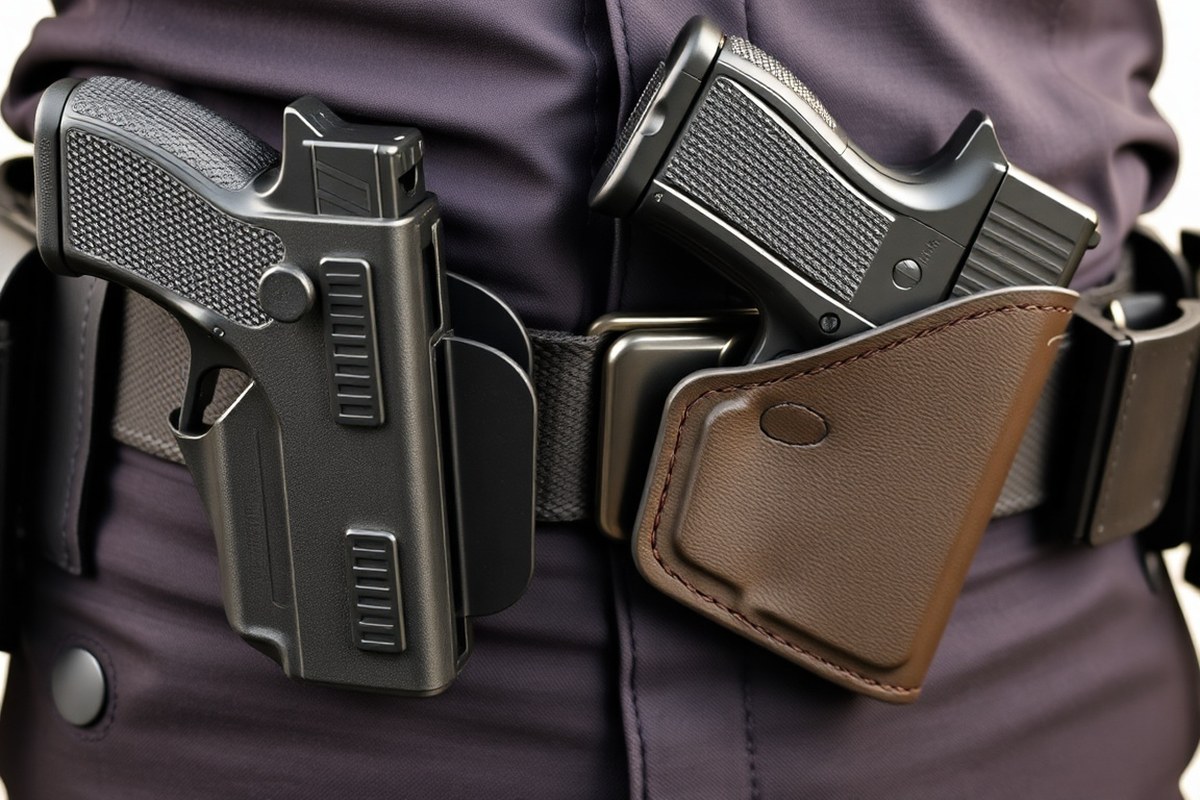
Taser holsters differ from gun holsters mainly in their intended function and design specifics. A taser holster’s purpose is to hold the device securely while enabling fast access for stun deployment. This means manufacturers focus on retention features that prevent accidental drops but do not slow your draw. Passive retention systems relying on the shape and tension of the holster are common. Some taser holsters use thumb breaks or push-button releases like the Taser 10 holster to combine security with rapid deployment. The relatively small, rectangular frame of most tasers allows these holsters to be compact and molded precisely to the device’s dimensions.
Gun holsters must accommodate larger, more complex shapes, slide, barrel, and trigger guard, all while considering safety and retention to prevent unauthorized access. Adjustable locking mechanisms or straps add secure retention but can slow the draw compared to some taser holsters. Holsters for firearms vary in size and material depending on the gun model and carry style but generally require deeper retention due to safety concerns and recoil during firing.
Quick stun deployment is a core design goal for taser holsters. For example, the TASER 7 CQ Holster by Safariland offers a smooth draw with secure polymer construction optimized for the Taser 7. These holsters often forgo heavy locking mechanisms in favor of a balance between speed and security, because a delay in drawing the taser can reduce their effectiveness for personal defense or law enforcement. Conversely, gun holsters focus heavily on preventing accidental discharge or weapon loss, so you’ll see more complex retention systems, which sometimes trade speed for safety.
Materials like 1680D nylon and Kydex are common in both types, but taser holsters can be lighter and less bulky to fit in various mounting positions, including MOLLE attachments for tactical vests. The choice of retention and mounting options will depend heavily on your priority between fast access and security. For example, passive retention with a friction fit is faster but may not secure the taser as well during vigorous movement compared to a thumb break lock.
Types of Taser Holsters and Their Compatibility

Taser holsters come in several types, mainly belt-mounted, inside waistband, and MOLLE attachments for tactical gear. Compatibility depends on the specific taser model, with many holsters designed to fit models like the Taser 7, Taser Pulse, X26P, and X1. Mounting options vary by tactical needs and comfort, while materials range from durable polymers to leather and nylon for different wear scenarios.
Belt and Outside Waistband (OWB) Holsters
Belt or outside waistband holsters are the most common and provide quick access and secure carry for tasers. These are usually attached to duty belts or standard belts between 1.5″ to 2.25″ wide. They fit prominently on the hip or thigh, offering easy retention and fast draw, making them popular among law enforcement officers during active duty.
Holsters such as the Blackhawk! TASER Holster (Model 11501) fit Taser X26P and X1 devices with a durable injection-molded polymer construction. Another example is the Zero9 Holsters 2015 Kydex model, compatible with Taser 7, offering Tek Lok and MOLLE Lok mounting options. The design often incorporates retention features like level 2 integrated hoods to minimize accidental release or tampering.
- Belt width compatibility typically between 1.5″ and 2.25″
- Open mouth or trigger coverage designs
- Right- and left-hand draw models available
- Options include adjustable height and tilt features
- Quick-release clips or locking retention
- Durable materials like injection-molded polymer or Kydex
Inside Waistband (IWB) and Concealed Holsters
Inside waistband holsters suit officers or civilians who want concealment without sacrificing accessibility. These holsters fit inside the pants or waistband and keep the taser close to the body, reducing printing under clothing. The We The People Holsters IWB model uses .08-inch Kydex and fits the Taser Pulse model with adjustable height and tilt for customizable comfort.
Due to their concealed nature, IWB holsters often sacrifice some speed in favor of discretion and concealment, ideal for off-duty carry or plainclothes operations. Leather options, though generally thicker, are less common for IWB taser holsters due to bulk but still available for users prioritizing natural materials.
Make sure the holster retains the taser firmly while inside the waistband to avoid accidental drops during movement.
Modular MOLLE and Tactical Vest Attachments
MOLLE-compatible taser holsters attach to tactical vests, plate carriers, or modular gear for adaptable placement. This option suits officers who wear full tactical kits during high-risk operations or training. The Zero9 Holsters 2015 model and REXTECH nylon MOLLE adapters are designed specifically to accommodate these setups.
MOLLE systems provide secure attachment via straps or clips and allow users to position the taser on the chest, side, or shoulder, depending on personal preference and tactical needs. This placement also frees up belt space for other equipment. Common MOLLE compatible holsters offer customization benefits but may add slight bulk compared to belt mount options.
Material Choices: Nylon, Kydex, Leather
Taser holsters come in various materials, each with unique tradeoffs in durability, weight, and comfort. Nylon holsters, like those from REXTECH, are lightweight and flexible but may wear faster in harsh conditions. Kydex and injection-molded polymers provide rigid, form-fitting protection with better retention and moisture resistance.
Leather taser holsters, such as VlaMiTex’s model designed for the Taser Pulse, are thicker (2.5, 3.0 mm) and offer a traditional aesthetic. They also tend to soften over time, providing improved comfort. However, leather holsters usually require more maintenance and can absorb sweat, potentially degrading faster if not cared for properly.
| Brand | Material | Compatibility | Mounting Options |
|---|---|---|---|
| Zero9 Holsters | Kydex | Taser 7 | Tek Lok (belt), MOLLE Lok (vest) |
| Blackhawk! TASER | Injection-molded polymer | Taser X26P, X1 | Belt and tactical platforms |
| VlaMiTex | Leather (2.5, 3.0 mm) | Taser Pulse | Belt (up to 5 cm width) |
| REXTECH | High-strength Nylon | Compatible with Safariland, Blackhawk, MOLLE gear | MOLLE attachments |
| We The People Holsters | Kydex (.08 inch thick) | Taser Pulse | Inside waistband |
Choosing the right material and mounting method depends on your duty requirements, comfort preferences, and the taser model you carry. Hard shells offer better protection but add weight, while soft holsters prioritize comfort and flexibility.
Types of Gun Holsters and Their Pros and Cons
Gun holsters come in several main styles that balance comfort, concealability, and accessibility differently. Choosing the right type depends on your duty needs, carry position, and the weapon size. Below is an overview of the key holster types with their main pros and cons to help you decide which fits your situation best.
Outside Waistband (OWB) Holsters
OWB holsters attach to the belt outside your pants, making them popular among law enforcement for duty carry. They offer excellent accessibility since the firearm is fully exposed, allowing a quick draw. These holsters tend to be more comfortable for long wear because they don’t press directly against your body.
The tradeoff is lower concealability, as the holster and gun create a visible bulk outside the waistline. OWB holsters also require a sturdy belt capable of holding the weight securely. Common materials include molded polymer and leather, which offer durable and reliable retention.
- Good for quick, open carry on patrol or uniform duty
- Usually fits a broad range of handgun models and sizes
- Less suitable for concealed carry due to visible profile
- Comfortable for extended wear on duty
- Needs a strong belt and proper mounting angle
Typical cost for an OWB duty holster ranges from $40 to $120, depending on brand and material. Tactical versions may include adjustable retention screws for security while maintaining fast access.
Inside Waistband (IWB) Holsters
IWB holsters fit inside your pants at the waistband, creating a lower profile for concealed carry. They are the go-to choice for undercover officers and civilians carrying concealed weapons. By tucking the holster inside with only the grip exposed, these holsters offer good concealability.
This style often sacrifices some comfort because the holster presses against your hip or thigh. Wearing an IWB holster for long periods requires proper sizing and sometimes dress adjustments, like untucked shirts. Accessibility is adequate but can be slower than OWB carry, as you need to reach inside your waistband to draw.
- Preferred method for concealed carry and undercover work
- Less comfortable for extended wear without proper fit
- Best paired with firearms of compact or subcompact size
- May require belt clips or loops to secure inside pants
- Often priced between $30 and $90
Some IWB holsters include sweat guards to protect the firearm and improve comfort. Users should ensure their clothing style accommodates the holster position to avoid printing.
Shoulder and Ankle Holsters
Shoulder holsters offer a way to carry a firearm horizontally under the arm, distributing weight across your back and shoulders. This style is favored when sitting or driving for long periods since it avoids pressure on the waist. However, shoulder holsters can be bulky and less concealable under thinner clothing.
Ankle holsters are often used as backup weapon carriers or for very small handguns. They secure the firearm around the lower leg, providing good concealability but slower draw times. Both shoulder and ankle carry require training to access the weapon effectively and safely under stress.
- Shoulder holsters allow comfort for extended sitting or protective gear wear
- Ankle holsters suit backup or off-duty carry with small pistols
- Lower accessibility than waistband options, demanding practice
- Shoulder holsters can interfere with body armor or other equipment
- Generally more expensive, ranging from $50 to $150
These holsters work best for specific needs rather than everyday carry. Officers should evaluate scenarios and draw speed requirements carefully before choosing these styles.
Specialized Holsters (Appendix, Crossdraw)
Appendix carry holsters hold the firearm in front of the body, near the belly button. This position offers fast access and good concealability when using slim holsters but may cause discomfort especially when sitting or bending. Appendix holsters require a high-quality holster with secure retention to prevent accidents.
Crossdraw holsters mount on the opposite side of the dominant hand, allowing the firearm to be drawn across the body. This style is common for seated officers or those who prefer a forward carry but can be less intuitive and slower for non-dominant hand draws. Crossdraw holsters often have additional retention features to secure the weapon during sudden movements.
- Appendix carry provides very fast draw with correct practice
- Can be uncomfortable for some body types or during extended wear
- Crossdraw is useful for seated officers or alternate access
- Requires training to perform safe and efficient draws
- Often limited holster options compared to standard positions
Prices for specialized holsters vary widely, generally falling between $40 and $100. Careful fitting and training are essential to maximize safety and performance when using these carry styles.
How Retention and Security Features Differ Between Holsters
Retention levels in taser holsters often include passive systems like friction retention or straps and active systems such as locking mechanisms or release buttons that require deliberate action to draw the device. Gun holsters typically offer several retention levels, from simple friction fits to multiple active retention devices, including thumb breaks and hoods. These retention features prevent accidental release while allowing rapid deployment when you need to access your equipment quickly and securely.
In taser holsters, locking mechanisms like the Level 2 retention hood firmly hold the taser in place. This design prevents accidental removal during movement or physical struggle but still permits swift deployment. Often, these holsters include an auto safety engagement that activates when the taser is holstered, providing an additional layer of safety against accidental activation. You disengage by executing a master grip or pressing a release button, making sure the device doesn’t come free unintentionally.
Gun holsters commonly incorporate thumb breaks or push-button locks that secure the firearm. These require a thumb release before drawing, improving security while maintaining accessibility. Some models offer improve features like adjustable tension screws that control friction retention, balancing draw speed with security according to your preference and duty requirements. However, more complex retention designs might add milliseconds to your draw time, which could be critical in high-pressure situations.
- Friction retention: simple, quick, minimal added bulk, but less secure during intense activity
- Straps with snaps: provide additional hold, preventing accidental loss during movement, may slow draw slightly
- Level 2 retention hood: locks device firmly but allows fast release with one hand
- Auto safety engagement: activates on holstering, prevents accidental activation, disengaged via master grip
- Thumb break or release button: requires deliberate action to unlock, increasing security, may add minor draw time
- Adjustable tension screws (gun holsters): customize retention force to suit deployment speed and safety needs
- Precise device fit: essential to avoid accidental drops or loss and maintain quick access
Choosing retention features depends on your environment and readiness needs. For law enforcement, combining multiple retention steps reduces the danger of your gear being grabbed or dropped under stress. The best taser holsters feature molded fits tailored to specific models like the TASER X26P or X1, constructed from durable materials to withstand duty conditions. Similarly, gun holsters benefit from strong construction and secure locking systems but aim to minimize draw delay.
Good retention provides security without sacrificing speed. Overly tight or complicated locks can cause hesitation, while too many quick-release features might risk accidental draw or loss. Balancing these factors by selecting a holster with appropriate retention mechanisms ensures safety for you and the public, along with dependable readiness when seconds count.
Comfort, Wearability, and Mounting Options Compared
Weight is a key factor affecting comfort when carrying either a taser or a firearm. Tasers generally weigh less than handguns, making taser holsters lighter and often more comfortable for longer shifts. For example, nylon stun gun holsters are designed to be lightweight and portable, which lessens fatigue when worn all day. Firearm holsters, accommodating heavier weapons, must be sturdier and often bulkier, impacting balance and causing more pressure on the carrying side.
Mounting options influence wearability greatly. Both taser and gun holsters commonly use belt attachment methods including belt loops, paddle clips, or MOLLE-compatible mounts. Versatile attachments like Tek-Lok allow for quick fastening and work with belts between 5 inches and 25 inches wide, providing adaptable carry placement. Non-belt options exist but are less common for law enforcement gear due to security and accessibility concerns. Carrying preferences also differ for right- and left-handed users since many taser holsters, such as the VlaMiTex B28 Leather Holster, are designed specifically for right-handed draw, limiting left-handed compatibility.
| Specification | Details |
|---|---|
| Brand | Houfut |
| Material | 1680D Nylon |
| Dimensions | 6.7 x 3 inches |
| Attachment | Belt loop and metal carabiner |
| Compatibility | Most stun guns on the market |
| Closure Type | Hook-and-loop strip |
| Weight | Lightweight and portable |
Achieving proper balance requires choosing a holster whose shape and retention system distribute weight evenly, reducing strain on your hips or waist. Firearm holsters tend to be tighter and thicker to secure weightier guns, which can affect comfort, particularly when sitting or moving rapidly. Tasers benefit from compact designs, like those with nylon construction, that weigh less and contour closer to the body. Belt attachment methods such as paddle clips provide quick on-and-off but can shift if not secured firmly, while Tek-Lok designs offer superior steadiness but may take longer to change position.
Make sure your holster fits your dominant hand’s draw side; holsters designed for right-handed users may impede quick access and comfort for left-handed carriers.
Legal and Safety Considerations When Choosing a Holster
Legal considerations for holster choice depend on your location and the type of weapon you carry. Many states have specific laws about how and where you can carry a firearm or a taser, including rules about concealment and accessibility. For example, some jurisdictions require that tasers be holstered in a way that prevents accidental discharge or activation, which is more likely if the holster lacks adequate retention or trigger protection. Always review local regulations to ensure your holster complies with these requirements.
Taser holsters are designed with safety features to reduce accidental activation. This can include custom fits that secure the device tightly, trigger guard shields, and retention systems that require deliberate actions to draw the taser. Unlike gun holsters, taser holsters often include additional safeguards against triggering the stun function while holstered. Choosing a holster specifically made for your taser model helps minimize movement and unintended activation, which protects both you and those nearby.
Proper training is essential for safely using any holstered weapon. Law enforcement officers and security professionals should practice routine drawing and holstering under supervision to build muscle memory and reduce errors. Training should cover how to handle malfunctions, proper grip techniques, and steps to avoid accidental discharges or activations. Using a holster consistently designed for your weapon ensures familiarity and confidence in handling it safely during high-pressure situations. Following a safety and legal checklist can help prepare you to choose and use the right holster:
- Research local laws, Check your state and city regulations on carrying tasers and firearms, focusing on rules about holster types and carry methods.
- Select a holster custom-fit, Choose one designed specifically for your model to ensure proper fit and activation protection.
- Examine retention systems, Look for holsters with active or passive retention mechanisms that securely hold your weapon while allowing quick access.
- Inspect trigger coverage, Confirm the holster fully shields the trigger or activation switches to prevent accidental discharge.
- Train regularly, Practice drawing and re-holstering your weapon daily or weekly under realistic conditions to build safe habits.
- Maintain your equipment, Check for wear, dirt, or damage that could reduce holster security or function and replace holsters as needed.
- Follow manufacturer guidelines, Use recommended holsters and never modify them in ways that could compromise safety features.
Common Mistakes and How to Avoid Them with Holsters
Retention failures often happen because the holster does not fit the specific model of your taser or firearm. For example, using a holster designed exclusively for TASER 7 on an older X26P can lead to loose retention, increasing the risk of loss or dropping. To prevent this, always select a holster molded specifically for your device model. Check manufacturer compatibility, many professional holsters clearly state which taser models they support, such as the Zero9 Holsters Model 2015 designed for TASER 7 users only.
Holster fit problems not only affect retention but can cause difficulty in drawing or reholstering safely. Custom-fit holsters typically provide a snug fit that holds the taser or gun securely while allowing a smooth draw. Avoid universal or generic holsters if your goal is reliable carry. When fitting a new holster, insert your device multiple times to test retention and ease of deployment.
Accidental discharge or unwanted taser activation most often result from improper holster design or malfunctioning retention mechanisms. For instance, some holsters lack an effective safety catch that prevents the taser’s trigger from engaging during movement. Using a holster that allows you to place the taser on safe before holstering adds an extra layer of protection. Ensure no loose straps or clips can snag and accidentally触发 the device.
Proper maintenance keeps holsters functioning safely and extending their lifespan. Dirt, dust, or debris in retention areas can cause sticking or loosening. Cleaning your holster regularly with a damp cloth and mild soap is usually sufficient. Avoid excessive heat or solvents that could warp plastic holsters. Leather holsters require conditioning to prevent cracking but avoid over-oiling, which reduces retention firmness.
- Choose device-specific holsters to ensure secure retention
- Verify compatibility before purchase using model lists or manufacturer specifications
- Test holster retention and draw multiple times before active use
- Use holsters with built-in safety features to prevent accidental activation
- Keep holsters clean and dry; avoid harsh chemicals and extreme heat
- Replace worn holsters if retention becomes unreliable
- Practice holstering and drawing in controlled conditions to identify issues early
Costs for quality holsters vary, with professional-grade taser holsters typically ranging from $40 to $100. Spending on a purpose-built holster tailored to your specific device reduces risks and improves readiness. Good results include smooth draws, firm retention, and no unwanted activations. Problems such as a failing retention snap, hard draws, or accidental discharges indicate a needed holster change or adjustment.
Choosing the Right Holster: Decision Rules and Recommendations
Selecting the right holster depends mainly on your device type, how you carry it, and the environment you operate in. You want a holster that keeps your device secure, accessible, and comfortable throughout your shift. Your choice should factor in safety, compatibility, and your budget to ensure reliable performance in all situations.
Assessing Your Carry Needs and Environment
Start by considering how and where you will carry your device. Law enforcement officers in high-risk environments need holsters with strong retention to prevent accidental drops or unauthorized use. Security professionals working in crowd-heavy or confined settings might prefer quick access and open-top designs.
Your carry method, belt-mounted, ankle, or chest rig, also affects holster choice. Belt carry usually offers faster access but may be less comfortable for extended wear. Ankle holsters can reduce print and keep your hands free but slow draw time. Your body type and uniform style are additional factors.
- Prioritize fast access in dynamic, close-quarters environments
- Choose strong retention features if you expect physical confrontation
- Consider low profile for undercover or plainclothes duties
- Balance comfort with accessibility for long shifts
- Match holster placement with your dominant hand and preferred draw side
Understanding your environment and typical movement patterns helps you avoid holsters that hinder your response speed or risk device loss.
Evaluating Device Compatibility and Holster Features
Match your holster precisely to your device model and intended use. For example, the TASER holsters made by Axon Enterprise feature injection-molded polymer construction customized for the TASER 7 and 7CQ models. These offer an open-top design with trigger coverage, balancing accessibility and safety.
Look for features like adjustable retention, trigger guard protection, and ambidextrous options. Secure retention prevents accidental drops, while trigger coverage reduces accidental discharge risk. A holster compatible with your dominant hand and draw style improve response efficiency.
Gun holsters usually have variants based on carry style (inside waistband, outside waistband, shoulder). Tasers often come with fewer options but require specific fit to avoid excessive bulk or loose fit. Testing the fit and ease of draw in a controlled setting reveals the best choice for your daily duties.
Considering Budget and Brand Reliability
Pricing ranges from around $40 for basic holsters up to $150 or more for premium, custom-fit models. Balancing budget with essential safety and comfort features prevents overspending on unnecessary extras.
Trusted brands, such as Axon’s TASER holsters, offer proven fit and durability backed by professional use. Cheap generic holsters may lack consistent retention or degrade faster, risking device security. Investing in reputable manufacturers ensures build quality and customer support if replacements or adjustments are needed. Consider these points when evaluating holsters:
- Material durability, polymer vs leather vs hybrid
- Warranty and return policy
- Customer reviews from law enforcement peers
- Fitment guarantees for your specific device model
- Options for left or right-hand draw
Setting a budget based on your department’s or agency’s gear allowance helps narrow choices while addressing all your operational needs.
When to Seek Custom or Professional Holster Services
Custom or professionally fitted holsters become worthwhile if you have unique carry requirements, special device modifications, or need non-standard positioning. Such holsters can improve draw speed, comfort, and retention tailored exactly to your body shape and duty environment.
Professional fitting also applies when switching between devices frequently during different assignments. A holster custom-made for your specific TASER or firearm model while accommodating your uniform and equipment belt reduces fumbling and accidental exposure.
Expect custom options to cost between $100 and $250, depending on design complexity and materials. Specialized holster makers often provide fitting services or detailed measuring instructions via phone or online consultation.
Always test your holster’s security and draw in safe conditions before duty use; improper fit risks delay in critical moments or accidental discharge.
Quick-Start Action Plan for Selecting and Using Your Holster
Follow these steps to pick the right holster for your taser or firearm and ensure safe, effective use.
- Before your shift: Check your department’s or local laws regarding holster requirements to avoid legal issues. Confirm compliance before purchase.
- Day 1: Choose a holster type suited for your weapon, verify fit and retention features by attaching and detaching your taser or gun. It should lock securely but allow quick access.
- Week 1: Practice drawing and reholstering your device multiple times to build muscle memory and highlight any comfort or wearability problems.
- Week 2: Adjust the mounting position if you experience discomfort or limited mobility. Test each adjustment during routine movements to confirm improved ergonomics.
- After 3 weeks: Inspect your holster for wear and assess retention mechanisms for consistent security. Replace if retention degrades or damage occurs.
- Ongoing: Stay updated on any changes to legal regulations and holster technology relevant to your equipment.
Frequently Asked Questions
Can You Carry a Taser and Gun on the Same Duty Belt Safely?
Yes, you can carry both safely, but ensure each has secure holsters to prevent interference during quick draws. Organizing them on opposite sides usually helps avoid confusion.
Do Taser Holsters Require Less Training to Use Compared to Gun Holsters?
Generally, Taser holsters need less training because Tasers deploy electronically and have simpler mechanisms. Still, you should practice regularly for fast and safe deployment.
Are Taser Holsters More Durable Than Gun Holsters?
Durability depends on materials and use; both can be highly durable. Taser holsters often use molded plastics or nylon for lightweight carry, while gun holsters focus on retention and impact resistance.
Can You Customize Taser Holsters for Left-Handed Users?
Yes, some Taser holsters, like the Serpa Holster for Taser 7, come designed specifically for left-handed carry to ensure comfort and quick access. Check compatibility before buying.
Do Gun Holsters Offer Better Retention Systems Than Tasers?
Gun holsters typically have more advanced retention systems, such as adjustable hoods and locking mechanisms, because firearms pose higher risks if lost. Tasers have simpler retention but still provide secure carry.
Is It Legal to Carry a Taser in a Gun Holster?
Legality varies by jurisdiction, but generally, using a gun holster for a Taser is not recommended due to fit and safety issues. Always check local laws and choose the correct holster.
The Bottom Line
The best holster balances security, comfort, and quick access tailored to your specific weapon and role. Regular practice and legal awareness keep your equipment reliable and compliant. Start by confirming your local legal standards and then select a holster that fits your taser or firearm precisely. Testing it in your usual work conditions ensures readiness and safety in high-pressure situations.