How to Get a North Carolina Concealed Carry Permit: A Complete Step-by-Step Guide
How to get a North Carolina concealed carry permit starts with meeting basic eligibility like being at least 21 years old and residing in the state for 30 days. You must submit your application to your county sheriff, complete a state-approved firearms training course, and pay the required fee. Following these steps ensures you comply with state laws and obtain your permit correctly.
Key Takeaways
- You must be at least 21 years old and have lived in North Carolina for 30 days before applying for a concealed carry permit.
- Submit your concealed carry permit application to the sheriff’s office of the county where you live.
- A state-approved concealed handgun training course is mandatory before your first application and if your permit expires over 60 days.
- The application fee is $90 for first-time applicants, $75 for renewals, and $15 for duplicate permits.
- Renew your permit no sooner than 90 days and no later than the expiration date to avoid retaking training.
- An active-duty military member can request up to a 90-day extension on their permit if deployed.
Who Qualifies for a North Carolina Concealed Carry Permit?
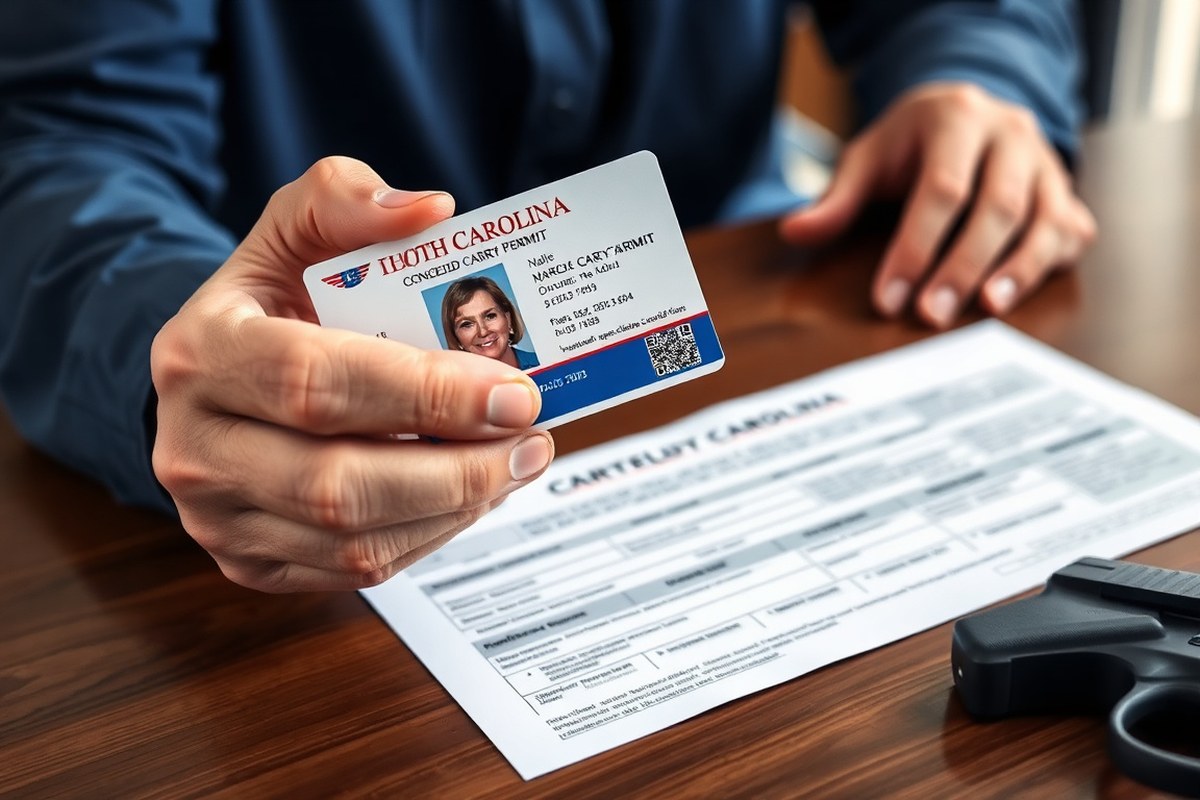
You must be at least 21 years old to apply for a North Carolina concealed carry permit. This age requirement aligns with state law and federal guidelines for handgun possession in most states. Also, you need to have lived in North Carolina for at least 30 days before submitting your application to the sheriff’s office in your county. This residency requirement ensures the permit process is handled locally where you live.
Only U.S. Citizens and lawful permanent residents qualify to apply. The sheriff’s office will verify your citizenship or immigration status as part of the application process. If you do not meet this criterion, your application will be disqualified. Being a legal resident also connects to your responsibility to follow state-specific firearm laws.
Criminal history plays a critical role in eligibility. Applicants must not have any felony convictions or certain disqualifying misdemeanors. Recent impaired driving violations or violent misdemeanors can also bar you from obtaining a permit. The sheriff uses a criminal background check and FBI records to determine if any of these disqualifications apply. A permit denial may be appealed if you believe there was an error.
Mental health is another key factor. Records indicating you have been adjudicated as mentally incompetent, committed to a mental institution, or found to be a danger to yourself or others will prevent you from receiving a permit. These checks occur alongside criminal background screening. The goal is to ensure all permit holders are capable of safely handling a concealed handgun.
To qualify, you must meet these core requirements: be 21 or older, have lived in North Carolina at least 30 days, possess U.S. Citizenship or lawful permanent residency, have no felony or certain recent misdemeanor convictions, and have no disqualifying mental health records. You will complete an application under oath and submit fingerprints for the background check. Once your documents are verified, the sheriff’s office has 45 days to approve or deny your permit.
A simple decision rule applies: if you fail any single eligibility criterion, age, residency, citizenship, criminal background, or mental health status, the application cannot be approved. Meeting all criteria means you proceed to training and the rest of the permit process. Carrying without the permit or with a revoked permit exposes you to legal penalties. Staying informed about these eligibility rules helps avoid costly mistakes and delays in obtaining your North Carolina concealed carry permit.
Where and How Do I Submit My North Carolina Concealed Carry Application?
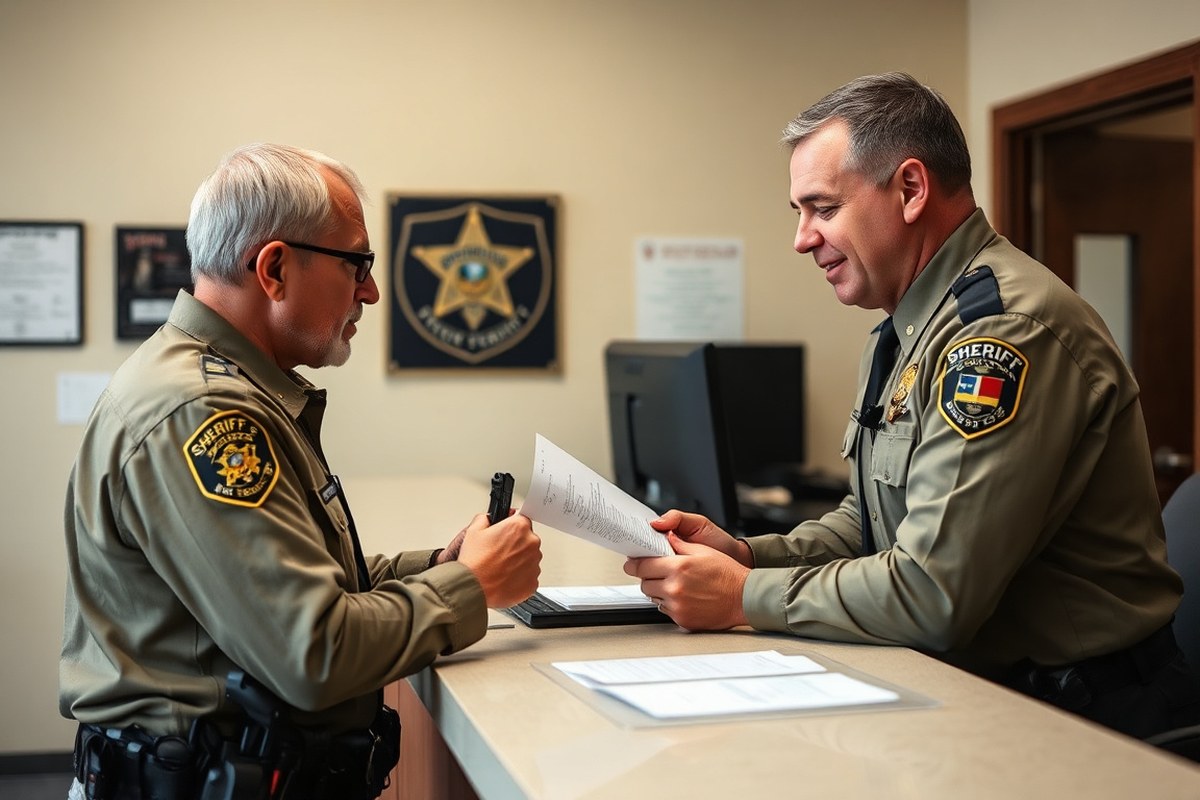
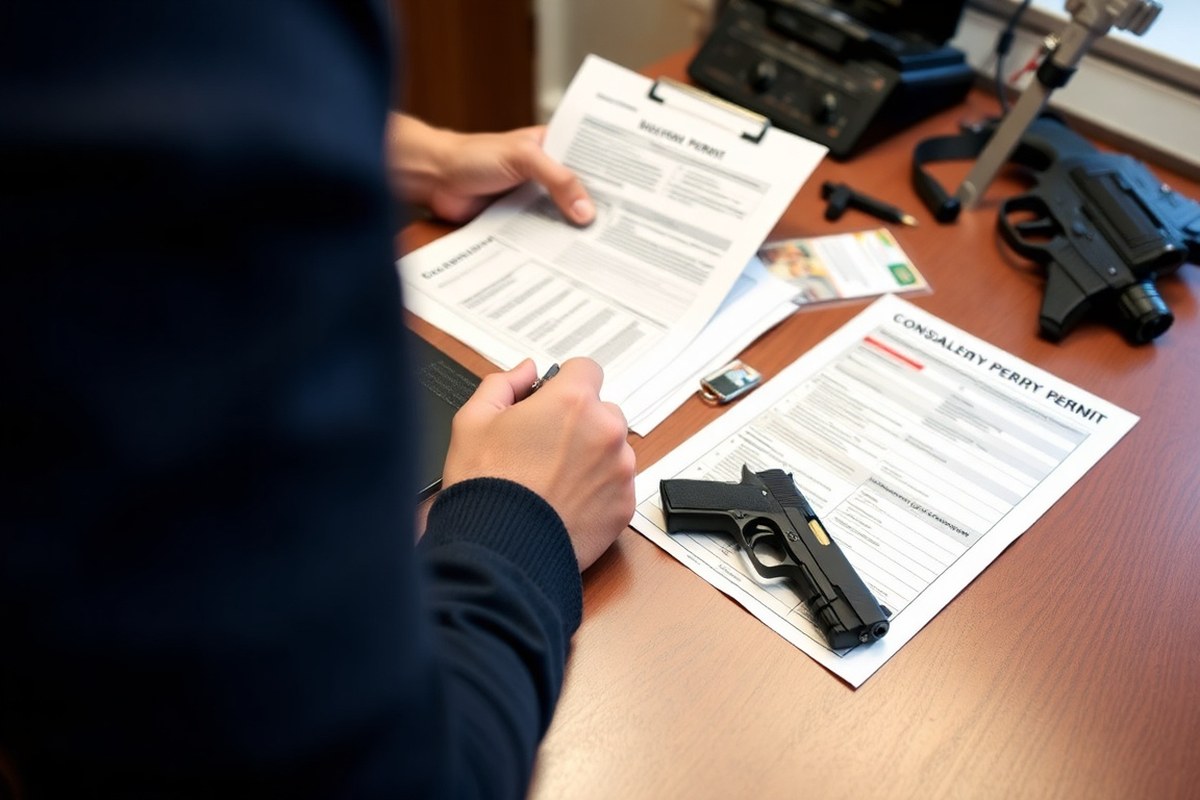
You must submit your North Carolina concealed carry permit application to the sheriff’s office in the county where you live. While you can fill out the application online, it must be printed and physically submitted in person. After submitting your application, you will also need to schedule and complete fingerprinting at the sheriff’s office or designated location. Payment for the application fee and any associated charges is due at the time of submission, and office hours vary by county.
County Sheriff Offices and Residency Requirements
Your concealed carry permit application must be submitted to the sheriff in the county where you currently reside. You can find the application form on your local sheriff’s office website. Print it out, complete it carefully, and bring it to the sheriff’s office during their business hours. You must report to your new local sheriff’s office in person with a valid North Carolina driver’s license or ID to update your permit information when you move to a new county or change your address.
The sheriff’s office is the official issuing authority, so applying anywhere else will delay or invalidate your application. For example, Wake County residents must apply at the Wake County Sheriff’s Office, while Mecklenburg County residents apply at their respective sheriff’s office.
| County | Sheriff’s Office Contact | Address | Phone | Business Hours |
|---|---|---|---|---|
| Wake | Wake County Sheriff’s Office | 330 S Salisbury St, Raleigh, NC 27601 | (919) 856-6311 | Mon, Fri, 8 a.m., 5 p.m. |
| Mecklenburg | Mecklenburg County Sheriff’s Office | 9555 Crabapple Rd, Charlotte, NC 28216 | (704) 336-2200 | Mon, Fri, 8 a.m., 5 p.m. |
| Guilford | Guilford County Sheriff’s Office | 400 W Market St, Greensboro, NC 27401 | (336) 641-3694 | Mon, Fri, 8 a.m., 5 p.m. |
Fingerprint Appointment Scheduling and Requirements
You cannot complete your concealed carry permit application without submitting a fingerprint record. After your application is submitted, the sheriff’s office will schedule a fingerprint appointment, typically at the Public Safety Center or a designated facility. Fingerprints must be taken by a certified technician at the sheriff’s office or their approved location.
Appointments are often required to manage the flow of applicants. Call your local sheriff’s office or check their website for specific instructions on how to book fingerprinting. Be sure to bring a government-issued ID and the receipt or proof of your application submission when you attend your fingerprint appointment.
Payment Methods and Fee Breakdown
The application fee for a North Carolina concealed carry permit is $90. Applying online requires paying an extra one-time $4 convenience fee. You must pay these fees when submitting your application at the sheriff’s office. Most county sheriff offices accept cash, money orders, and sometimes debit or credit cards, but check beforehand to confirm acceptable payment types.
The $90 fee is nonrefundable, so ensure your application packet is complete before submitting. Keep the payment receipt, as you may need it during fingerprinting or permit pickup.
- Find and print the concealed carry permit application from your local county sheriff’s office website.
- Complete the application and gather all required documents: proof of training, proof of citizenship or lawful residence, and proof of North Carolina residency.
- Visit your county sheriff’s office during business hours with your completed application, documents, and payment for the $90 fee ($94 if applying online).
- Submit your application for review at the sheriff’s office.
- Schedule your fingerprint appointment if not automatically scheduled, and attend it on the assigned date and time.
- Retain all receipts and confirmation numbers until your permit is issued.
Submit your application early during sheriff’s office hours and confirm fingerprint appointments ahead of time to avoid delays in processing your permit. Always bring original documents and exact payment amounts as instructed.
What North Carolina Firearms Training Is Required to Get a Permit?
To obtain a concealed carry permit in North Carolina, you must complete a firearms training program authorized by the North Carolina Criminal Justice Standards Commission. The training consists of classroom instruction and hands-on handgun shooting, focusing on state firearm regulations and safety protocols. Some individuals, such as law enforcement officers, are exempt from this training requirement.
Approved Concealed Handgun Training Courses
The firearms training must come from a provider certified by the North Carolina Criminal Justice Standards Commission. These classes usually last several hours and combine classroom learning with live target shooting. The classroom covers North Carolina concealed carry laws, legal use of force, and firearm safety rules. The live-fire section tests your ability to handle and shoot a handgun safely and accurately.
You can find approved training courses by searching online or checking the Yellow Pages under firearms training. Many gun dealers or shooting ranges also offer classes that meet state standards. To qualify for the permit, you must pass the course with a minimum score determined by the instructor, typically around 70% or higher on any written tests. Upon successful completion, you will receive a valid certificate that you submit with your permit application.
Exemptions for Law Enforcement and Military Applicants
Active law enforcement officers and those who have retired within the last two years are exempt from the general firearms training requirement. This exemption recognizes their existing firearms qualifications and experience. Military personnel do not receive an automatic exemption unless they also fall under active or recently retired law enforcement status.
Even if exempt from training, these applicants must still meet all other legal requirements for the permit. Carrying the permit and valid identification while armed remains mandatory. The exemption helps streamline the permit process for those with professional firearms training on record.
Training Retake and Expiration Rules
Your North Carolina concealed carry permit requires retaking the firearms training before you can renew it if your current permit has expired. The state requires submission of a current training certificate with your renewal application, so retaking the course is necessary if the previous certificate is not valid or has expired. This ensures all permit holders maintain up-to-date knowledge of state laws and safe handling practices.
Plan to retake the course and submit the updated certificate well before your permit expires, as you cannot legally carry concealed while your permit is expired. Retaking training also offers a refresher on any updates to gun laws or safety guidelines enacted since your last course.
How Much Does the North Carolina Concealed Carry Permit Cost?
Getting a concealed carry permit in North Carolina involves several fees that vary depending on your situation. The initial application fee for first-time applicants is $90. Renewal applications cost $75, and if you lose or damage your permit, getting a duplicate card requires a $15 fee. These fees cover the administrative costs related to processing your application and maintaining records.
Fingerprinting fees are separate and must be paid in addition to the application fees. Typically, fingerprinting costs range from $10 to $15 and are required to complete the background check portion of your application.
Retired sworn law enforcement officers who provide the necessary documentation receive a reduced application fee of $45. This discount incentivizes qualified officers to maintain lawful carry privileges at a lower cost.
Fees can be paid at the sheriff’s office when you submit your application. Most sheriff’s offices accept multiple payment methods, including cash, check, and credit or debit cards. It’s a good idea to call ahead to confirm which payment options are accepted at your local office.
| Permit Type | Fee | Notes |
|---|---|---|
| First-Time Application | $90 | Standard fee for new applicants |
| Renewal | $75 | Due before permit expiration |
| Duplicate Permit | $15 | For lost or damaged permits; request in person |
| Retired Law Enforcement Officer Application | $45 | Reduced fee with required documentation |
| Fingerprinting | $10, $15 | Separate from permit fees; required for background checks |
You must apply for a duplicate or report a change of address in person at the sheriff’s office, Monday through Friday between 8:30 a.m. And 5 p.m. Plan to bring your payment and relevant documents with you to avoid delays. Remember that your renewal fee must be paid before your permit expires to continue carrying legally without interruption.
What Is the Timeline and Process After Application Submission?
Once you submit your North Carolina concealed carry permit application, the sheriff has 45 days to approve or deny it, according to state law (G.S. 14-415.13). During this time, the sheriff conducts a background check using your fingerprints, which are sent to the State Bureau of Investigation (SBI). The process includes reviewing relevant mental health records to confirm eligibility. This background and mental health review generally happens soon after submission, but its length can depend on how quickly the SBI and local agencies respond.
In most cases, the sheriff will complete their review within the 45-day window. If the sheriff needs additional information or decides an interview is necessary, expect some delay, but no formal extensions beyond 45 days are allowed by law. You are not required to submit extra documents such as employment histories or character affidavits unless specifically requested in writing or allowed by law. The sheriff maintains confidentiality of all application and permit holder information, so your privacy is protected throughout this process.
After the sheriff either issues or denies your permit, you will be notified. Notification often happens by mail, but some sheriff’s offices may have different procedures like phone calls or email. Once notified that your permit is ready, you typically have up to 30 days to pick it up from the sheriff’s office. Failure to claim your permit in that time may result in the permit being voided, requiring you to start the application process again. It’s a good idea to call ahead and ensure your permit is ready before visiting the sheriff’s office.
Keep your contact details updated with the sheriff’s office to avoid missing notification about your permit status.
Here is a basic timeline and checklist after submitting your application: Day 1, application filed and fingerprints taken; Days 2-30, the SBI and sheriff conduct background and mental health checks; Days 31-45, sheriff completes review and makes decision; Day 45+, notification sent to applicant; then within 30 days, you must pick up your permit. This schedule ensures you stay on track and understand each phase of the licensing process.
Occasionally, delays happen if the sheriff needs to clarify mental health records or if law enforcement databases are slow to respond. Preparing in advance, such as completing your training and providing accurate information, helps minimize these issues. Any additional requirements will come directly from the sheriff’s office, so stay responsive to communications to keep the process moving smoothly.
How to Renew, Replace, or Update Your Concealed Carry Permit
You need to renew your North Carolina concealed carry permit before it expires to keep carrying legally. Begin the renewal process as early as 90 days prior to your permit’s expiration date. Missing the deadline may require completing training again and applying as a new applicant. Notify the sheriff who issued your permit within 30 days of any permanent address change to remain in compliance.
Renewal Timeline and Fees
Your concealed carry permit is valid for five years from the issue date. Begin your renewal application up to 90 days before expiration and no later than the last day it’s valid. Missing the deadline means your permit is expired, and you must apply as a new applicant. This involves completing the required firearms training again and paying all fees. The renewal fee is generally lower than the original application fee, often around $50, but check with the issuing sheriff for the exact current cost.
To renew, collect your current permit, proof of training if required, and payment for the fee. Incomplete or late applications will not be accepted without retraining, so submit early to avoid interruptions.
Replacing Lost or Damaged Permits
Lost or damaged permits must be replaced promptly to comply with legal requirements. You need to notify the issuing sheriff’s office with a notarized statement declaring the loss or damage. There is a set fee of $15 for obtaining a duplicate permit. Keep a copy of your notarized statement for your records in case of follow-up requests.
Replacement permits are issued without needing to go through the entire application or training again. This process ensures you stay legally permitted without delay.
Change of Address Notification Procedures
Whenever you move, you have 30 days to inform the sheriff’s office that issued your permit about your new permanent address. This requirement helps authorities maintain accurate records and ensures your permit remains valid for your current jurisdiction. Failure to notify within 30 days can result in penalties or complications with your permit status.
The Wake County Sheriff’s Office only processes address changes for residents holding Wake County permits. Permit holders from another county should reach out to the office that issued their permit to learn about the specific renewal steps required. Generally, an in-person visit, phone call, or mail notification suffices, but it’s best to confirm the method with them.
- Gather your current concealed carry permit and proof of identity.
- Collect any required documentation such as your training certificate if renewing.
- Complete the renewal or replacement application form available from the sheriff’s office or their website.
- To replace a lost or damaged permit, prepare a notarized statement describing what happened.
- Calculate and prepare the proper fee: around $50 for renewal and $15 for replacement.
- Submit your application, notarized statement (if replacing), and payment to the issuing sheriff’s office.
- Notify your issuing sheriff with your new address within 30 days after moving, using their preferred contact method.
- Keep copies of all submitted documents and receipts for your records.
What to Do If Your Permit Is Denied, Revoked, or Suspended
Common reasons a North Carolina concealed carry permit may be denied or revoked include felony convictions, certain domestic violence restraining orders, active mental health commitments, or failure to meet residency requirements. A permit can also be revoked for providing false information on the application or if the permit holder violates firearm laws. Understanding these reasons helps you address the specific issues if you plan to challenge the decision.
If your permit is denied, revoked, or suspended, you have the right to appeal the decision. Appeals must be filed with the Chief District Court Judge of Wake County, who reviews these cases, typically without a formal hearing. You need to submit a written appeal petition within 30 days of receiving the denial or revocation notice to preserve your right to contest the decision.
Your appeal petition should include your full name, contact information, explanation of why you believe the permit should be granted or reinstated, and any supporting documents such as court records or proof of compliance with legal requirements. Start by addressing the petition to “The Honorable Chief District Court Judge, Wake County” and send it either by mail to the Wake County Courthouse or deliver it in person during office hours. The courthouse hours for Concealed Carry Permit-related matters are Monday through Thursday, from 9 a.m. To 11 a.m. And 2 p.m. To 4 p.m.
While there is typically no fee required to file the appeal petition itself, you should check with the Wake County Clerk of Court in case any administrative fees apply. During the appeal review, you may not legally carry a concealed handgun if your permit has been denied or revoked, unless you already held a valid permit that remains active. Waiting to carry until the appeal verdict protects you from potential legal consequences.
To prepare a successful appeal, gather clear evidence proving you meet all legal qualifications for the permit, such as completion of firearms training, lack of disqualifying criminal history, or corrected errors on your application. Address each reason stated for denial or revocation directly in your petition, stating why that reason does not apply or has been resolved. It also helps to request a hearing if you want to present your case orally, though North Carolina judges often decide on appeal petitions alone.
Keep in close contact with the sheriff’s office that issued the original permit, as they handle initial application processing and can provide guidance on properly filing your appeal. For direct help, contact the Wake County Clerk of Court at the courthouse phone number, or visit their official website for current mailing addresses and submission instructions. This ensures your appeal meets all formal requirements and deadlines.
What Are Legal Limits and Safe Practices for Concealed Carry in North Carolina?
Open carry of a handgun is generally allowed in North Carolina without a permit, but concealed carry requires a valid permit issued by the state. This permit demonstrates you have met legal and training requirements. Carrying a concealed handgun without this permit is illegal and can lead to criminal charges, so always carry your permit on your person when you conceal carry. Law enforcement officers may request to see your permit and must be informed immediately if you are carrying a concealed weapon.
Some locations strictly prohibit carrying any firearm, concealed or open, regardless of permit status. These places include schools, government buildings such as courthouses, and private property where the owner prohibits firearms. Bars and establishments where alcohol is served may also restrict firearms. Exceptions exist, such as concealed firearms allowed on private property with the owner’s permission. Understanding these prohibited areas helps you avoid legal issues and ensures respectful carry.
When carrying a handgun inside a vehicle, the law allows permit holders to keep the weapon concealed on their person or in the vehicle’s glove compartment, console, or other secure place. The weapon must remain concealed and inaccessible to others in the car. Keep your permit with you in the vehicle to avoid legal problems if stopped by law enforcement.
- Do not carry concealed in schools, courthouses, and state government buildings
- Avoid carrying in bars or private businesses that post “no firearms” signs
- Always carry your North Carolina concealed carry permit when armed
- Keep your handgun securely stored and concealed in vehicles
- Inform law enforcement immediately if carrying during a stop
- Practice regular safe handling and storage of your firearm
Safe practices are essential to responsible firearm carry. Always keep your handgun holstered or secured and never display it unnecessarily. Regularly review your knowledge of local laws and keep your permit current. Use proper training to handle your weapon confidently and safely, and store it securely when not in use. Knowing exactly where you can and cannot carry, and how to respond if stopped by police, will help you avoid legal and personal risks.
Carrying a concealed handgun without your permit on hand is a common reason for legal trouble; always keep it accessible whenever you carry.
Your Step-by-Step Plan to Secure Your North Carolina Concealed Carry Permit
Follow these clear steps to complete your North Carolina concealed carry permit application properly and on time.
- Before You Apply: Make sure you meet all legal qualifications, including age, residency, and background checks, to avoid delays or denial.
- Week 1: Enroll and complete the required firearms training course. Confirm completion with a certified instructor to get the necessary certificate.
- Week 2: Prepare your application packet with your training certificate, proof of residency, and any required identification documents as specified by your local sheriff’s office.
- Week 3: Submit your application in person at the sheriff’s office. Keep copies of all documents and a receipt of submission to track your status.
- Weeks 4-8: Monitor communication from the sheriff’s office for any additional requests or your permit approval. Respond quickly to any inquiries.
- Upon Approval: Pick up your permit as instructed. Review all conditions and legal limits for carrying concealed firearms in North Carolina to stay compliant.
- Annually Before Expiration: Begin renewal process 60 days before your permit expires to avoid any gap in your carry rights.
Frequently Asked Questions
Can I Carry a Concealed Handgun in North Carolina Without a Permit?
North Carolina law mandates obtaining a permit before carrying a handgun hidden from view. A concealed handgun permit is necessary to carry concealed legally within the state.
Does North Carolina Honor Concealed Carry Permits from Other States?
Yes, North Carolina recognizes valid concealed carry permits from some other states, including Maryland, under reciprocity agreements. You still must follow North Carolina’s laws while carrying.
Is a Background Check Required for a Concealed Carry Permit in North Carolina?
Yes, all applicants must pass a criminal background check before receiving a concealed carry permit in North Carolina. This helps ensure applicants meet legal qualifications.
Do I Need to Carry My Concealed Carry Permit at All Times When Carrying?
You must carry your North Carolina concealed carry permit with you whenever carrying a concealed handgun. Carrying without the permit is illegal.
What Happens If I Lose My Concealed Carry Permit in North Carolina?
You should apply for a replacement permit from the sheriff’s office. Carrying without your permit, even if lost, can lead to legal trouble.
Can I Use My North Carolina Permit to Purchase a Handgun?
No, since 2024, North Carolina no longer requires a permit to purchase a handgun, so your concealed carry permit is not needed for buying firearms.
Before You Go
Getting your North Carolina concealed carry permit takes attention to detail and careful timing, but following this plan keeps everything on track. Your next move should be to identify a certified firearms training provider near you and schedule your class. Staying organized from the start will make the remainder of the process much smoother.