Is Concealed Carry Legal in NC? A Complete Guide to Laws and Restrictions
In North Carolina, carrying a concealed handgun requires holding a valid concealed handgun permit. However, you may carry a handgun openly without a permit if you are 18 or older and lawfully eligible to own a firearm. Confirm you fulfill the age and residency requirements before applying for a concealed permit.
Key Takeaways
- To qualify for a concealed handgun permit in North Carolina, you must be at least 21 years old, be a U.S. Citizen or lawful permanent resident, and have resided in the state for at least 30 days.
- Open carry of handguns is legal without a permit if you are 18 or older and have no felony convictions.
- Concealed carry permits in NC are valid for five years and cost about $90 for new applications and $75 for renewals.
- The sheriff has 45 days to process your concealed handgun permit application after receiving all required documents.
- New NC laws restrict concealed carry in bars and restaurants, removing previous exemptions for permit holders.
- Concealed carry is allowed on religious properties during functions or outside school operating hours without additional restrictions.
Is Concealed Carry Legal in North Carolina Without a Permit?
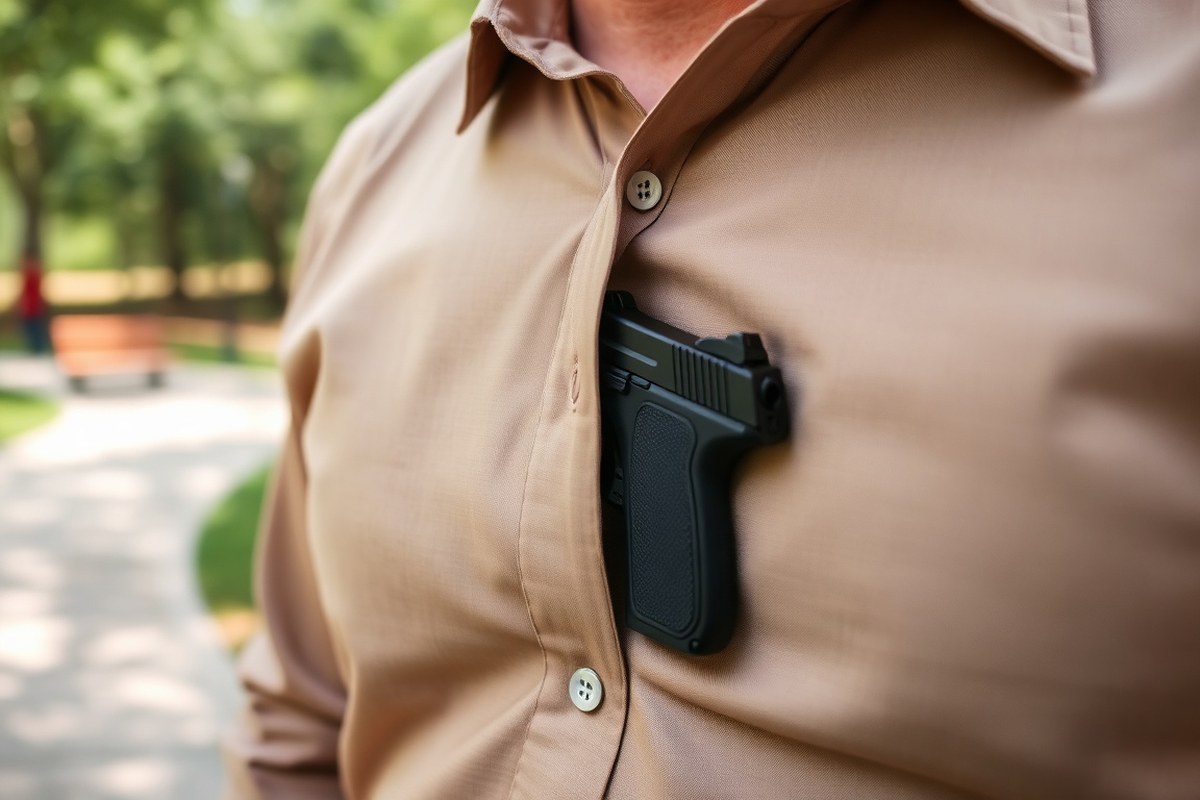
Carrying a concealed handgun without a permit is currently not legal in North Carolina. The state requires anyone who wants to carry a concealed handgun in public to have a valid North Carolina Concealed Handgun Permit (CHP) or hold a recognized out-of-state permit. This legal framework remains in place despite legislative proposals like SB 50, which sought to allow permitless concealed carry. As of now, carrying a concealed handgun without the proper permit exposes the individual to criminal prosecution under state law.
The distinction between open carry and concealed carry is important in North Carolina. Open carry is generally legal without a permit for people aged 18 and over who are not prohibited from having firearms, such as individuals with felony convictions. However, concealed carry is legally restricted to those who have met the state’s permit requirements. This means that even if you are 18 or older and legally allowed to possess a handgun, you cannot hide that handgun on your person without first obtaining a CHP.
Age is a key factor in North Carolina’s concealed carry laws. You need to be at least 21 years old to apply for a concealed handgun permit. Applicants must also be U.S. Citizens or legal permanent residents and have lived in North Carolina for a minimum of 30 days. People aged 18 or older can carry a handgun openly, but the state requires those wanting to carry concealed to meet the higher age limit of 21. Unlike some states allowing concealed carry without a permit at 18, North Carolina sticks to 21 as the minimum age for a permit.
To carry a concealed handgun legally in North Carolina, you must apply for and be issued a concealed handgun permit. The process involves meeting the eligibility criteria, submitting an application to the sheriff’s office, and paying any associated fees. Maintaining the permit is prudent even if changes to the law ever allow for permitless concealed carry, as the permit provides protection against legal consequences and recognition of your right to carry in various jurisdictions.
North Carolina law also distinguishes between carrying a concealed handgun on your person and having it accessible in a vehicle. Both situations require a valid CHP or another recognized permit. Carrying a handgun concealed without a permit outside these legal exceptions can lead to criminal charges, which underscores the importance of obtaining and carrying the appropriate permit.
Who Qualifies for a North Carolina Concealed Handgun Permit?

To qualify for a concealed handgun permit in North Carolina, you must meet specific age, residency, and legal criteria designed to ensure public safety. Applicants need to be adults with clean criminal records and either residents or lawfully allowed non-residents. Understanding these requirements helps you determine if you can legally carry a concealed handgun with a permit.
Age and Residency Requirements
You need to be at least 21 years old to apply for a concealed handgun permit in North Carolina. This age requirement helps ensure applicants have the necessary maturity to carry a firearm safely in public. The rule applies equally to residents and non-residents, though non-residents often have to submit extra paperwork and satisfy state-specific standards.
North Carolina accepts concealed carry permit applications primarily through county sheriffs, making local residency a factor in the application process. However, non-residents can apply if they meet the other requirements and possess valid identification proving lawful status. Proof of residency or lawful presence includes a state ID, driver’s license, or valid passport.
Disqualifications and Restrictions
Certain disqualifications prevent an individual from obtaining a concealed handgun permit in the state. These restrictions target factors that may affect safety or indicate a risk for misuse of firearms. Common disqualifications include felony convictions and specific misdemeanor offenses related to violence or substance abuse. You also cannot hold a permit if you:
- Are currently under indictment or charged with a felony
- Have been convicted of a crime punishable by imprisonment exceeding one year
- Have been adjudicated as mentally incompetent or committed to a mental institution
- Are subject to a domestic violence protective order
- Are addicted to controlled substances or unlawfully use drugs
- Have been dishonorably discharged from the armed forces
- Are prohibited by federal law from possessing firearms
Background checks performed by the sheriff’s office confirm that applicants meet these standards before a permit can be issued.
Carrying a concealed handgun without meeting these criteria can lead to criminal charges, so verify your eligibility thoroughly before applying.
Special Eligibility Exceptions
North Carolina law permits concealed carry by individuals 18 to 20 years old without a permit in limited circumstances, but they cannot apply for a concealed handgun permit until age 21. Permitless carry for handguns has not been fully legalized statewide, so those under 21 typically cannot carry concealed handguns without a permit.
People holding valid concealed carry permits from other states enjoy reciprocity, meaning their permits are recognized by North Carolina when carrying concealed. This exception makes it easier for non-resident visitors who already meet their home state’s requirements to carry legally. The permit application process includes submitting documents, fingerprints, and completing an approved firearms training course, which helps ensure applicants understand safe firearm use and state laws.
How to Apply for a Concealed Carry Permit in North Carolina
You apply for a concealed carry permit in North Carolina through your local county sheriff’s office. The process requires submitting an application, providing fingerprints, paying fees, and allowing up to 45 days for processing. Gathering all necessary documents and following proper steps helps ensure a smooth approval.
Submitting the Application and Fingerprints
Obtain your concealed carry permit application from the sheriff’s office in your county or download it directly from their website. To be eligible, you need to have lived in North Carolina for a minimum of 30 days and be either a U.S. Citizen or hold lawful permanent resident status. Include a valid government-issued photo ID with your completed application.
The sheriff’s office requires you to submit fingerprints, which are used for background checks. Fingerprints can often be taken at the sheriff’s office itself or at an authorized law enforcement agency. It’s important to get this step done promptly since the sheriff’s office will not begin processing without fingerprints.
Background and Mental Health Checks
Upon receiving your complete application and fingerprints, the sheriff initiates a thorough background investigation. This includes checking criminal records and verifying your mental health history. The mental health check aims to confirm you are legally allowed to possess a handgun under North Carolina laws.
You should be free from disqualifying conditions such as felony convictions, certain misdemeanor offenses, or severe mental health restrictions. This background review ensures only eligible applicants receive permits and protects public safety by screening out prohibited individuals.
Permit Issuance Timeline and Fees
The sheriff’s office has 45 days from the receipt of all required documents to issue or deny the permit. This timeframe allows for complete processing of background checks and administrative review. Applying early and providing accurate information can help you avoid delays.
The fee for a concealed carry permit is set by the county sheriff, but it typically ranges between $70 and $100. Make sure to confirm the exact amount and acceptable payment methods with the sheriff’s office before submitting your application. Some counties may charge separate fees for fingerprinting.
- Obtain the concealed carry permit application form from your county sheriff’s office or website.
- Gather required documents, including a valid government-issued photo ID and proof of North Carolina residency for at least 30 days.
- Submit your application form and documents to the local sheriff’s office.
- Schedule and complete fingerprinting at the sheriff’s office or authorized location promptly.
- Pay the required application and fingerprinting fees according to your county’s instructions.
- Wait up to 45 days while the sheriff conducts background and mental health checks.
- Receive notification of permit issuance or denial; if approved, pick up your concealed carry permit at the sheriff’s office.
Where You Can and Cannot Carry Concealed Handguns in North Carolina
You cannot carry a concealed handgun in specific locations under North Carolina law. These restrictions exist for safety and legal reasons, so knowing where you can carry concealed helps keep you within the law and avoids penalties.
Schools, government buildings, and areas where alcohol is sold and consumed (bars and many restaurants with ABC permits) are off-limits for concealed carry. Private property owners can also prohibit concealed carry by posting “No Weapons” signs or verbally notifying you that firearms are not allowed. Licensed concealed carriers may carry in houses of worship even if they host private schools, but only when the school is not in session for curricular activities.
Local governments in North Carolina may impose additional restrictions on open carry in public areas, but concealed carry rules are primarily set by state and federal law. Federal properties and courthouses also always ban concealed firearms regardless of state laws. Below is a table to help you decide where concealed carry is legal or illegal in North Carolina based on common locations:
| Location | Concealed Carry Allowed? | Notes |
|---|---|---|
| Public Schools and School Property | No | Includes K-12 schools and related grounds; applies regardless of permit status |
| Colleges and Universities | No | Applies to all public and private institutions |
| Government Buildings/Courthouses | No | Federal and state rules prohibit firearms |
| Bars and Many Restaurants Serving Alcohol | No | Includes any establishment with an ABC permit where alcohol is sold and consumed |
| Private Property with “No Weapons” Sign | No | Signage must be clearly posted; verbal notice also applies |
| Houses of Worship Hosting Private Schools | Yes (Conditional) | Allowed only if no students are present for classes |
| Public Streets, Sidewalks, Alleys (Open Carry) | Yes (with local restrictions) | Subject to local ordinances; concealed carry generally allowed statewide |
When approaching any private property, look for posted “No Weapons” signs or listen for verbal instructions banning firearms. Respect these notices to avoid trespassing or criminal charges. For bars and restaurants, concealed carry is illegal if the establishment holds an ABC permit and serves alcohol, even if you are not drinking. This ensures compliance with state liquor laws and reduces risk in environments where alcohol is consumed.
Before carrying concealed in unfamiliar places, especially schools, government property, or private venues, confirm the location’s specific rules. This reduces legal risks and respects property owner rights. Remember, even if concealed carry is generally allowed, being in a prohibited location can lead to severe criminal consequences.
North Carolina Vehicle Carry Laws for Handguns
Carrying a concealed handgun in your vehicle in North Carolina involves specific rules about visibility, accessibility, and permit requirements. Generally, you cannot have a firearm concealed in your vehicle without a concealed handgun permit (CHP). A handgun stored in a glove compartment or any place where it is not visible to a casual observer is considered concealed. Without a permit, your handgun must be completely visible, such as on the passenger seat or floorboard, to comply with state law.
You can carry a concealed handgun in your vehicle if you have a valid North Carolina CHP. This permit allows your firearm to be carried in the vehicle even if it is not in plain sight. Passengers who also carry handguns must each have their own valid CHP to legally carry concealed firearms inside the vehicle. It is important to avoid carrying handguns into any prohibited places or areas where posted signs restrict firearms. Following the correct steps for carrying or transporting a handgun in a vehicle can help reduce the risk of legal issues. Here’s a clear process to follow if you intend to carry or transport a handgun in your vehicle in North Carolina:
- Check your eligibility to possess a firearm under North Carolina law. Convicted felons and those under protective orders are not allowed to possess firearms.
- Obtain a concealed handgun permit (CHP) if you want to carry a concealed handgun in your vehicle legally.
- When carrying without a permit, keep the handgun fully visible and accessible, such as on the seat or floor, not inside concealed compartments like the glove box or under the seat.
- Carrying with a permit means you may keep the handgun concealed inside compartments such as the glove box or center console.
- Make sure any passengers with handguns also have their own valid CHP to carry concealed firearms legally inside the vehicle.
- Avoid carrying firearms in vehicles on posted private property or areas with explicit firearm restrictions.
- Do not consume alcohol or have an open container while carrying a handgun in the vehicle to avoid additional charges.
Always ensure your firearm is visible to avoid being charged with carrying a concealed weapon without a permit when you do not have one.
Training and Renewal Requirements for Concealed Carry Permits
In North Carolina, completing a mandatory firearms safety training course is required to obtain a concealed carry permit. Once issued, the permit must be renewed every five years, with specific procedures and fees involved.
Basic Firearms Safety Course Details
You must complete an approved firearms safety and training course before applying for a concealed carry permit in North Carolina. The course covers safe handling, storage, and use of handguns, ensuring you understand how to carry responsibly. The state requires demonstration of competency, and training providers must be officially recognized.
The course typically includes both classroom instruction and live-fire exercises. Passing this course is legally necessary because it confirms you do not have a physical or mental condition that would prevent the safe handling of a handgun. Certificates from approved courses are valid for up to one year from completion for permit applications.
Renewal Application Process and Fees
Concealed carry permits in North Carolina expire after five years, requiring renewal to maintain legal status. Renewals should be submitted before the permit’s expiration to avoid gaps in authorization. The process involves submitting an updated application, proof of ongoing eligibility, and payment of a renewal fee. Renewal fees typically range around $50 but can vary, so checking the most recent fee schedule from the North Carolina Department of Justice is recommended. Your renewal application must include:
- Completed renewal form
- Current proof of firearms safety training, if required
- Payment for renewal fees
- Updated personal information, if applicable
- Proof of continued residency in North Carolina
- No significant changes in criminal history since the last application
Submitting your renewal application well in advance helps avoid delays. You can generally apply online or by mail depending on availability and preference.
Continuing Eligibility Standards
Maintaining eligibility for your concealed carry permit requires ongoing compliance with state laws. Convictions for certain crimes, particularly felonies or offenses involving violence, can disqualify you from renewal. Also, any diagnosed physical or mental conditions that impair safe handgun handling may affect your permit status.
During renewal, the authorities check for these disqualifiers. Staying informed of any legal changes or personal circumstances that might impact your eligibility is essential. Failure to meet continuing eligibility criteria can lead to permit denial or revocation.
Penalties and Legal Consequences for Illegal Concealed Carry in NC
Carrying a concealed handgun without a permit in North Carolina is a Class 1 misdemeanor for a first offense, which can result in fines and possible jail time. Repeat offenses improve the charge to a Class H felony, significantly increasing penalties including longer imprisonment and higher fines. This strict escalation shows the state’s effort to discourage illegal concealed carry and maintain public safety.
Your risk increases if you carry in prohibited areas or violate permit conditions. Places such as schools, government buildings, and establishments serving alcohol ban concealed carry regardless of permit status. Carrying a concealed handgun while consuming alcohol or with alcohol present in your blood is illegal and carries separate criminal charges. Violating these restrictions can lead to additional misdemeanor or felony charges under the North Carolina General Statutes, including G.S. 14-415.1.
Prior felony convictions, especially firearms-related, bar you from legally carrying concealed handguns. For example, individuals with any felony firearm conviction cannot lawfully carry concealed in North Carolina. Domestic Violence Protective Orders and unlawful drug users are also prohibited from carrying, reflecting federal and state firearm restrictions. Attempting to carry despite these prohibitions not only leads to criminal charges but can also complicate any defense you might have under new or existing laws.
| Category | Permitless Carry Allowed? | Legal Reference |
|---|---|---|
| Adults age 18+ (not otherwise prohibited) | Yes, if SB 50 becomes law | SB 50 |
| Felony conviction (any firearm) | No | G.S. 14-415.1 |
| Under 18 years old | No | SB 50, Existing Law |
| Subject to Domestic Violence Protective Order | No | G.S. 50B-3.1 |
| Unlawful drug users, fugitives, others prohibited by state/federal law | No | 18 U.S.C. § 922(g) |
These laws highlight how violations can quickly worsen your legal situation. For instance, carrying concealed without a permit once is a misdemeanor, but a second conviction is treated as a felony. This progression serves as a warning that repeated offenses come with much harsher consequences. Strictly following permit requirements and avoiding carrying in banned locations reduce your legal exposure and increase your chances of lawful concealed carry.
It is important to remember that new laws, such as SB 50 if enacted, may provide some defense for eligible adults carrying without a permit but do not protect those who remain legally barred from carrying. This means you must always verify your eligibility before carrying concealed. When involved in legal questions about concealed carry, consulting a licensed attorney familiar with North Carolina firearm laws is advisable.
How Recent Law Changes Affect Concealed Carry in North Carolina
North Carolina has seen significant legislative activity concerning concealed carry, particularly around permitless carry and restrictions related to alcohol-serving venues. As of early 2024, no law has fully enacted permitless concealed carry, but proposals continue to advance in the state legislature. These bills aim to allow residents to carry a concealed handgun without a permit, streamlining the legal process. Supporters argue this aligns with Second Amendment rights, while opponents raise concerns about public safety and law enforcement challenges.
Pending legislation proposes that adults who can legally possess a firearm would not need to apply for a concealed handgun permit. However, even under a permitless carry framework, North Carolina would maintain restrictions on specific locations where firearms are prohibited. This includes government buildings, schools, and private properties that explicitly ban firearms. The timeline for any permitless carry law to take effect depends on legislative approval and gubernatorial sign-off, with debates expected to continue throughout 2024.
In addition, recent changes have clarified rules around carrying concealed weapons in venues that serve alcohol. New restrictions reinforce that firearms are not allowed in areas where the primary revenue comes from alcohol sales, such as bars. This applies to both permit holders and those who might carry under proposed permitless laws. The concern is to prevent firearm possession where alcohol consumption could impair judgment and increase risks. Proof of these restrictions is often posted visibly in such venues, and violating these rules can lead to criminal charges and loss of legal carry rights.
For comparison, current permit-required concealed carry means you undergo background checks, fingerprinting, and training before receiving a permit. With permitless carry, these steps might be bypassed, reducing upfront costs and wait times. However, permitless carry does not eliminate all rules; compliance with location-based restrictions and prohibitions remains critical. For example, carrying into a bar or government building off-limits to firearms can result in prosecution just as under the existing permit system.
These legislative efforts also highlight the importance of understanding the exact effective dates of any new laws. Cases involving unlawful concealed carry are judged based on the law in effect on the day of the alleged offense. That means charges brought before a permitless carry law passes will use existing rules, potentially disadvantaging defendants unaware of pending changes. A table comparing key points might look like this:
| Aspect | Current Law (Permit Required) | Proposed Permitless Carry |
|---|---|---|
| Permit | Required, includes background check and training | Not required for legal firearm owners |
| Alcohol-Serving Venues | Firearms banned where alcohol sales predominate | Same restrictions apply |
| Location Restrictions | Government buildings, schools, private bans apply | Same restrictions apply |
| Enforcement | Charged under law at time of offense | Would be charged under updated statute once effective |
Future legislative sessions could introduce modifications to the scope of permitless carry or change prohibitions at specific venues. Tracking bill progress through the North Carolina General Assembly website will provide the latest status. Engaging with local lawmakers or gun advocacy groups offers insight into how these changes might affect your rights and responsibilities. It’s essential to stay informed since even small legal shifts can carry heavy consequences for your record and ability to carry concealed legally.
Always verify the law’s effective date before carrying concealed without a permit to avoid prosecution under previous stricter regulations.
Reciprocity and Special Considerations for Non-Residents Carrying Concealed
North Carolina recognizes concealed carry permits issued by many states, but the list of recognized states can change based on new legislation or reciprocity agreements. When you carry concealed in North Carolina with an out-of-state permit, your permit must be valid and issued for concealed handgun carry. This recognition allows you to lawfully carry concealed while visiting North Carolina, avoiding legal issues for unauthorized possession.
You cannot obtain a non-resident concealed carry permit from North Carolina unless you are an active-duty military member stationed in the state. Civilian non-residents must rely on their home state’s permit and confirm if North Carolina recognizes it before carrying concealed within the state.
Keep in mind some states only acknowledge your concealed carry rights if you hold a valid North Carolina permit, but your North Carolina permit may be recognized in more states. These differences affect travel plans and personal security, so checking applicable reciprocity each trip is essential. The table below lists examples of states whose permits North Carolina recognizes and notes on restrictions or exceptions to help you decide if your out-of-state permit will allow legal concealed carry here.
| State | Permit Recognized by NC? | Special Notes |
|---|---|---|
| Virginia | Yes | Standard carry permit accepted |
| South Carolina | Yes | Must be valid and issued for concealed carry |
| Georgia | Yes | Permit recognition contingent on reciprocity |
| California | No | NC does not recognize California permits |
| Texas | Yes | Recognized unless permit is new or restricted |
To determine if your out-of-state permit works in North Carolina, verify the current reciprocity list on the North Carolina Department of Public Safety’s website before you travel. Law changes can occur without much notice, affecting permit recognition.
If you qualify as an active-duty member of the military stationed in NC, apply for a North Carolina permit through the regular process but note this exemption allows non-resident status. For others, carrying concealed without a recognized permit risks serious legal penalties.
When carrying concealed with an out-of-state permit, ensure your permit remains current and follow North Carolina’s restrictions on where you can carry. Violating location-based restrictions can lead to fines or permit revocation even if your permit is recognized.
Step-by-Step Action Plan for Getting Your Concealed Carry Permit in North Carolina
Follow these steps to legally carry a concealed handgun in North Carolina and ensure you stay compliant with the law.
- Before you apply: Confirm you meet the eligibility criteria, including being 21 or older and having no disqualifying convictions. Verify your status by reviewing North Carolina’s official concealed carry qualifications.
- Within the first week: Complete the required firearms training course from a qualified instructor. Keep your certificate as proof for your application.
- Day 8 to Day 14: Gather your application materials, including proof of residency, training certificate, and an aging photo ID. Double-check all documents for accuracy.
- Week 2: Submit your application in person at a sheriff’s office along with the $50 application fee. Ask for a receipt or confirmation of submission.
- Weeks 3-6: Wait for the sheriff to process your application, which may include a background check. Contact the sheriff’s office if you haven’t heard back after 30 days.
- Upon approval: Pick up your permit at the sheriff’s office. Review carry restrictions printed on the permit and on the state website before carrying concealed.
- Every 5 years: Renew your permit before it expires to stay legal. Complete any training renewal requirements and pay the renewal fee.
Frequently Asked Questions
Can I Carry a Concealed Handgun in North Carolina Without a Permit?
No, concealed carry requires a North Carolina Concealed Handgun Permit or a recognized out-of-state permit, as permitless concealed carry is not currently legal in the state.
What Is the Minimum Age to Obtain a Concealed Carry Permit in North Carolina?
You must be at least 21 years old to qualify for a concealed carry permit in North Carolina.
Are There Any Exceptions to the No-Permit Concealed Carry Rule in North Carolina?
Permitless concealed carry remains illegal despite recent legislation, though open carry is allowed for those 18 and older.
Can I Carry a Concealed Handgun in a Church or Other Religious Property in North Carolina?
Yes, concealed carry is permitted on church property during religious functions or outside school operating hours.
Does North Carolina Allow Concealed Carry in Bars or Restaurants?
No, a 2019 law removed the previous exemption, so concealed carry is now prohibited in establishments serving alcohol.
Do I Have to Complete a Training Course to Get a Concealed Carry Permit in North Carolina?
Yes, training is required, but recent laws have expanded access to gun safety courses at community colleges for adults 18 and older.
Final Thoughts
Carrying a concealed handgun legally in North Carolina depends on following the state’s permit process and respecting its carry restrictions. Start by confirming your eligibility and completing the training. Use the sheriff’s office as a primary resource for application and renewal information to make sure you maintain legal status while carrying.