J Clips vs C Clips Holster: Complete Comparison and Best Use Cases
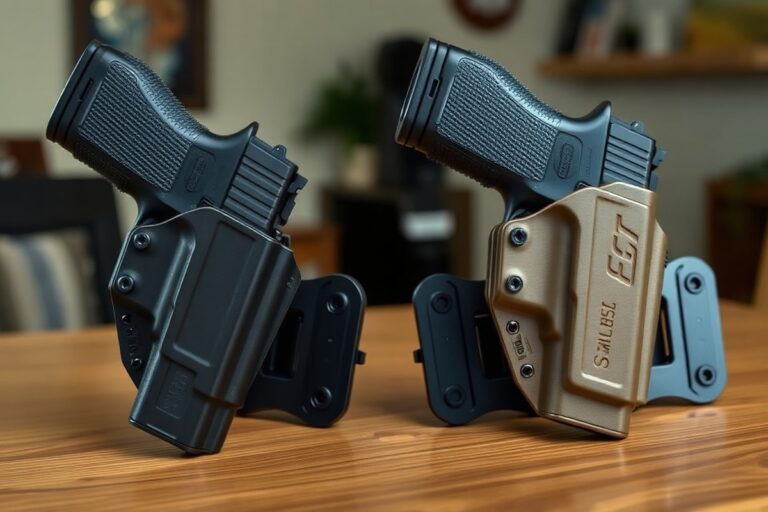
J clips and C clips holsters differ mainly in how they attach to your belt and affect your carry experience. J clips hook over the belt’s edge, offering secure, low-profile carry, while C clips generally wrap around the belt, providing a larger contact surface and often better retention. Choosing between the two depends on your belt size, carry position, and need for concealment or quick access.
This comparison targets concealed carry enthusiasts weighing durability, comfort, and holster stability. You’ll learn how each clip style impacts retention, adjustability, and fit to match your lifestyle and carry preferences.
Key Takeaways
- J clips attach firmly to standard 1.5-inch gun belts and allow you to adjust both the cant and ride height.
- C clips offer more clip-to-belt contact, improving holster stability especially at the 3 to 5 o’clock carry position.
- Choose clips designed for your belt width, 1.5 inches is most common; 1.75-inch clips may slide, and 1.25-inch clips won’t fit.
- Curved clips mimic your waistline to maintain 100% clip-to-belt contact, improving concealment and comfort.
- Adjust ride height vertically to position your holster comfortably on your waistline regardless of clip style.
- J clips suit dress belts and low-profile carry, while C clips handle wider duty-style belts and heavier holster setups better.
J Clips vs C Clips: What’s the Difference?

J clips and C clips are common types of holster attachments that secure inside-the-waistband (IWB) holsters to your belt. Both are hard loops made from metal or rigid polymer and connect to the holster with screws, making them more stable than soft loops. The primary purpose of these clips is to hook over your belt to hold the holster firmly in place while you carry.
A J clip is shaped somewhat like the letter “J,” with a hooked end that curves back under the belt. This design offers a tight grip around belts up to about 1.5 inches wide, keeping the holster stable but allowing for slightly easier on and off compared to some hard loops. The curved shape of the J clip fits around belt loops and belt buckles better than traditional straight clips, which matters if you wear thicker belts or have buckle obstructions. J clips are generally narrower and less bulky, helping with concealment by minimizing printing under clothing.
On the other hand, C clips resemble the letter “C” and wrap more fully around the belt, usually providing a stronger, more secure hold than J clips. Because of their shape, C clips fully encircle the belt, locking the holster firmly in place even during active movements. These are ideal if your carry demands high retention and less shifting, such as for jobs requiring physical activity or while driving. C clips tend to be a bit bulkier and stiffer, which could affect comfort under lighter clothing. Both clip types attach rigidly, unlike soft loops, so they don’t flex or stretch.
Both J and C clips are considered hard loops, meaning they maintain their shape and rely on a firm grip on the belt rather than elasticity. This rigidity helps keep the holster positioned consistently, especially with a stiff belt. Hard loops screw directly onto the holster’s body, which generally features standard hole spacing. This allows you to swap between clip styles easily to test fit and comfort. The choice between J versus C clips hinges on your priorities: if you want easy attachment with low bulk, J clips usually fit better. If your main concern is maximum retention and stability, especially on a strong gun belt, C clips excel.
Both clip types fit most common belt widths, particularly the 1.5-inch belts favored for concealed carry. Installation involves unscrewing the existing clip or hard loop, aligning the new clip’s holes with the holster’s screws, and tightening them securely. This process takes only a few minutes with a standard screwdriver. Testing each clip style with your usual pants and belt is the best way to see which provides the right balance of security and comfort for your daily carry setup.
How J and C Clips Affect Holster Security and Retention
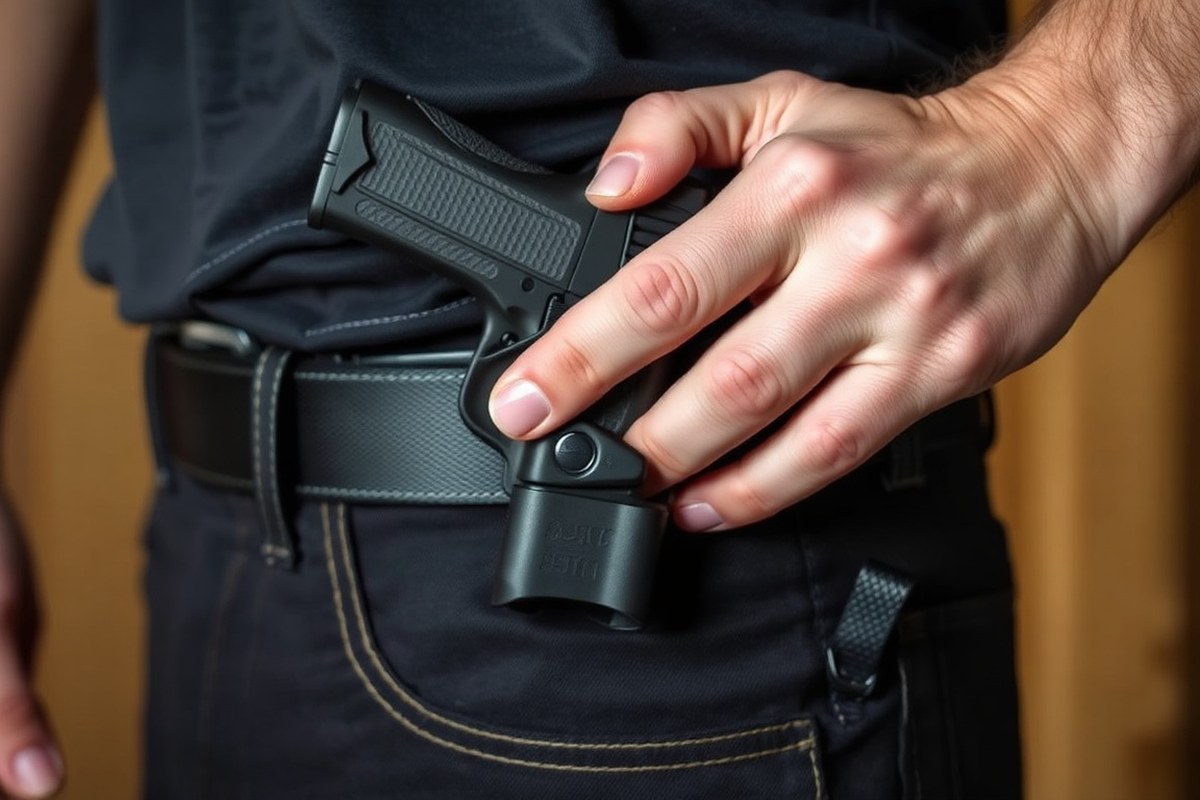
Both J clips and C clips secure your holster to the belt, but they do so in different ways that affect how firmly your holster stays in place and resists shifting during movement. J clips usually provide a tighter grip by wrapping under the belt, which improve stability and retention. C clips latch onto the top of the belt and tend to be easier to attach or remove but can allow more slight motion. Your choice will depend on balance between security and convenience.
How J Clips Secure the Holster
J clips have a distinctive hook shape that slides under the bottom edge of your belt, creating a locking effect that firmly anchors the holster. This design prevents vertical slippage by locking the holster in place from below. The channel in the J clip matches the belt width, often 1.5 inches, ensuring it grips the belt without stretching it.
This strong grip limits holster shifting while walking or sitting, which benefits concealed carriers who want consistent firearm positioning. Holsters with J clips are less prone to accidental disengagement because the clip resists being pulled off by normal torso movements or clothing adjustments.
Retention and Stability of C Clips
C clips hook over the top of the belt, offering quick attachment or removal. Their open design lets you slide the holster on and off fairly easily but tends to hold less firmly than J clips. C clips can permit a small amount of lateral movement along the belt. This slight shifting can affect firearm presentation during a draw because the holster may move with your motions.
The retention depends on how tightly the C clip pins the belt and the belt’s thickness and stiffness. C clips on thin or flexible belts may loosen more quickly, increasing the risk of holster shifting or accidental disengagement when bending or reaching.
Prevention of Holster Shifting
J clips excel at limiting holster movement because of their wrap-under hook and belt channel, which blocks both vertical and horizontal displacement. This retention system keeps the holster stable throughout varied activities, even rapid movement.
C clips rely mainly on friction and belt thickness but lack the additional anchoring feature of J clips. For everyday walking or light activity, a quality C clip will prevent major shifting, but more aggressive activities or strenuous movement may cause slight holster drift.
Accidental Disengagement Risks
Accidental disengagement happens when the clip slips off or loosens, posing a risk of firearm drop or exposure. J clips have a lower accidental disengagement risk because their hook wraps under the belt, making it difficult for the clip to pop off unintentionally. You still must match the clip width to your belt and ensure a proper fit.
C clips are easier to disengage on purpose or by accident, especially during quick clothing adjustments or snagging on objects. Their open hook design can catch or slide off lighter belts if not properly tensioned.
Tips for Choosing and Using Clips by Situation
Matching your holster clip with your daily activities and belt type helps optimize security and retention. Consider these situations:
- Everyday carry with standard 1.5-inch gun belts: J clips offer strong, secure retention for most users.
- Quick off/on needs or lighter belts: C clips provide ease of use but require thicker belts to reduce slipping risk.
- Seated or driving carry: J clip stability prevents holster shifting when sitting for long periods.
- Body armor or thick clothing layers: Either clip can work but ensure enough belt thickness for stability.
- Adjusting ride height or cant: J clips often allow more precise positioning because they lock firmly to the belt.
Always check that your clip matches your belt width and thickness to avoid unexpected holster movement or disengagement during carry.
Comfort and Concealment: Which Clip Is Best?
J clips tend to offer better comfort for all-day wear because they usually allow the holster to sit closer and flush against your body. Their design often makes the holster ride higher with less bulk between you and your belt. This reduces pressure on your waistband and skin during long hours of carry. On the other hand, C clips extend outward a bit more to hook onto the belt’s edge, which can create additional gaps and pressure points, making them feel less comfortable over time.
In terms of concealment and printing, J clips have an advantage since they generally keep the holster tighter against your body. This closer fit minimizes the outline of the holster under clothing, reducing the chance of printing, especially if you wear slimmer or tighter shirts. C clips, with their tendency to project outward, may cause the holster to print more noticeably, particularly under thinner fabrics. Choosing clothing with looser fit can mitigate this, but for tucked shirts and dress carry, J clips typically provide a cleaner silhouette.
When considering tucked-in shirts or dress carry, J clips are often better suited because they lay flatter and hold the holster snug against your belt. This combination decreases the bulk visible beneath a tucked shirt, preserving your professional or formal look. By contrast, C clips, which grip the belt from the outside edge, can sometimes pull the holster outward, creating unwanted outlines. Their design can also make adjusting your holster’s position tricky when your shirt is tucked, since they don’t allow as much flexibility in ride height or cant.
To maximize comfort and concealment with either clip, always set up your holster with the exact belt and clothing you plan to wear daily. Check the holster’s stability and printing by moving around throughout your regular activities. For example, if you find the J clip holster digs into your waist after hours, try adjusting the cant or lowering the ride height slightly. With C clips, ensure the clip clamps tightly to a belt no wider than 1.5 inches to avoid slippage, and consider a belt with a sturdy edge to improve grip without causing discomfort.
Lastly, taking care of the clip attachment hardware ensures consistent comfort and concealment. Loose or damaged clips can cause the holster to shift or sit awkwardly, increasing printing risk and discomfort. Regularly inspect screws and clip springs, and tighten or replace parts as needed. In general, the tradeoff is between the comfort and low-profile fit of J clips and the stronger, sometimes bulkier hold of C clips. Choosing the right clip depends on your carry style, typical clothing, and prioritizing concealment versus ease of use.
Comparing Fit: Belt Sizes and Carry Positions for J & C Clips
J clips and C clips fit most common belt widths, generally accommodating belts from 1.25 up to 1.75 inches wide. Both clips perform differently depending on your carry position, with J clips often preferred for strong side carry due to their security and design, while C clips can offer better fit and concealment in front or appendix carry. Choosing the right clip depends on your belt size and primary carry location.
Belt Width Compatibility
J clips, typically made from steel, are strong and thin, making them compatible with belts up to 1.75 inches wide. This fits most standard concealed carry belts, which commonly range from 1.25 to 1.5 inches as well. C clips usually specify compatibility for 1.5 to 2-inch belts, partly due to their mounting method and thickness.
Lower-quality polymer clips may not hold as well and can wear out or crack if forced over belts wider than their rating. It’s important to verify the exact belt width and clip specifications when purchasing.
| Clip Type | Material | Belt Width Compatibility | Typical Mount |
|---|---|---|---|
| J Clip | Steel | Up to 1.75 inches | Post and screw mount |
| C Clip | Steel or Polymer | 1.5 to 2 inches | 3-point adjustability |
| Polymer Clip (Low Quality) | Polymer | Varies, often < 1.5 inches | Snap or friction fit |
Always match the clip’s rating to your belt width. Using a clip that’s too small or too rigid on a thicker belt can stress the clip or cause discomfort.
Recommended Carry Positions
J clips tend to work best for strong side carry positions. Their thin profile and secure tension keep the holster firmly anchored on the belt without adding bulk. You’ll find them stable at the 3 or 4 o’clock positions, providing reliable retention and less movement during daily activities.
C clips perform well in front or appendix carry positions. Their shape often hugs the belt at the 3 o’clock position and supports slight reverse cant angles, around 0 to 10 degrees, which suits appendix carry. This hugging design can help conceal printing better in these positions.
Back carry is more sensitive to clip design because it requires securing the holster firmly without excessive cant. Both clip types can work here, but you should test for comfort and retention, keeping in mind that some users prefer J clips for their rigidity.
Adjustability Features
C clips typically offer more adjustability. For example, many come with a 3-point mount system that supports cant angles from 0 up to 15 degrees for strong-side carry and allows reverse cant for appendix. Some also provide pull-the-dot® snap closures, which secure the clip in one direction to prevent slipping during movement.
J clips usually have fewer adjustment options but make up for it with simplicity and strength. The tension in a spring steel J clip provides crisp engagement with the belt, which means less risk of shifting but also less opportunity for fine-tuning ride height or cant without changing the holster design.
Holsters like Front Line’s IWB line feature screw systems to dial in cant and ride height independently of the clip. This lets you experiment with position while using the same clip type. Choose a setup that allows you to easily tweak these settings to achieve comfortable, secure carry based on your daily activities.
Materials and Durability: Steel vs Polymer in J and C Clips
Steel clips generally offer superior durability compared to polymer clips. Steel’s high tensile strength and resistance to deformation let it hold secure over years of daily use without warping or cracking. You can expect steel clips to maintain their retention pressure and shape with normal wear, which helps the holster stay firmly attached to your belt while you move. Polymer clips, even those reinforced with quality materials, require more bulk to reach similar strength levels. This can add thickness at your waistband, impacting concealment.
The material choice also affects how the clip interacts with your belt. Steel clips tend to provide a slimmer profile, allowing a tight, secure fit that can reduce shifting. Wearing a sturdy, quality belt, including leather or reinforced nylon, helps prevent the steel clip from causing wear or damage. Polymer clips often exert lower tension and may be less harsh on belts, but excessive clip pressure, regardless of material, can chew up belt edges over time and make holster removal difficult. It pays to check clip tension by sliding the holster on and off multiple times before carrying all day.
Scratching and surface wear differ between steel and polymer. Steel clips, especially those finished with matte black coatings or powder coats, show scuffs but rarely suffer structural damage. Polymer clips resist corrosion and don’t rust but can develop stress marks or cracks from heavy use or exposure to extreme temperatures. Polymer may become brittle in cold climates or soften under consistently high heat, risking warping. Steel’s stable properties make it more reliable across wider environmental conditions.
Pick steel clips when you want a slim, proven inside-the-waistband (IWB) attachment and pair them with a quality belt to minimize wear. Polymer clips suit carriers who prioritize a quieter draw and slightly lighter gear while accepting a bit more bulk. For example, if you carry your holster at the 3 to 5 o’clock position, a wider polymer clip footprint can better resist shifting as you sit and stand. Conversely, a steel clip’s slim design works well for appendix carry or setups needing minimal printing.
Test your clip’s tension daily by sliding the holster on and off your belt; excessive force can damage your belt or make drawing awkward.
Adjusting Ride Height, Cant, and Position for Optimal Carry
Adjusting the ride height and cant angle on J clips and C clips is key for tailoring your holster’s fit. Proper adjustment improves comfort, concealment, and draw efficiency. Both clip types allow for these customizations, but success depends on precise mounting and clip strength to maintain settings during movement.
Ride Height Adjustment
Ride height refers to how deep or high the holster sits on your belt, directly affecting concealment and comfort. Both J clips and C clips typically have multiple mounting holes or slots on the holster shell or backer, letting you raise or lower the holster by repositioning the clip screws.
To adjust ride height, loosen the screws holding the clip, slide the clip up or down the mounting slots to the desired position, then tighten securely. Increasing ride height can improve concealment by lowering the gun closer to the body, but going too low may make the grip hard to reach. Lower ride height improves draw speed but may show the holster outline.
Cant Angle Settings
Cant is the angle at which the holster tilts forward or backward on the belt. Adjusting cant changes the natural alignment of your draw stroke and can make carrying more comfortable, especially when seated or moving. Both J and C clips allow for cant adjustments by rotating the clip in relation to the holster shell.
To customize cant, first loosen the mounting screws, then rotate the clip forward or backward along its mounting holes or adjustable slots. A 0 to 15-degree forward cant is common for appendix carry, while a 15 to 30-degree forward cant suits strong side carry. After setting, tighten screws firmly to prevent shifting during movement.
Positioning Tips by Carry Style
Fine-tuning clip adjustment depends on where you carry; different positions benefit from different ride height and cant settings. The clip’s ability to lock against your belt with a lip or hook helps keep your setup stable during drawing or bending.
- Appendix carry: Use a mid to high ride height to keep the grip accessible but prevent printing.
- Strong side (3-4 o’clock): A slight forward cant (15-30 degrees) improves natural draw angle.
- Behind the hip (5-7 o’clock): Lower ride height and minimal cant reduce bulk and increase comfort when sitting.
- Small of back: Mid ride height with slight backward cant helps maintain holster stability.
- Adjust clip placement if holster tilts or moves unsafely during walking or drawing.
- Ensure clip lip hooks firmly under the belt to prevent the holster lifting out with the gun.
Repeatedly test your draw after adjustments to confirm that the holster stays secure and the grip remains easy to reach without pulling the holster out or shifting on the belt. Better clip strength and tighter screws directly improve reliability of your settings over time.
Common Mistakes Choosing Between J Clips and C Clips
Choosing the wrong clip type or size often leads to holster shifting or discomfort during carry. One frequent mistake is using a single clip on a larger pistol holster, which can cause instability. Larger pistols benefit from two attachment points or belt loops to keep the holster firmly in place. Another common error occurs when the belt size does not match the clip design. Each clip style is built around specific belt widths and thicknesses, so mismatching these results in poor retention or difficulty securing the holster.
Installation mistakes are also typical, often stemming from incorrect clip orientation or inadequate tightening. For instance, steel clips generally require firm attachment to maintain a low profile and secure grab on the belt. Polymer clips may offer flexibility but can loosen if not correctly positioned. Users sometimes snap a holster onto the belt without threading the belt through, which compromises stability since the holster can shift or detach during movement. To avoid these problems, focus on a practical checklist:
- Match clip width to your belt’s width and thickness
- Use two clips or belt loops for larger, heavier pistols
- Attach clips firmly and double-check orientation before use
- Thread the belt fully through loops when possible instead of clipping on
- Select steel clips for low bulk and higher security on standard IWB holsters
- Test holster stability by moving or walking before everyday carry
- Replace worn clips promptly to maintain retention
Following these steps helps maintain a secure, comfortable carry setup. Proper clip selection and installation reduce holster shifting that causes irritation or printing. Ensuring your clips and belt size align with your chosen holster type also prevents unexpected loosening or difficulty drawing the firearm. Always check that clips hold the holster firmly under typical daily motion, aiming for a balance of secure retention and ease of removal that fits your lifestyle and carry habits.
Selecting the Right Clip for Your Holster and Lifestyle
C clips shine when you need easy on-and-off access, such as at the range or during short outings. They clamp over the belt or waistband but don’t loop underneath, making removal quick and simple. For holster users who don’t wear their holster all day and prefer frequent removal, C clips offer convenience without sacrificing too much retention. This also makes them suitable for appendix or off-angle carry positions, where fewer attachment points can reduce discomfort. Certain holster brands recommend clip types based on their holster design and intended use. For example, LAS holsters often come with options including stiff hooks and traditional belt clips, addressing different carry angles and positions. Dual-clip belt mounts like DCC designs suit those with active lifestyles or police officers needing extra hold. Ulticlip attachments offer a middle ground, combining retention and ease of removal with a slim profile. To decide on a clip, measure your typical belt width and consider your preferred carry spot. Wide belts (1.75 to 2 inches) work well with J clips because they grab more securely under the belt. Narrower belts or casual wear may be easier to use with C clips. Appendage carry demands clips that prevent the holster from sliding forward or digging in, so choosing a clip that balances retention and comfort is key. Experiment with different clips if possible; swapping them usually costs between $10 and $25 and can dramatically change your carry experience. Use dual-clip setups for active jobs or driving to keep the holster firmly attached and prevent shifting during movement or seating.
Step-by-Step Action Plan to Choose and Optimize Your Holster Clip
Follow this plan to pick the right clip and adjust your holster for secure, comfortable concealed carry that suits your daily needs.
- Day 1: Try both J and C clips on your belt to feel the difference in fit and comfort. Confirm the clip grips securely without pinching or slipping.
- Day 2: Test ride height and cant adjustments on your holster using the clip you prefer. Make changes until you can reach your firearm smoothly and comfortably.
- Week 1: Wear your chosen holster for at least 8 hours in normal activities to evaluate concealment and retention during movement.
- Week 2: Inspect clip material for wear or damage, especially if using polymer clips for concealed everyday carry. Replace if any weakness shows.
- Week 3: Assess if your belt size and carry position still provide solid retention with your clip choice. Adjust clip placement if needed for better security.
- Month 1: Practice drawing and reholstering with your clipped holster until it feels natural and consistent under pressure.
- Ongoing: Regularly check clip tightness and holster fit, adjusting or swapping clips if comfort or retention declines.
Frequently Asked Questions
Can You Use J Clips and C Clips Interchangeably on the Same Holster?
J clips and C clips are not usually interchangeable because they attach differently and affect retention and comfort in unique ways; always check compatibility with your holster model.
Do J Clips or C Clips Better Accommodate Wider Belts?
C clips generally handle wider belts better since they tend to have more open or flexible designs; J clips often fit standard belt widths snugger.
Are Metal or Polymer Clips Quieter During Concealed Carry?
Polymer clips usually produce less noise when moving compared to metal J or C clips, making them better for discreet carry in quiet environments.
How Do J and C Clips Impact Quick Draw Speed?
Clips that provide firmer retention, like J clips, may slightly slow draw speed, while C clips often allow easier holster removal but might sacrifice stability.
Can J or C Clips Cause More Belt Wear over Time?
Metal J clips often cause more wear on belts due to their rigid backing, whereas C clips with polymer construction tend to be gentler on belt material.
Do J Clips or C Clips Require Specific Belt Thickness for Optimal Use?
J clips can be less forgiving with thinner belts, potentially slipping more, while C clips tend to adapt better across various belt thicknesses.
Key Points to Remember
Choosing between J clips and C clips comes down to your priorities for comfort, retention, and carry style. Adjust your holster setup with attention to clip fit and position so it stays secure and concealed all day. Start by testing clips on your belt and make incremental adjustments to find the balance that works for your lifestyle and handgun. Taking time to tune your setup pays off in confidence and readiness.