Can You Carry a Concealed Weapon in Philadelphia? A Complete Legal Guide
Philadelphia permits concealed carry only for those who have a valid License to Carry Firearms (LTCF). In this city, you must have a permit for any firearm carry inside city limits, whether hidden or openly displayed. Possessing a concealed weapon without the proper license is classified as a third-degree felony, leading to significant legal penalties. You must submit your application through the Gun Permits Unit of the Philadelphia Police Department to get this license. Start by confirming you meet age and eligibility requirements, then apply for the LTCF and pay the $20 fee to carry legally in Philadelphia.
Key Takeaways
- You must be at least 21 years old to apply for a concealed carry license in Philadelphia.
- Philadelphia requires a LTCF to carry any firearm openly or concealed, unlike the rest of Pennsylvania.
- Unlicensed concealed carry in Philadelphia can result in a prison sentence of up to seven years and fines reaching $15,000.
- The fee for a new or renewal LTCF in Philadelphia is statutorily capped at $20 for five years.
- Felony or domestic violence convictions bar applicants from obtaining a concealed carry license in Philadelphia.
- Submit your LTCF application to the Philadelphia Police Department’s Gun Permits Unit with the $20 fee.
Is Concealed Carry Legal in Philadelphia Without a Permit?
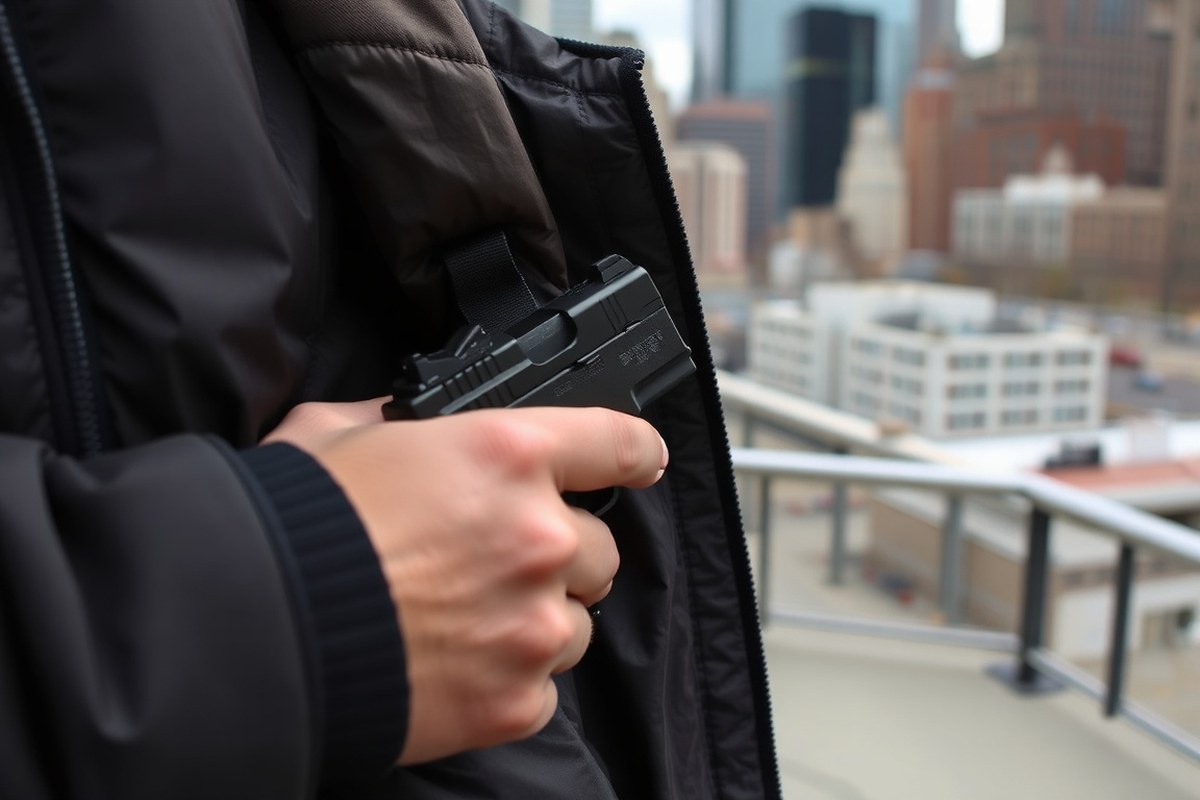
Carrying a concealed weapon in Philadelphia without a permit is not legal. The city requires a valid License to Carry Firearms (LTCF) for any type of firearm carry, whether open or concealed. This rule differs from the rest of Pennsylvania, where open carry generally does not require a permit for individuals 18 or older. In Philadelphia, the LTCF must be obtained through the Philadelphia Police Department, and it is mandatory for anyone wanting to carry a concealed firearm in public spaces.
Philadelphia holds the designation of a “City of the First Class” under Pennsylvania’s laws, leading to tougher gun rules than those in other counties. Open carry without a license is allowed in much of Pennsylvania, but the city requires an LTCF just to carry openly. Carrying a concealed weapon in public areas like streets and parks is illegal in Philadelphia unless you have this license. State law also bans carrying a weapon in public or in a vehicle without an LTCF, except for certain situations such as being at your residence or your permanent business location.
The LTCF in Philadelphia is issued only to those 21 years or older who pass a thorough background check and meet eligibility requirements. Out-of-state permits are not recognized within the city limits, so even if you have a concealed carry license from another state, you are not allowed to carry concealed in Philadelphia without obtaining a local LTCF. The application process involves submitting fingerprints and an application to the Police Department, and holding the LTCF ensures you are legally protected while carrying concealed or open within Philadelphia.
Understanding and complying with these specific permit rules matter because without the LTCF, carrying a concealed weapon in Philadelphia can lead to serious legal consequences, including criminal charges. The difference between Philadelphia’s requirements and those in neighboring counties means residents and visitors must be cautious and proactive about securing the appropriate license before carrying any firearm concealed. Failing to do so risks violating the stricter city ordinances, even though similar actions might be allowed elsewhere in Pennsylvania.
How to Apply for a Philadelphia License to Carry Firearms (LTCF)
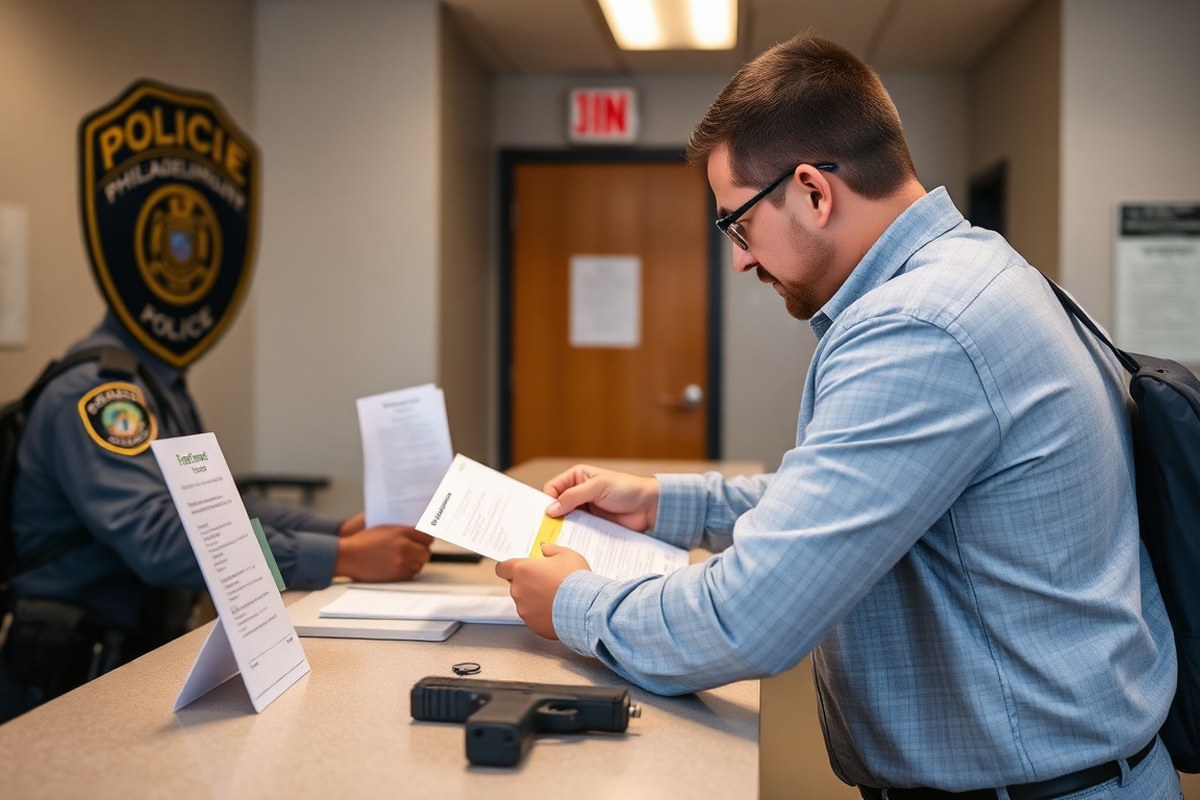
Applying for a License to Carry Firearms (LTCF) in Philadelphia involves completing an application form, submitting the necessary documents to the Philadelphia Police Department, paying a $20 fee, and passing a background check. This procedure often spans several weeks due to strict local and state rules. Understanding the requirements, documents needed, and the timeline will help you prevent errors and reduce waiting time.
Submitting Your Application to the Philadelphia Police
Start by obtaining the official Pennsylvania License to Carry Firearms application form. You can submit the completed application in person at the Philadelphia Police Department’s Gun Permit Unit or by mail. Your application must include proof of age, residency, and any other supporting documents outlined by the department. The $20 application fee is required at the time of submission and is payable by money order or cashier’s check. Follow these steps to ensure your application is complete and properly submitted:
- Complete the Pennsylvania LTCF application form accurately, including all personal information.
- Gather required documents, such as a government-issued photo ID (driver’s license or state ID) and proof of Philadelphia residency (utility bill or lease agreement).
- Complete a certified firearms training course that meets Pennsylvania state requirements.
- Schedule and complete fingerprinting, either through the Philadelphia Police or an approved vendor.
- Submit your application and required documents to the Gun Permit Unit during business hours or mail them to the Philadelphia Police, Gun Permit Unit.
- Include the $20 application fee via money order or cashier’s check payable to the Philadelphia Police Department.
Keep copies of all submitted documents and proof of training to avoid delays or missing paperwork requests.
Completing Background Checks and Interviews
Once the Philadelphia Police receive your application, they conduct a rigorous background check following Pennsylvania state law. This process reviews criminal history, mental health records, and other factors that may disqualify you. For residents and non-residents alike, the background check can take several weeks due to strict state guidelines. Occasionally, applicants may be contacted for an interview or additional information to clarify their application.
Promptly respond to any Police Department requests to submit further documentation or complete an in-person interview, as delays can extend the processing time. The entire background check and review process is necessary to ensure compliance with 18 Pa.C.S. § 6108, which regulates carrying firearms in Philadelphia.
Receiving and Using Your LTCF
Once the Philadelphia Police Department approves your application, they will provide you with your License to Carry Firearms. You will receive official notification by mail with instructions on where and when to pick up your LTCF. The license is valid for five years and must be renewed before it expires to continue carrying legally.
With a valid LTCF, you may carry a concealed firearm on public streets and property in Philadelphia, complying with all local rules and restrictions. Always carry your LTCF with you when armed and be ready to present it to law enforcement upon request. Failing to have your license on hand can result in legal penalties, even if you are otherwise authorized to carry.
Who Is Eligible and Who Is Barred from Getting a Concealed Carry Permit?
To qualify for a License to Carry Firearms (LTCF) in Philadelphia, several legal requirements must be met. The minimum age to apply is 21 years old. This age threshold ensures applicants have reached legal adulthood and are subject to adult criminal and civil law, which is important because the license grants the right to carry concealed firearms in public and on private property.
Criminal history has a direct impact on eligibility. Individuals with felony convictions or certain misdemeanors related to violence or firearms possession are barred from obtaining an LTCF. This restriction aims to reduce the risk of firearm access by those with histories of violence or unlawful behavior. It is critical to disclose any disqualifying convictions during the application process to avoid permit denial or future legal complications.
Some individuals fall under special rules or exemptions regarding concealed carry. Active-duty military members and law enforcement officers usually have different procedures that might simplify obtaining a License to Carry Firearms (LTCF) or exempt them from standard licensing steps. Visitors to Philadelphia must have a valid concealed carry permit from their home state to carry concealed. Pennsylvania accepts certain permits from other states, but carrying legally inside Philadelphia requires a Pennsylvania LTCF. The table below summarizes key eligibility factors and common disqualifications under Pennsylvania law as they relate to obtaining an LTCF in Philadelphia:
| Eligibility Criterion | Requirement or Restriction |
|---|---|
| Minimum Age | 21 years old |
| Criminal Record | Felony convictions and certain violent or firearm-related misdemeanors disqualify |
| Mental Health | Involuntary commitment or adjudication as mentally incompetent disqualifies |
| Military and Law Enforcement | May have exemptions or streamlined application depending on status |
| Residency | Residents must apply locally; non-residents must have valid out-of-state permits recognized by Pennsylvania |
During the application, authorities review criminal and mental health records thoroughly. Involuntary mental health commitment or legal adjudication of incompetency will prevent license issuance because these conditions pose safety concerns for firearm possession. Non-residents can lawfully carry concealed in Philadelphia only if their home state’s permit is valid and recognized under Pennsylvania’s reciprocity agreements.
Meeting eligibility criteria closely aligns with permit approval and reduces delays. Knowing these rules upfront allows you to prepare necessary documentation, understand any needed waivers or additional paperwork, and avoid denials. Understanding which convictions or mental health histories disqualify candidates can also guide safer choices related to firearm ownership and carry within the city limits.
Where You Can and Cannot Carry Concealed in Philadelphia
Concealed carry in Philadelphia is subject to strict restrictions in certain locations to protect public safety and comply with state and federal laws. Carrying a concealed weapon on K-12 school grounds, inside school buildings, or on school buses is prohibited under Pennsylvania law, with very limited exceptions that courts have interpreted narrowly. You should avoid carrying concealed on any school property or during school-sponsored events, as possession of a firearm there can lead to serious legal consequences. Public schools are also obligated to notify parents and staff of weapon-related incidents within 24 hours starting January 6, 2026, under Act 44.
Parks and public transportation in Philadelphia present another layer of restrictions. While the city does allow carrying concealed on public streets and in vehicles if you have the proper license, Philadelphia city parks often fall under local regulations that prohibit firearms, including concealed carry. Public transportation systems typically do not allow firearms, reflecting common security policies. Philadelphia also enforces federal and state bans on firearms in courthouses, government buildings, and polling places during elections, regardless of whether you hold a License to Carry Firearms (LTCF).
Private properties with clear signage prohibiting firearms must be respected. These “gun-free” signs indicate that carrying a concealed weapon there is not legal, even if you possess a valid LTCF. Owners have the right to deny entry to individuals carrying firearms and may pursue legal action if the rule is violated. Always check for posted notices before entering private establishments, as these rules help avoid charges related to trespassing or illegal carrying.
Carrying a concealed weapon inside a vehicle within Philadelphia city limits is generally allowed if you have a valid LTCF. This is consistent with Pennsylvania’s more permissive vehicle carry laws. However, the firearm must be carried according to specific rules about accessibility and carrier eligibility. Someone without an LTCF caught carrying concealed in a vehicle risks felony charges.
- K-12 school buildings, grounds, and buses are off-limits for firearms.
- Philadelphia parks may prohibit weapons despite statewide carry rights.
- Public transportation systems do not permit concealed carry.
- Private properties with “no firearms” signage must be obeyed.
- Federal buildings and courthouses remain firearm-free zones.
- Concealed carry in vehicles is allowed with a valid LTCF.
- Polling places during elections also prohibit firearms.
Following these restrictions is essential to avoid severe penalties including felony charges with up to seven years in prison and fines up to $15,000. Understanding these limits lets you carry responsibly within Philadelphia’s complex legal environment while respecting sensitive areas designated by law or local ordinance.
Key Differences Between Open Carry and Concealed Carry in Philadelphia
In Philadelphia, both open carry and concealed carry of firearms require a license, setting the city apart from most of Pennsylvania. Outside Philadelphia, open carry is generally legal for individuals 18 or older who are not prohibited from possessing a firearm, and no license is needed for open carry on foot in public places. Inside the city limits, however, the local laws require a license to carry any firearm openly or concealed. This means you must have a Philadelphia License to Carry Firearms (LTCF) or a valid permit from a state that Pennsylvania recognizes if you want to legally carry a gun in Philadelphia, whether openly or concealed.
The distinction comes from Philadelphia’s status as a city with its own specific firearms regulations, unlike many other Pennsylvania areas governed strictly by state law. For example, in Pittsburgh, state law applies directly, so open carry without a license is allowed for eligible individuals, but in Philadelphia, the city ordinance mandates the license for both carrying methods. The following table summarizes the key differences between carrying a firearm in Philadelphia versus other parts of Pennsylvania:
| Carry Type | License Required in Philadelphia | License Required Elsewhere in Pennsylvania | Age Requirement | Legal Restrictions |
|---|---|---|---|---|
| Open Carry (on foot) | Yes, LTCF or equivalent | No license needed if 18+ and not prohibited | 18 years or older | Must not be prohibited by law from firearm possession |
| Concealed Carry (on person) | Yes, LTCF or equivalent | Yes, LTC required statewide | 21 years or older for handgun | Must not be prohibited by law from firearm possession |
| Carry in Vehicle | Yes, LTCF or equivalent | Yes, LTC required statewide | Same as above | Felony charge if without valid license (§ 6106) |
The city licensing requirement matters because failing to have the proper license for open or concealed carry in Philadelphia can lead to serious criminal penalties, including a third-degree felony charge for carrying in a vehicle without a license. Obtaining the LTCF involves submitting an application to the Philadelphia Police Department, providing fingerprints, background checks, and meeting eligibility criteria focused on lawful firearm possession and residency or legal presence in the city.
Always carry your Philadelphia LTCF or recognized permit visibly or readily accessible when carrying a firearm; failure to present it upon police request can escalate legal trouble.
Your legal right to carry openly or concealed in Philadelphia hinges on holding that specific city-issued or recognized license, distinguishing Philadelphia sharply from most other Pennsylvania areas where open carry without a license is allowed for eligible adults.
Vehicle Carry Rules for Firearms Within Philadelphia City Limits
Carrying a concealed weapon inside a vehicle within Philadelphia city limits requires a valid License to Carry Firearms (LTCF). Pennsylvania law treats a loaded handgun in a vehicle as concealed, so having an LTCF is generally mandatory to lawfully carry one in your car. Carrying a firearm in your vehicle without the proper permit can lead to serious legal consequences, as Philadelphia enforces strict rules that do not differ from overall state requirements in this regard.
In 2024, a key court decision affected the rules for carrying firearms in vehicles. A district court found the ban on carrying a loaded firearm in a vehicle without a permit unconstitutional. A judge then paused this decision in September 2024, restoring the ban that prohibits carrying a loaded gun in a vehicle without a license. The restriction requiring a valid LTCF remains in effect throughout Philadelphia for anyone transporting firearms.
The key detail to understand is how loaded firearms are handled in vehicles. Pennsylvania law and Philadelphia city regulations view any loaded handgun as effectively concealed whenever it is inside a car. This interpretation means you cannot legally carry a loaded firearm openly or concealed in your vehicle unless you hold an LTCF. The permit must be valid and cover the jurisdiction where the vehicle is located, which includes Philadelphia.
To comply with these rules, you need to carry your firearm unloaded or locked in a secure container if you do not have an LTCF and must transport it in a vehicle. Having an LTCF lets you carry a loaded gun on your person or keep it safely stored in your vehicle, following all applicable state and local regulations. Failing to meet these conditions can result in criminal charges, including fines or imprisonment.
Obtaining an LTCF involves an application process that includes background checks and may involve waiting periods. While Pennsylvania doesn’t legally require firearms safety training as part of the application, undertaking complete training is highly recommended to ensure you understand your responsibilities, especially when carrying a weapon in a vehicle. Knowing how to safely store and handle your firearm during vehicle transport can prevent legal issues and improve safety.
In Philadelphia, vehicle carry rules do not create exceptions to the general state requirement that you must have a permit to carry a concealed firearm in your car. However, certain listed exceptions under Pennsylvania law might apply in very limited cases, such as for certain law enforcement officers or authorized personnel, but these do not generally pertain to private individuals. Always verify your eligibility before carrying a firearm in a vehicle within the city.
What Are the Training and Legal Knowledge Requirements for an LTCF?
You must complete specific training and have a solid understanding of gun laws to carry a concealed weapon legally in Philadelphia. The License to Carry Firearms (LTCF) application requires proof of firearms safety knowledge but Pennsylvania does not mandate a standardized training course for all applicants. Learning local and state laws before carrying is important to compliance.
Required Firearms Safety Courses
Pennsylvania does not require all LTCF applicants to complete a formal firearms safety course. However, some counties or sheriff offices may recommend or require such training to improve applicants’ qualifications. Taking a firearms safety course helps you understand basic handling, storage, and use of handguns, which supports safe and lawful carry.
Typical safety courses last 4 to 8 hours and include live-fire practice, proper use, and emergency response. Costs range from $50 to $150 depending on the provider. Even if not compulsory, completing a course shows good faith adherence and could support your application or court defense if needed.
Knowledge of Philadelphia and Pennsylvania Gun Laws
To carry legally, you must know relevant laws covering concealed carry and firearms possession in Philadelphia and Pennsylvania. This knowledge ensures you comply with restrictions and avoid criminal penalties. Key topics to understand include:
- Where concealed firearms are prohibited within Philadelphia
- Rules for transporting firearms in vehicles
- Difference between open carry and concealed carry regulations
- Legal conditions requiring you to disclose firearm possession to police
- Penalty ranges for illegal carrying or possession under local law
Keeping up to date on any legislative changes and court rulings that affect your rights and duties is important. Many applicants use official state or county websites and materials from law enforcement agencies to prepare for carrying responsibly.
Exemptions and Alternatives to Mandatory Training
Military veterans, active-duty personnel, and law enforcement officers often qualify for exemptions from mandatory firearms training if their official service included firearms handling. Some Pennsylvania counties accept proof of equivalent training or active certification in place of civilian safety courses.
Applicants who cannot attend traditional classroom courses may find online courses accepted by some jurisdictions, but be sure to verify local LTCF office policies. Regardless of exemptions, thorough knowledge of legal responsibilities remains mandatory before carrying concealed in Philadelphia.
Penalties for Carrying Concealed Without a Valid License in Philadelphia
Carrying a concealed weapon in Philadelphia without a valid License to Carry Firearms (LTCF) can lead to serious criminal penalties. If you are caught with a concealed firearm or a loaded handgun in your vehicle without a license, you face a felony of the third degree under Pennsylvania law (18 Pa.C.S. § 6106). This felony can carry substantial fines and jail time, reflecting the state’s commitment to regulating firearm possession strictly within city limits.
People who are eligible to obtain an LTCF but carry concealed without one are often charged with a first-degree misdemeanor instead of a felony. This distinction matters because a first-degree misdemeanor can still result in penalties including up to five years in prison and fines reaching $10,000. Therefore, officials consider your licensing eligibility when determining the severity of the charge, offering some differentiation based on your background.
Additional penalties apply if you possess firearms while barred from doing so due to disqualifying factors like prior convictions. In these cases, the charge remains a felony of the third degree, but the legal consequences may become more severe, and successful defenses become more difficult. Carrying concealed in prohibited areas or in vehicles without compliance with licensing laws usually results in criminal prosecution rather than simple fines.
Separate charges may arise for violations specifically related to carrying a loaded handgun inside a vehicle without a license. The law treats carrying a firearm in your vehicle the same as carrying it concealed on your person, requiring you to have an LTCF at all times inside vehicle limits. Failure to do so can result in additional counts under 18 Pa.C.S. § 6106, compounding the legal risks.
Legal defenses often rely on proving either that the defendant was otherwise eligible for a license or that the firearm was not carried concealed under the statutory definitions. Showing that the firearm was in a home or a fixed place of business exempts you from license requirements. Consulting with an experienced firearms attorney is essential to handle the complex legal standards and work toward reducing felony charges to misdemeanors when possible.
Always ensure you carry a valid License to Carry Firearms before transporting or concealing a weapon anywhere in Philadelphia, including inside your vehicle, to avoid felony charges.
Best Practices When Carrying Concealed and Interacting with Police in Philadelphia
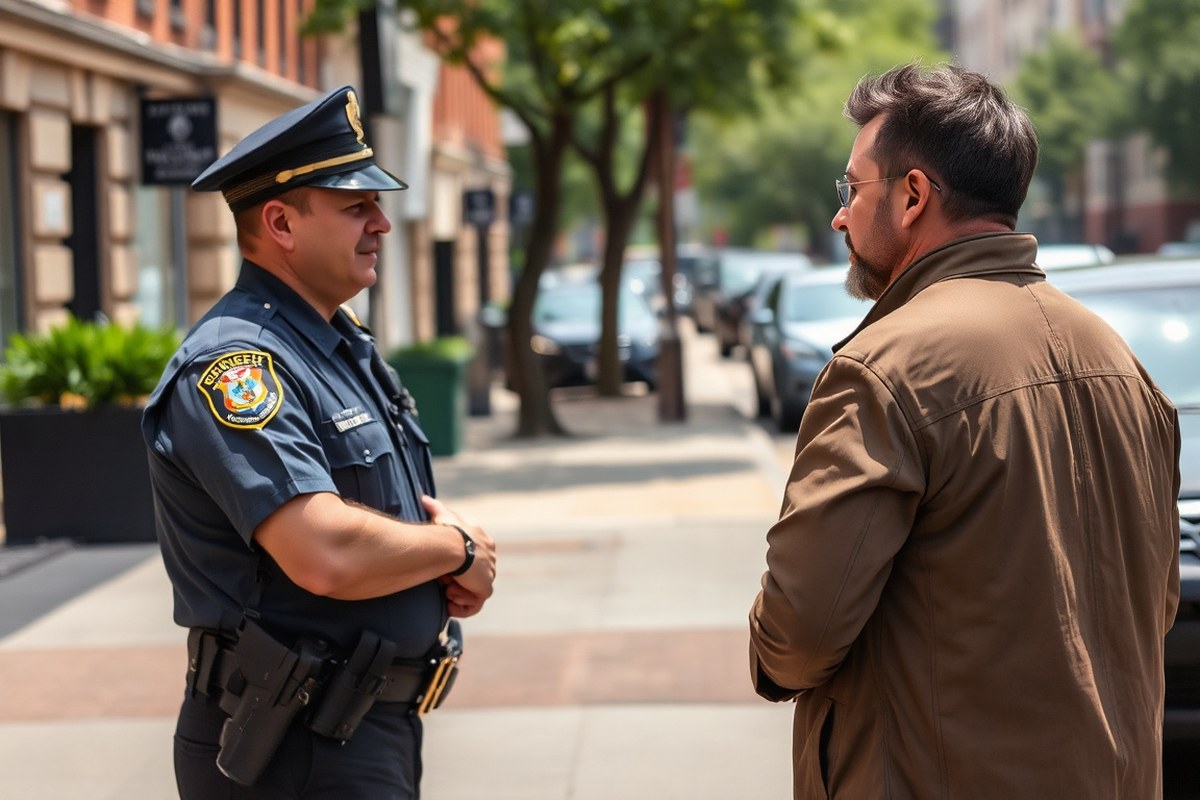
You do not have a legal obligation under Pennsylvania state law to inform a police officer that you are carrying a concealed weapon during an encounter. However, doing so proactively can help prevent misunderstandings. Always remain calm, keep your hands visible, and follow the police officer’s instructions. Carrying your valid License to Carry Firearms (LTCF) and government-issued ID ready for presentation streamlines the interaction.
When to Inform Officers You Are Armed
You are not required by law to volunteer that you are carrying a concealed weapon during initial police contact. It is often safest to wait until the officer requests your identification or if you feel that explicitly stating you are armed would promote transparency and safety. For example, during a traffic stop, after the officer approaches your vehicle and asks for your documents, calmly inform them by saying, “Officer, I want to let you know I have a concealed firearm and I have my License to Carry Firearms with me.” This heads-up can reduce tension and avoid sudden movements that might be misinterpreted.
Not informing the officer might be reasonable in low-risk situations, but proactively communicating is recommended, especially since some officers train to respond aggressively to unknown situations. Tailor your decision based on your environment and the officer’s initial approach.
How to Present Your LTCF and ID
Always carry your LTCF and valid photo ID on your person when you have a firearm, including when it is inside your vehicle in Philadelphia. Present these documents only when requested, and do so with both hands visible to the officer. Avoid reaching into pockets or bags without clear instruction, as sudden movements can raise concern. Clear communication helps. Use a simple script such as:
“I have my License to Carry Firearms and my ID right here. May I retrieve them for you?” [Wait for the officer’s permission before reaching.]
Keep your LTCF and ID in an easily accessible, consistent place like a front pocket or a wallet. This reduces fumbling and keeps the process smooth. Digital copies or photographs on your phone are not substitutes; Pennsylvania law requires physical documents for presentation.
Handling Police Stops Respectfully
Respectful behaviour fosters safer police encounters and protects your legal rights. Keep your hands visible, refrain from sudden movements, and answer questions politely but briefly. You can decline to answer questions unrelated to your identification and guns, but do so calmly and clearly. When asked about your weapon, answer honestly using your prepared disclosure. Example dialogue during a traffic stop:
Officer: “Do you have any weapons in the vehicle?” You: “Yes, Officer. I have a concealed handgun with my valid License to Carry Firearms.” Officer: “Please wait while I verify your license.” You: “Of course.” [Keep hands on steering wheel or visible.]
Stay seated unless told otherwise, and do not resist frisk or searches if allowed under the law or specifically consented to. Always comply with legal orders while asserting your rights politely.
Avoiding Legal Pitfalls During Encounters
Several behaviors can escalate the situation or lead to legal trouble. Avoid these common mistakes:
- Failing to carry your LTCF when carrying a firearm, which may lead to citations or arrest.
- Reaching for your weapon or license without clear instruction from officers.
- Concealing your firearm in prohibited locations or violating local restrictions during the encounter.
- Arguing or refusing lawful police commands, which can escalate suspicion or lead to charges.
- Providing false information about your carrying status or permit.
- Handling your firearm in an unsafe manner, such as drawing or pointing it unless absolutely necessary.
- Failing to remain calm and polite, which can escalate a routine encounter.
Remember that police in Philadelphia and surrounding areas commonly deal with firearm-related incidents. A calm, clear, and cooperative approach minimizes misunderstanding and ensures your rights are respected. Always abide by instructions and present your LTCF and ID on request without delay. Should you think your rights were violated, file a complaint afterward instead of confronting officers immediately.
Step-by-Step Action Plan for Carrying Concealed in Philadelphia
Follow these steps to legally carry a concealed weapon in Philadelphia and avoid common pitfalls.
- Before You Apply: Verify that you meet all eligibility requirements for an LTCF, including age and criminal record checks, to ensure your application will be accepted.
- Week 1: Complete the required firearms safety and legal knowledge training from an approved instructor so you can pass the licensing test.
- Week 2: Submit your LTCF application to the Philadelphia Police Department with all necessary documents and proof of training, then confirm receipt.
- Week 3-6: Attend your fingerprinting appointment and await background check results; you will be notified when your license is ready or if issues arise.
- Upon License Issuance: Carefully review all restrictions and rules attached to your LTCF to understand where and how you can legally carry concealed in the city.
- Immediately After: Practice responsible carry habits, like keeping your weapon concealed and safe, and always carry your LTCF when armed to avoid penalties.
- Ongoing: Stay updated on local firearm laws and renew your LTCF before it expires to remain compliant with Philadelphia regulations.
Frequently Asked Questions
Can You Carry a Concealed Weapon in Philadelphia Without a Permit?
Philadelphia law mandates a License to Carry Firearms (LTCF) for carrying any firearm openly or concealed within city boundaries, covering all public streets and properties.
Do You Need a Separate Permit for Open Carry in Philadelphia?
Yes, unlike elsewhere in Pennsylvania, Philadelphia demands an LTCF to carry a firearm openly or concealed because it is a “city of the first class.”
Can Minors Carry Concealed Weapons in Philadelphia?
Applicants for a concealed carry license in Philadelphia need to be 21 years old or older to qualify.
Are There Special Training Requirements for Getting a Concealed Carry Permit in Philadelphia?
Yes, applicants must complete specified training covering firearm safety and legal knowledge before getting a License to Carry Firearms.
Is It Legal to Carry a Concealed Weapon at My Home or Business in Philadelphia Without a Permit?
Yes, carrying a concealed weapon inside your own residence or fixed place of business in Philadelphia does not require an LTCF.
Can a Person with a Criminal Record Obtain a Concealed Carry Permit in Philadelphia?
Generally no, individuals with certain criminal records or disqualifying characteristics cannot legally obtain a concealed carry license in Philadelphia.
Final Thoughts
You can carry a concealed weapon legally in Philadelphia by obtaining an LTCF and following all associated rules and restrictions carefully. Start by confirming your eligibility and completing the required training, as these form the foundation for a successful application. Keep your permit current, carry responsibly, and know places off-limits for concealed carry to protect yourself from legal trouble. Take the first step today by contacting a certified instructor to begin your firearms training.