How to Store Glock in Glock Case: A Complete Guide with Safe Storage Tips
Learning how to store Glock in Glock case starts with choosing a case that fits your model and includes foam inserts to protect the gun. Place your Glock securely in the foam cutout to avoid movement and damage during storage. Ensure the case closes completely and use a reliable lock to prevent unauthorized access.
Key Takeaways
- Select a case sized for your specific Glock model for a snug, secure fit.
- Use foam inserts cut precisely to the shape of your Glock to cushion and immobilize it.
- Store magazines separately in designated slots or foam cutouts inside the case.
- Choose a case with high-quality locking mechanisms and replace locks every 2-3 years.
- Anchor your Glock case to a fixed location to reduce theft risk.
- Do not store your Glock loaded or with a chambered round unless local laws and safety conditions permit it.
How to Store Your Glock Safely in Its Case

Storing your Glock safely inside its case protects the firearm from damage and unauthorized access. Using a case designed specifically for Glock models, like the NANUK 909 hard case or a similarly sized option with custom foam inserts, ensures your pistol fits securely without unnecessary movement. This snug fit prevents scratches, impacts, and moisture exposure, which can degrade performance and appearance over time.
Many Glock cases come with foam inserts pre-cut to fit popular models such as the Glock 19, with typical dimensions around 10.5 inches long, 6.25 inches wide, and 2 inches deep. These inserts stabilize the pistol and magazines. You can store the Glock with most common attachments inside the case, but always check that the attachments don’t interfere with closure or press excessively on the foam. For bulky attachments like extended sights or lights, consider foam customizing to maintain a secure hold or store those parts separately. Follow these steps to place your Glock properly in its case and ensure it fits snugly:
- Clear and unload your Glock: Verify the magazine is removed and the chamber is empty. This ensures safety before handling the firearm.
- Open the Glock case fully: Lay it flat on a stable surface with the foam insert facing up. Confirm the foam cutout matches your Glock model’s dimensions.
- Place the pistol in the foam insert: Gently lower the Glock into the cutout. Make sure any attachments on your Glock don’t stop the case from closing tightly or make the pistol fit loosely.
- Insert magazines into designated slots: Use magazine holders or foam cutouts to keep them from shifting during transport or storage.
- Close the case carefully: Lower the lid smoothly to avoid dislodging the pistol or magazines. Press down to confirm the case closes evenly without resistance.
- Lock the case: Use the built-in locking mechanism or a padlock through the reinforced eyelets. Make sure the lock fits securely and does not rattle.
- Check the fit: Hold the closed case and shake gently to ensure the contents don’t move inside. Adjust the foam or reposition the firearm and magazines whenever there’s movement inside the case.
Expect the case to feel stable and the Glock firmly secured without pressure points. A loose fit can result in scratches or rattling, while a fit too tight may warp or damage the pistol over time. Cases like the NANUK 909 use shock-absorbent crosslink foam and tough resin shells to balance protection with lightweight portability, optimizing security for your Glock regardless of environment.
Choosing the Right Case Size and Foam Inserts for Your Glock
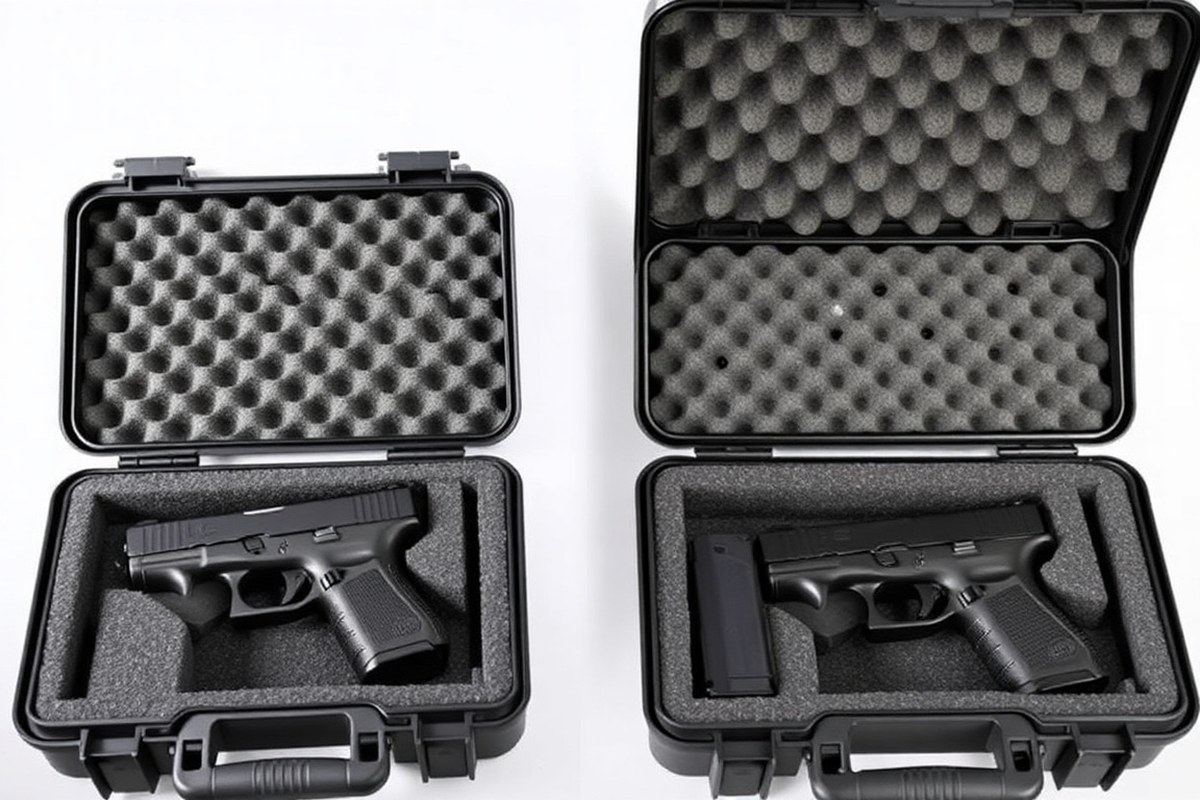
Selecting the right case size for your Glock means matching both its dimensions and your accessory needs. Start with the minimum interior footprint for your model, then add space for any optics, weapon lights, and extended magazines you plan to store with it. This approach prevents rattling and damage while keeping the setup compact.
The dimensions below reflect internal space needed once foam inserts are shaped to fit the pistol snugly. You want a case that fits your Glock model with enough padding so it doesn’t move but also extra room to accommodate mounted attachments or larger magazines.
| Glock Model | Approximate Length | Approximate Height (flush mag) | Minimum Interior Footprint |
|---|---|---|---|
| Glock 43X / 48 | ~6.5 in | ~5.0 in | 8.5 x 7 in |
| Glock 19 / 45 | ~7.3 in | ~5.0 in | 9.3 x 7 in |
| Glock 17 / 22 | ~8.0 in | Just over 5 in | 10 x 8 in |
| Glock 34 / 35 (long slide) | ~8.8 in | Just over 5 in | 11 x 8 in |
Foam inserts generally offer better long-term protection than molded plastic alone, especially when storing optics or lights. Closed cell PEF foam is common and cushions without absorbing moisture, protecting your Glock from scratches or pressure points. Cut foam precisely to your gun’s outline plus added space for accessories.
Adding specific measurements for attachments helps avoid surprises. For instance, mounted red dot optics usually add about an inch in height and width. Weapon lights may increase the overall width or length because they often extend past the muzzle. Extended magazines can add almost an inch below the grip, so the foam cavity needs to be deep enough.
Use this simple decision rule: Take your Glock’s length and height, add about 1 inch in height for a red dot optic or suppressor-height sights, plus extra for magazines and lights. Choose a case that fits the largest combined size of your stored items when you have multiple pieces. Cases like the Nanuk 909 are designed to fit full-size pistols with mounted optics and magazines without overcrowding.
Before closing the case, insert your Glock and accessories into the foam to check the fit; you can slide a strip of paper under the lid foam near the optic, if the paper gets stuck, the foam might be too snug and could put pressure on your gear.
Best Practices for Storing Glock Magazines in the Case
Storing Glock magazines inside the case requires care to avoid damage and maintain readiness. Both loaded and unloaded magazines can be stored safely if you follow best practices regarding capacity, placement, and maintenance. Proper storage protects your magazines from moisture, deformation, and accidental damage.
Loaded vs Unloaded Magazine Storage
It is possible to store Glock magazines loaded inside the case, but it comes with tradeoffs. Keeping magazines loaded allows for quicker response and readiness, but storing them under constant spring tension may shorten spring life over time. Unloaded magazines reduce spring fatigue and make the case lighter and safer. A checklist for safe magazine storage includes:
- Inspect all magazines for damage before storage.
- Confirm your Glock and magazines are unloaded when required by law or transportation rules.
- Store loaded magazines only for short periods to prevent spring wear.
- Store magazines upright or lying flat in the case to prevent bending.
- Keep magazines away from direct moisture and extreme temperatures inside the case.
Storing magazines unloaded is better for long-term care. Loaded magazines are suitable for short-term readiness or transport but should be rotated regularly to maintain spring tension.
Magazine Capacity and Arrangement in the Case
The number of magazines that fit safely inside a Glock case depends on the case size and whether foam inserts are used. Standard Glock cases designed for pistols generally accommodate 2 to 4 magazines comfortably without crowding. Cases with foam inserts can be custom-cut to fit more magazines securely, but overcrowding can cause bending or damage.
Arrange magazines side by side to avoid pressure on feed lips or springs. Avoid stacking magazines directly on top of each other without padding or foam separation. Tips for arranging magazines inside the case:
- Use foam inserts to keep magazines secured and prevent movement during transport.
- Place magazines flat or standing vertically with the follower facing up.
- Do not cram more magazines than the case was designed to hold.
- Keep magazines away from the pistol to avoid scratches or impacts.
Organizing magazines properly inside the case helps prevent damage during handling and ensures they are ready when needed.
Storage Tips to Preserve Magazine Integrity
Protecting your Glock magazines from corrosion, deformation, and spring fatigue requires attention to environmental factors and handling. Humidity inside cases can promote surface rust or damage to springs. Recommended storage tips include:
- Use silica gel packs inside the case to reduce moisture buildup.
- Store magazines in a cool, dry place avoiding extreme heat or freezing temperatures.
- Inspect magazines monthly for signs of corrosion or mechanical issues.
- Clean magazines with appropriate gun oil or lubricant before storage and after extended use.
- Rotate loaded magazines regularly to maintain spring tension.
- Avoid dropping or applying pressure to magazines inside the case.
Adhering to these tips ensures that your Glock magazines remain reliable and retain their functionality over long periods in storage. Regular inspection and maintenance reduce the risk of feeding problems when you need them most.
Locking and Securing Your Glock Case for Maximum Safety
To lock and secure your Glock case effectively, use high-quality padlocks or cable locks designed for firearms cases. Selecting the right lock type and maintaining it regularly ensures your Glock stays protected from unauthorized access or theft. Replacing the locking mechanism every 2 to 3 years is important for maximum security.
Types of Locks Compatible with Glock Cases
Padlocks and cable locks both work well for securing Glock cases, but they differ in strength and ease of use. Padlocks with hardened steel shackles offer strong protection because they resist cutting and tampering. Look for padlocks specifically rated for security or designed for firearms cases. Avoid travel-type locks that security agencies can open with a master key, as these provide weaker protection.
Cable locks are flexible and easy to thread through case handles or designated lock holes. They work best when combined with a heavy-duty padlock or when drilling a secure hole in your case for locking. You can also consider cases with built-in locking latches, like NANUK’s system, which keeps the case firmly closed until you intentionally unlock it.
Lock Replacement Timelines and Maintenance
Replace your locking mechanism every 2 to 3 years to maintain optimal security. Over time, locks may suffer from rust, internal wear, or mechanical failure that reduces their effectiveness. Regular inspection of locks ensures you catch any issues like stiffness or corrosion before they compromise security.
Keep locks clean and lubricated using a graphite-based lubricant, which prevents debris build-up and ensures smooth operation. Environmental factors such as humidity, temperature fluctuations, and altitude changes can affect lock performance. These conditions may create vacuum pressure sealing some cases shut, but do not rely on that alone for security.
Using Cable Locks vs Padlocks Safely
Cable locks provide flexibility and convenience for securing case latches or handles but are generally easier to cut than hardened padlocks. Use cable locks only as part of a layered security approach. Properly installed padlocks offer a stronger barrier against theft and unauthorized access, especially if made of hardened steel and with a thick shackle. To secure your Glock case effectively:
- Choose locks with non-traditional keyways or combination dials to resist picking
- Avoid using locks that security personnel can open with master keys
- Thread cable locks through case handles or designated lock holes when possible
- Consider drilling a reinforced hole for a padlock if your case doesn’t have locking points
- Test lock fit and function before relying on it during transport or storage
- Keep replacement keys or combinations in a secure, separate location
- Periodically check lock mechanisms for wear or corrosion and replace promptly
While cable locks offer convenience, choose padlocks when maximum security is your highest priority. Balancing ease of use and protection will help you keep your Glock safe in its case over time.
How to Anchor and Store Your Glock Case to Prevent Theft
Securing your Glock case by anchoring it to a fixed object greatly reduces the risk of theft. The process involves selecting a sturdy mounting point and using locking cables or chains designed for firearm security. Placing your locked Glock case inside a secure environment like a gun safe adds an extra layer of protection, combining physical restraint with controlled access.
Choosing where to store your Glock case impacts the overall security. Ideal spots include under a heavy desk, inside a reinforced closet, or within a gun safe rated for firearm storage. A gun safe offers temperature control, prevents unauthorized access, and protects against fire damage. However, keep in mind safes vary greatly by price, from a basic model around $150 to high-end biometric safes costing over $1,000. Here are the steps to anchor and store your Glock case effectively:
- Select a solid, immovable object like a heavy table leg, a wall-mounted anchor point, or a secure gun safe with internal attachment points.
- Purchase a lockable cable or chain designed for firearm cases, ideally made from hardened steel with a combination or key lock rated for security.
- Thread the cable or chain through the integrated handle or dedicated locking loop on your Glock case.
- Wrap the other end of the cable firmly around the mounting point, ensuring there is minimal slack to prevent removal.
- Secure the lock on the cable tightly; double-check that the case cannot be lifted off or slid free without unlocking.
- Place the locked and anchored Glock case inside a safe or in your chosen storage location, prioritizing hidden or discreet areas to avoid drawing attention.
- Verify all locking mechanisms on the case itself are engaged, including integrated slide locks where available, to prevent accidental opening.
- Review your setup regularly for signs of tampering and test quick access to ensure you can retrieve your Glock swiftly if needed.
Always balance the need for security with your ability to access the firearm quickly; overly complicated anchoring could delay access in an emergency.
Safety Tips for Storing a Glock Loaded or with a Chambered Round
Storing a Glock with a round chambered inside the case carries inherent risks, but following proper safety steps can minimize them effectively. It is generally safer to store your Glock unloaded with the slide locked back or at least uncocked. A cocked firearm may increase the chance of an accidental discharge if the trigger is inadvertently engaged during handling or transport. Leaving a round chambered can be convenient for quick access, but the heightened risk requires careful attention to secure the case and handling environment.
One important measure is to always keep the gun pointed in a safe direction before and after placing it inside the case. Use a quality hard case with foam inserts sized for your Glock model, such as the Eylar® Intact Stacker Series with an interior dimension of about 11.6 x 8.5 x 3.15 inches, to prevent movement that could jostle the firearm. When fitting accessories like a red dot or light, verify that the total dimensions still allow the pistol to sit firmly without pressure on the trigger or slide.
To further reduce accident risk, unload the magazine and remove it from the case unless storing the gun loaded is necessary for your particular situation, such as immediate home defense. In cases where a loaded chamber is unavoidable, double-check the trigger guard clearance inside the case and ensure the case is locked at all times. A locked case restricts unauthorized access and lessens the chances that unsecured handling will lead to discharge.
Common safety mistakes include storing a loaded Glock without locking the case, failing to clear the chamber before placing the gun in the case, and using a case too large or too small, which can lead to excessive movement or difficulty in accessing the firearm quickly. Following a simple checklist can aid discipline: always unload and visually inspect the chamber before storage, use a correctly sized case with foam inserts that immobilize the pistol, lock the case securely, and consider a trigger lock or other secondary safety devices when storing a loaded firearm.
You should clean your Glock before storing it, especially if storing long term, and keep the case in a cool, dry place to prevent corrosion. Ambient temperatures around 70°F and low humidity are ideal. Storing it loaded at room temperature in a locked case with the slide forward and trigger free will help maintain mechanical readiness while mitigating accidental discharge risk. If storing in high heat or cold conditions, consult manufacturer recommendations for your Glock model. Due to liability and safety concerns, it’s advisable to consult a licensed professional if you’re unsure about storing a loaded or chambered firearm.
Preparing Your Glock and Case for Transport and Travel
To transport your Glock by air, use a sturdy, lockable case and ensure the gun is unloaded. Lock the case with a key you control and check specific airline and TSA rules before travel. Proper packing and declaration are required to avoid delays or legal issues.
Selecting Travel-Appropriate Glock Cases
Choose a hard-sided case made from durable materials like reinforced polymer or metal to protect your Glock during air travel. The case should have a foam interior to prevent movement and damage. Cases designed for firearms usually include pre-cut foam or customizable inserts for a snug fit.
The case must accept padlocks or built-in locks that meet airline security standards. It’s best to pick a case sized specifically for your Glock model to avoid empty space inside that could allow the firearm to shift. Cases made for general gear may not provide the necessary protection or compliance.
Locking Methods Suitable for Air Travel
Lock your Glock case with a key or combination lock that only you can open. Airline rules require passengers to retain sole control of the keys to their firearm cases; avoid locks with master keys or TSA-only access. This ensures your case can’t be opened without your permission and maintains compliance with regulations.
Common choices include small padlocks designed for firearm cases or integrated locking mechanisms on the case itself. Combination locks are convenient but require careful memory or note of the code. Using a lock rated for security and travel helps avoid damage and unsolicited access.
TSA and Airline Compliance Tips
Always declare your Glock during airline check-in at the ticket counter. Present your firearm unloaded, packed in a locked hard case, and separated from any ammunition per airline rules. Failure to declare may result in fines or confiscation. The TSA does not approve any specific “firearm” cases, but it requires that firearm cases be locked and accessible only to the passenger. Follow these steps as a checklist:
- Unload your Glock and remove magazines
- Secure the Glock and magazines in a hard, lockable case
- Lock the case with a personal key or combination lock
- Keep the lock key or combination with you at all times
- Declare the firearm to airline personnel during check-in
- Check the airline’s firearm and ammunition policies beforehand
Costs for firearm cases range from $50 to $200 depending on materials and features, with locks typically $10 to $40. Well-prepared packing and following these guidelines reduces the risk of delays and ensures your Glock arrives safely at your destination.
Common Storage Mistakes and Troubleshooting Glock Case Issues
One common mistake when storing your Glock in its case is neglecting regular maintenance of both the firearm and the case. Dirt, moisture, and debris can accumulate inside the case, especially if it’s kept in a humid or dusty environment. Over time, this can lead to rust on your Glock or damage to the locking mechanism of the case. Clean your Glock and wipe down the foam inserts and interior surfaces of the case at least once every three months to prevent buildup and corrosion.
Another frequent error is improper locking or forcing incompatible locks. Begin by cleaning the lock mechanism when your case lock gets stuck or broken. Use a lubricant designed for locks, such as graphite powder or a silicone-based spray, to loosen the pins. Spray the lubricant into the keyhole and move the key gently to distribute it. Avoid applying too much oil-based lubricant, which can attract dirt and worsen the problem. Contact the manufacturer or a locksmith experienced with firearm cases for repair or replacement when the lock still fails.
Storage mistakes also include ignoring the seal integrity on your Glock case. Cases stored in trucks, boats, or checked baggage face exposure to dust and condensation. This exposure can cause rust even if the Glock itself isn’t wet. A case with a gasket seal creates a barrier against moisture and dust, preserving your firearm better over time. Check the gasket for cracks or damage every six months and replace it if you notice any wear or hardening. Here’s a practical checklist to avoid common Glock case storage mistakes:
- Clean and oil the lock mechanism every six months to prevent sticking.
- Regularly wipe down the inside of the case and foam inserts to remove dust and dirt.
- Inspect and replace gasket seals to maintain dust and moisture resistance.
- Store the case in a dry, temperature-controlled environment whenever possible.
- Use the correct lock type recommended for your specific Glock case model.
- Don’t force the lock open and avoid using excessive lubrication.
Keep your Glock case dry and clean by avoiding damp storage locations and routinely checking for gasket damage to prevent hidden moisture buildup.
Maintaining your Glock case doesn’t require expensive tools, usually a soft cloth, a gentle cleaner, and quality lock lubricant suffice. Check the manufacturer’s instructions for any specific products recommended for your case. Following these steps can preserve the function of your Glock case lock and the condition of your firearm, reducing the risk of costly repairs or dangerous malfunctions due to rust or mechanical failures.
Step-by-Step Action Plan for Storing Your Glock in Its Case
Follow these steps to store your Glock safely and securely in its case, ensuring proper protection and quick access when needed.
- Before storing: Clear the chamber and remove the magazine. Verify the Glock is unloaded to ensure safe handling.
- Day 1: Choose a Glock case with a snug foam insert that fits your model perfectly. Confirm the pistol sits firmly without excessive movement.
- Day 1: Place your unloaded Glock inside the foam insert, positioning it so the trigger area is accessible but protected.
- Day 2: Store magazines separately in the designated foam slots or a separate compartment within the case. Check that springs are not compressed to extend magazine life.
- Day 2: Engage the locking mechanism on the case, testing the lock to verify it prevents unauthorized opening.
- Week 1: Anchor your Glock case to a fixed object using a security cable or lockbox system. Make sure the anchor point and method resist common tampering attempts.
- Weekly: Inspect the Glock and case for moisture or dust buildup. Use a desiccant inside the case if needed to keep metal parts dry.
- Before transport: Double-check the lock, retain foam inserts, and that magazines are properly stored. Confirm the case is securely anchored if in a vehicle or temporary location.
Frequently Asked Questions
How to Store a Glock in Its Glock Case Safely?
Store your Glock unloaded, with no round in the chamber, inside its case fitted with foam inserts. This prevents movement and protects its finish while reducing accidental discharge risks. Make sure the case is locked to keep it secure from unauthorized access.
Is It Okay to Store a Glock Magazine Loaded in Its Case?
Yes, storing Glock magazines loaded in the case is common practice and acceptable. Just ensure magazines are kept in their designated foam slots to avoid damage, and remove rounds from the chamber for maximum safety.
Should You Store Your Glock Cocked Inside Its Case?
No, storing your Glock cocked inside its case is unsafe and goes against storage best practices. Always keep the pistol unloaded without a round in the chamber to prevent accidental discharge and unauthorized use.
Is It Safe to Keep a Round Chambered in Your Glock When in Storage?
Keeping a round chambered while storing your Glock in its case is not safe and not recommended. Removing the round reduces risk of accidental firing and improves overall storage safety.
Can You Carry or Transport Your Glock in the NANUK 909 Case with Magazines Loaded?
The NANUK 909 case is designed for protection and transport but best practice is to carry your Glock unloaded with magazines loaded separately. This ensures compliance with most transport laws and improve safety during travel.
How Do You Maintain a Glock Case Lock for Security During Storage?
Regularly check and maintain your Glock case lock by cleaning and lubricating it to prevent rust or sticking. Proper lock care guarantees consistent security and peace of mind at home or when transporting your firearm.
Before You Go
Properly storing your Glock in its case helps preserve its condition and prevents accidental use or theft. Secure the case with the right lock, keep the gun unloaded unless specifically needed, and anchor the case to an immovable object. Start by inspecting your current case setup today and add a reliable lock or foam insert to improve your Glock’s storage safety immediately.