Is the Glock 18C Legal? Clear Answers on Ownership and Restrictions
Is the Glock 18C legal to own in the United States? The short answer: civilian ownership of the Glock 18C is heavily restricted and generally illegal without special federal approval. This fully automatic pistol is classified under strict machine gun laws, limiting access to those with transferable machine gun registrations predating May 1986. Your first step is confirming the firearm’s registration status and complying with the National Firearms Act requirements if you pursue lawful ownership.
Key Takeaways
- The Glock 18C is a select-fire 9mm pistol with full-auto capability and a compensator to reduce muzzle rise.
- Federal law bans civilian new purchases of fully automatic firearms like the Glock 18C unless pre-1986 registration exists.
- Glock 18C ownership is primarily legal for law enforcement and military personnel, not for typical civilian buyers.
- Only transferable machine guns registered before the May 1986 cutoff can legally change hands among civilians.
- The Glock 18C’s compensator distinguishes it from the standard Glock 18 but does not affect its legal classification.
- Internationally, Glock 18C legality varies, often restricted or banned due to its automatic fire feature.
Is the Glock 18C Legal to Own in the United States?

The Glock 18C is not legal for civilian ownership in the United States under standard federal law. It is classified as a machine gun by the National Firearms Act (NFA), primarily due to its full-automatic firing capability and a cyclic rate of roughly 1,200 rounds per minute. This classification makes it subject to strict controls and restrictions that limit civilian access.
The NFA restricts ownership of machine guns to those manufactured and registered before May 19, 1986. Since the Glock 18C was introduced after that cutoff date, newly manufactured examples cannot be legally owned by civilians. The law’s intent is to prevent proliferation of new automatic weapons among the public, so most Glock 18C pistols available today remain the property of law enforcement, military, or licensed dealers.
While the law technically allows civilians to own certain transferable machine guns that were registered before 1986, the Glock 18C falls outside this exception. Very few, if any, Glock 18C pistols legally qualify as transferable machine guns, making legal civilian ownership virtually impossible. Civilian collectors and enthusiasts interested in owning an automatic Glock face significant legal and financial obstacles, including a multi-thousand-dollar tax stamp and lengthy federal approval process where rare examples come up for transfer.
The “C” variant, featuring a compensator to reduce muzzle climb during automatic fire, does not affect its legal classification. Both the Glock 18 and the 18C share the same full-auto mechanism and are treated identically under federal law. They remain tightly regulated as machine guns, regardless of these design differences.
To legally possess a fully automatic firearm like the Glock 18C, a civilian buyer must go through a rigorous process that includes submitting an ATF Form 4, paying a $200 tax stamp, undergoing a background check, and having the firearm registered with the National Firearms Registration and Transfer Record. The process can take several months or longer, and applicable only to the scarce pre-1986 examples. Purchasing any Glock 18C not registered before that date is unlawful and could lead to severe legal penalties.
In summary, the Glock 18C’s federal classification as a machine gun and its post-1986 manufacture date make it effectively illegal for private individuals to own in the United States. Exceptions are extremely rare and typically limited to law enforcement or government agencies. Civilians seeking full-auto Glocks face nearly insurmountable legal barriers as private ownership of new or unregistered Glock 18Cs is prohibited nationwide under the NFA.
How Federal Laws Restrict Glock 18 and 18C Ownership
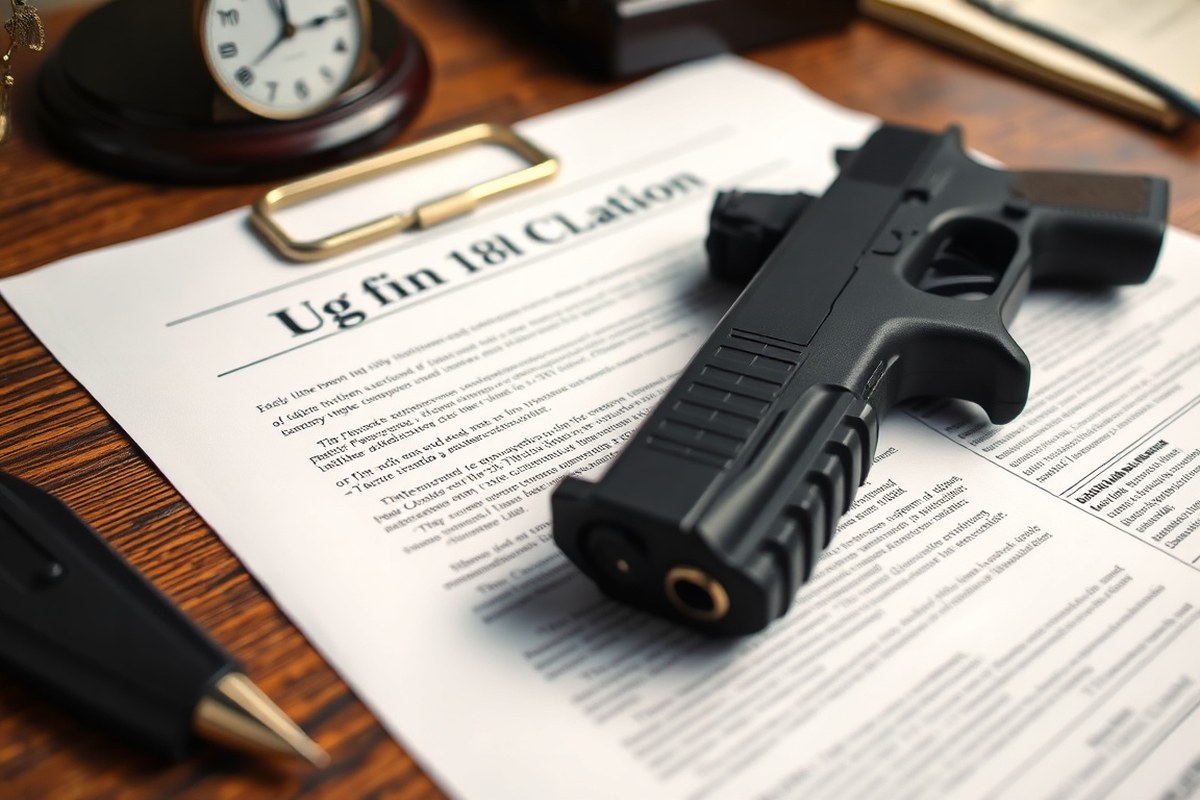
Federal laws strictly regulate ownership of the Glock 18C due to its fully automatic capabilities. The Firearm Owners’ Protection Act (FOPA) of 1986 and the National Firearms Act (NFA) of 1934 classify the Glock 18C as a machine gun, imposing severe restrictions on civilian possession. Only certain pre-1986 registered models can be legally owned by civilians, making newer versions effectively unavailable for public purchase.
The Firearm Owners’ Protection Act Of 1986
The act serves to regulate the civilian trade of fully automatic firearms, including the Glock 18C. It bans civilian possession of machine guns created after May 19, 1986, which means any Glock 18C manufactured beyond that date cannot legally be sold or given to civilians. The purpose of this legislation was to stop the addition of new transferable automatic weapons to the civilian marketplace.
The FOPA affects buyers and owners by limiting them to only those firearms that were already registered before 1986. Transfers of these pre-1986 machine guns require strict compliance with ATF rules, including paperwork and tax payments. This provision greatly reduces availability, as these firearms are rare and often come with extremely high prices at auctions or private sales.
Classification Under the National Firearms Act
Enacted in 1934, the National Firearms Act classifies the Glock 18C as a machine gun because it can discharge multiple shots with one trigger pull. This classification requires owners to comply with strict regulations, including mandatory registration, tax payments, and complete background checks when buying or selling the firearm. To legally own one, you must file federal paperwork and receive approval from the Bureau of Alcohol, Tobacco, Firearms and Explosives (ATF).
Owners must submit an ATF Form 4 for a transfer, pay a $200 tax stamp, and wait through a lengthy background check process. The law requires the firearm to be registered with the ATF, making private possession without paperwork illegal. These rules aim to control the distribution and possession of machine guns, restricting access primarily to law enforcement, military, and certain licensees.
Pre-1986 Grandfathering Provision
Civilian ownership of the Glock 18C depends largely on the firearm’s manufacture date. Only machine guns registered before May 19, 1986, qualify under the federal grandfathering clause. Since the Glock 18C was produced after this cutoff, virtually no models entered civilian hands legally before this date. This means the majority of Glock 18C pistols are not transferable to civilians under current federal laws.
This provision effectively means that Glock 18Cs made after 1986 cannot be legally owned by the general public, cutting off most civilian access. Rare Glock 18s registered before the cutoff are highly prized collectors’ items and command high prices. For most buyers and enthusiasts, owning a Glock 18C requires special occupational licensing or military/law enforcement status rather than normal civilian purchase channels.
Always verify the manufacture date and registration status before attempting to buy a fully automatic firearm like the Glock 18C, as owning an unregistered machine gun is a serious federal offense.
What Makes the Glock 18C Different from the Glock 18?
The Glock 18C differs from the Glock 18 primarily through its compensator features, which include ports cut into the barrel and slide. These modifications help reduce muzzle rise during full-automatic fire, making the 18C easier to control and more accurate compared to the standard Glock 18. Both models share the same selectable fire mode and rate of fire, but the 18C’s compensator significantly improves shooting performance under rapid-fire conditions.
Compensated Barrel and Slide Cuts
The Glock 18C is equipped with compensator cuts on the top of the slide and ports in the barrel. These are designed to vent gases upward when firing, creating downward pressure that counteracts the natural muzzle rise generated by rapid shots. The compensator cuts begin about halfway back along the barrel and extend along the slide, venting gas away from the shooter’s line of sight. This venting helps to keep the muzzle steadier during bursts of full-auto fire.
In contrast, the Glock 18 features a fully enclosed slide and barrel without any compensator ports. Without these gas vents, the standard Glock 18 experiences stronger recoil-induced muzzle climb, especially during full-auto mode, which can make accurate follow-up shots more difficult. The added ports on the 18C therefore serve a functional purpose, reducing recoil and muzzle rise to improve control without changing the gun’s core firing mechanisms.
Rate of Fire and Handling Improvements
Both the Glock 18 and 18C operate at a cyclic rate of about 1,200 rounds per minute. The controllability improvements on the 18C directly affect handling when firing in full-auto mode. The ports help maintain a steadier aim during rapid bursts by reducing the upward motion of the muzzle, which otherwise forces shooters to compensate with grip strength or modified stance.
These design enhancements improve shooting accuracy and reduce shooter fatigue over sustained firing sessions. Better control in full-auto mode means shooters can deliver more rounds on target faster, improving the firearm’s effectiveness in tactical or defensive situations where rapid fire is necessary.
Legal Status Compared to Original Glock 18
Legally, the Glock 18C is treated the same as the original Glock 18 in the United States and other jurisdictions with firearm regulations concerning fully automatic weapons. Both models fall under strict controls due to their select-fire capability at a high rate of fire. The presence of compensator ports on the 18C does not provide any exemption or added legality compared to the standard 18.
Owners must adhere to the same federal and state laws governing machine guns, including licensing, registration, and background checks. Neither the 18 nor the 18C is legal for general civilian ownership without meeting these stringent requirements, and both require specific legal channels to obtain and possess. The compensator features are purely performance-oriented and do not impact legal classification.
Who Can Legally Purchase and Own a Glock 18C in the US?
Only a limited group can legally purchase and own a Glock 18C in the United States. These include law enforcement and military agencies, licensed dealers with specific permits, and collectors with certain restrictions. Civilian ownership is highly restricted by federal law and requires extensive paperwork and approvals.
Law Enforcement and Military Exemptions
Law enforcement and military agencies have direct access to Glock 18C pistols for operational use. These agencies can purchase the firearm through authorized distributors or directly from Glock, often using demonstration letters that certify the weapon’s tactical purpose. The Glock 18C’s fully automatic capability offers these agencies a tactical advantage in certain high-risk situations, which justifies their legal access under federal regulations.
These agencies do not follow the same restrictions that apply to civilian buyers, allowing them to acquire Glock 18Cs without the extensive regulatory burdens faced by private individuals. The procurement process for these agencies typically involves internal approvals and compliance with federal firearms laws tailored to government entities.
Special Occupational Tax (SOT) Holders
Class III dealers with a Special Occupational Tax (SOT) designation are authorized to possess and transfer fully automatic firearms like the Glock 18C. These dealers must comply with federal tax and regulatory requirements to legally manage machine guns. The SOT status is granted to manufacturers, importers, and dealers engaged in business involving National Firearms Act (NFA) firearms, including automatic weapons.
Obtaining and maintaining an SOT license involves rigorous background checks and payment of an annual tax. Only these licensed dealers, often handling firearms for law enforcement or military customers, can legally buy Glock 18Cs post-1986 from manufacturers or other licensed holders. These dealers can also guide potential buyers through the complex legal steps if a qualified transfer candidate exists.
Civilian Ownership Exceptions
Civilian possession of a Glock 18C is restricted to collectors who have registered machine guns from before 1986. The ATF recorded these firearms prior to the Firearm Owners’ Protection Act of 1986, which stopped new civilian production and transfers of automatic guns. Collectors must adhere to all NFA requirements, such as registration, paying tax stamps, and clearing background checks to keep ownership legal.
Because the Glock 18C entered production near or after the mid-1980s, it is extremely rare for such models to exist in civilian hands legally. Civilian ownership of newer Glock 18Cs without the proper registration and licensing is unlawful and subject to severe penalties. Collectors interested in fully automatic pistols often seek legally registered pre-1986 models from Class III dealers or licensed importers specializing in NFA firearms.
Legal Channels and Paperwork for Owning Fully Automatic Pistols
Owning a fully automatic pistol like the Glock 18C requires navigating federal regulations under the National Firearms Act (NFA) and the Gun Control Act (GCA). The key step is securing an approved transfer from a licensed dealer authorized to handle machine guns registered before May 19, 1986, since new machine guns for civilian ownership are generally prohibited. To legally acquire the Glock 18C, you must complete ATF Form 4 (Application for Tax Paid Transfer and Registration of Firearm), which registers the weapon to you in the National Firearms Registration and Transfer Record (NFRTR).
To begin, locate a seller and verify that the Glock 18C is listed on the official machine gun registry. Then, fill out Form 4, providing personal information, fingerprints, a passport-style photo, and a certified check or money order for the $200 tax stamp mandated by the NFA. You must also send a signed notification to local law enforcement to report the transfer, though this requirement varies by location. The dealer or transferor forwards your application to the ATF for processing.
After submission, the approval process typically takes eight to twelve months, depending on workload and application accuracy. During this time, the ATF conducts extensive background checks through the FBI’s National Instant Criminal Background Check System (NICS) and verifies that you are legally eligible to own a machine gun. It’s important to ensure all paperwork is complete and accurate; missing signatures or incorrect information can delay processing significantly or result in denial.
Once approved, the ATF returns the Form 4 with the tax stamp attached. You must keep this documentation permanently, as any future sale or transfer will reference the original registration. The weapon becomes registered to you, and you are legally allowed to possess it subject to additional federal and state laws. Keep in mind, some states prohibit ownership of machine guns entirely, regardless of federal approval, so checking local laws beforehand is essential.
Failure to follow these federal procedures can result in severe penalties, including fines and imprisonment. Only transfers between approved parties, such as from a licensed dealer or trust, following the NFA rules and paying the tax stamp, are lawful for fully automatic weapons. Variations in ownership can occur if you are transferring through a legal trust or corporation, which requires additional documentation but follows the same ATF process.
Always double-check your application packet before submitting it to avoid delays, and remember that incomplete or inaccurate forms can extend the approval timeline significantly.
International Legality and Restrictions for the Glock 18C
The Glock 18C, a fully automatic pistol, faces strict regulation outside the United States, with most countries prohibiting civilian ownership due to its automatic firing capability. Generally, countries that restrict or ban automatic weapons classify the Glock 18C alongside other machine pistols, making legal civilian possession rare and heavily controlled. Licenses and permits, where available, often require law enforcement or military affiliation, specialized registration, or government approval beyond typical firearm ownership processes.
In many European countries, including the United Kingdom and Germany, civilian possession of fully automatic firearms like the Glock 18C is explicitly banned. These countries maintain strict gun control laws that exclude fully automatic pistols except for select professional uses, such as police or military. Owning or attempting to acquire such firearms without appropriate authorization typically results in severe legal consequences, including fines and imprisonment.
Some countries with more relaxed firearm regulations, such as Switzerland and the Czech Republic, allow limited ownership of automatic weapons under stringent licensing conditions. These regulations often require background checks, psychological evaluations, detailed documentation of firearm storage, and justification for ownership. Still, the Glock 18C is rarely available to civilians, even under these regimes, due to its classification as a specialized weapon.
Australia and Canada also impose strict prohibitions against civilian ownership of automatic pistols like the Glock 18C. Both countries classify automatic firearms differently from semi-automatic ones, with automatic pistols typically excluded from legal civilian markets. Individuals in these countries face complex application processes if they seek to legally possess such weapons, often requiring special permits, justifiable reasons, and detailed reporting to firearm authorities.
Internationally, licensing costs and legal hurdles to owning a Glock 18C include high fees, extensive wait times, and mandatory secure storage inspections. Even in countries where an individual can legally acquire an automatic pistol, these requirements significantly limit ownership. Attempting to circumvent these rules by unlicensed possession, importation, or sales is illegal and can result in criminal charges.
The landscape of international legislation largely aligns with U.S. Federal restrictions but tends to be more prohibitive, especially where civilian automatic weapon ownership is concerned. While some licensed U.S. Collectors may acquire Glock 18C pistols through legal channels at substantial expense and paperwork, their international use or export often faces barriers. Therefore, the Glock 18C remains most accessible in the U.S. For civilians with the necessary authorization. Elsewhere, owning this firearm legally demands strict adherence to local laws, extensive documentation, and significant financial investment.
Common Misconceptions About Glock 18C Legality and Ownership
A common misconception is that you can buy a brand new Glock 18C pistol off the shelf legally. This is not true. Civilians in the United States cannot purchase newly manufactured Glock 18C pistols because they are fully automatic weapons regulated under the National Firearms Act (NFA). Only certain registered and approved entities, such as law enforcement or military agencies, may acquire new models. Private individuals are limited to a very small number of pre-1986 transferable Glock 18 firearms that already went through strict federal registration.
Some think converting a Glock 17 semi-automatic into a fully automatic Glock 18C is simple and lawful, but this is false and prohibited. Altering a Glock 17 for full-auto firing breaches federal law. The ATF strictly prohibits such conversions without the necessary licenses, which virtually never issue to private owners. Violating these rules can result in heavy fines and imprisonment.
Full-auto firearms like the Glock 18 and 18C are not always outright illegal, but their ownership and transfer are extraordinarily restricted. Civilians can legally own fully automatic weapons only if they were manufactured and registered before May 19, 1986, often called “transferable machine guns.” These weapons must be registered in the National Firearms Registration and Transfer Record, and buying one requires approval from the ATF, including fingerprinting, a background check, and paying a $200 tax stamp. This process can be lengthy and costly, and most Glock 18Cs available today are not transferable to civilians at all.
Because new Glock 18Cs are not available to private buyers, the only legal path to ownership involves finding an existing registered firearm manufactured before 1986. Even then, the process demands patience and adherence to the strict NFA rules. This includes completing ATF Form 4, submitting photographs, fingerprints, local law enforcement notification, and waiting for approval that can take several months. The price for a transferable Glock 18C on the secondary market can reach tens of thousands of dollars due to their rarity.
No civilian is legally permitted to purchase a new Glock 18C from a regular firearm retailer, nor is it lawful to alter a Glock 17 into this fully automatic model under federal law. Ownership of fully automatic pistols requires navigating complex regulations and significant expenses. Understanding these points helps clear up frequent misunderstandings about Glock 18C legality.
What to Expect When Attempting to Buy or Own a Glock 18C
Finding a transferable Glock 18C is extremely challenging because there are currently zero Glock 18 models registered as transferable under the National Firearms Act (NFA). This means private ownership is generally restricted to those with the proper federal licenses, such as Class 3 Special Occupational Taxpayer (SOT) dealers or law enforcement agencies. Collectors with the appropriate paperwork may network through platforms like Armslist to locate available units, but the scarcity keeps availability very limited.
Expect the cost of a legal Glock 18C to be significantly higher than standard Glock pistols. Prices often range from $20,000 to upward of $30,000, depending on condition, provenance, and market demand. The fully automatic capability and the rarity of the Glock 18C make it a prized item among collectors, pushing prices well above typical polymer pistols. Agencies might also face similar costs when purchasing for tactical use or inventory additions.
The Glock 17 is semi-automatic and does not feature full-automatic firing, making it legal under usual firearm regulations. Modifying a Glock 17 to perform like a Glock 18C’s machine pistol is not allowed unless you have a tax stamp and approval from the ATF. Collectors and enthusiasts who want the full-automatic Glock 18C must buy one that is legally registered.
| Aspect | Details |
|---|---|
| Availability | No transferable Glock 18Cs exist; very limited for those with Class 3 licensing; networking recommended. |
| Cost Estimate | $20,000 to $30,000+ based on condition and demand. |
| Legal Alternatives | Converted Glock 17s are legal only if semi-auto; fully automatic conversion illegal without ATF approval. |
Collectors aiming to acquire a Glock 18C should maintain patience and vigilance in monitoring the limited market. Engaging with licensed dealers and registered Class 3 sellers is important to avoid illegal transactions. Agencies planning to add this model for tactical purposes should include budget allowances for the high price tag and factor in the time for extensive paperwork and ATF processing. For all buyers, proper documentation and adherence to federal and state laws are non-negotiable steps to avoid severe penalties.
Never attempt to modify a Glock 17 into a full-auto Glock 18C without the proper federal licenses and tax stamps, doing so carries heavy legal risks and penalties.
Step-by-Step Action Plan for Legally Owning a Glock 18C
Follow these steps to start the process of legally owning a Glock 18C, making sure you meet all federal requirements and complete necessary paperwork.
- Before you start: Confirm that you meet all federal eligibility criteria, including being at least 21 years old and legally permitted to own a firearm. This ensures you’re qualified to pursue ownership.
- Week 1: Research National Firearms Act (NFA) regulations and understand the restrictions on fully automatic weapons. Checking official ATF resources helps clarify the legal framework.
- Week 2: Locate a licensed Class 3 firearms dealer who sells registered fully automatic pistols like the Glock 18C. Dealers with proper licenses can guide you through the purchase lawfully.
- Week 3: Send your Form 4 to the Bureau of Alcohol, Tobacco, Firearms and Explosives (ATF) to apply for the transfer and registration of the Glock 18C. You must wait for the ATF’s approval before taking possession.
- After 10-12 weeks: Monitor your application status and wait for ATF approval. Only after approval can you legally take possession of the firearm.
- Upon approval: Complete a background check and fingerprinting if requested. These confirm your ongoing eligibility to own the firearm.
- Ongoing: Maintain compliance with all federal and state laws, including secure storage and reporting any changes related to ownership. Staying compliant keeps your ownership legal.
Frequently Asked Questions
Can a Civilian Legally Own a Glock 18C in the US Without Special Permits?
No, civilians cannot own a Glock 18C without NFA registration and tax stamps due to full-auto restrictions. Only registered transferable machine guns made before 1986 qualify for civilian ownership.
Does the Glock 18C Need Special Handling or Training Due to Its Automatic Fire?
Yes, its 1,200 RPM cyclic rate requires advanced handling skills to maintain control and accuracy. Professional training is recommended for safe and effective use.
Are Glock 18C Parts or Kits Legal to Buy and Assemble?
No, buying parts or kits to convert a pistol to full-auto can violate federal laws. It’s illegal without proper licensing and registration.
Can Law Enforcement Officers Take Home a Glock 18C Issued for Duty?
Typically, law enforcement agencies have strict policies limiting firearm take-home privileges, often excluding full-auto weapons like the Glock 18C. Policies vary by department.
Is the Glock 18C Used in Competitive Shooting Sports?
No, its full-auto fire and legal restrictions make it unsuitable and generally prohibited in competitive shooting events.
Does the Glock 18C Qualify as a Short-Barreled Rifle or Handgun for Legal Purposes?
It is classified as a pistol, but full-auto function subject it to machine gun regulations, differing from SBR rules.
Wrapping Up
The Glock 18C is tightly regulated and legal possession depends on strict adherence to federal laws, including completing extensive paperwork and passing background checks. Start by confirming your eligibility and connecting with a licensed dealer to begin the formal process. Taking these steps carefully helps ensure you comply fully with the law while pursuing ownership of a Glock 18C.