How to Choose the Right Gauge Steel for Your Gun Safe
Choosing the right gun safe can feel overwhelming, especially with so many options out there. You’re not alone—many gun owners struggle to find a safe that balances security, size, and budget.
After all, your firearms deserve the best protection, but knowing where to start with steel thickness and build quality isn’t always straightforward.
When choosing steel gauge for your gun safe, go for at least 12-gauge for basic protection, while 10-gauge or thicker offers stronger resistance against break-ins. Remember, lower gauge means thicker, heavier steel that improves durability but reduces portability.
Don’t just focus on gauge—consider steel quality, alloy composition, and construction reinforcements for better security.
Balancing these factors guarantees your valuable firearms stay safe. If you want to know how to optimize these choices for your specific needs, keep exploring the details ahead.
Key Takeaways
- Choose at least 12-gauge steel for basic gun safe protection; opt for 10-gauge or thicker for higher resistance against break-ins.
- Consider steel alloy quality and heat treatment, as these enhance durability beyond thickness alone.
- Use thicker gauges like 10-gauge for larger safes or exposed locations to improve security and weather resistance.
- Balance steel gauge choice with weight, portability, and installation feasibility based on safe size and placement.
- Verify steel quality and maintain the safe regularly to ensure long-term resistance and structural integrity.
How to Choose the Right Steel Gauge for Your Gun Safe
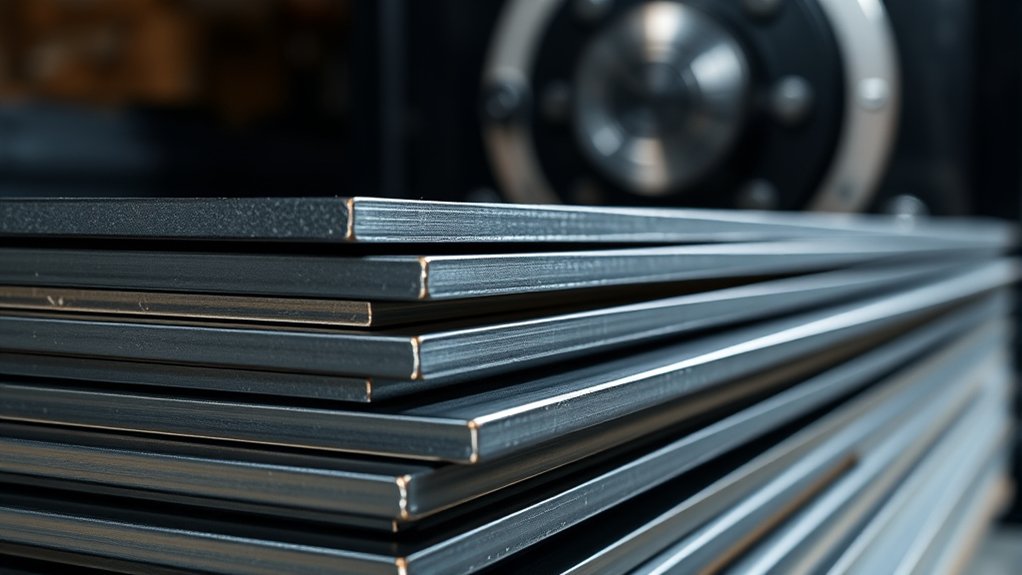
When choosing the right steel gauge for your gun safe, you’ll want to start with at least a 12-gauge steel for basic security, as it resists common break-in tools effectively. The gauge of steel directly influences the security level, with lower gauge numbers indicating thicker, more durable steel.
If you need enhanced protection against sophisticated theft methods, consider a 10-gauge or lower, which offers greater steel thickness and improved resistance. Keep in mind that steel thickness alone doesn’t determine security; the overall construction and use of layered or reinforced materials also play a critical role.
However, thicker steel increases the safe’s weight, which might affect portability and installation options. You’ll want to balance your security level with practical factors like weight, cost, and fire resistance.
Understanding Steel Gauge and Its Impact on Gun Safe Security
When choosing a gun safe, understanding steel gauge is key since lower numbers mean thicker, stronger steel. You’ll want at least 12 gauge for basic protection, but 10 gauge or thicker offers better resistance against break-ins.
Keep in mind, though, that the steel’s quality and how the safe is built also play a big role in its overall security.
Steel Gauge Basics
Although steel gauge might seem like a confusing number, it’s actually a straightforward way to measure steel thickness. The lower the gauge, the thicker and stronger the steel. When choosing a gun safe, understanding steel gauge is essential because thickness directly impacts security.
For example, 12 gauge steel is generally the minimum for reliable protection, while 10 gauge or thicker offers enhanced resistance against drilling, prying, and cutting tools. Keep in mind that the gauge scale varies by material, with 8 gauge steel around 0.1644 inches thick and 14 gauge about 0.0747 inches.
Security Versus Thickness
How much does steel thickness really affect your gun safe’s security? Gauge ratings give you a clear idea: lower numbers mean thicker steel, which generally boosts resistance against forced entry.
Thicker steel often means better security, but it’s not the whole story. You’ll want reinforced construction and strong locking mechanisms to truly protect your firearms.
Safes made from thinner steel (higher gauge ratings) can still offer decent security if they use layered defenses, but they’re usually easier to pry or drill through.
When choosing your safe, consider the balance between thicker steel’s added protection and factors like weight and cost. Ultimately, the right gauge for you depends on the threats you expect and how valuable your stored items are.
Material Quality Effects
Why does steel quality matter just as much as thickness when choosing a gun safe? While steel gauge indicates thickness, the material quality, especially alloy composition, plays a crucial role in security.
High-quality steel with reinforced alloys like boron or manganese resists cutting and drilling better than thicker, lower-grade steel. So, don’t just focus on gauge; consider how the steel is treated and its alloy makeup.
| Steel Gauge | Thickness (inches) | Alloy Composition | Security Impact |
|---|---|---|---|
| 12 | 0.1046 | Standard Steel | Basic protection |
| 10 | 0.1345 | Hardened Alloy | Enhanced cut resistance |
| 8 | 0.1644 | Boron Alloy | Superior tamper resistance |
| 6 | 0.1920 | Manganese Alloy | Maximum security |
Both steel gauge and material quality determine your safe’s true durability.
Steel Gauge Numbers: Thickness and Strength Explained
When you look at steel gauge numbers, remember that lower numbers mean thicker, stronger steel. This thickness directly affects how well the steel resists cutting or prying.
Understanding this relationship helps you choose the right gauge for your needs.
Gauge Numbers Defined
Although steel gauge numbers might seem confusing at first, understanding them is key to choosing the right thickness for your safe. Gauge numbers indicate steel thickness, but the gauge scale works in reverse: higher numbers mean thinner steel.
For instance, 14-gauge steel is about 0.0747 inches thick, while lower gauge numbers like 10 or 12 correspond to thicker, more robust steel. The gauge scale is non-linear, so each step down equates to a noticeable increase in thickness.
While different materials have their own gauge systems, the principle remains the same: lower gauge numbers mean thicker metal. Knowing these gauge numbers helps you pick steel thickness that matches the security and durability level you want for your gun safe.
Thickness Versus Strength
How much does steel thickness really affect your safe’s strength? When choosing gauge thickness, lower numbers like 10 or 12 mean thicker steel, which boosts steel strength and security. Thicker steel better resists cutting, prying, and impact attacks, making your gun safe significantly tougher. Keep in mind, gauge numbers work inversely: the lower the gauge, the thicker the steel.
Here’s what you should know:
- Lower gauge thickness equals greater durability and resistance to forced entry.
- Moving from a higher gauge (like 14) to a lower gauge (like 10) greatly enhances security.
- Steel quality and reinforcement also contribute to overall strength beyond just thickness.
Choosing the right gauge thickness balances your safe’s steel strength and security needs perfectly.
Why Thicker Steel Improves Gun Safe Protection
Because thicker steel has a lower gauge number, it offers much greater resistance to cutting, prying, and drilling, key methods burglars use to break into gun safes. When you choose a safe made with thicker steel, you’re investing in stronger protection that substantially reduces the risk of forced entry.
Thicker steel with a lower gauge number significantly strengthens your safe against cutting, prying, and drilling attacks.
For example, safes constructed with at least 10-gauge steel are about 40% more resistant to break-ins than those with thinner steel. This increased thickness creates a durable barrier that withstands attacks from tools like sledgehammers and power saws.
The relationship between gauge and steel thickness means that as the gauge number decreases, the steel becomes thicker and tougher. By opting for thicker steel, you improve your safe’s ability to resist tampering, offering peace of mind that your firearms and valuables remain secure against common burglary techniques.
Ultimately, thicker steel is a critical factor in enhancing your gun safe’s overall protection.
How Steel Gauge Affects Safe Weight and Portability
When choosing steel gauge, you’ll notice that thicker steel means a much heavier safe, which can be tough to move or install. For example, a 10-gauge safe can weigh twice as much as one made with 14-gauge steel, affecting where you can place it.
You’ll need to balance the added security of thicker steel with the challenges of portability and installation.
Weight Impact Of Gauge
One key factor you’ll notice with steel gauge is how much it influences the weight of your gun safe. The gauge directly impacts the safe’s weight, which affects how easy it is to move and install. Here’s what to keep in mind:
- Lower gauge steel, like 6 gauge, means thicker, heavier steel. Your safe could weigh several hundred pounds more.
- Raising steel thickness from 14 gauge to 10 gauge can add hundreds of pounds, making the safe much heavier.
- This added weight requires more effort and equipment during installation and makes moving the safe far more challenging.
Understanding the weight impact of gauge helps you anticipate the logistics involved in handling and placing your safe, ensuring you’re prepared for the physical demands it brings.
Balancing Security And Portability
Although thicker steel boosts your safe’s security, it also makes it considerably heavier and harder to move. Choosing the right gauge steel means balancing security and portability to fit your needs.
Lower gauge steel increases weight by about 40%, making the safe much tougher for burglars to carry away, but it can weigh several hundred pounds and might require anchoring for stability.
On the other hand, higher gauge steel results in a lighter safe that’s easier to transport and install, though it may offer less resistance to forced entry. You’ll need to weigh how much security you want against the practical aspects of moving and placing your safe.
Ultimately, the right gauge steel balances protection without sacrificing portability too much.
The Importance of Steel Hardness and Alloys for Durability
Because durability hinges on more than just steel’s composition, understanding hardness and alloying elements is essential for choosing the right gauge steel. Steel hardness plays a crucial role in resisting cutting, drilling, and prying, so you want steel that’s been properly heat-treated to boost toughness without adding excess weight.
Reinforced steel alloys, enhanced with elements like boron and manganese, offer the perfect balance of hardness and tensile strength, making them ideal for gun safe security.
Here’s what to keep in mind:
- Steel hardness determines how well your safe withstands abrasion and forced entry attempts.
- Alloys improve steel’s strength and durability while keeping it manageable in weight.
- Reinforced steel combines hardness with toughness, essential for long-lasting protection.
Why Composite and Layered Construction Matter for Gun Safes
When you’re choosing a gun safe, composite and layered construction can make all the difference in security and fire resistance. This approach combines multiple materials like steel, insulation, and reinforced panels to create a tough barrier against break-ins.
With layered construction, you get interior steel plates and foam insulation working together to slow down drilling and prying attempts. These layers often include hardened steel or composite barriers that considerably enhance your safe’s security features.
Selecting Steel Gauge Based on Safe Size and Location
Since the size and location of your gun safe directly affect its vulnerability, choosing the right steel gauge is essential. The steel gauge you pick should match both the safe size and where you plan to place it. Here’s how to decide:
The size and placement of your gun safe crucially determine the appropriate steel gauge for optimal protection.
- For larger safes or those in high-risk locations, go for thicker steel gauges like 10 or lower. This offers stronger protection against tampering and environmental damage.
- Smaller or secondary safes can use thinner gauges like 14 or 16. These balance weight, cost, and security well, especially if the safe is indoors or concealed.
- If your safe will be outdoors or in an exposed location, prioritize thicker steel gauge (10 or lower) to withstand weather and potential attacks.
Balancing Steel Thickness, Lock Quality, and Reinforcements
Although choosing thicker steel provides strong protection, you shouldn’t rely on gauge alone for your gun safe’s security. A well-balanced approach involves combining an appropriate steel gauge with high lock quality and effective reinforcements.
For example, selecting a safe with at least 10-gauge steel offers solid resistance without excessive weight, but pairing that with UL-rated electronic or mechanical locks greatly boosts security. Reinforcements like internal braces, welded seams, and composite door layers further enhance the safe’s toughness, reducing the chance that someone can exploit weaknesses in the steel itself.
When you balance steel thickness with strategic reinforcements and quality locks, you create a thorough defense that’s more effective than simply focusing on thicker steel. This approach ensures your safe is both secure and practical, avoiding unnecessary bulk or cost.
Pros and Cons of Higher vs. Lower Steel Gauge Safes
Deciding between higher and lower steel gauge safes means weighing the trade-offs between security, cost, and convenience. Lower gauge safes, with thicker steel like 10 or 12 gauge, offer superior protection against forced entry, enhancing the overall security of your gun. They also tend to have better fire ratings due to the added thickness. However, these safes are heavier and more expensive, which might complicate installation and moving.
On the other hand, higher gauge safes (14 or 16) are lighter and more affordable, making them easier to install. But their thinner steel is easier to cut or drill through, which reduces their effectiveness in protecting your firearms.
Here are three points to weigh:
- Lower gauge safes provide stronger resistance to break-ins and better fire ratings.
- Higher gauge safes are budget-friendly and easier to handle.
- Balance your need for protection with factors like weight and cost to secure your gun effectively.
How to Verify Steel Quality Beyond Gauge Numbers
Even if you know the gauge number of your safe’s steel, that alone won’t tell you everything about its quality. To verify steel quality, you need to look beyond thickness and check for alloy compositions like boron or manganese, which enhance strength without adding weight.
High-quality steel often undergoes heat hardening or surface treatments such as galvanization to boost resistance to cutting and corrosion. Don’t hesitate to ask manufacturers for detailed specifications or certifications outlining the steel grade and treatment processes used.
Additionally, the presence of reinforced or layered steel construction signals advanced materials beyond basic gauge measurements. If possible, conduct a physical test by trying to drill or cut a sample piece to gauge hardness and overall durability.
Maintenance Tips to Protect and Strengthen Your Safe’s Steel
To keep your safe’s steel in top shape, you’ll want to regularly inspect it for any signs of corrosion or damage and address issues right away. Proper maintenance guarantees your safe remains secure and durable over time.
Here are three key tips to protect and strengthen your safe’s steel:
- Apply a corrosion-resistant coating to exposed steel surfaces, especially if your safe is in a humid area. This prevents rust and extends the steel’s lifespan.
- Use steel reinforcement on vulnerable parts like doors and hinges to boost structural strength and resist forced entry.
- Keep your safe dry and well-ventilated, and periodically tighten bolts, hinges, and locking mechanisms to maintain functionality and prevent moisture buildup that can weaken steel.
Following these maintenance steps will help preserve your safe’s integrity and protect your valuables for years to come.
Frequently Asked Questions
What Gauge Steel Should a Gun Safe Be?
You should go for steel gauge 10 or lower for your gun safe to guarantee strong protection against forced entry. If you just need basic security, 12 gauge can work, but anything thinner like 14 or 16 is better suited for interior panels, not the main body.
Which Is Stronger, 11 or 12 Gauge Steel?
Choosing between 11 and 12 gauge steel is like picking armor for a knight. 11 gauge steel is stronger. It’s thicker by about 0.005 inches, making it tougher to cut or pry open.
If you want maximum protection, 11 gauge will stand firm against attacks, while 12 gauge, though still decent, won’t provide the same level of security. So, go with 11 gauge if strength’s your priority.
Is 10 or 12 Gauge Steel Better?
10 gauge steel is better if you want maximum protection since it’s thicker and more resistant to cutting and prying.
But if you’re okay with slightly less security for a lighter, more affordable safe, 12 gauge steel works fine. It really depends on your security needs and budget.
If you want top-tier defense against tools like saws and torches, go with 10 gauge. Otherwise, 12 gauge is adequate for most home use.
Is 14 Gauge Steel Strong for Gun Safe?
Imagine a light breeze nudging a sturdy fence. It holds, but you wouldn’t trust it against a storm. That’s what 14 gauge steel feels like for a gun safe.
It’s strong enough for basic protection and easier to move, but it won’t stand up well to serious break-in attempts with saws or torches. If you’re after solid security, you’ll want thicker steel, but 14 gauge works if you need something lighter and budget-friendly.
Conclusion
Choosing the right steel gauge for your gun safe isn’t just about numbers—it’s about peace of mind. Thicker steel means stronger protection, but don’t forget to balance it with quality locks and reinforcements. After all, a safe is only as strong as its weakest part.
So, before you decide, ask yourself: do you want a safe that whispers security or one that shouts it from every corner? Your guns deserve nothing less.
When selecting the right gauge steel for your gun safe, consider both the thickness and the overall construction to ensure maximum security.