What Humidity for Gun Safe: Ideal Range and 8 Proven Control Methods
The ideal humidity for a gun safe is between 30% and 50%, with the best range often cited as 40% to 50%. This range protects steel parts from rust while preventing wood stocks from cracking. Maintaining these humidity levels is essential to preserve the condition and value of your firearms over time.
This information targets gun owners and collectors who want to prevent corrosion and damage inside their safes. You will learn the perfect humidity range and effective ways to monitor and control moisture for long-lasting firearm preservation.
Key Takeaways
- Keep relative humidity between 40% and 50% inside your gun safe to prevent rust and wood damage.
- Avoid letting humidity drop below 30% since overly dry air can crack wooden gun stocks and grips.
- Maintain your gun safe temperature about 3 degrees warmer than outside air to reduce moisture buildup.
- Regularly check your safe’s humidity with a reliable hygrometer or digital meter for accuracy.
- Use either electric or chemical dehumidifiers and adjust based on your humidity readings.
- Place your gun safe away from highly humid or damp areas like basements or garages.
1. What Is the Ideal Humidity Range for a Gun Safe?
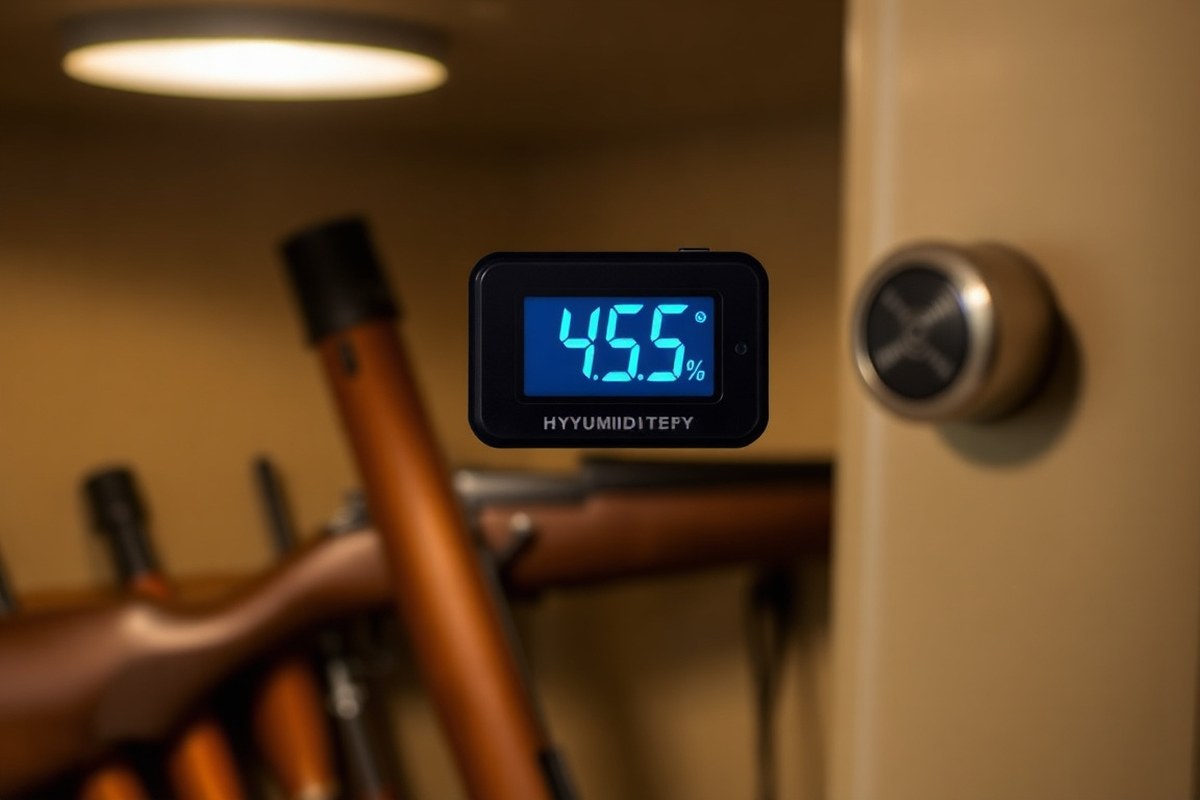
The ideal humidity level inside a gun safe should be kept between 30% and 50%, with many experts recommending a tighter range of 40% to 50% for best results. This range helps prevent rust on bare steel parts while avoiding excessive dryness that can cause wooden stocks and grips to crack. Maintaining humidity within these limits safeguards your firearms from the most common moisture-related damage.
Keeping humidity below 30% can dry out wood components, leading to cracks and warping over time. This is especially important if your firearms have traditional wooden stocks or grips. On the other hand, exceeding 50% humidity increases the risk of corrosion and rust, particularly on steel surfaces like barrels and actions. Rust damage can appear in as little as two to four weeks if humidity climbs above 70%, so it’s critical to avoid sustained high moisture levels inside your gun safe.
Because a gun safe is a sealed steel box, the humidity trapped inside when the door closes remains until it is actively controlled. The moisture content of the air when you seal the safe sets the starting point. This is why you must regularly monitor and maintain the interior humidity. Using a reliable digital hygrometer allows you to check if your safe stays within the 30% to 50% range. Frequent checks help you catch any changes early before damage occurs.
To achieve and maintain this ideal range, start by letting fresh, dry air in before locking the safe for longer-term storage. If your climate or room humidity tends to be high, employ passive solutions such as renewable desiccants or moisture-absorbing products designed for gun safes. These typically cost between $10 and $30 and last several months before needing recharging. In more humid environments or during seasons when moisture climbs, a small electric dehumidifier wire rod rated for gun safes, usually priced from $20 to $50, can provide active control.
Good humidity control is not only about protecting your investment but also easing maintenance. Properly stored firearms require less frequent cleaning and upkeep because rust and wood damage are minimized. Conversely, failing to keep humidity balanced results in accelerated wear and potential costly repairs. Adjust your humidity-control methods seasonally, as winter tends to lower indoor humidity below 30% and summer can push it above 50%. Consistent monitoring and adjustment reduce the risk of either extreme.
2. How Temperature and Humidity Together Affect Firearm Preservation
Temperature greatly influences humidity levels inside a gun safe, affecting the risk of rust forming on your firearms. When the temperature inside the safe rises, air can hold more moisture, increasing the relative humidity if no moisture is removed. Conversely, if the temperature drops suddenly, the relative humidity may exceed 100%, causing water vapor to condense on metal surfaces. This condensation accelerates corrosion and rust, damaging your firearms over time.
Daily temperature swings inside the safe pose a bigger threat than a steady high or low humidity reading. For example, a steel safe placed in a garage experiences wider temperature variations throughout the day compared to one in a climate-controlled closet. Even if the average humidity in both locations is the same, the garage safe is more likely to develop rust due to this condensation cycle. Rapid temperature drops cause moisture trapped in the air to settle on cold metal, resulting in creeping rust that is difficult to reverse.
Maintaining an even temperature between 50 and 70 degrees Fahrenheit inside your gun safe is ideal for firearm preservation. This range minimizes humidity fluctuations, reducing the chance of condensation on your guns and ammo. Temperatures below 50°F tend to increase relative humidity, while temperatures above 70°F may speed up chemical reactions that degrade finishes and wood stocks. Keeping the environment stable encourages long-term protection for metal and wood components alike.
To control humidity together with temperature, locate your gun safe in an area where temperature changes are modest, such as an interior closet or conditioned room rather than an unheated basement or garage. Use a reliable gun safe hygrometer to monitor both temperature and relative humidity inside. If large swings appear, adjust the placement of the safe, improve room insulation, or add a gun safe dehumidifier that maintains moisture levels within the recommended 40% to 50% range.
Gun safes store firearms best when internal climate remains steady. Avoid storing your safe where temperatures cycle widely day and night, as this will expose metal parts to repeated moisture condensation cycles. Low humidity below 30% can dry out wooden grips and stocks, causing cracking, while high humidity over 60% promotes rust and corrosion. Balancing both temperature and humidity is essential for keeping your firearms in peak condition.
Store your gun safe in a stable-temperature environment and use daily hygrometer readings to spot dangerous humidity spikes caused by temperature drops.
3. Tools to Accurately Monitor Gun Safe Humidity Levels
To accurately monitor the humidity inside your gun safe, you need a reliable digital hygrometer. These devices measure relative humidity and temperature, helping you maintain the safe environment your firearms require. Regular checks ensure your tools and investments stay protected from moisture damage.
Choosing the Right Digital Hygrometer
Select a digital hygrometer with high accuracy, ideally one that offers ±0.04% relative humidity precision. Many models fall in the $10 to $30 range and include temperature readings to track how heat interacts with moisture inside your safe. Avoid analog hygrometers; digital versions provide more reliable data to prevent rust or corrosion.
Look for a device that displays dew point as well, which signals when condensation might form on your metal parts. Some models have memory functions to record humidity trends over time, a useful feature if you don’t check daily. Accuracy is important because even small errors can mislead you into thinking your guns are safe when humidity is too high or too low.
Installing and Placing the Hygrometer Inside Your Safe
Place the hygrometer in a visible spot inside the gun safe, near firearms but away from direct contact with cold or warm surfaces that could skew readings. Avoid placing it on the safe floor or directly touching metal shelves. Position it around eye level or attached to the door’s interior so you can quickly check levels without disturbing your gear.
Use double-sided tape or adhesive strips for easy removal and repositioning during maintenance. If your safe is large, consider multiple hygrometers to monitor humidity in several areas, especially near dehumidifying devices or heat sources like light bulbs.
Start monitoring immediately after installation. Keep in mind that humidity may take a day or two to stabilize once you’ve changed control methods.
Routine Monitoring and Record Keeping
Check the hygrometer at least once a month to ensure your gun safe humidity stays within the recommended 30%-50% range. In more humid environments or during seasonal changes, increase the frequency to weekly checks. Regular monitoring lets you catch rising humidity early before it causes damage.
Create a simple log to record date, humidity, and temperature each time you check. Tracking these values helps you see trends and judge whether adjustments to your dehumidifiers or silica gel packs are needed.
- Check humidity in the morning when indoor conditions are stable
- Record humidity and temperature values in a dedicated notebook or spreadsheet
- Notify yourself for monthly or weekly checks using phone reminders or calendar alerts
- Inspect or replace batteries in digital hygrometers annually to maintain accuracy
- Compare readings before and after adjusting humidity control devices
- Keep documentation for warranty or safe maintenance records
A consistent routine with accurate tools is your best defense against moisture buildup inside your gun safe. This approach helps preserve each firearm’s condition and keeps your collection ready for use.
4. Comparing Humidity Control Methods for Gun Safes
Choosing the best humidity control method for your gun safe depends on your safe’s location, power availability, and how much maintenance you want to handle. Electric rods, silica gel desiccants, and renewable dehumidifiers like the Eva-Dry each have pros and cons in cost, upkeep, and effectiveness.
Electric rods, such as the Lockdown GoldenRod, plug into an outlet and warm the air inside the safe to about 100-120°F. This heat prevents moisture buildup and creates air circulation to reduce humidity levels. They require little maintenance beyond occasional dusting and offer the most consistent protection. They are ideal if your safe is near a power source.
Silica gel desiccants absorb moisture passively without power. Regular silica gel packs need replacement once saturated, which can happen every few months depending on the environment. They’re inexpensive upfront but require frequent swapping. They work well in low-humidity environments or as supplemental moisture absorbers.
Renewable dehumidifiers like the Eva-Dry E-500 combine the benefits of silica gel with reusability. These units need recharging every 30-60 days by plugging them in outside the safe to dry out the beads inside. Eva-Dry claims about 10 years of service life per unit, making them cost-effective long term. They’re useful when you can’t plug in a conventional electric rod but want a more consistent solution than disposable packs.
| Humidity Control Method | Power Required | Maintenance | Effectiveness | Cost Range | Recommended Use |
|---|---|---|---|---|---|
| Electric Rod (e.g., GoldenRod) | Yes, plug-in | Low; occasional dusting | Very consistent; handles temperature swings well | $30, $70 | Safes near electrical outlets |
| Silica Gel Packs | No | High; replace packs every few months | Moderate; limited capacity, less consistent in high moisture | $5, $20 per pack | Low humidity areas or supplemental use |
| Renewable Dehumidifier (e.g., Eva-Dry E-500) | No during use, yes for recharging | Moderate; recharge every 30-60 days, 10 years usable | Good; better than packs, less consistent than electric rod | $30, $50 per unit | Safes without power access |
Combining silica gel packs with an electric rod can improve moisture control by absorbing residual humidity that the rod might miss. Silica gel alone might get saturated quickly in humid climates, leaving firearms vulnerable since it only absorbs moisture up to its vapor pressure limit. Conversely, electric rods handle changes in temperature better, preventing condensation and corrosion more effectively.
Renewable units like the Eva-Dry sit between these options, offering effective moisture absorption without constant replacements but requiring a reliable routine to recharge. Missing recharges can compromise their performance and lead to moisture buildup inside the safe. Electric rods are “set-and-forget” as long as power is reliable.
5. Practical Steps to Stabilize and Maintain Desired Humidity
To stabilize and maintain proper humidity in your gun safe, start by preparing the safe carefully before storing your firearms. Use a reliable dehumidifier or desiccant and follow a strict maintenance schedule that includes regular humidity checks and timely recharging or replacement of moisture-absorbing products.
Preparing Your Safe Before Loading Firearms
Before placing your firearms inside the safe, ensure the interior environment is dry and stable. New safes may have residual manufacturing moisture or dust that can raise humidity levels. Cleaning and airing out the safe ahead of time prevents mold and rust. Follow these steps to prepare your safe properly:
- Wipe down the interior surfaces with a dry, soft cloth to remove dust and particles.
- Leave the safe door open for several hours in a well-ventilated room to lower humidity inside.
- Place a hygrometer inside and monitor for stable readings around 30-50% relative humidity before adding firearms.
- Install your chosen humidity control device, such as a dehumidifier or desiccant, and allow it to operate until the desired humidity level is reached.
- Check the safe’s door seal for any gaps where moisture could enter and replace it if needed.
Always wait until your gun safe reaches a stable humidity below 50% before storing firearms to minimize the risk of rust and corrosion.
Using Dehumidifiers and Desiccants Correctly
Dehumidifiers designed for gun safes gradually lower interior moisture and keep it stable by slightly warming the air and maintaining humidity below the condensation point. Desiccants absorb humidity directly but need recharging or replacing to remain effective.
Use dehumidifiers by plugging them in consistently and monitoring the hygrometer to confirm stable conditions. Desiccants generally require recharging every 1 to 3 months, depending on the safe’s humidity load and desiccant size.
- Choose a dehumidifier sized appropriately for your safe, typically around 10-20 watts for small to medium sizes.
- Position desiccants off the floor and replace or recharge them every 1-3 months by drying them in an oven or exposing to sunlight, as per the manufacturer’s instructions.
- Avoid overcrowding desiccants to allow proper airflow and moisture absorption.
- Do not rely on a single solution; combining a dehumidifier with desiccants helps balance humidity fluctuations due to seasonal changes.
Check the hygrometer weekly during the first month of use to ensure your humidity control method works and adjust placement or recharge intervals accordingly.
Regular Checking and Maintenance Schedule
Maintaining the ideal humidity inside your gun safe requires a routine of periodic monitoring and prompt action. Check your hygrometer weekly at first, then transition to biweekly or monthly once levels stabilize between 30% and 50% relative humidity.
Set reminders for desiccant recharging and dehumidifier maintenance, such as filter cleaning or electrical inspections, every 1 to 3 months. In cases of high external humidity or frequent safe openings, increase the frequency of checks.
- Inspect your hygrometer weekly during the first 4 weeks; adjust your moisture control strategy as needed.
- Recharge or replace desiccants every 1-3 months, depending on moisture absorption rate.
- Clean and service electrical dehumidifiers every 3-6 months to ensure consistent operation.
- Keep the safe’s door seal intact and clean; replace it if damaged.
- Record humidity readings and maintenance actions in a log for tracking trends and troubleshooting.
Ignoring humidity checks can let moisture build unnoticed, risking rust damage despite using control devices.
6. Common Mistakes Gun Owners Make with Humidity Control
Ignoring humidity in your gun safe is a common mistake that can lead to rust, even if your firearms are locked away securely. Humidity from the surrounding environment slowly seeps through seals and small gaps in the safe, allowing moisture to accumulate. If you don’t monitor humidity, it can rise above the ideal 40%, 50% range, creating conditions where rust forms on metal parts and wooden stocks degrade.
Another frequent error is improper use or placement of humidity control devices like desiccant packs or electric dehumidifiers. Simply placing a desiccant pack without replacing or recharging it regularly means it loses effectiveness. Plug-in dehumidifiers run inefficiently if the safe is poorly sealed or placed in a damp room, leading to constant cycling and wear.
Excessive dryness below 30% relative humidity also causes problems, especially for guns with wooden grips or stocks. Wood can crack, warp, or shrink, which affects how your firearm functions and looks. Some owners only focus on preventing rust and overlook this damage risk.
- Failing to regularly check humidity with a reliable hygrometer; fix by setting a schedule to check weekly or monthly.
- Using desiccant packs without drying or replacing them every 6, 8 weeks; fix by monitoring their color change indicator or weight.
- Placing the safe in a damp area like a basement without ventilation; fix by relocating the safe or using a stronger dehumidifier.
- Sealing the safe poorly or leaving the door ajar; fix by inspecting seals and always closing the door tightly.
- Relying solely on a single control method; fix by combining desiccants with electric dehumidifiers for consistent control.
- Ignoring drops below 30% humidity; fix by adding a small humidifier or a moisture source designed for storage.
- Not accounting for seasonal humidity spikes; fix by adjusting dehumidifier settings as weather changes.
Fixing humidity spikes involves identifying the source of moisture and increasing dry air circulation. A quality plug-in dehumidifier typically costs $50 to $150 and can maintain levels below 50%. You must check seals and placement to ensure its efficiency. For excessive dryness, introducing moisture carefully is key. Small, commercial humidifier packs designed for gun safes slowly release moisture to maintain the 40% range. Avoid overdoing it, since over-humidification leads to rust again.
Taking consistent readings and combining monitoring with adjusted equipment use protects your firearms from corrosion and wood damage. Doing this doesn’t require elaborate tools, a digital hygrometer ($10, $20) plus basic desiccant packs or a small dehumidifier usually suffices for most safe sizes and home environments.
7. How Location and Seasonality Affect Gun Safe Humidity
The location of your gun safe and the season have a strong impact on humidity levels inside. Safes placed in garages or basements often face higher humidity, requiring more active moisture control. Adjusting your dehumidification strategy with seasonal changes prevents rust and other damage caused by moisture shifts.
Challenges of Garage and Basement Safes
Garages typically have poor environmental control. They tend to be hotter in summer and colder in winter, with greater humidity swings because of exposure to outdoor air. This variability can cause condensation inside your gun safe, especially if temperature differences cause firearms brought in from cold to warm areas to sweat.
Basements are generally more humid than above-ground rooms but more stable in temperature. While placing a gun safe in a basement is possible, controlling humidity requires extra steps, such as using effective dehumidifiers and moisture absorbers. Without these, metal parts can start showing rust in just weeks in a damp basement environment.
- Choose a location away from windows or doors that open outside
- Use 12-inch dehumidifier rods sized roughly one per 20 cubic feet of safe volume
- Renew silica gel packs regularly, about every 2 to 3 months in humid areas
- Consider electronic dehumidifiers for garages due to extreme fluctuations
- Ventilate the room where possible to reduce ambient humidity
- Avoid storing firearms immediately after outdoor use without acclimating them to indoor temperatures
Adding inexpensive absorbing devices like silica gel canisters offers additional insurance. Regular inspection for early signs of rust or moisture helps catch problems before damage occurs.
Adjusting Humidity Controls for Summer and Winter
Humidity inside your gun safe changes with the seasons. Summer usually brings higher moisture levels from warm, humid air, while winter lowers indoor humidity but increases the risk of condensation when firearms come inside cold. Adjust your humidity controls accordingly to maintain consistent safe conditions.
During summer months, increase the capacity or frequency of use for dehumidifiers or silica packs. Check and replace moisture-absorbing materials every 1 to 2 months if you notice dampness. Lower the safe humidity target toward the 40% mark to prevent rust.
In winter, reduce the dehumidification intensity to avoid drying the air too much, as overly dry conditions can damage wooden stocks or grips. Instead, focus on managing temperature changes by allowing firearms to warm slowly before placing them in the safe to avoid condensation.
- Summer: Replace silica gel packs every 1 to 2 months
- Winter: Allow firearms to reach room temperature before safe storage
- Year-round: Use a hygrometer to monitor humidity and adjust absorber reload times
- Winter: Consider lower power on electric dehumidifiers to prevent excessive dryness
Monitoring your humidity and temperature closely during seasonal transitions reduces risks from rapid environmental changes.
Climate Zones and Their Impact on Safe Environment
Climate plays a large role in deciding the type and strength of humidity control needed. Arid climates with low ambient humidity require less aggressive moisture control, often relying on simple silica gel packs. Conversely, coastal or tropical climates with consistently high humidity demand more strong dehumidifiers or renewable moisture absorbers.
When picking a dehumidifier, consider your regional climate and the safe’s placement. Electronic dehumidifiers work well in hotter, more humid zones but come at a higher initial and running cost than passive rods or silica packs.
Pricing for renewable products like silica gel packs ranges from $10 to $30 per unit, while electric dehumidifiers suitable for gun safes may cost $50 to $150 depending on capacity and features. Factor in power use and maintenance when choosing what fits your environment and budget.
- Dry climates: Silica gel or basic desiccant rods suffice
- Humid climates: Invest in electric dehumidifiers or multiple rods
- Coastal areas: Choose rust-resistant safe models and high-capacity moisture control
- Mountainous or variable climates: Monitor closely and adjust control methods seasonally
- Check local weather averages as a guide for typical humidity ranges
Tailoring humidity control to your local climate and safe location helps protect your firearms year-round while managing costs and maintenance effort.
8. When to Upgrade: Signs You Need a Better Dehumidifier
Your current humidity control might not suffice if you notice persistent rust spots on your firearms even after using desiccant packs or silica gel. Another warning sign is if your gun safe’s recorded humidity regularly climbs above 50%, which increases corrosion risk. In such cases, investing in an electric dehumidifier designed for gun safes becomes a smart choice to maintain optimal moisture levels and protect your firearms.
Electric dehumidifiers actively remove moisture using a refrigeration or thermoelectric process, offering consistent humidity control. They often regulate humidity between 30% and 50%, the recommended safe range for firearms. You should consider upgrading when passive methods can’t stabilize humidity during humid seasons or in damp locations, or when your collection grows and requires tighter preservation conditions. Here’s a decision checklist to help determine if it’s time to move to an electric unit:
- Humidity in your safe frequently exceeds 50% despite passive control methods.
- Visible rust or corrosion appears on your firearms within weeks or months.
- Environmental conditions near the safe include high ambient humidity or temperature fluctuations.
- Your gun safe is in a basement or unventilated space prone to moisture buildup.
- Frequent replenishment or replacement of desiccants is inconvenient or expensive.
- You desire precise humidity control with digital monitoring and alert features.
- Current dehumidifying rods or packs fail to dry the safe effectively.
Electric rods are an alternative but carry some safety considerations. Unlike desiccants, electric rods plug into power outlets and heat up to reduce humidity. They must be certified for safe use in gun safes and installed according to manufacturer instructions to prevent fire hazards. Never use an electric rod in a safe without proper ventilation or designed circuitry, and always check local electrical codes.
Check your safe’s relative humidity weekly during humid months to catch problems early and decide if professional-grade electric dehumidification is needed.
Costs for electric dehumidifiers range from $50 to over $200 depending on capacity and features. Proper sizing for your safe volume is important, too small a unit won’t control humidity effectively, and oversizing wastes energy. Expect ongoing energy costs around a few dollars monthly, which is reasonable for protecting valuable firearms over time.
Good results mean maintaining a consistent humidity level near 40% with no new rust spots or corrosion after long-term storage. If you see ongoing moisture condensation inside the safe or quick recurrence of rust, your humidification system likely needs upgrading. Consider professional consultation for very large or climate-challenged gun safes to choose the best electric dehumidifier model and installation method that meets safety and performance needs.
Step-by-Step Action Plan for Maintaining Optimal Gun Safe Humidity
Keep your firearms protected by controlling humidity consistently. Follow these steps to get your gun safe’s environment right and maintain it well.
- Before Setup: Choose a gun safe location away from extreme temperature swings and moisture sources like basements or garages. Check humidity levels with a digital hygrometer to confirm baseline conditions.
- Day 1: Install a reliable hygrometer inside the safe to track humidity in real time. Confirm it reads between 35% and 50% relative humidity for ideal firearm preservation.
- Week 1: Set up a dehumidifier or use quality desiccants inside the safe. Monitor daily to see the humidity drop into the target range without drastic fluctuations.
- After 2 Weeks: Inspect firearms and wooden stocks for any signs of rust or warping. If issues appear, adjust humidity controls or increase airflow.
- Monthly: Replace or recharge desiccants as needed and test your dehumidifier’s function. Calibrate your hygrometer to maintain measurement accuracy.
- Seasonally: Prepare for changes in outdoor humidity and temperature by adjusting dehumidifier settings or increasing ventilation to keep conditions stable inside the safe.
- As Needed: Upgrade your humidity control equipment if you notice persistent moisture or corrosion signs despite regular maintenance.
Frequently Asked Questions
What Is the Best Humidity Level to Prevent Rust in a Gun Safe?
Keep gun safe humidity between 40% and 50% to prevent rust without drying wood stocks, protecting bare steel and grips effectively.
Can Too Low Humidity Damage Wooden Gun Stocks Inside a Safe?
Yes, humidity below 30% can dry out and crack wooden stocks and grips, so avoid letting levels drop too low.
How Often Should I Check the Humidity Inside My Gun Safe?
Monitor humidity at least weekly to ensure it stays within the ideal 40-50% range and adjust controls or dehumidifiers as needed.
Are Silica Gel Packs Effective for Controlling Gun Safe Humidity?
Silica gel can help lower humidity but needs regular recharging and works best in small safes or combined with other methods.
Does Storing Firearms in Cases Affect Moisture Control in a Safe?
Foam or soft cases can trap moisture, so ventilate guns occasionally and maintain proper safe humidity to avoid corrosion.
What Temperature Should Accompany Ideal Humidity in a Gun Safe?
Keep safe temperature around 60-70°F along with 30-50% humidity to reduce corrosion and wood damage.
The Bottom Line
Maintaining your gun safe’s humidity between 35% and 50% is key to preventing rust and protecting wood finishes. Regular monitoring and timely adjustments keep your firearms ready and in good condition. Start today by checking your current safe’s humidity levels with a digital hygrometer to set a baseline for better control.