Where Should a Gun Safe Be Placed? 8 Best Location Tips for Security & Access
Where should a gun safe be placed to maximize both security and ease of access? The best location balances protection from theft and damage with quick reach during emergencies. Choose a spot with solid structural support, low moisture, and minimal temperature swings to preserve your firearms.
Begin by assessing your home’s strongest floor and areas with controlled humidity, such as a main-floor closet or a reinforced basement space. This helps ensure your safe remains stable, secure, and in good condition over time.
Key Takeaways
- Place gun safes weighing over 1,000 pounds on reinforced concrete or sturdy ground floors to prevent structural damage.
- Use active dehumidifier rods in basements to keep gun safes within 30-50% relative humidity and avoid rust.
- Check doorway widths before purchase; some safes require at least 22 inches clearance for entry.
- For safes over 750 pounds on wood floors, reinforce the floor and distribute weight to avoid damage.
- Select locations away from direct sunlight and heat sources to maintain a stable internal safe temperature.
- Balance security and emergency access by placing the safe somewhere accessible yet concealed, like a bedroom closet.
1. What Is the Best Location to Place a Gun Safe in Your Home?

The best location for placing a gun safe in your home balances quick accessibility, strong security, and favorable environmental conditions. Generally, the master bedroom closet stands out as the ideal spot, offering fast access in emergencies, good concealment, and moderate environmental risks. Placing the safe in a discreet, indoor location, such as a closet or a dedicated safe room, helps reduce theft risk while ensuring you can retrieve firearms easily when needed.
Begin your placement decision by prioritizing accessibility. You want your safe within immediate reach for authorized users, especially during emergencies. The master bedroom closet or an easily reached interior closet fits this need best, providing the ability to open the safe quickly without exposing it to visitor traffic or common areas. Avoid overt locations like garages, which are more visible to burglars and subject to harsher environmental conditions.
Security is the next critical factor. Select a location that is not obvious to intruders and can be fortified or anchored effectively. Concealment reduces theft attempts, while anchoring to a solid floor surface, concrete slab or sturdy joists, adds resistance to forced removal. Closets on slab floors make anchoring easier and safer than upper floors, which may need additional structural assessment before installation. Avoid spots prone to moisture or fire damage, or plan to mitigate those risks through dehumidifying or fire protection measures.
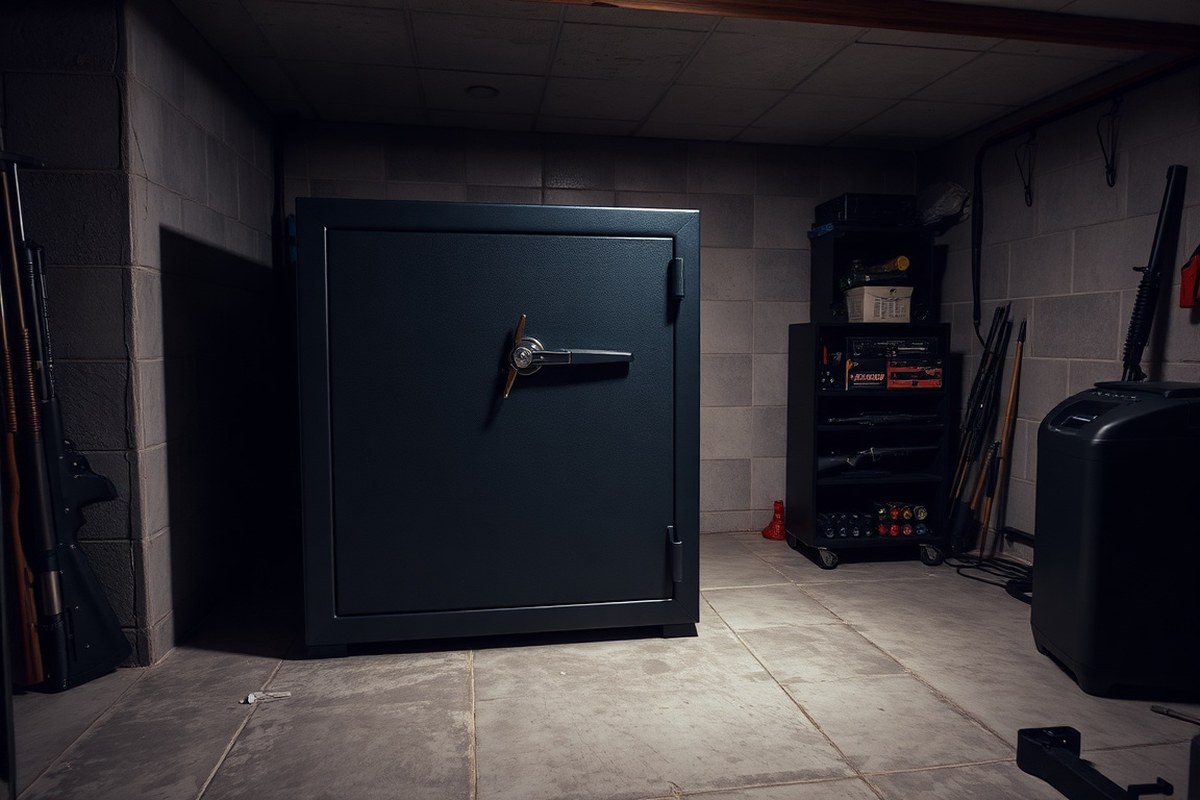
Environmental stability protects your firearms from damage. The basement, despite its high humidity, can work well if you install a dehumidifier to prevent rust and corrosion. A dedicated safe room offers excellent control of temperature and humidity but requires more investment and planning. Rooms with moderate to low humidity and temperature fluctuations, like interior closets or home offices, safeguard your guns without requiring special equipment.
Use a simple decision rule checklist to finalize placement: Confirm the room offers fast access for authorized users; evaluate whether the location can be securely anchored and concealed; check floor strength and environmental conditions; and ensure it fits within your home’s overall security strategy. Any low-scoring factor means you should consider alternative spots or plan mitigation steps, such as adding a dehumidifier or improving locking mechanisms.
Expect to invest roughly $100 to $300 in anchoring hardware and installation tools if securing the safe yourself. Professional installation might add $150 to $500 depending on the floor type and safe weight. Good results appear as quick safe access without visibility to outsiders, stable firearm conditions over time, and a bolted safe that resists theft attempts. Poor placement leads to slow access during emergencies, environmental damage to firearms, or increased theft risk.
Variations depend on your home’s layout and routine. A home office may be better if you spend most daylight hours there, whereas a basement suits heavy, long-gun safes that require concrete floors. Quick-access handgun safes can be stored under a bed or inside bedroom furniture but do not replace a main safe for long guns. Balancing these factors according to your lifestyle results in a secure, accessible gun safe location.
2. How Structural and Weight Considerations Affect Safe Placement

Not all home floors can safely support the weight of a gun safe. Most gun safes weigh between 200 and 1,000 pounds, depending on size and features. When the safe weighs under 1,000 pounds, a solid, level surface such as a concrete slab or hardwood floor usually suffices. However, if a safe exceeds 1,000 pounds, especially on upper floors, the risk of damaging your home’s structure rises significantly. In these cases, placing the safe on the ground floor or basement with concrete support is advisable.
To check your floor’s ability to handle a safe, start by estimating the safe’s total weight. For example, a mid-size safe might weigh 800 pounds. The floor must support this load spread over the safe’s base area. Calculate the load per square foot by dividing the safe’s weight by its footprint, if the safe base is 4 square feet, the weight distribution is 800 / 4 = 200 pounds per square foot. Residential floors are typically designed to support at least 40 to 50 pounds per square foot, so doubling or more requires reinforcement or relocating the safe. Here’s what to do to ensure your floor can handle your gun safe:
- Measure or find the safe’s weight and base area to calculate load per square foot.
- Inspect floor type: concrete slabs handle high loads better than wood joists.
- For upper floors, confirm joist spacing and load ratings with a professional.
- Consider installing a steel or plywood base under the safe to spread the weight.
- Consult a structural engineer if the safe exceeds 1,000 pounds or the floor is old.
- Use a thin rug or carpet pad under the safe to protect floor surface and prevent slipping.
Calling a professional structural engineer is the safest way to avoid costly floor damage when placing heavy safes above the ground floor.
In some situations, floor reinforcements such as sistering joists or adding blocking between floor beams may be necessary before installing a heavy safe. This step can cost several hundred to a few thousand dollars based on the work’s scope and local labor rates, but it prevents sagging and structural failure. A concrete slab basement often requires no special reinforcement, making it ideal for heavier safes. Knowing your floor’s load limits and safe weight helps you place your gun safe where it will remain stable and your home stays intact.
3. Evaluating Environmental Factors: Moisture, Humidity, Temperature
Environmental conditions such as moisture, humidity, and temperature fluctuations can harm both your gun safe and its contents. Controlling these factors inside and around your safe preserves your firearms, prevents rust, and maintains the safe’s structural integrity. Taking steps like avoiding damp areas and using climate control devices will protect your investment effectively.
Common Environmental Hazards for Gun Safes
Humidity is a primary concern because a gun safe generally reflects the moisture level of the room it stands in. In basements or garages, humidity often runs high due to poor ventilation and ground moisture, leading to condensation inside a sealed safe whenever temperatures swing. These fluctuating conditions can cause rust on firearms and corrosion on internal safe components.
Temperature swings are especially extreme in uninsulated or partially insulated garages. Day-night temperature changes rapidly affect the safe’s interior, which traps moisture inside as warm air cools. This condensation cycle accelerates damage not only to firearms but also to wooden stocks, metal parts, and ammunition.
Effective Solutions for Humidity and Moisture
Controlling moisture in and around your gun safe involves a few reliable methods. Using a dehumidifier, like a Golden Rod rod plugged into the safe’s power source, is standard for maintaining low internal humidity. This electric heater type gently warms the safe’s interior walls, preventing condensation without drying the air too much.
Desiccant dehumidifiers, which use moisture-absorbing packets or canisters, offer a non-electric alternative. They are less expensive upfront but require regular replacement or recharging, typically every 30 to 90 days, depending on humidity levels. Rechargeable silica gel packs or clay absorbers can be effective in environments with moderate moisture but may not suffice in very damp areas.
Installing a small standalone dehumidifier in the room where you place the safe also helps. These units range from $50 to $200 and require electricity but control overall humidity to aid in protecting the safe from dampness. Consider combining external and internal methods for challenging environments.
Location-Specific Environment Tips
Basements are often the most humidity-prone locations. When you must place your safe there, use both a room dehumidifier and a Golden Rod inside the safe. Ensure the basement is well sealed against ground moisture and has adequate ventilation. Avoid placing the safe directly on a concrete floor; use a raised platform or wooden pallet to reduce risk of water damage from flooding or seepage.
Garages see wide swings in temperature as they are exposed to outside conditions with less insulation. The large daily temperature range drives moisture inside sealed safes and can cause significant condensation. When choosing the garage for your gun safe, pick a well-insulated model rated for fire and humidity resistance. Use internal climate control units and avoid placing the safe near garage doors or heat sources such as furnaces or water heaters.
Indoor rooms like bedrooms or offices usually offer the most stable environments. These spaces have controlled heating, ventilation, and air conditioning systems that keep temperature and humidity within moderate ranges, generally 30% to 50% relative humidity. In these cases, routine use of a simple rechargeable desiccant pack inside the safe may be enough to prevent moisture buildup.
4. Pros and Cons of Common Locations: Basement, Bedroom, Closet, Garage, Office
Choosing the right spot for a gun safe depends on balancing concealment, quick access, and environmental risks. Typical options include basements, bedrooms, closets, garages, and home offices. Each location offers specific benefits but also presents challenges related to security, moisture, visibility, and weight support.
Below is a table summarizing key pros and cons for common gun safe locations. This comparison can help you decide based on your priorities, such as emergency accessibility or long-term protection.
| Location | Pros | Cons |
|---|---|---|
| Basement | Low visibility to intruders; often surrounded by strong masonry; can support larger safes | Subject to flooding and humidity; may involve stairs and floor loading limits; harder to access quickly |
| Bedroom | Fast emergency access; convenient location; placing safe in bedroom closet adds concealment | Visibility risk if safe is in plain sight; security concerns if not properly anchored or locked |
| Closet (interior) | Discreet and climate-stable; convenient; adds one layer of concealment without delaying access | Check floor strength and doorway clearance; ventilation may be limited, increasing humidity risk |
| Garage | Ample space for large safes; out of main living areas so discreet | Higher environmental risks like moisture and temperature swings; often requires extra protection and climate control |
| Home Office/Main Floor Room | Balances accessibility with concealment if not obvious; can be supervised | Visibility can vary; risks increase if the room is frequently used or has windows facing outside |
For quick access, bedrooms and interior closets rank highest. Placing the safe inside a bedroom closet blends concealment with easy reach, ideal for emergency situations. Basements offer stronger burglary resistance and support for heavier safes, but the risk of flooding and humidity is higher, so taking steps like anchoring the safe off the floor or using a waterproof sealant helps.
The garage offers space for large safes but presents more environmental hazards. Protect safes here with a moisture barrier and consider a climate-controlled environment, especially if storing firearms long term. Visibility and burglary risk in the garage can be lower if the safe is concealed away from entry points.
Closets typically provide climate stability and discreetness. However, always check that closet floors can handle the safe’s weight and that door clearance allows easy opening. Ventilation is important to prevent humidity buildup that can damage firearms and the safe.
Security improves when the safe is anchored per manufacturer instructions and placed out of sight of windows and doors. Avoid high-traffic or obvious areas that guests or children frequent. The final choice depends on your balance between fast access and protecting your firearms from theft, damage, or environmental harm.
5. Balancing Accessibility and Security for Emergency and Everyday Use
Placing a gun safe involves balancing quick, authorized access with preventing theft or unauthorized use. A location offering rapid access in emergencies often conflicts with maximum concealment and security. Understanding your priorities and household risks helps select a spot that minimizes these trade-offs.
Emergency Accessibility Best Practices
For emergency use, speed and ease of access are important. The master bedroom is frequently chosen because it offers the fastest access when an intruder is suspected or during urgent self-defense situations. Despite its security risks, burglars often check the master bedroom first, it may be justified depending on your circumstances and local crime rates.
Prioritizing emergency access while reducing risk can mean installing a smaller quick-access safe in the master bedroom for one or two firearms, paired with a larger, more secure safe located elsewhere. Lockers with biometric or keypad entry provide faster access than traditional key locks. Placement near the bed or within arm’s reach reduces the time needed to retrieve a firearm, critical in seconds-sensitive scenarios. Key factors for emergency placement include:
- Location within 3 to 5 feet of your bed for eyesight-limited situations
- Use of biometric locks or PIN codes to avoid fumbling with keys
- Stable surface placement to prevent tipping during quick access
- Easy reach but out of sight from windows or common pathways
- Clear space around the safe to allow rapid opening
Regular drills can help all authorized users gain muscle memory and reduce retrieval times. Avoid placing emergency safes in high-traffic or visible areas, even within the bedroom, to avoid drawing attention during a break-in.
Securing Access Credentials and Codes
Securing the means to open your safe is as critical as placing the safe itself. Unauthorized access often results not from the safe’s physical security but from poorly protected codes, keys, or biometric data. Here are steps to secure access methods effectively:
- Store backup keys or override codes in separate, secure locations known only to trusted family members
- Use strong, unique PIN codes that avoid birthdates, anniversaries, or easily guessed numbers
- Limit the number of people with access credentials and update or change codes periodically
- Enroll only primary users in biometric systems, and disable fingerprint access for visitors or children
- Keep written codes or keys out of sight and never taped to or near the safe
Biometric locks offer convenient access but require maintenance. Regularly clean scanner surfaces and review authorized profiles to avoid accidental lockouts or unauthorized access. Regularly review the audit logs of your safe, if it offers this feature, to spot any unusual access attempts.
Avoiding Common Security Pitfalls
Choosing accessible yet secure placements often leads to mistakes that compromise safety. For example, placing a safe too visibly in a bedroom or living room sacrifices concealment, increasing theft risk. Conversely, hiding a safe in a basement without easy access can hinder emergency use. The following common errors should be avoided:
- Placing safes near windows, doors, or high-visibility areas that burglars scan first
- Ignoring secure anchoring, which can allow safes to be carried away or pried loose
- Leaving keys, access cards, or codes in obvious or shared locations
- Failing to update or test access credentials regularly
- Over-relying on a single safe without a complementary quick-access option
- Not training all authorized users on emergency access procedures
Do not store a gun safe’s backup keys or access codes inside or near the safe itself.
Reassessing your safe placement annually or after changes in household composition or security concerns helps maintain the right balance. Combining a highly secure, concealed safe with a smaller quick-access unit tailored to emergency needs resolves the core tension between accessibility and security without forcing a compromise.
6. Legal, Insurance, and Fire Safety Considerations for Placement
Laws require gun owners to store firearms securely to prevent unauthorized access, especially by children. Many states mandate locking firearms in a safe or using a locking device when not in use. For example, California’s SB 53 law specifically defines secure storage, requiring firearms to be kept in a locked container or disabled with a trigger lock. Compliance means placing your safe in a location that is both physically secure and out of easy reach. Check your state and local laws regularly, as requirements vary and may change.
Insurance policies frequently include clauses about firearm storage, and improper placement can jeopardize coverage. Insurers often require safes to be anchored, locked, and positioned so theft is difficult. Keep your insurance agent informed of your safe’s exact placement to ensure it meets policy conditions. For instance, a safe placed in an unlocked or easily accessible spot may invalidate theft claims. To avoid complications, request written confirmation from your insurer that your setup aligns with their security expectations.
Fire resistance should influence where and how you place your gun safe. Many safes provide a rating indicating how long they withstand certain temperatures, such as 30 minutes at 1400°F. Position your safe away from heat sources like fireplaces or direct sunlight, which can degrade its fire resistance. Installing the safe in a cooler, interior room or basement increases protection during a fire. Adding fireproof mats or insulation beneath the safe can improve its fire resistance. These precautions help maintain safe integrity, safeguarding both guns and important documents.
Balancing legal, insurance, and fire safety considerations requires a clear checklist. First, confirm compliance with state and local gun storage laws, including any requirements for locking mechanisms and placement. Second, verify insurance policy demands regarding safe type, location, and anchoring. Third, avoid heat, water, and environmental risks by selecting an interior spot away from furnaces or water pipes. Document these steps for your records. Taking these actions reduces legal risks, ensures coverage, and protects your valuables during emergencies.
Special cases like California call for extra caution. The state’s secure storage law is strict, and failure to meet it can lead to fines or criminal charges. California requires guns be stored with a locking device or in a locked safe when not in use. Keeping the safe in a discreet, locked room or closet often satisfies this. Consult California’s firearm regulations and update your safe placement if your living situation changes. Always stay informed about local ordinances to avoid legal trouble.
7. Anchoring, Concealment, and Security Integration Strategies
Securing a gun safe involves physically anchoring it, choosing effective concealment methods, and integrating it with home security technology. Anchor your safe to a sturdy floor or wall to prevent removal. Concealment reduces the chance of discovery but does not replace locking or anchoring. Adding alarms, cameras, and smart locks creates multiple layers of defense that improve protection.
Proper Safe Anchoring Techniques
Anchoring a gun safe stabilizes it and prevents thieves from carrying it away. Most safes come with pre-drilled holes and a hardware kit designed for this purpose. The ideal spots for anchoring are concrete floors or solid wooden subfloors, where bolts or lag screws can be securely fastened. To anchor your safe, follow these steps:
- Place the safe in the desired location, preferably over a solid concrete slab or sturdy wooden floor joists.
- Mark the pre-drilled holes on the floor or wall through the safe’s base or back.
- Drill pilot holes into concrete (using a masonry bit) or wood (using a standard drill bit).
- Insert the anchor bolts or lag screws included with your safe’s hardware kit.
- Tighten the bolts fully to secure the safe, ensuring it does not shift.
Anchoring costs typically range from $10-30 in hardware if you do it yourself. Using a professional can cost $50-100 depending on floor type. Keep the safe’s weight in mind: heavier safes are less likely to be moved if anchored properly. Avoid anchoring to drywall or weak surfaces, which won’t hold bolts well and risk wall damage.
Effective Concealment Options
Concealment hides the safe from plain view, reducing the chance of intruder discovery but not substituting for a strong lock or anchoring. Choose locations where foot traffic is low or where the safe can blend in with normal furnishings. Common concealment methods include:
- Inside closets behind clothing or stored boxes
- False walls or hidden compartments built into cabinetry
- Gun safes disguised as furniture, such as bookshelves or dressers
- Under-bed safes mounted out of sight
- Safes hidden behind removable panels or artwork
- Closet safes sized to fit narrow spaces, making them less obvious
- Safes positioned in rooms with limited access or visibility
Choose concealment that maintains quick access but reduces exposure, especially in high-traffic rooms or near entrances. Remember, concealment adds security only when combined with locked, anchored safes and controlled access.
Integrating with Home Security Systems
Integrating your gun safe with home security technology provides alerts, evidence, and deterrence. Alarms can immediately notify you or a monitoring service if the safe is tampered with. Surveillance cameras placed at entry points and near the safe provide video proof and discourage unauthorized access. Consider these integration tips:
- Install an alarm sensor on the safe door linked to your home security system
- Position cameras to cover the safe area and main home entrances
- Use smart locks on the safe for remote monitoring and instant alerts via smartphone
- Consult your monitoring service about integrating safe sensors for quick emergency response
- Keep security devices powered and maintained to ensure reliability
- Automate alerts for low battery or malfunction to avoid gaps in protection
- Combine safe alarms with perimeter security systems for layered protection
Smart home features like app-based control and real-time notifications help you stay aware of your safe’s status at all times. Dependence on technology means regular maintenance and battery checks are necessary. Discuss your layered defense setup with security professionals to optimize your system’s response time and coverage.
8. Common Placement Mistakes and How to Avoid Them
Placing a gun safe in the wrong spot can reduce its effectiveness, pose safety risks, and even damage your firearms over time. A frequent error is ignoring environmental conditions that cause moisture and temperature shifts, which may lead to rust or warping of guns inside the safe. Fixing this usually means relocating the safe to a room with stable temperatures around 60° to 75°F and humidity levels below 50%.
Many gun owners install their safes without proper anchoring, which compromises security by making the safe susceptible to theft or tipping over. If your safe isn’t anchored, you should bolt it to the floor or wall using manufacturer-approved hardware. This often requires drilling into concrete or studs and costs around $20 to $50 for anchors, which is a small price for improved safety.
- Placing a safe near heating vents or in direct sunlight, move it to a cooler, shaded area with stable temperature.
- Installing on floors unable to support the safe’s weight, consult a structural engineer or add reinforcement.
- Obstructing safe access with furniture or clutter, clear a dedicated space around the safe for quick, safe retrieval.
- Failing to maintain locks and electronic components, regularly clean and test locking mechanisms following manufacturer guidelines.
- Ignoring local laws and fire regulations, review and adjust the placement to be compliant with your state and insurer requirements.
- Skipping professional installation if unsure, hire a certified installer to ensure proper placement and security.
Maintenance mistakes such as neglecting to calibrate humidity controls or failing to check the safe’s seals can shorten the safe’s lifespan and jeopardize your firearms. A simple fix is to use silica gel packs or a dehumidifier inside the safe and replace them every few months. Inspect door seals for wear, and lubricate hinges with a light oil annually to ensure smooth operation.
Consult a professional installer if your safe weighs over 500 pounds, or if your home has unusual flooring, to avoid costly errors and guarantee safe setup.
Seeking expert advice also makes sense if you live in areas prone to flooding or have concerns about fire resistance. Professionals consider all these factors to optimize placement, ensuring your safe both protects your firearms and meets legal and insurance guidelines. While hiring help may cost $100 to $300, it pays off by preventing mistakes that could lead to damage or liability.
Step-by-Step Action Plan for Placing Your Gun Safe
Follow these steps to select and secure the best location for your gun safe, ensuring safety, accessibility, and legal compliance.
- Before you start: Review local laws and insurance requirements for gun safe placement to avoid compliance issues. Confirm you understand any restrictions or obligations.
- Day 1: Choose a room with stable environmental conditions, avoid basements prone to dampness or garages with temperature swings. Verify the space has proper ventilation and minimal moisture.
- Day 2: Assess the floor’s structural capacity to support your safe’s weight. Use a level and a floor load calculator or consult a professional if the safe is exceptionally heavy.
- Day 3: Select a spot that balances quick access in emergencies and concealment from intruders. Bedrooms or closets near entrance points often work well.
- Day 4: Plan your anchor points based on the safe’s mounting options. Ensure anchors are secured to solid structural elements like floor joists or wall studs.
- Day 5: Install the safe and test the anchor stability. Attempt gentle movement to confirm it is firmly attached and cannot be easily removed or tipped over.
- After installation: Integrate additional security measures such as alarms or security cameras aimed at the safe’s location to deter theft.
- After 1 week: Perform a full accessibility check to confirm you can open and close the safe smoothly under all conditions, including low light or stress.
Frequently Asked Questions
What Is the Optimal Placement Height for a Gun Safe?
The ideal height is at chest level for easy access while maintaining discretion. This height supports quick retrieval in emergencies without making the safe too obvious or hard to reach.
Can a Gun Safe Be Placed on Carpeted Floors?
Yes, but ensure the floor structure can support the safe’s weight without compressing the carpet. Use a sturdy backing like plywood beneath the safe to prevent sinking and help secure the safe against tipping.
Is It Better to Place a Gun Safe Against an Interior or Exterior Wall?
Interior walls are generally better because they offer more stable temperatures and moisture levels. Exterior walls may expose the safe to temperature changes and dampness, risking rust and damage to firearms.
How Important Is Ventilation Around a Gun Safe?
Ventilation helps prevent moisture buildup inside the safe and the surrounding area. Avoid sealing the safe tightly against walls or furniture to allow air circulation, reducing humidity and protecting your firearms.
Can a Gun Safe Be Hidden Inside Furniture?
Yes, concealment inside furniture like a cabinet or under a bed can improve security. This limits visibility to outsiders while keeping firearms accessible to you in a home emergency.
Should the Gun Safe Location Be Known to All Household Members?
Only trusted household members should know the location to balance safety and accessibility. Limiting knowledge prevents unauthorized access while allowing quick emergency retrieval when needed.
Key Points to Remember
Choosing the right location for your gun safe involves balancing security risks, emergency access, and environmental factors for your home’s unique layout. Confirming your safe’s position complies with legal and insurance guidelines is critical. Your next step is to physically inspect the chosen site today and verify it meets weight, moisture, and structural requirements before final installation.