How to Store Guns Without a Safe: 8 Proven Methods for Secure Storage
Storing guns safely without a traditional safe is possible by using secure and accessible alternatives. Effective methods include gun cabinets, trigger and cable locks, and concealed storage options that prevent unauthorized access. Start by choosing a method that fits your security needs and space constraints to keep firearms out of reach and reduce risks.
Key Takeaways
- Use a sturdy gun cabinet with a lock as an affordable safe alternative for secure storage.
- Apply trigger and cable locks to disable firearms and prevent accidental discharge.
- Store guns in concealed compartments within furniture to keep them hidden yet accessible.
- Keep firearms in a locked closet or room with restricted access to improve safety.
- Always separate ammunition from guns to lower the risk of accidental use.
- Control humidity and temperature where firearms are stored to prevent rust and damage.
1. Effective Alternatives to Safes for Gun Storage
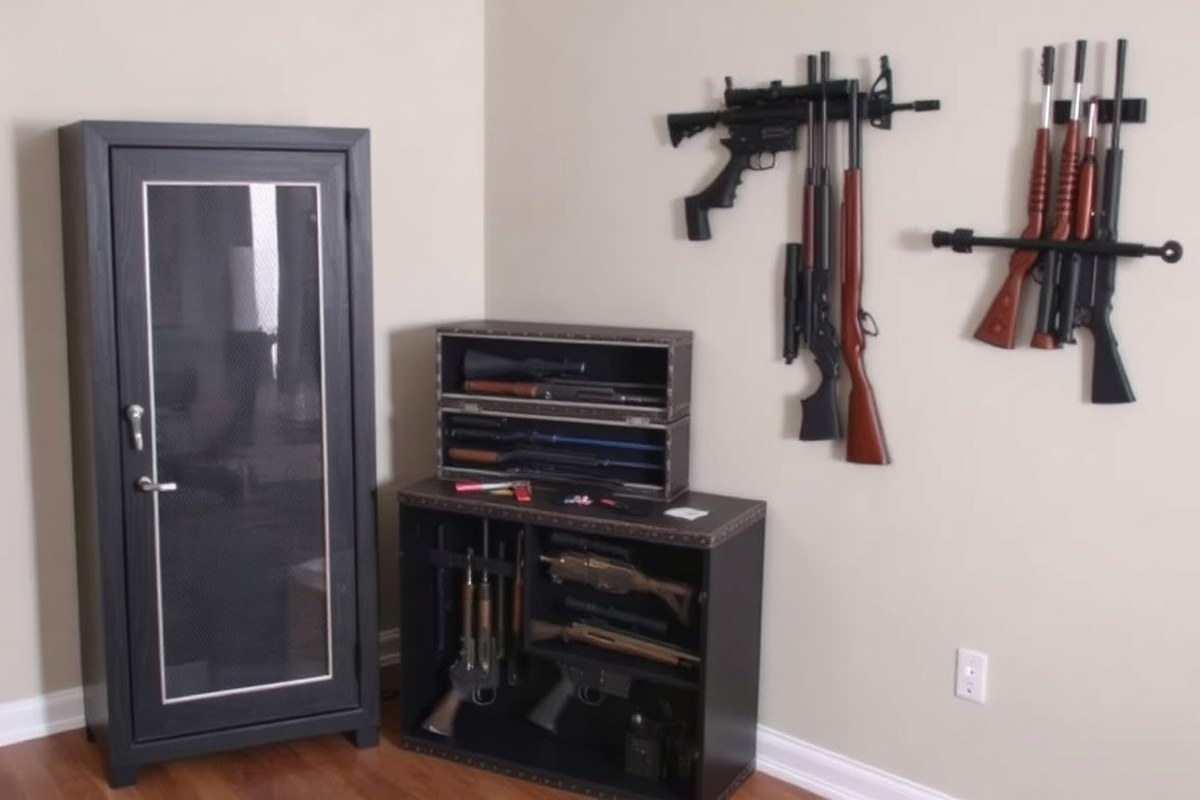
You can store guns without a safe using lockable gun cabinets, secure gun cases, or mounting systems. Gun cabinets offer a balance between accessibility and security. They usually have a key or combination lock and a solid metal or wood build that resists casual tampering. Although not as secure as a heavy gun safe, cabinets are often the next best option for keeping guns safe from unauthorized access. Lockable gun cases and lockboxes are portable and convenient for handguns or a small number of firearms, providing a secure enclosure to protect guns from theft or curiosity. Gun racks and mounts organize firearms but do not lock them, so they should only be used alongside additional locking devices like trigger or cable locks.
Security depends on the method and how you apply it, so combining options improves safety. For example, placing guns in locked cases inside a gun cabinet or mounting guns with locks attached greatly reduces unauthorized access risk. Gun cabinets cost between $150 and $500, lockable cases around $50 to $200, and mounts from $20 to $100. This range fits different budgets and situations, such as storing guns in a closet or a gun room without a traditional safe. Installing extra locks or combining concealed storage decreases risk, especially in homes with children or others who should not handle firearms.
| Storage Option | Security Level | Lock Type | Cost Range (USD) | Best Use |
|---|---|---|---|---|
| Gun Cabinet | Medium (second safest after safes) | Key or combination lock | $150 – $500 | Multiple guns, home storage, closet installation |
| Lockable Gun Case / Lockbox | Medium-low | Key, combination, or digital lock | $50 – $200 | Handguns, transport, temporary secure storage |
| Gun Racks / Mounts | Low (requires additional locks for security) | None (can add trigger or cable locks) | $20 – $100 | Organization within gun rooms, closets, or safes |
| Lockable Gun Storage Bag | Low-medium | Key or combination lock | Under $100 | Portable storage, concealment, short-term storage |
To decide which alternative fits your needs, first consider how many firearms you need to secure and where you plan to store them. Use gun cabinets if you want a balance of security and capacity. Choose lockable cases for handguns or when you need to transport guns safely. Gun racks are best for organizing visible guns but always add locks to prevent unauthorized use. Including cable or trigger locks inside these storage options creates layers of security that significantly reduce risks. Installing a sturdy lock on the room or closet door also adds an important barrier.
Securing guns without a safe requires this practical assembly of tools and thoughtful placement. Properly maintained locks and storage units prevent theft and unauthorized use, keeping firearms out of reach from children or potential thieves. Cost, ease of installation, and how often you need to access your firearms influence which method to select. Combining a locked container with additional locks or concealed furniture support improves security markedly compared to using any single method alone.
2. Using Trigger and Cable Locks to improve Gun Safety

Trigger locks and cable locks serve as effective barriers to prevent accidental or unauthorized use of firearms. Both types of locks work by physically blocking the firing mechanism, ensuring the gun remains unloaded and rendering it inoperable until the lock is removed. Although they don’t replace a secure safe, these locks offer a practical first line of defense in safe gun storage practices.
Types of Trigger and Cable Locks
Trigger locks are designed to cover or block the trigger area of a firearm, making it impossible to pull the trigger without first removing the lock. They often clamp onto the trigger guard and come with a key or combination for removal. Cable locks use a flexible steel cable that threads through the gun’s action, barrel, or magazine well, preventing the firearm from loading or being fired.
Trigger locks are best used on handguns or rifles where you can easily clamp onto the trigger guard. Cable locks add versatility and can secure larger firearms or multiple guns simultaneously. Both types are affordable, generally costing between $10 and $25, and are widely available at gun stores and online. These locks are valuable for temporarily securing unloaded firearms, especially when a gun safe is not accessible.
How to Properly Install Trigger Locks
Correct installation ensures the lock performs its safety function. Follow these steps to install a trigger lock:
- Unload the firearm completely: remove all ammunition from the chamber, magazine, and any compartments.
- Point the firearm in a safe direction and visually confirm it is unloaded.
- Select the appropriate lock size to fit your specific firearm make and model.
- Open the trigger lock and position it over the trigger guard or through the trigger area.
- Secure the lock firmly so it cannot be removed without the key or combination.
- Double-check that the trigger and firing mechanism cannot move or function.
- Store the firearm in a location inaccessible to unauthorized users, combining lock use with concealment if possible.
Always verify the gun is completely unloaded before applying any lock to avoid accidental discharge.
Combining Locks with Other Storage Methods
Locks alone do not prevent unauthorized people, like determined thieves or curious children, from accessing your firearms. Use trigger or cable locks in combination with other storage solutions, such as locking drawers, concealed compartments, or secure rooms. This layering of security adds extra protection without the bulk and expense of a traditional gun safe.
Keeping ammunition stored separately from locked, unloaded firearms further improve safety and reduces risk. Using racks or mounts with locks can balance readiness with security, though guns stored this way should always have a trigger or cable lock applied. Combining these methods addresses multiple angles of safety and accessibility, minimizing the chances of accidents or theft in your home.
3. Concealed Storage in Furniture and Hidden Compartments
Using furniture with secret compartments offers an effective way to store guns discreetly while maintaining quick access in urgent situations. These concealed options reduce the chance of unauthorized discovery by blending gun storage into ordinary household items. You can choose ready-made concealed furniture or create your own hidden spaces tailored to your home and safety needs.
Furniture with Built-In Secret Compartments
Certain types of furniture come with hidden compartments designed specifically to store valuables, including firearms. Common examples include end tables or nightstands with false bottoms or secret drawers, hollowed-out bookshelves, and benches with lift-up seats revealing storage below. These pieces often look like everyday furniture, which helps maintain discretion and keeps guns out of plain view.
Magnetic gun holders installed inside such compartments or beneath surfaces provide added convenience for mounting firearms securely and accessing them quickly. These holders can be attached to the underside of a desk, inside a nightstand drawer, or within a concealed wall panel behind a picture frame. Prices for furniture with built-in compartments typically range from $100 to $500 depending on size and complexity, making them a cost-effective alternative to traditional gun safes.
DIY Concealed Gun Storage Ideas
Creating your own hidden gun storage can be done using ordinary furniture with some modifications. For example, you can convert a drawer into a hidden compartment by adding a false back or bottom panel that lifts out. Attaching a magnetic gun holder inside the drawer or under a shelf adds secure yet accessible mounting. You might also use a hollowed-out book, a locked briefcase concealed on a bookshelf, or a modified picture frame that swings open to reveal storage. Consider the following DIY options:
- Install magnetic strips under a nightstand surface for quick bedside access.
- Modify an ottoman or storage bench with a hidden compartment under the cushion.
- Add a false bottom to a dresser drawer to hide firearms from casual view.
- Use a locked box disguised as a book or decorative item inside a shelf.
- Create a hinged panel behind a framed artwork to conceal guns on a wall.
DIY projects typically cost less than premade concealed furniture, often under $50 if you already own the base piece. The effectiveness depends on your craftsmanship and the ability to keep the compartment truly hidden without obvious signs of alteration.
Advantages and Risks of Furniture Storage
Concealed furniture storage can provide discreet access and keep firearms out of sight from visitors, children, and potential intruders. Furniture blends into your home environment and may be quicker to open than a combination safe, which helps in emergencies. It also avoids the bulk and cost of traditional gun safes.
However, the security level depends heavily on the concealment quality and locking mechanism. Simple hidden compartments without locks offer limited protection against theft or unauthorized use. Using a lock or added trigger or cable lock inside the compartment improves security but may slow access. Keep in mind that DIY storage without solid construction or durable locks can fail under forced entry attempts. Also, poorly ventilated compartments risk moisture buildup, which can damage firearms over time.
4. Securing Guns in Closets and Rooms Without a Safe
Locking firearms in a closet or room without a dedicated gun safe requires a combination of solid door security and additional containment methods. A sturdy lock on the closet door provides the first barrier against unauthorized access. Supplemental options such as locking gun cases or storage bags inside the closet add layers of protection. These measures also reduce the chance of accidental access by children or visitors.
Installing a reliable lock on your closet door starts with choosing the right type. Deadbolt or keyed cam locks designed for interior doors offer secure yet cost-effective options. Adding a padlock on a hasp can work if the door frame is strong enough. Beyond the door lock, using lockable gun cases or bags inside the closet helps contain individual firearms safely and discreetly. Follow these steps to secure firearms stored in closets or rooms without a dedicated gun safe:
- Assess the door type: Determine if your closet door is solid wood, hollow core, or metal. Solid wood or metal doors provide the best base for secure lock installation. Hollow-core doors are easier to reinforce or replace.
- Purchase a quality interior door lock: Choose a keyed deadbolt or cam lock designed for closet or cabinet doors. Expect to pay between $20 and $60 depending on lock type and brand.
- Reinforce the door frame: Strengthen the door jamb and strike plate with longer screws (3 inches or more) and metal reinforcements to resist forced entry attempts. This is essential to maximize the lock’s effectiveness.
- Install the lock according to instructions: Use a drill and screwdriver to fit the lock precisely, ensuring the latch fully secures into the reinforced strike plate. Test the lock several times before storing firearms.
- Place firearms inside lockable cases or storage bags: Use a locking gun case or padded gun storage bag with a built-in lock. These are available for $30 to $100 and provide secondary containment within the closet.
- Store unlocked ammunition separately: Keep ammunition in a separate locked container or another room to further reduce risks.
- Consider additional room security: An alarm sensor on the closet door or motion detector in the room can alert you to unauthorized entry attempts.
- Regularly check and maintain all locks: Lubricate lock mechanisms annually and verify keys are accessible to authorized users only. If locks become hard to turn or damaged, replace them promptly.
Good results look like a securely locked closet door that cannot be opened without a key or combination, combined with locked storage bags or cases that prevent easy removal of firearms even if someone gains closet access. Common problems include weak door frames that allow forced entry, outdated or worn locks that fail to engage fully, or lax control over keys. Addressing all these factors improves your firearm security without owning a dedicated gun safe.
5. Legal and Safety Considerations When Storing Guns Without Safes
Storing guns without a safe is legal in many areas, but it requires careful attention to both state laws and safety practices to avoid accidents and legal trouble. Child Access Prevention (CAP) laws in particular set legal standards for how firearms must be stored to prevent children from gaining unauthorized access. States like California, Massachusetts, Minnesota, and Maryland have strict CAP laws that often require locking devices or other secure storage methods. For example, Massachusetts requires gun owners to use a locking device when storing firearms. Checking your specific state’s regulations is essential before choosing any storage method that does not involve a safe.
To comply with legal responsibilities and promote safety, you should make sure your guns are inaccessible to unauthorized individuals, especially children. This can mean using trigger or cable locks, storing firearms in locked rooms or compartments, and ensuring storage areas are secure and private. Safe storage is critical because it reduces the risk of unintentional shootings and theft. More than 60% of gun owners support laws that require locking up firearms when not in use, reflecting widespread agreement about the importance of secure storage.
Here’s a checklist for storing guns without a safe while staying within legal and safety guidelines: confirm your state’s CAP laws, use at least one reliable locking device per firearm, keep guns out of sight and reach of children, and consider locked storage options like lockboxes or secured closets. Also, regularly inspect your storage system to ensure all locks and compartments function correctly and are not compromised. Behavioral interventions like firearm safety counseling combined with providing gun safety devices have proven to improve safe storage significantly.
Ignoring legal and safety requirements can lead to serious consequences including fines, criminal charges, or tragic accidents. For licensed gun owners, safely transferring firearms according to legal guidelines is mandatory, reinforcing the importance of secure storage practices. If you choose not to use a traditional gun safe, remember that even an inexpensive gun safe offers better protection against unauthorized access than other storage alternatives.
A common mistake is overlooking local laws, search your state’s specific safe storage requirements before deciding on a firearm storage solution that doesn’t use a safe.
6. Storing Ammunition Safely and Separately from Firearms
Storing ammunition separately from firearms is critical for safety. Keeping guns and ammo apart reduces the chance of accidental discharge, especially in homes with children or guests. This practice also helps meet many state laws, which require unloaded guns and separated ammo to prevent unauthorized use and ensure legal compliance.
Choosing the right container for ammo storage means picking something secure, sturdy, and moisture-resistant. Metal ammo cans with tight-sealing lids are commonly available and affordable, often costing $15 to $30. These containers protect rounds from humidity, dust, and physical damage. Plastic containers specifically designed for ammo, or lockable boxes with rubber seals, work well too. Avoid storing ammunition loose in open containers or cardboard boxes, which offer little protection against environmental factors.
Maintaining dryness inside your ammo storage container is essential to prevent corrosion and deterioration of the powder and primers. Using silica gel desiccant packs inside the container absorbs moisture. Replace these packets every few months, or whenever they feel damp. Store ammo in a cool, dry place away from direct sunlight and heat sources, ideally below 80°F. Basements or closets with controlled humidity often work well if ventilation is adequate and moisture levels stay low.
- Always unload firearms before storing, separating ammo in a locked container
- Use a metal or plastic container with a tight-fitting, locking lid
- Place desiccant packs inside ammo boxes to absorb moisture
- Store ammo in a cool, dry, and dark location
- Check ammo condition every 6-12 months to catch damage early
- Keep ammo containers out of children’s reach or locked away
- Label boxes clearly with caliber type for quick access and organization
Following these steps helps ensure your ammunition stays in good condition, ready to use safely when needed. Skipping proper storage can lead to misfires or damaged rounds that may cause unsafe firearm behavior. Keeping ammo and guns apart limits risk and adds an important layer of responsibility to your firearm safety routine.
7. Preventing Damage and Environmental Risks to Stored Firearms
Humidity plays a key role in gun maintenance. When relative humidity exceeds about 60%, moisture in the air can quickly cause rusting on metal parts of firearms. This damage not only affects your gun’s appearance but also its function, potentially leading to costly repairs or unsafe handling. Keeping humidity levels below 50% slows down corrosion and preserves a gun’s lifespan.
To prevent rust and physical damage, use accessories such as silicone-treated gun socks or rust inhibitors designed specifically for firearms. These products create a moisture barrier and reduce oxidation. Also, using padded racks or individual gun cases prevents guns from banging together or falling, which causes scratches or dents. Regular cleaning and oiling every few months remove any accumulating moisture or contaminants.
Choosing the right storage location also matters a great deal. Avoid basements or garages that experience large temperature swings and dampness. Instead, select dry, climate-controlled spots such as interior closets or lockable cabinets with good ventilation. An environment consistent in temperature around 60 to 70 degrees Fahrenheit and under 50% humidity offers some of the best conditions for storing guns outside of safes. Here’s a practical checklist to keep your firearms safe and well-preserved without a traditional safe:
- Store guns in padded cases or silicone-treated gun socks to prevent scratches and rust
- Keep relative humidity below 50% using silica gel packs or small dehumidifiers
- Place firearms on stable racks or cushioned mounts that prevent falling or knocking
- Aim for storage rooms between 60°F and 70°F with consistent climate control
- Clean and lightly oil guns every 3 to 6 months, depending on humidity and use
- Use desiccant packets that you replace every 1 to 3 months to absorb moisture
- Avoid storing guns near exterior walls or damp areas like basements
Proper maintenance requires attention and some supplies that typically cost $20 to $50 for quality gun socks and rust inhibitors. Silica gel packs are inexpensive and available in various sizes, costing just a few dollars each. For optimal results, check humidity levels periodically with a small hygrometer, a device usually priced under $15.
Without these precautions, firearms exposed to high moisture can develop surface rust in just days, leading to pitted barrel bores or seized parts. Physical damage from improper storage can impair sight alignment or trigger function. Prioritize these steps to keep guns functioning safely and maintain their value over time.
8. Combining Methods for Layered Security Without a Safe
Layered security means using several protective measures together to keep guns safe without relying solely on a traditional safe. Combining locks, concealment, and controlled access reduces the risk of theft and accidental use more than any single method alone. This approach balances security and convenience for different storage needs.
Layered Security Basics
Layered security involves stacking multiple safeguards so no single failure compromises your firearms’ safety. Using trigger or cable locks prevents unauthorized firing, while concealment methods hide guns from view, reducing the chance of theft. Controlling access, such as locking the room or cabinet storing the firearm, adds another barrier.
These layers protect against different risks: locks stop unauthorized use, concealment avoids attracting attention, and access control limits who can physically reach the guns. Adding organization by separating ammunition from firearms lowers accident risks. Each measure contributes to a stronger overall system.
Start by assessing your environment: the accessibility of your firearms, who might try to reach them, and your storage space. This evaluation helps determine which combination of locks, visible concealment, and access control fits your home and usage patterns.
Examples of Effective Method Combinations
Some practical combinations include using a keyed trigger lock on the firearm, then storing the gun inside a lockable steel gun cabinet hidden within a closet or behind a false wall. The lock prevents firing, the cabinet restricts access, and the concealment reduces visibility, making theft or misuse much harder. Here’s a checklist of layered security elements to combine:
- Trigger or cable lock fitted on each firearm
- Firearm stored in a lockable steel gun cabinet or strong box
- Cabinet placed inside a concealed space like a false wall or hidden furniture compartment
- Room or closet containing guns secured with a keyed or combination lock
- Ammo stored separately in a locked container
- Limited knowledge of gun locations shared only with trusted household members
This approach typically costs less than a high-end safe. A steel cabinet runs $150 to $400, trigger locks can be $10 to $30 each, and building a false wall might cost several hundred dollars but adds significant concealment value. The benefits include reduced theft risk and controlled access without compromising usability.
When to Upgrade Security Measures
Consider upgrading whenever household conditions change or risks increase. For example, if you have children or frequent visitors who might notice your concealed storage, adding stronger locks, alarms on cabinets or doors, or moving guns to less accessible locations is wise. Upgrading matters if theft or break-in rates rise in your area.
Failure to adapt layered security can lead to unauthorized access or accidents. Avoid placing all faith in just concealment or just a single type of lock. Review your system annually and update any worn hardware and concealment that becomes obvious over time.
Never rely solely on concealment; a hidden gun without a physical lock or controlled access risks unauthorized handling. Combine methods for best safety.
Step-by-Step Action Plan for Storing Guns Without a Safe
Use this plan to secure your firearms safely without a traditional safe while reducing risks and maintaining legal compliance.
- Day 1: Choose a secure, concealed location like a sturdy closet or hidden furniture compartment. Verify the spot is out of view and difficult for unauthorized persons to access.
- Day 2: Install trigger locks or cable locks on every firearm stored. Test locks to make sure each gun cannot be loaded or fired.
- Day 3: Separate ammunition from firearms in a locked container. Confirm the container locks properly and is stored in another secure place.
- Week 1: Use moisture absorbers or dehumidifiers in the storage area to reduce risk of rust or corrosion. Monitor humidity levels to keep them below 50%.
- Week 2: Review local gun storage laws to ensure your setup complies, adjusting storage methods if needed.
- Week 3: Practice regular checks to confirm locks and storage locations are in good condition and functioning properly.
- Monthly: Rotate stored firearms to prevent wear from static positioning and maintain overall gun condition.
Frequently Asked Questions
Can I Store Guns Without a Safe If I Use a Lockable Gun Cabinet?
Yes, a lockable gun cabinet is a strong alternative for securely storing firearms without a traditional safe. It offers physical security and makes guns less accessible to unauthorized users, keeping safety a priority.
Are Gun Racks and Mounts Safe for Storing Guns Without a Safe?
Gun racks and mounts can store guns without a safe but usually lack locking security. They work best combined with trigger locks or other safety devices to prevent unauthorized or accidental discharge.
Is It Necessary to Store Guns Unloaded If I Don’t Have a Safe?
Storing guns unloaded is recommended when not using a safe to reduce accidental firing risk. Always keep ammunition stored separately and securely to improve overall safety.
Can I Use Cable or Trigger Locks as the Only Method When Storing Guns Without a Safe?
Cable or trigger locks help block the firing mechanism, but they should not be the only measure. Use them along with locked containers or concealed storage to improve firearm security.
Are There Legal Risks to Storing Guns Without a Safe?
Laws vary by state, but improper gun storage can lead to legal penalties or increased liability. Make sure any storage method complies with local regulations and keeps firearms inaccessible to children.
What Is the Best Way to Protect Guns from Environmental Damage Without a Safe?
Store firearms in a dry, climate-controlled area away from moisture to prevent rust and damage. Use protective cases or gun sleeves to shield them while stored outside of a safe.
The Bottom Line
Securing your guns without a safe requires combining concealment, locking devices, and environmental protection to prevent unauthorized access and damage. Start with choosing the right storage spot and adding trigger or cable locks immediately. Taking this first step ensures your firearms stay out of the wrong hands while remaining well-preserved for when you need them.