How to Get a Concealed Carry Permit for All States: Complete Multi-State Strategies
Many people ask how to obtain a concealed carry permit valid in every state, but no single permit allows legal carry in all 50 states as of 2026. Using multiple non-resident permits together can provide legal coverage in around 40 states, typically costing between $150 and $210. Begin by applying for permits issued by states with broad reciprocity, which acknowledge licenses from numerous other states.
Key Takeaways
- About 29 states allow permitless concealed carry, but permits expand your legal coverage nationwide.
- Most states require applicants to be at least 21, with exceptions for military or constitutional carry states.
- Reciprocity agreements mean your permit could be accepted in roughly 84% of the US.
- Non-resident permits from states like Florida, Utah, or Arizona offer the widest multi-state coverage.
- Training courses often combine requirements for multiple states in a single day for around $150.
- Concealed carry permits usually expire in 4 to 5 years, requiring renewal to maintain coverage.
Can You Get a Concealed Carry Permit Valid in All States?

No single concealed carry permit is valid in all 50 states. Each state sets its own laws and rules for concealed carry permits, including who qualifies and whether they will recognize permits from other states. Some states honor any valid permit from any state, a few refuse to recognize any out-of-state permits, and many fall somewhere in between. This patchwork of laws means a one-size-fits-all concealed carry permit does not exist nationwide.
States typically do not honor permits from others because of differing eligibility requirements, training standards, and political priorities. For instance, what counts as sufficient training in Arizona might not meet California’s stricter standards. Also, some states have moved toward permitless or constitutional carry, making reciprocity unnecessary or more complicated. Legal sovereignty over firearms permits remains firmly with each state, preventing a single, nationwide permit.
To carry legally in the most states possible, many gun owners look to non-resident permits from a few high-reciprocity states like Utah, Arizona, or Florida. These states issue permits to residents of other states and their permits are recognized by dozens of others, sometimes more than a resident permit from your own state. Obtaining two or three of these non-resident permits can extend your legal carry coverage to between 37 and 40 states.
For example, combining a home state resident permit with non-resident permits from Utah and Florida covers an extensive range of states. You would pay roughly $150 to $210 total and complete about a day of training and paperwork for each. This strategy offers the benefit of broader recognition, backup permits in case one is lost, and flexibility as states change reciprocity agreements.
Some states like California and New York either do not honor out-of-state permits or issue permits under highly restrictive rules that make it difficult for non-residents to qualify. These states remain exceptions where carrying concealed legally requires a resident permit or may even prohibit it altogether except in limited circumstances. It’s important to research the specific states you plan to visit or pass through.
Active and qualified retired law enforcement officers have a separate federal option under the Law Enforcement Officers Safety Act (LEOSA), which allows concealed carry nationwide, though with certain conditions and exclusions. Civilians must rely on handle the mix of state-issued permits.
A checklist to maximize your state coverage would include: first, securing your home state permit if applicable; second, acquiring non-resident permits from 2 or 3 high-reciprocity states; third, carrying all relevant permits physically while concealed; and fourth, staying up to date on changing reciprocity agreements. Regularly reviewing which states honor your permits can prevent accidental illegal carry.
Despite the complexity, the multi-permit approach is currently the most effective way to carry legally in the majority of states. The tradeoff involves upfront costs, training, and managing multiple permits, but the result significantly expands your legal protected carrying range beyond any single permit’s limits.
What Are the Key Eligibility Rules for Concealed Carry Permits?

You usually must be at least 21 years old to apply for a concealed carry permit, although some states lower this to 18 for military members or under special constitutional carry laws. Residency requirements differ widely: many states require you to be a resident, while some offer non-resident permits with more limited privileges.
Most states perform a thorough criminal background check. You’ll be disqualified if you have felony convictions, certain domestic violence offenses, or outstanding warrants. Mental health also plays a key role: applicants flagged for involuntary psychiatric commitment or found legally mentally incompetent are generally excluded. Military veterans usually aren’t treated differently unless their service involved disqualifying conduct or mental health issues.
Before applying, verify your state’s specific rules because each state sets its own standard. Even though some states have a “shall-issue” policy that requires issuing a permit if you meet all rules, others have more discretion and subjective criteria.
- Meet minimum age (usually 21, sometimes 18 for military)
- Confirm state residency or qualifying non-resident status
- Pass a criminal background check with no felony or serious misdemeanor convictions
- No record of domestic violence or restraining orders related to firearms
- No history of involuntary psychiatric commitment or adjudicated mental incompetence
- Provide valid government-issued identification and proof of residency
- Complete any state-required safety training or firearms course
Check your state’s official website for the most current eligibility rules to avoid application delays or denials.
Application fees vary from around $50 to $150. Expect the background check and processing time to take several weeks depending on state workload. Even after careful preparation, incomplete documentation or ineligible criminal records often cause rejections or require appeals. Following the eligibility checklist precisely reduces risk of denial and speeds up permit issuance.
How Do Reciprocity Agreements Affect Multi-State Carry?
Reciprocity agreements refer to arrangements between states where each agrees to honor the concealed carry permits issued by the other. This means if you have a permit from your home state, you might legally carry concealed in another state that recognizes your permit. These agreements are essential for anyone planning to travel across state lines with a concealed weapon, as they define where your existing permit remains valid and where it does not.
Despite 29 states allowing permitless or constitutional carry, meaning no permit is needed to carry concealed, obtaining a concealed carry permit is still valuable. Such a permit may provide legal carry rights in additional states through reciprocity, help with firearm purchases, and prove you have completed training requirements. However, many states with constitutional carry do not automatically honor out-of-state permits, as they rely on their own legal regimes for carrying firearms.
Some states do not recognize concealed carry permits issued by other states. As of early 2026, these states are California, New York, New Jersey, Massachusetts, Hawaii, Connecticut, Maryland, Oregon, and Washington D.C. Using your home state’s permit to carry a firearm in these places might lead to legal trouble.
Because reciprocity agreements can change frequently, you should verify the current recognition status before traveling. The best approach is to check your own state’s official concealed carry licensing website for a reciprocity map or list. Then confirm the laws directly on the issuing or law enforcement website of the destination state. These sources typically update regularly and provide official confirmation of which permits they honor. Some border states may have complex exceptions depending on permit type or additional local rules. Below is a simplified example of how reciprocity can differ:
| State | Honors Out-of-State Permits? | Notes |
|---|---|---|
| Texas | Yes | Honors most states’ valid permits |
| California | No | Does not recognize any out-of-state permits |
| Florida | Yes | Recognizes permits from over 30 states |
| New York | No | Refuses to honor all out-of-state permits |
| Arizona | Yes | Permits are widely recognized; also permits permitless carry |
When checking reciprocity, be aware that some states with constitutional carry laws might still require permits for out-of-state visitors. For example, if your home state offers a permit, carrying in a constitutional carry state as a non-resident may depend on that state’s reciprocity rules. No-cost verification with official state resources reduces the risk of unknowingly breaking the law.
National reciprocity, a federal proposal that would require all states to recognize every other state’s concealed carry permit, has not passed due to constitutional issues and respect for state rights. Until such a law exists, you have to rely on the existing web of bilateral and multilateral state agreements, which can be complex and ever-changing.
As a practical step, use a two-part verification script to confirm your permit’s acceptance before travel: first, visit your home issues state’s official concealed carry page to identify recognized states; second, consult the destination state’s official law enforcement or state police website to confirm the current rules. For instance, you might call or email the state police department’s firearms licensing division for direct guidance. This process typically takes a few minutes and costs nothing but can save significant legal and financial risk.
Which Non-Resident Permits Offer the Widest U.S. Coverage?
Non-resident concealed carry permits from Florida, Utah, and Arizona each offer broad multi-state coverage, making them popular choices for gun owners who travel. Florida’s permit is recognized by about 37 states, Utah and Arizona’s permits cover over 30 states each, and combining permits extends your overall reach. Costs and validity vary, with fees generally ranging between $50 and $100 and validity periods spanning 5 to 7 years.
Florida Non-Resident Permit Coverage
Florida issues a Non-Resident Concealed Weapon License (CWL) that is widely accepted across the country, with reciprocity in about 37 states. It does not require state residency, which is helpful if your home state has strict issuance rules. Florida’s broad recognition makes it the top single non-resident permit for traveling concealed carry.
You must complete a firearms training course approved by Florida’s standards or any NRA-certified course to apply. This permit remains valid for 7 years, allowing a long-term carry solution without frequent renewals. Many gun owners pair the Florida permit with another to maximize coverage across states that recognize one but not the other.
Utah Non-Resident Permit Coverage
Utah offers a Concealed Firearm Permit (CFP) to non-residents, recognized by over 30 states. Utah is known for its strict training requirements, which some states specifically respect to honor Utah permits. Unlike Florida, Utah’s permit lasts for 5 years.
The training must be an approved Utah firearms safety course, which can differ in length and depth from the Florida-required course. A key benefit of Utah’s permit is that it complements Florida’s coverage, filling gaps in states that accept one but not both. This makes the Florida + Utah combination the closest option to carrying legally in nearly all states.
Arizona Non-Resident Permit Coverage
Arizona issues non-resident permits even though it is a constitutional carry state for residents. The Arizona permit is recognized by over 30 states, similar to Utah’s permit. Arizona does not require extensive training for issuance, which can appeal to those seeking a quicker or less involved process.
While Arizona’s permit alone covers fewer states than the Florida permit, it can still be part of a multi-permit strategy that increases overall reciprocity. Like Utah and Florida, Arizona’s permit requires staying current with renewals every 5 years, and the permit fee tends to be competitive.
Cost and Duration Comparison
The typical cost to obtain each permit varies by state. Florida’s non-resident permit is the most expensive, costing $97, but offers 7 years of validity. Utah charges about $53 for their permit, with a 5-year validity period. Arizona fees are usually similar to Utah’s but can vary by county.
Applicants might complete overlapping training courses accepted by both Florida and Utah to minimize time invested. Combining the Florida and Utah permits usually costs about $150 total and covers roughly 37 to 40 states. This layered approach is popular for maximizing legal carry options.
| Permit | Fee | Training | Validity |
|---|---|---|---|
| Florida Non-Resident CWL | $97 | Any NRA or Florida-certified course | 7 years |
| Utah Non-Resident CFP | ~$53 | Utah-approved course | 5 years |
| Arizona Non-Resident Permit | Varies (~$50-$60) | Minimal or no training required | 5 years |
The costs and time frames reflect what you should expect to invest upfront. Choosing which permit or permits to apply for depends on how many states you need coverage in, your budget, and how much training you want to complete. Combining the Florida and Utah permits is the best tactic to cover the most states with legal concealed carry rights.
What Are the Training and Documentation Requirements for Applications?
Most states require you to complete a firearms safety training course before applying for a concealed carry permit. These courses cover safe handling, storage, and use of firearms, along with state-specific laws. The certificate you receive after finishing the training must be submitted with your application as proof. Standard courses often last from 4 to 8 hours and cost between $50 and $150, depending on the provider and state regulations.
Accepted training certificates vary by state. Many states recognize certificates from National Rifle Association (NRA) Basic Pistol Courses or state-certified training programs. Some allow online components paired with in-person instruction, while others insist on fully in-person classes. For applicants seeking permits in multiple states, combo courses designed to satisfy several states’ requirements can save time and money, but you must verify each state’s acceptance before enrolling.
Fingerprinting is an essential part of the background check in most states. Usually, you will need to submit a fingerprint card obtained through a law enforcement agency or an authorized fingerprinting service. Some states require electronic fingerprint submissions, which can speed up processing. Background checks typically review criminal history and mental health records and may take anywhere from a few days to several weeks, depending on the state.
- Complete state-required firearms safety training and obtain the certificate
- Collect proof of residency, such as a driver’s license or utility bill
- Get fingerprinted through a law enforcement agency or authorized provider if required
- Fill out the state’s official concealed carry permit application form
- Submit application with training certificate, fingerprint card (if needed), and applicable fees
- Pass the background check, which may include local and federal databases
- Wait for approval, which can take from days to weeks depending on your state
Variation in these requirements is significant. For example, some states waive fingerprinting or allow permitless carry, but training and background checks remain important for most. The exact paperwork can include extra affidavits, medical statements, or proof of firearms ownership depending on local laws.
Always double-check your state’s current training and documentation rules before enrolling in any course or submitting your application to avoid delays or rejection.
Preparing your application carefully with the right training certificate, complete fingerprints, and accurate documents streamlines the process. Incomplete or incorrect paperwork often leads to delays or denials. Fees vary widely; expect costs generally between $50 and $150 for the entire application. Clear and correct submissions tend to result in faster approval and fewer follow-up requirements.
How to Apply and What to Expect in the Permit Process?
Applying for a concealed carry permit involves submitting a complete application, providing fingerprints, undergoing a background check, and waiting for approval. The entire process usually takes a few weeks to a couple of months, depending on the state. Fees for applications vary but typically range between $50 and $150.
Completing and Submitting the Application
You start by filling out the concealed carry permit application accurately and completely. Each state has its own application form, which you can find online on the state’s official website or at the issuing agency’s office. Make sure to check for any additional required documents before submission, such as identification, proof of residency, or training certificates.
Before submitting, double-check your application for mistakes or missing information to avoid delays or rejection. Application fees vary widely. For example, some states charge $50, while others may charge up to $150 or more. Payment methods often include credit cards, checks, or money orders. Common steps to submit include:
- Download the application form from your state’s licensing authority website.
- Fill out all sections, providing personal details, contact info, and any required certifications.
- Gather necessary documents like government-issued ID, proof of residency, and training certificates.
- Calculate and prepare the application fee according to your state’s schedule.
- Submit your application online, by mail, or in person, depending on your state’s requirements.
Fingerprinting and Background Check
Fingerprinting is a mandatory part of the application process to verify your identity and check your criminal history. Most states require electronic fingerprinting at approved locations, such as law enforcement offices or authorized fingerprinting centers.
The background check includes searching national and state databases for criminal records, restraining orders, or any disqualifying factors. This step ensures only eligible applicants receive permits.
Be prepared to schedule a fingerprinting appointment soon after submitting your application or even before, depending on your state’s process. Fees for fingerprinting generally range from $10 to $50 and are often separate from the application fee.
Waiting for Approval and Receiving Permit
After submitting your application and fingerprints, the typical waiting period ranges from 30 to 90 days. Some states process permits faster, within two to three weeks, while others may take longer if background checks are more complex.
You may receive status updates online or via mail. Once approved, you will receive the permit as a physical card mailed to your address or be asked to pick it up at a law enforcement office.
When your application is rejected, the notice generally includes a reason along with details on how to appeal the decision or reapply. Common causes for rejection include incomplete paperwork, disqualifying criminal history, or failure to meet training requirements.
Renewal Procedures and Tips
Permit renewal typically involves submitting a renewal application before the permit expires, paying a renewal fee, and sometimes undergoing another background check. States differ on renewal periods, usually every 4 to 5 years.
Renewal fees often mirror initial application fees but can be lower. For example, a state may charge $70 to renew, compared to $100 for the first-time permit. Taking a refresher training course may be required or recommended in some states.
To avoid lapses, start the renewal process at least 60 days before your permit expiration date and keep your contact information current with the issuing agency. When the renewal is delayed, your original permit might expire, which could restrict your legal carry rights until the new permit is approved.
What Are Important Legal Restrictions and Safety Considerations?
The rules for carrying a concealed firearm are very strict, regardless of having a permit. The Gun-Free School Zones Act is a federal law that bans carrying guns within 1,000 feet of any school zone. You cannot have a firearm on school grounds or nearby unless your permit is valid in the state you’re in. This law applies nationwide to keep schools safe from guns.
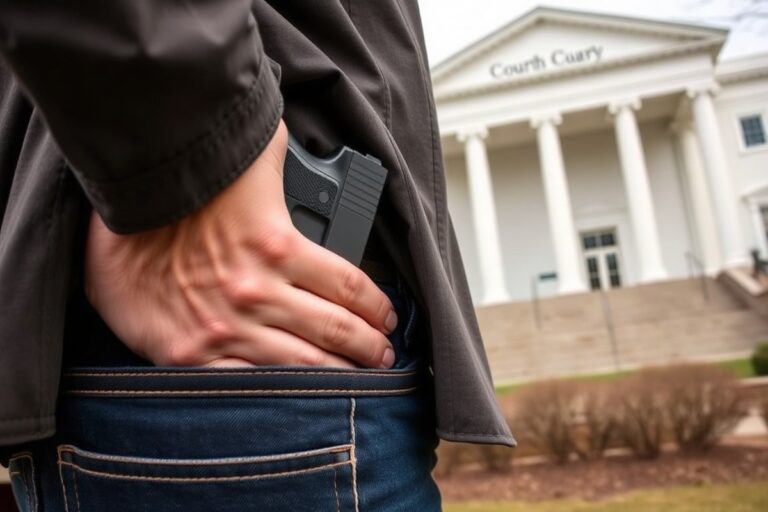
Even with a concealed carry permit, certain places remain off-limits. These restricted areas include federal buildings, courthouses, post offices, and places where firearms are explicitly banned by law or posted signs. In some states, carrying in bars, restaurants that serve alcohol, or college campuses is also restricted or prohibited. Carry permit holders should always check local laws for these types of limits to avoid legal trouble.
Some states require you to follow a “Duty to Inform” law, which means you must notify law enforcement officers immediately if you are carrying a concealed weapon during a traffic stop or other official contact. Usually, this involves calmly stating that you have a concealed carry permit and informing the officer where the weapon is located on your person. This process helps prevent misunderstandings and ensures everyone’s safety.
Understanding firearm safety and legal responsibility is a key part of carrying concealed. You should keep your handgun secured and under control at all times. Avoid careless handling, never brandish your weapon, and only draw it if you face a credible threat to your life or the lives of others. Improper or reckless use of a concealed firearm can lead to serious legal consequences, including criminal charges and loss of your permit.
The Law Enforcement Officers Safety Act (LEOSA) of 2004 allows qualified active and retired law enforcement officers to carry concealed weapons across state lines without worrying about local laws. However, this exemption does not apply to regular civilians with permits, who must follow all state and local carry laws wherever they are.
When traveling, it is critical to research the specific restrictions that each state enforces, such as variations in restricted areas or notification requirements. Missing these details can result in penalties or confiscation of your weapon. Carry permit holders are responsible for knowing and complying with both state and federal laws to avoid legal risks and maintain safe, responsible concealed carry.
What Is the Best Multi-Permit Strategy to Maximize State Coverage?
A solid multi-permit strategy involves selecting two to three non-resident concealed carry permits that together cover most states you plan to visit or travel through. Typically, a combination of permits from states with broad reciprocity agreements like Arizona and Florida provides extensive nationwide coverage. Adding a third permit depends on your travel routes and the specific states you frequent that may not be covered by the first two.
Top Two-Permit Combos and Coverage
The most common and practical two-permit combination is Arizona and Florida. Arizona’s non-resident permit is widely accepted because it includes roughly 37 states, covering many in the West and South. Florida’s permit adds coverage in numerous other states, making the pair cover around 40 to 43 states collectively, depending on the year and reciprocity updates. Together, they offer extensive coverage for most travel routes across the country.
In terms of cost, an Arizona non-resident permit usually runs about $60, while Florida’s is around $100. Applying for both permits involves meeting each state’s requirements, such as completing separate applications and any mandated training hours. These two serve most concealed carriers well without the extra expense of a third permit. Make sure to check reciprocity regularly since permits lose and gain recognition based on state politics and law changes.
When Adding a Third Permit Makes Sense
Adding a third permit is practical if you frequently travel to states that Arizona and Florida do not cover. For example, a permit from Utah or Mississippi might fill gaps in Northern or Southern states that don’t recognize Arizona or Florida permits. The essential consideration is whether the extra $60 to $100 cost and renewal hassle is justified by actual travel needs.
Decide on adding a third based on mapping out your regular travel or visit states. You can create a checklist of each state you want permit coverage in. Your third permit becomes valuable when you travel to states not recognized by your first two permits. Otherwise, the third permit adds unnecessary cost and administrative work. Keep in mind expiration dates and renewal requirements for all permits you maintain, as juggling many can increase the chance of lapses and compliance issues.
Special Cases: Law Enforcement and Military Provisions
Law enforcement officers and military members frequently have separate privileges or recognition for carrying concealed across states that civilians do not. Some states issue concealed carry permits to off-duty law enforcement without the usual training or residency requirements, and many recognize law enforcement credentials from other states in lieu of regular permits. Military personnel may also access permit reciprocity through federal or state provisions depending on duty status.
Qualifying under these categories means you should check your home state’s rules and any agreements in the states you intend to visit. This may reduce or eliminate the need for multiple civilian non-resident permits. Always carry proof of your status and understand that these privileges can vary by state and situation.
Track permit expiration dates and renew early to avoid gaps in coverage when carrying in multiple states.
Your Step-by-Step Plan to Secure Multi-State Concealed Carry Permits
Follow these steps to start your concealed carry permit applications and build your coverage strategically across states.
- Before you start: Confirm your home state’s eligibility requirements and current reciprocity map to identify which states you want coverage in.
- Day 1-3: Complete any required firearms training that meets your primary state’s standards, ensuring documentation is official and ready for submission.
- Week 1: Submit your initial concealed carry permit application in your resident state and request a background check to confirm eligibility.
- Week 3: After receiving your resident permit, research non-resident permit applications from states with broad acceptance and gather required documents for those states.
- Month 1: Apply for your first non-resident permit with the widest U.S. Coverage, and schedule any additional required training or fingerprinting specific to that state.
- Month 2 and onward: Apply for additional non-resident permits to fill key gaps in your coverage, tracking expiration dates and renewal requirements carefully.
- Ongoing: Maintain copies of all permits with you, regularly review changes in reciprocity laws, and always follow legal restrictions and safety practices rigorously.
Frequently Asked Questions
Can I Use a Non-Resident Permit to Carry Concealed in My Home State?
Usually no, non-resident permits don’t override your home state’s laws. You must follow your state’s rules first.
Does Constitutional Carry Affect the Need for a Concealed Carry Permit?
Yes, in states with constitutional carry, you don’t need a permit to carry concealed. However, having a permit helps when traveling to permit-required states.
Are There Age Restrictions for Getting a Concealed Carry Permit?
The minimum age to apply for a permit is usually 21 in most states. Exceptions exist in some states for 18-year-olds who have served in the military or meet special criteria.
Can Training Be Completed Online for Concealed Carry Permits?
Some states accept online training, but many still require live, in-person instruction for your permit application. Check state-specific requirements.
Is a Criminal Background Check Mandatory for All Concealed Carry Permits?
Yes, all states require a background check before issuing a concealed carry permit to ensure legal eligibility.
Does Owning a Firearm Automatically Qualify Me for a Concealed Carry Permit?
No, owning a gun doesn’t guarantee a permit. You must meet state-specific criteria like training, background checks, and residency.
Wrapping Up
Acquiring a concealed carry permit valid across multiple states requires careful planning and adherence to each state’s rules. Start by securing your home state permit, then build your collection of non-resident permits based on coverage needs and reciprocity agreements. Taking the first step to apply and train properly puts you on solid legal and safety footing for carrying concealed nationwide. Your next action is to check your home state’s application details and begin your approved training without delay.