Are 3D Printed Guns Safe? What You Must Know About Risks & Use
Are 3D printed guns safe? Generally, they are not safe due to inconsistent materials and design flaws that often cause failures under firing pressures. These guns can function but usually lack the reliability and durability of traditionally manufactured firearms. Start by understanding the limits of 3D printed materials and exercising extreme caution when handling or testing any 3D printed firearm.
Key Takeaways
- PLA and low-quality nylon used in 3D printed guns often become brittle and risk catastrophic failure when fired.
- Proper design and sufficient infill levels are important to prevent dangerous malfunctions like barrel explosions.
- 3D printed guns may only fire a few rounds before becoming unsafe or malfunctioning.
- Compatibility between printed components and metal parts must be verified to reduce failure risks.
- Legal restrictions vary widely; verify your local laws before considering possession or manufacture of 3D printed guns.
- Law enforcement detection remains a challenge due to the non-metallic nature of many 3D printed firearms.
Are 3D Printed Guns Safe to Use and Why?

3D printed guns generally are not safe to use due to fundamental material and manufacturing risks. These guns are often made from plastics like PLA or nylon that lack the strength and heat resistance to withstand the pressures and temperatures generated when firing a bullet. Unlike traditional firearms, which undergo rigorous quality control and are made from metals designed to endure repeated explosions, 3D printed guns frequently have inconsistent layer adhesion and variable material properties. This inconsistency can lead to catastrophic failures such as cracks, ruptures, or even explosions during firing.
The risks become clear when you consider that some 3D printed guns have shattered or exploded after firing only a single round. This happens because the plastic components cannot reliably contain the high pressure and rapid heat buildup inside the chamber. The amount of pressure generated can exceed 20,000 psi in some handgun calibers, far above what plastic materials typically handle. In addition, the printing process itself, particularly with hobbyist-level printers, often results in flaws like weak infill settings, poor bonding between layers, and dimensional inaccuracies that further reduce durability.
Recognizing safety red flags can help you assess the risk before using or attempting to build a 3D printed gun. Check for cracks, uneven surfaces, or visible layering defects, which signal weak points. Avoid designs lacking reinforced areas around the barrel and chamber, as these must contain extreme forces during firing. Use validated blueprints from reputable sources that specify proper infill percentages (often 50% or higher) and materials suited for high heat and pressure. Never ignore safety testing, such as firing in a controlled environment with protective equipment and inspecting the gun carefully after each shot for damage.
Failure often results from the use of brittle plastics like PLA that soften at temperatures as low as 140°F, making them unsuitable for bearing heat generated from firing a cartridge. Nylon is more heat resistant but varies widely in quality, with cheaper variants prone to brittleness and delamination. Metal components mandated by law, such as firing pins or barrels, improve safety but do not eliminate risks associated with plastic frames. This partly explains why early 3D printed guns were bulky and simple, to compensate for material weaknesses by adding extra thickness and robustness.
In practice, a 3D printed firearm might work for a few shots but often a high chance of failure remains. Such failures are dangerous, causing shrapnel injuries and loss of control. The absence of standardized testing and certification observed in traditional guns means these risks persist unevenly, depending on materials, printer precision, design, and user skill. Given these factors, 3D printed guns should be considered unsafe compared to conventional firearms, especially for repeated or defensive use.
How Materials and Design Affect 3D Printed Gun Safety
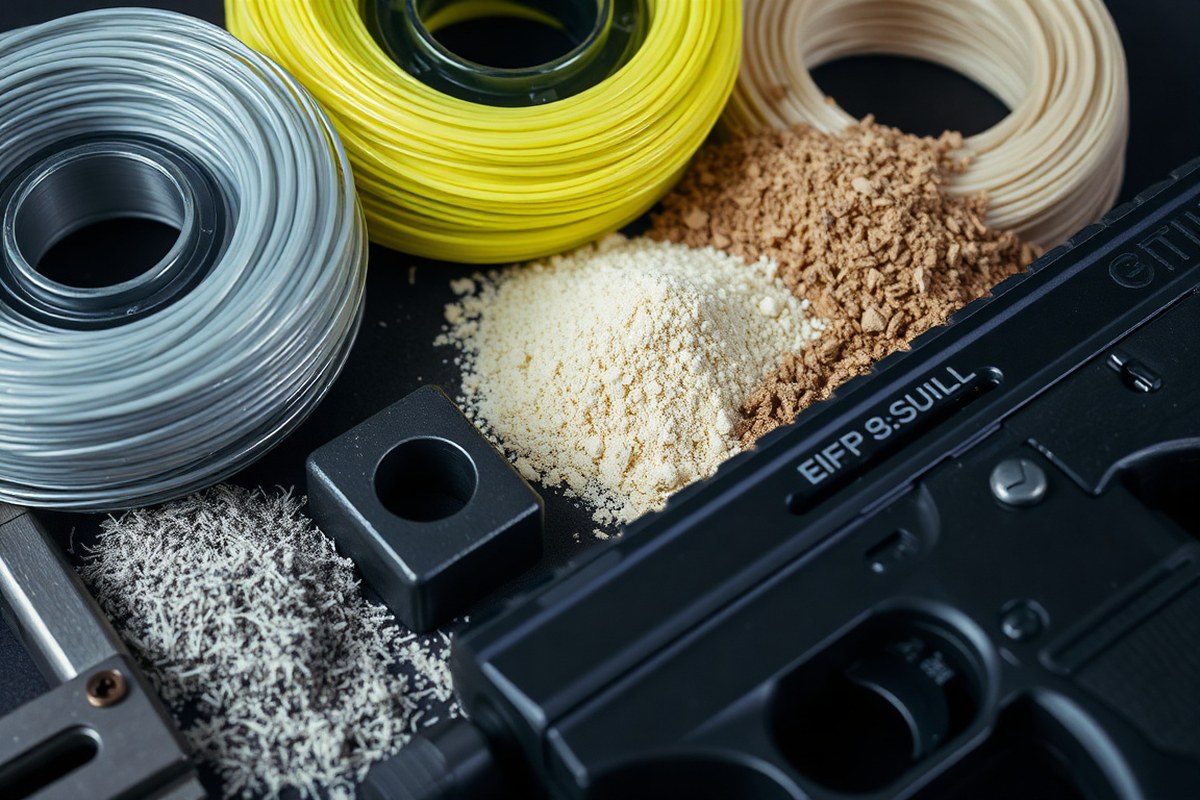
Materials used in 3D printed guns range from common plastics to advanced composites and some metal parts. These choices directly affect a firearm’s durability, reliability, and safety. Plastic types vary widely in strength and thermal resistance, while metal integration can improve key stress points, reducing the risk of catastrophic failure during firing.
Common Plastics Use in 3D Printed Guns
Most 3D printed guns use thermoplastics like ABS, PLA, and nylons due to their availability and ease of printing. ABS offers toughness and moderate heat resistance around 105°C but can warp during printing if the environment isn’t controlled. PLA is easier to print but becomes brittle and softens near 60°C, making it less reliable under firing stresses. Nylon provides superior flexibility and strength, with a higher melting point close to 250°C, making it a preferred plastic when durability is a priority.
These plastics alone generally lack the mechanical properties needed to withstand high-pressure gas expansion that occurs when a firearm discharges. This limitation increases the risk of structural failure, such as cracking or shattering, especially at critical stress points like the chamber or barrel area. For this reason, plastic-only prints should not be relied upon for repeated or heavy firearm use.
Advanced Composite and Metal-Infused Materials
Some builders use composite filaments that mix plastic with carbon fiber, glass fiber, or metal powders to boost strength and thermal resistance. Carbon fiber-filled nylon, for example, offers improved stiffness and heat tolerance, reducing deformation during firing. Metal-infused filaments, though still primarily plastic-based, can add abrasion resistance and structural integrity. However, these filaments often cost significantly more, up to two or three times standard ABS but may still not match the toughness of traditional metals.
Metal parts produced by laser sintering or metal fused deposition modeling can reproduce high-strength components such as firing pins, barrels, and slides. These parts greatly improve safety by replacing plastics where heat and pressure spikes are most intense. Unfortunately, metal 3D printers are costly and not widely accessible, limiting use mostly to professionals or experimental users rather than hobbyists.
How Material Quality Influences Durability and Failure Risk
Material quality depends on filament purity, extrusion consistency, and print settings like temperature and layer height. Lower quality plastics can contain impurities or voids, reducing tensile strength up to 30%. Printing at incorrect temperatures can cause poor inter-layer bonding, leading to cracks and delamination when firing pressure peaks. Properly calibrating printer speed and cooling also improves layer adhesion and reduces hidden defects.
Design elements such as wall thickness (minimum 3 to 5 mm in load zones), infill percentage, and print orientation affect structural integrity. Designs that fail to distribute stress evenly or allow weak layer lines perpendicular to pressure risks deforming or fracturing. Optimal design with compatible high-grade materials can improve a 3D printed gun’s lifespan and help avoid sudden failures during use.
Role of Metal Components in Improving Safety
Integrating metal parts into critical firearm components dramatically increases 3D printed gun safety. Metals like stainless steel or aluminum are used in barrels, chambers, firing pins, and other load-bearing parts because they withstand high temperatures and pressures without deformation. This hybrid approach keeps overall costs and print times down while addressing the weakest points of plastic-only guns.
Metal inserts or sleeves are often combined with printed frames for reinforcement. Installation requires precision to avoid misalignments that could cause jams or malfunction. Securing these parts properly can bring the mechanical performance closer to conventional firearms standards, but improper fit or substandard metal quality still poses risks. You should never omit safety inspections after assembly and should consider professional evaluation for any metal integration in 3D printed guns.
Always select materials rated to withstand at least 3,000 psi of pressure and reinforce stress points with metal parts when possible to reduce the risk of failure.
Material Comparison and Selection Tips
| Material | Typical Tensile Strength (psi) | Heat Resistance (°F) | Cost Range (per kg) | Safety Impact |
|---|---|---|---|---|
| ABS | 4,000 – 4,500 | 221 | $20 – $30 | Moderate; prone to warping, moderate toughness |
| PLA | 5,000 – 6,000 | 140 | $15 – $25 | Low; brittle and low heat tolerance |
| Nylon | 7,000 – 10,000 | 482 | $40 – $60 | High; strong and flexible, better heat resistance |
| Carbon Fiber Nylon Composite | 10,000 – 13,000 | 500+ | $80 – $120 | High; improved strength and thermal stability |
| Metal (Stainless Steel) | 75,000+ | 1200+ | Varies, >$200/kg | Very High; essential for load-bearing parts |
Select materials by considering printing capabilities, firearm design, and intended use. For hobbyists with standard printers, nylon or carbon fiber-infused filaments provide the best reliability within plastics. For users who can access metal printing or metal inserts, combining plastics for the frame with metal barrels and firing pins offers a prudent balance of safety and cost. Avoid brittle or low heat-resistant plastics, especially for any component subjected to firing pressure.
How 3D Printed Guns Function and Common Failure Points
3D printed guns operate similarly to traditional firearms but rely heavily on plastic printed parts combined with some metal components. Typically, the frame or lower receiver is printed, while the barrel and firing pin often remain metal to withstand high pressure and heat. Failure usually happens at points where printed parts bear the most stress, especially around the chamber and slide areas, leading to cracks, breakage, or catastrophic failures during firing.
Core Components Printed in Most Models
The primary part commonly produced via 3D printing is the frame or lower receiver, which houses the trigger mechanism and the magazine. This component is critical for the firearm’s function and structural integrity. Some models also print grips and exterior shells to reduce metal parts. However, essential components exposed to extreme forces during firing, like the barrel, firing pin, and bolt, are almost always made from metal for safety and durability reasons.
Many 3D printed guns use a hybrid approach where plastic printed parts are combined with commercially available metal elements like barrels, springs, and firing pins. This mix compensates for the inferior strength of printed plastics under combustion pressures and mechanical wear. Printing the entire gun in plastic is rare and typically results in a one-shot device, such as early Liberator designs, due to material limitations.
Mechanical Stresses During Firing
When firing a bullet, the gun’s firing pin strikes the primer, igniting the gunpowder, which produces high-pressure gas. This gas rapidly expands, pushing the bullet through the barrel while simultaneously exerting force backwards against the chamber and receiver. In 3D printed guns, the printed frame must withstand sudden bursts of intense pressure and heat, even if it only supports the metal barrel and chamber.
During firing, repeated stresses cause layer delamination, microfractures, and fatigue within the printed plastic, compromising part integrity. Heating cycles also take a toll as plastic components soften at much lower temperatures than metal, risking deformation. Areas around the chamber, barrel interface, locking lugs, and trigger housing see the highest mechanical load, making them especially vulnerable.
Common Malfunctions and Causes
Failures often occur from cracks or breaks in the printed frame, especially near the barrel extension or slide rails where pressure concentrates. Inconsistent print quality leads to weak layer bonds, causing unpredictable weaknesses. Improper assembly or incompatible metal parts can cause binding or excessive wear, increasing failure risk.
Catastrophic failure can happen if the barrel or chamber expands beyond the plastic’s ability to contain it, potentially causing the gun to burst or explode on firing. Many 3D printed guns are prone to jamming and misfires due to imperfect tolerances between plastic and metal parts. These issues highlight why precise design, high-quality printing, and correct material selection are essential to reduce malfunctions.
Legal Regulations and Enforcement Around 3D Printed Guns
Laws regulating 3D printed firearms combine federal and state rules that differ greatly by location. According to the Undetectable Firearms Act, all firearms, including those 3D printed, must contain enough metal to be detected by metal detectors. This means designs like the Liberator pistol must have a metal part to comply. The Bureau of Alcohol, Tobacco, Firearms and Explosives (ATF) enforces these laws and mandates serial numbers on guns made for sale or transfer. However, if someone makes and keeps a 3D printed gun for personal use, federal law typically does not require a serial number.
State laws vary considerably and impose additional restrictions. California enforces strict rules: anyone manufacturing a firearm, including those produced via 3D printing, must apply for and engrave a state-issued serial number before possession. New York, on the other hand, prohibits the manufacture, sale, and possession of unserialized “ghost guns,” which often includes 3D printed firearms without serial numbers. These state-specific laws target the circulation and possession of untraceable firearms to address public safety concerns.
Legal debates and enforcement challenges largely center on what are called “ghost guns.” These are firearms without serial numbers, frequently 3D printed, that law enforcement increasingly recovers at crime scenes. Federal and state agencies have responded by intensifying efforts to restrict the distribution of digital blueprints and to crack down on unlicensed manufacturing. Courts continue to weigh in on these issues. A landmark case involved a temporary court order that blocked a release of downloadable CAD files for 3D printed guns, citing public safety risks. This case illustrates ongoing tensions between Second Amendment rights, digital freedom, and law enforcement priorities.
The patchwork of regulations means you must carefully research the laws in your state before manufacturing or possessing a 3D printed firearm. Federal law provides a baseline, primarily focusing on detectability and serialization for sales. States range from permissive to highly restrictive. Enforcement by ATF and local authorities can vary, and prosecutions often depend on proving that a 3D printed gun violates serial number or possession laws. As technology and printing methods improve, legal scrutiny continues to evolve, making compliance and understanding of both federal and state laws essential for anyone involved with 3D printed firearms.
Detection Challenges and Forensic Tracking of 3D Printed Guns
3D printed guns often evade metal detectors because they are primarily made from plastic materials rather than metal. Some models include only small metal parts such as springs or firing pins, which may be difficult for standard metal detectors to pick up. In some cases, manufacturers intentionally add minimal metal components just enough to meet legal detection thresholds. This ability to bypass metal detection contributes to their nickname, “ghost guns,” since these weapons can appear invisible to common security scans and lack traditional serial numbers that tie them to manufacturers or owners.
The absence of serial numbers creates significant challenges for law enforcement trying to trace 3D printed firearms used in crimes. Traditional firearm tracing relies on these serial numbers to track origins and link weapons to suspects or trafficking activities. Without them, law enforcement agencies face a regulatory maze that limits their ability to identify where the weapon was made or how it was distributed. The difficulty intensifies because 3D printed guns can be produced from digital files at home, bypassing commercial oversight entirely.
Emerging forensic methods aim to overcome these barriers by identifying unique markers left during the 3D printing process. One technique involves analyzing the chemical and microscopic fingerprints of the printed material. These forensic fingerprints can reveal the type of printer, filament, or even individual print settings used, offering clues to track the origin of a ghost gun. Laboratories conducting such analyses require specialized equipment like high-resolution microscopes and chemical analyzers, which increase costs and complexity. However, successful identification of these signatures can help law enforcement connect a recovered weapon to digital blueprints or suspects, improving investigative efforts.
Law enforcement decision rules currently prioritize the use of metal detection in secure locations but often escalate to advanced imaging, chemical analysis, or collaborating with forensic experts when handling suspected 3D printed guns. For example, officers encountering a plastic firearm at a crime scene should immediately document the item, secure it for lab examination, and request chemical fingerprinting to determine its origin. These steps require coordination with federal agencies like the ATF, which has resources for tracing firearms through alternative methods when serial numbers are absent.
Costs and time for forensic tracing vary widely. Chemical fingerprinting can take several weeks and may cost thousands of dollars depending on the case complexity. Immediate detection technologies like X-rays or metal detectors remain frontline tools but are increasingly insufficient alone due to plastic components. Combining detection methods and forensic analysis is the best current practice to address 3D printed gun challenges.
Always report suspicious plastic firearms to authorities promptly; these “ghost guns” can evade standard detection and require specialized forensic methods to track.
Common Mistakes in 3D Printed Gun Making and How to Avoid Them
Errors in 3D printed gun making often stem from the wrong choice of materials, insufficient infill density, and poor assembly practices. Using materials not designed for high stress or heat resistance, like standard PLA, can weaken critical parts, increasing the risk of cracks or catastrophic failure. Opting for stronger filaments such as ABS, nylon, or carbon-fiber reinforced polymers improves durability but may require adjustments in print temperature and printer calibration to avoid warping or layer separation.
Printing parameters heavily influence the strength and safety of the final product. Infill density below 50% can create weak internal structures, making the firearm prone to breakage under firing pressure. Layer adhesion is another important factor; using a higher nozzle temperature within the filament’s recommended range improve bonding between layers, reducing the chance of delamination during use. Slower print speeds help improve precision and layer fusion but extend printing time.
Poor assembly poses significant hazards. Parts that do not fit tightly cause alignment problems, increasing the risk of misfires or barrel ruptures, which can be fatal. Careful post-processing, including cleaning mating surfaces and verifying dimensions with calipers, ensures proper component fit. Using thread-locking adhesives on screws prevents loosening during repeated firing cycles. Misaligned triggers or safeties also compromise user control, so repeatedly testing mechanical function before use is important.
- Select high-strength materials like ABS or nylon instead of PLA
- Set infill density to at least 50%, preferably 70% or more for critical parts
- Print at filament-specific temperatures to improve layer bonding
- Maintain slow print speeds (30-50 mm/s) for better accuracy
- Measure and clean all parts before assembly to ensure tight fits
- Use thread-locking compound on screws and fasteners
- Test trigger and safety mechanisms multiple times before firing
Following this checklist requires some trial and error and may take several prints to perfect. The additional filament and time costs vary by printer and filament choice but expect printing critical components to take several hours each. Good results include a firearm that shows no visible cracks after firing, maintains structural integrity around the barrel and chamber, and operates smoothly through multiple firing cycles. Signs of failure include cracking under stress, loose parts during assembly, and failure of safeties or triggers to reset properly.
Practical Steps to Test and Safely Handle 3D Printed Guns
Testing and handling 3D printed guns requires strict attention to safety and condition monitoring to reduce risks. You should follow a detailed inspection before firing, prepare a controlled environment, and carefully check the gun after each use. Knowing when to stop using a printed gun prevents injury from part failure or heat damage.
Pre-Firing Inspection Process
Before attempting to fire, thoroughly inspect every part of the 3D printed gun for defects and wear. Visual checks and physical tests ensure the plastic components have no cracks, warping, or discoloration from heat, which can signal weakening. Improperly inspected guns have higher chances of catastrophic failure during firing. Follow this step-by-step safety checklist before firing:
- Examine the barrel and chamber for any cracks or deformities under bright light.
- Check moving parts like the trigger and hammer for smooth operation without grinding or sticking.
- Test the fit between components to confirm no looseness or excessive gaps.
- Assess the overall structure for heat discoloration, softness, or brittleness.
- Ensure the ammunition matches the gun’s specifications, especially caliber and primer type.
- Verify that any metal reinforcements or inserts are intact and properly secured.
- Wear protective gloves and eyewear to avoid injury from potential sharp broken plastic.
Safe Firing Environment Setup
Conduct test firing in a secure location with a backstop capable of stopping live rounds at close range. Closed indoor ranges or remote outdoor areas with no bystanders or structures nearby work best. Maintain ample distance between you and the gun when firing, using remote firing tools if possible.
Use personal protective equipment like eye and ear protection. Keep a fire extinguisher and first aid kit on hand. Ensure a stable rest for the gun to avoid excessive movement, compensating for potentially lower accuracy. Only fire one round at a time and observe the gun’s reaction carefully.
Evaluating Post-Fire Condition
After each shot, immediately inspect the 3D printed gun for signs of damage or heat effects. Damage indicators include cracks, deformations, loose parts, and discoloration. Small microfractures can appear even if the gun looks intact. Repeated shots increase heat buildup, which accelerates plastic weakening.
Follow this rule to decide whether to discontinue use: stop using the gun if you find any cracks, warping greater than 1/16 inch, or noticeable loss of mechanical function. Never attempt to reinforce or repair a cracked plastic firearm without professional evaluation. Paying attention to these signs prevents accidents and injuries.
Ethical and Public Safety Concerns with 3D Printed Firearms
3D printed firearms present complex ethical challenges primarily because they bypass traditional manufacturing controls and legal oversight. These guns can be produced at home using widely available blueprints and affordable 3D printers, making them accessible to individuals who might not pass background checks or adhere to firearm regulations. This accessibility raises questions about the balance between personal freedom to innovate and the responsibility to prevent harm. The lack of serial numbers and reliable identification marks on plastic firearms complicates law enforcement efforts to trace weapons used in crimes, undermining existing public safety measures.
Communities face increased risks because 3D printed guns can be both unregulated and undetectable with standard security equipment. Plastic models, while often less durable, have been shown capable of firing multiple rounds accurately, as evidence indicates one user fired 14 3D printed 9mm bullets without malfunctions. Such capability magnifies concerns about these firearms being used in criminal acts or mass shootings, especially since their production does not require compliance with safety testing or quality assurance standards. This gap creates a hazard not only for the user, due to potential weapon failure, but also for innocent bystanders and law enforcement officers.
Addressing these concerns involves a mix of policy and technical interventions. Legally, some jurisdictions have proposed requiring digital files for firearm blueprints to be regulated or labeled, making it illegal to share or distribute without proper controls. Others focus on improving background checks, even for homemade firearms, through licensing or registration requirements. On the technology front, innovations such as microstamping or embedded electronic markers might enable better traceability, although these methods raise privacy and implementation debates.
Public safety agencies recommend combining outreach and education with stricter enforcement against illicit 3D printed gun trafficking. For instance, restricting sales of high-performance printing materials or metal components could reduce the production of durable and functional weapons. Community-based programs that promote firearm safety and responsible ownership help counteract risks posed by unregulated guns, including those 3D printed. It’s essential that professionals in law enforcement and legislation continue collaborating with technologists to develop adaptable strategies that keep pace with advances in 3D printing.
Always check local laws before attempting to produce any firearm component using 3D printing technology, as unregulated production can have serious legal and safety consequences.
Step-by-Step Action Plan for Responsible Handling of 3D Printed Guns
This plan helps you approach 3D printed firearms with safety and legal awareness at every stage.
- Before you start: Research your local, state, and federal laws about manufacturing and possessing 3D printed guns to ensure compliance.
- Day 1: Choose high-quality, reliable materials and verified designs known for testing well to reduce failure risk; confirm design source credibility.
- Week 1: Assemble the firearm in a controlled environment, following tested procedures; visually inspect all parts for defects or misalignments.
- Week 2: Conduct controlled function tests with proper protective gear and empty chambers; verify firing mechanisms operate as intended without malfunctions.
- After 2 weeks: Record and analyze performance during initial shooting sessions with a safety observer; watch for signs of cracks, misfires, or overheating.
- Ongoing: Store the firearm securely and keep detailed records of any modifications or repairs; remain up to date with changes in legal regulations affecting 3D printed guns.
- Continuously: Avoid unauthorized sharing of designs to prevent unethical use; stay informed about new detection methods and forensic capabilities.
Frequently Asked Questions
Can 3D Printed Guns Be Reliably Detected by Airport Security?
Many 3D printed guns contain plastic parts that may evade metal detectors. Adding metal components helps detection, but pure plastic models remain a challenge for standard airport screening systems.
Do 3D Printed Guns Require Regular Maintenance?
Yes, like traditional guns, 3D printed guns need regular cleaning and inspections. Their plastic components are more prone to wear and degradation from firing and environmental exposure.
Are 3D Printed Guns Discouraged by Shooting Range Operators?
Most shooting ranges restrict or prohibit 3D printed guns due to safety concerns and unreliable performance. Always check individual range policies before attempting to bring or shoot one.
Can 3D Printed Guns Jam More Often Than Metal Firearms?
Yes, 3D printed guns are more likely to jam because their plastic parts wear faster and may deform under heat and pressure. This affects feeding and firing reliability.
How Long Does It Take to Print a Functional 3D Gun?
Printing can take several hours to several days depending on complexity and printer quality. Post-processing and assembly add more time before a gun is usable.
Do 3D Printed Gun Owners Need to Register Their Firearms?
Registration laws vary by jurisdiction. Some places require registration, but enforcement can be difficult with untraceable 3D printed guns. Always follow your local laws.
Before You Go
3D printed guns carry inherent risks tied to materials, design, and legal context that impact their safe use. Handling them with full knowledge of these factors reduces potential harm and upholds responsibility as a firearm owner. Start by verifying the laws where you live and ensure any firearm you handle or produce passes thorough safety checks before use.