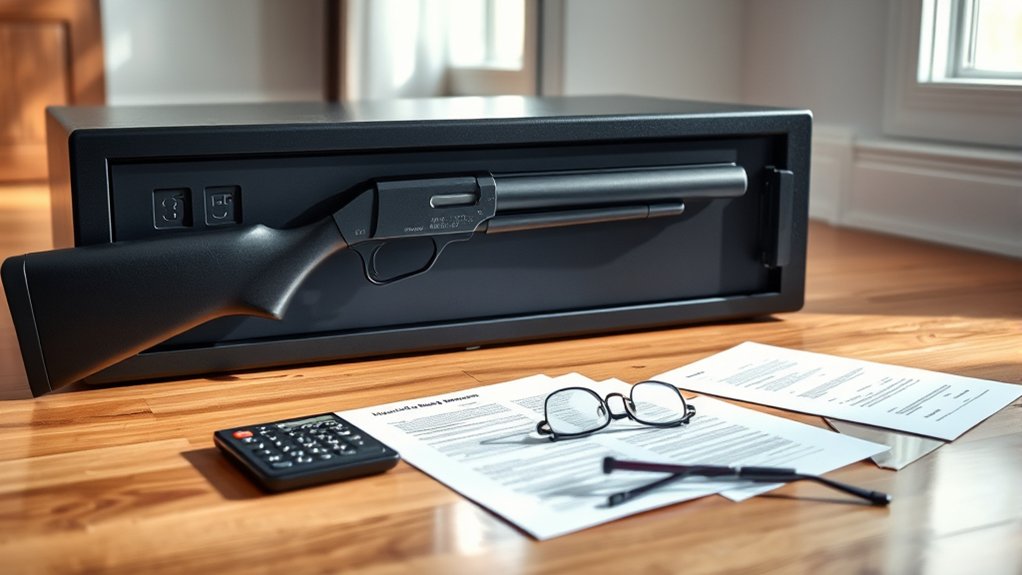
How to Determine If Gun Safes Are Tax Free
Are you tired of navigating the confusing world of gun safe taxes? You’re not alone—many people struggle to figure out if their investment in a secure gun safe can actually save them some money. With varying regulations and requirements across states, it can feel overwhelming to determine what qualifies for tax exemptions.
The good news is that understanding the criteria for tax-free gun safes doesn’t have to be complicated. Whether you’re looking to keep your firearms secure or just want to make a smart financial choice, we’ve got you covered. Let’s break down the essentials so you can feel confident in your purchase.
To determine if gun safes are tax free, you need to check if they have secure locking features and meet your state’s specific storage requirements.
Look for current exemption periods and confirm your safe qualifies, such as having electronic or combination locks where applicable.
Verify details on your state’s revenue or tax authority website, and keep documentation handy at purchase.
If you want to understand how different states compare and what retailers must do, there’s more to explore.
Key Takeaways
- Confirm the gun safe has secure locking mechanisms and is designed specifically for firearm storage.
- Check your state’s Department of Revenue website or tax authority for applicable tax exemption laws.
- Verify the exemption time frame and eligibility period for firearm storage products in your state.
- Ensure you have documentation proving the safe’s purpose and lock type at the point of purchase.
- Ask retailers about current laws and watch for exemption notices displayed at the sales location.
Gun Safe Qualification Criteria for Tax Exemptions
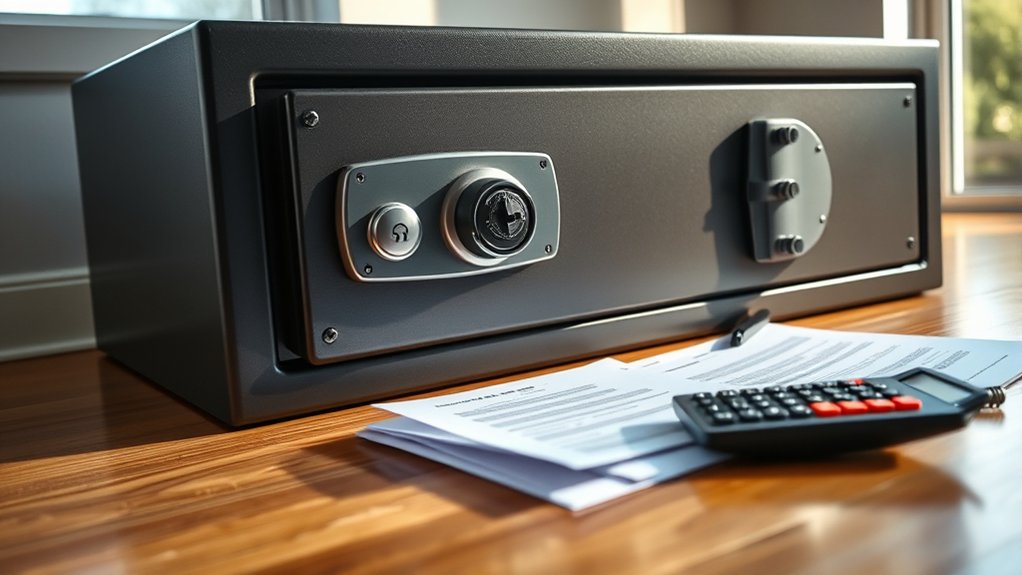
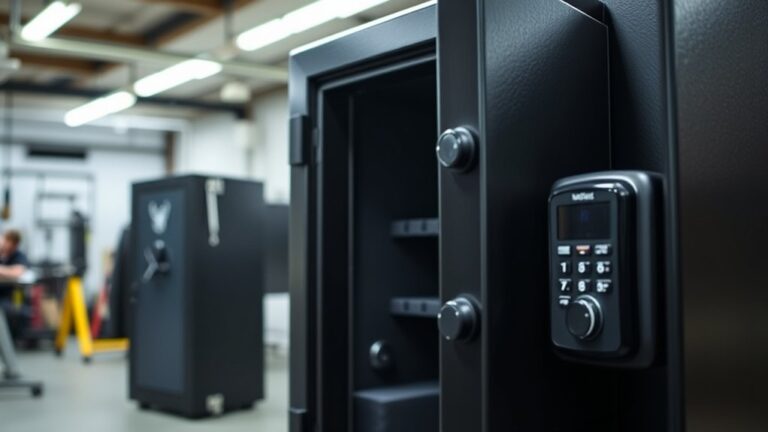
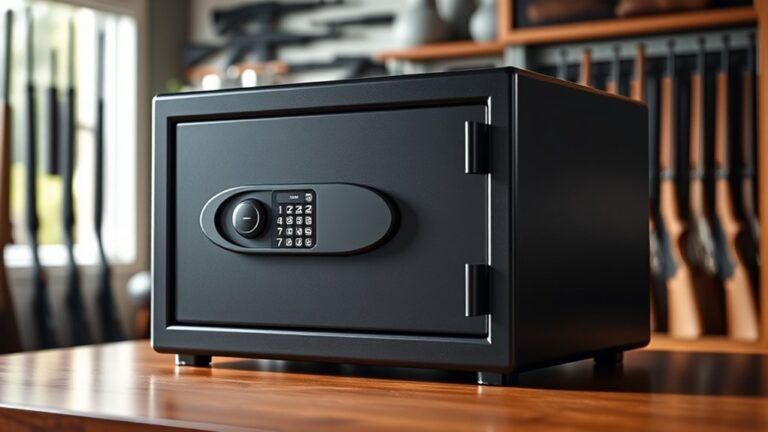
Although tax laws vary by state, gun safes generally qualify for exemptions if they’re specifically designed or modified for secure firearm storage and come equipped with locking mechanisms like padlocks, key locks, combination locks, or electronic locks.
Gun safes with secure locks often qualify for tax exemptions, depending on state-specific firearm storage laws.
When you’re looking to claim a tax exemption, it’s important that your gun safe clearly meets these criteria. For example, Washington State includes electronic locks as qualifying mechanisms, while Tennessee focuses on locking containers intended solely for firearm storage.
To guarantee your gun safe qualifies for tax exemption, it must be used explicitly for secure storage, and the lock type plays a vital role in meeting these standards.
Additionally, having proper documentation or product descriptions that confirm the safe’s purpose and lock type can support your exemption claim. By understanding these qualification criteria, you can confidently determine whether your gun safe is eligible for a tax exemption, avoiding unnecessary tax costs and ensuring compliance with your state’s regulations.
How to Verify Your State’s Gun Safe Tax Exemption
Before you purchase a gun safe, it’s essential to verify whether your state offers a tax exemption for it.
Start by checking your state’s Department of Revenue or tax authority website to review relevant state legislation about sales tax exemption on firearm safes.
Some states, like Washington, have specific statutes (e.g., RCW 82.08.832), while others may offer temporary relief periods.
You can also visit retail locations to see if there are signs indicating tax exemption or contact local retailers and tax officials directly for confirmation.
Be sure to note any exemption time frames to ensure your purchase qualifies.
| State | Sales Tax Exemption Status | Relevant Legislation/Notes |
|---|---|---|
| Washington | Yes | RCW 82.08.832 |
| Michigan | Temporary | Temporary exemption periods |
| Texas | No | No current exemption |
| California | No | No exemption for firearm safes |
| New York | Varies | Check local retailer notices |
Comparing State Gun Safe Tax Exemption Policies
When you’re shopping for a gun safe, it’s important to understand how sales tax exemptions differ from state to state. States like Massachusetts, Michigan, Connecticut, New Jersey, and Washington offer sales tax exemptions on firearm safes, often saving you between 6% and 10%.
Sales tax exemptions on firearm safes vary by state, potentially saving you 6% to 10%.
For example, Washington’s exemption applies specifically to secure enclosures with locks, per RCW 82.08.832. Michigan’s exemption, effective from May 13 to December 31, 2024, includes safes, lockboxes, and trigger locks.
Tennessee recently introduced a permanent sales tax exemption for firearm safes and safety devices starting November 1, 2023. Since policies and qualifying products vary widely, you’ll want to check your state’s current laws carefully.
Retailers also need to verify these rules to ensure you get the correct exemption. Knowing these differences helps you conserve money and choose the right firearm safe for your needs without unexpected tax costs.
Important Dates and Documents for Claiming Exemptions
Since tax exemption periods and requirements vary by state, you’ll need to keep track of important dates and gather the right documents to claim your gun safe exemption successfully.
Start by verifying the specific exemption dates in your state, like Michigan’s deadline of December 31, 2024, or Washington’s ongoing exemption under RCW 82.08.832.
Next, obtain official notices or legislation, such as Tennessee’s HB 7012/SB 7085, which confirm whether the tax exemption is permanent or temporary.
Make certain you have proper documentation ready, including receipts or exemption certificates that clearly show your gun safe qualifies for tax-free status.
Also, check with local tax authorities or retailers for any required forms or notices to substantiate your claim at purchase.
- Confirm state-specific exemption dates
- Review official notices and legislation
- Collect receipts and exemption certificates
- Keep records for potential audits or verification
Following these steps ensures you’re prepared to claim your gun safe exemption without issues.
What Retailers Need to Know About Gun Safe Tax Exemptions
Although gun safe tax exemptions can offer significant savings, retailers need to be certain about their state’s current laws and exemption periods to apply them correctly.
Gun safe tax exemptions provide savings, but retailers must confirm their state’s laws and exemption timelines to apply them properly.
You should verify if your state provides a sales tax exemption on gun safes by reviewing local legislation and checking expiration dates.
It’s vital to confirm that the products qualify, typically requiring safes equipped with locks designed specifically for firearm storage.
Make sure to clearly display notices at the point of sale, such as “Exempt from sales tax in Michigan until December 31, 2024,” so customers are informed.
Proper documentation and accurate reporting of exempt sales on tax forms are essential to remain compliant and avoid penalties.
Stay updated on legislative changes and exemption timelines to maximize savings for your customers and guarantee your business follows current tax regulations related to firearm safes.
This attention to detail helps you navigate tax rules effectively and maintain smooth sales operations.
Frequently Asked Questions
Are All Gun Safes Tax Free?
No, not all gun safes are tax free.
Whether you pay tax depends on where you live and the specific safe’s features.
Some states only exempt safes designed specifically for firearm storage with locks.
You’ll need to check local laws and the safe’s specifications to see if it qualifies.
Also, keep in mind that some tax exemptions are temporary, so what’s tax-free now might change later.
What Is the Most Heavily Armed State in America?
If you were living in the era of muskets and revolvers, you’d still find Texas standing out as the most heavily armed state in America today.
You’ll notice it boasts over 15 million civilian-owned firearms and nearly half of its households own guns.
With the highest number of firearm permits issued and a strong gun culture, Texas leads the nation in firearm ownership and reflects a deep-rooted tradition of gun enthusiasm.
How Do You Know You Are Tax Exempt?
You’ll know you’re tax exempt if your purchase receipt clearly shows no sales tax charged or an exemption note.
Before buying, check with the retailer or tax authority to confirm the exemption applies.
Also, look for any official documentation or posted notices about tax-free status.
Keep all paperwork proving the exemption, especially if it’s tied to a specific period or product category like gun safes.
What Is Exempt From Sales Tax in NC?
In North Carolina, certain firearm safety devices like gun safes with locks are exempt from sales tax.
You’ll also find exemptions on items designed for secure firearm storage that meet state criteria.
However, the exemption only applies during specific periods and under certain conditions.
To be sure, you should check the latest state tax guidelines or ask your retailer if your purchase qualifies before buying.
Conclusion
Now that you know how to determine if gun safes are tax free, you’re ready to save money like you’ve discovered a treasure chest!
Just remember to check your state’s specific rules, gather the right documents, and stay updated on important dates.
Whether you’re a buyer or a retailer, understanding these exemptions can make a huge difference in your wallet.
Don’t let taxes sneak up on you—be informed and prepared every step of the way!
By knowing how to determine if gun safes are tax free, you can ensure a smoother purchasing experience.