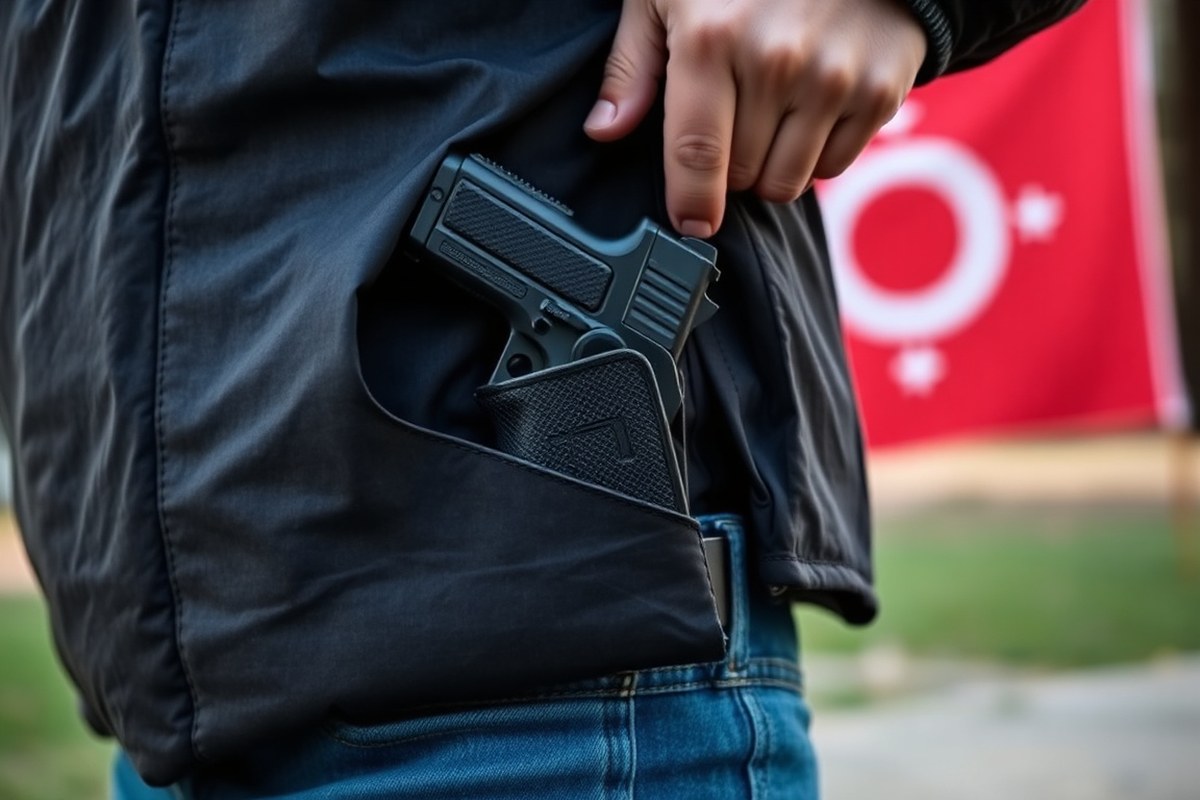
Can You Carry a Concealed Weapon in Ohio? A Complete Guide for Beginners
Can you carry a concealed weapon in Ohio? Yes, adults 21 and older who are not legally prohibited can carry a concealed handgun without a permit. This change took effect in June 2022, allowing permitless concealed carry under Ohio’s constitutional carry law.
Many still choose to keep their concealed handgun license to simplify travel to other states. Start by confirming you meet the basic eligibility requirements before carrying concealed.
Key Takeaways
- Ohio allows permitless concealed carry for qualifying adults aged 21 and older since June 2022.
- You must not be legally prohibited from possessing a firearm to carry concealed without a permit.
- Maintaining a concealed handgun license helps with interstate travel and legal protections in some areas.
- Concealed carry is banned in certain places like federal buildings and school zones under state and federal laws.
- Open carry is legal in Ohio for anyone 18 or older who can legally possess a firearm.
- Application fees for a concealed handgun license vary from $67.00 to $78.25 depending on residency duration.
Can You Legally Carry a Concealed Weapon in Ohio Without a Permit?

Ohio law permits carrying a concealed handgun without a license if certain conditions are met based on Senate Bill 215, which took effect on June 13, 2022. To be a “qualifying adult,” you must be at least 21 and legally allowed to own a firearm under both state and federal regulations. This update means you do not need a Concealed Handgun License (CHL) to carry concealed in Ohio unless barred by factors like felony convictions or restraining orders.
The law is structured to ensure that only responsible adults who meet legal requirements can carry concealed weapons without a license. To carry legally without a permit, you must first confirm that you are 21 or older. You also must not be disqualified by federal or state restrictions, these include convictions involving crimes punishable by more than one year in prison, dishonorable discharge from the military, drug addiction, or mental incompetency as defined by law. Also, you cannot carry if you are listed in the National Instant Criminal Background Check System as prohibited from firearm possession.
This permitless carry applies to any place where a licensed concealed carrier is allowed, but it does not override business owners’ rights to prohibit firearms on their property using proper signage. Unlike with a CHL, you are not required to undergo training, background checks, or pay application fees specifically for concealed carry. However, having a CHL may still be beneficial if you want to carry concealed in other states that recognize Ohio’s permits through reciprocity agreements.
To ensure you carry concealed legally without a permit, use this decision checklist: Are you at least 21 years old? Do you have the legal right to possess a firearm under both Ohio and federal laws? Is the place where you plan to carry a concealed firearm one where license holders are allowed to carry? Confirming “yes” to these questions means you meet the requirements of Ohio’s constitutional carry law. Always stay updated on any specific local restrictions or federal laws that could affect your right to carry.
While no license is required for constitutional carry, you remain under the same legal obligations as permit holders to avoid carrying in prohibited areas, such as federal buildings or private businesses that display no firearms signs. Unlike previous regulations, there is no requirement to notify law enforcement you are carrying during a traffic stop, although an officer may ask you after identifying themselves. Carrying concealed without a permit reduces costs and procedural barriers, but it also places responsibility on you to know and follow all relevant laws to avoid unintentional violations and potential penalties.
Where and When Are Concealed Weapons Prohibited in Ohio?

Carrying a concealed weapon in Ohio comes with specific restrictions on where and when you can carry. Several locations are off-limits due to state and federal laws. Schools, including all public and private K-12 buildings, school grounds, and university campuses, prohibit concealed carry. This rule is strict, with no exceptions unless a university’s board of trustees explicitly allows it, though this is rare. Federal law also forbids carrying within 1,000 feet of a school without a state-issued concealed handgun license (CHL).
Government buildings such as courthouses, police stations, sheriff’s offices, and detention facilities are off-limits for concealed firearms. Airports prohibit concealed carry entirely, reflecting federal regulations. Likewise, most hospitals post “No Weapons” signs, making them prohibited zones. Private property owners in Ohio can restrict firearms on their premises by posting “No Firearms” signs; in these cases, concealed carry is not allowed.
Public parks are generally more lenient. Open park areas usually allow concealed carry, but any government buildings within the park, like visitor centers or administrative offices, are considered sensitive government locations and barred from carrying firearms. For religious institutions like churches, synagogues, mosques, and temples, Ohio law presumes no firearms are allowed unless the institution gives explicit permission.
- No concealed carry in K-12 school buildings and grounds
- Prohibited inside universities unless institution allows
- Government buildings including courthouses and police stations
- Airports and federal transportation facilities
- Private property with “No Firearms” signage
- Most hospital buildings due to signage
- Places of worship unless expressly authorized
Carrying near school buses follows the same rules as school grounds, making it illegal to carry concealed on or near active buses. Ohio’s constitutional carry law assumes adults 21 or older can carry without a permit but still requires compliance with these location-based restrictions. Paying close attention to posted signs is important to avoid violations and potential legal penalties.
Always verify posted signage and property rules before carrying concealed to avoid unintentionally breaking the law, especially on private property or inside buildings.
What Are the Benefits and Requirements of Ohio’s Concealed Handgun License (CHL)?
Ohio’s Concealed Handgun License (CHL) remains a valuable option despite permitless carry. Many Ohio residents still choose to get a CHL to benefit from reciprocity in about 39 other states, skip FBI background checks when buying firearms, and gain easier legal protections. The CHL is optional within Ohio but offers advantages for travel and firearm purchases.
Eligibility and Age Requirements
To obtain a Concealed Handgun License (CHL) in Ohio, you need to be at least 21 years old and qualify under state rules. You must be legally permitted to own and carry a handgun without any criminal convictions, mental health restrictions, or issues with drug use. Ohio residency is usually necessary, but some non-residents who meet the requirements can also apply. Military personnel and veterans who fulfill the same criteria may apply without special exceptions.
Training and Application Steps
Completing 8 hours of firearm training is mandatory before applying for an Ohio CHL. This training includes a minimum of 6 hours of classroom instruction on topics like legal use of force and safe handgun handling, plus live-fire practice on a range. Submit your application, along with proof of training, a valid photo ID, and the application fee, to your county sheriff’s office. The sheriff must review and issue the license within 45 days of receiving a full application with all documents.
Costs and Renewal Process
The application fee for Ohio residents is generally about $67, with some variation depending on the county. Non-residents usually pay around $77. After approval, the CHL is valid for five years. Renewal requires submitting a new application and completing any updated requirements but does not usually require repeating the full training. Having a current CHL allows you to bypass the FBI’s National Instant Criminal Background Check System (NICS) check when purchasing firearms from licensed dealers, speeding up the process.
How Does Ohio Law Regulate Concealed Carry in Vehicles?
In Ohio, anyone 21 or older who legally owns a firearm can carry a loaded, concealed handgun inside a vehicle without needing a concealed handgun license (CHL). The law allows carrying either openly or concealed anywhere within the passenger compartment of a car. This means you can keep a loaded handgun on you or in a glove box, center console, or under a seat without a permit. These rules apply equally to residents and non-residents, so if you’re visiting Ohio and meet the age and legal ownership requirements, you can carry a loaded handgun in your vehicle without a CHL.
Despite the broad allowance for concealed carry in vehicles without a permit, there are important restrictions when it comes to school zones. Ohio Revised Code 2923.122 makes carrying a firearm in or near a school a serious offense unless you have a valid CHL. Without this license, carrying within 1,000 feet of school grounds is prohibited. The law’s strict stance means you must plan your route and vehicle stops carefully to avoid violating these limits unintentionally. For example, parking or stopping the vehicle on a school property while carrying a loaded handgun without a CHL can result in criminal charges.
To stay compliant, the key is knowing your location relative to schools and ensuring you have a valid Ohio CHL if you plan to carry near a school. When driving through school zones, storing your handgun in the vehicle’s passenger compartment is permitted as long as you hold a CHL. Not having a license means you should avoid stopping in these zones or make sure your firearm is securely out of reach during any stops.
Ohio permits you to carry a loaded concealed handgun in your vehicle without needing a permit if you meet certain basic requirements. You must pay close attention to the specific rules for carrying in school zones. Visitors from other states traveling through Ohio need to have valid documentation and comply with the state’s firearm possession laws, including the restrictions within school zones.
Should you choose to get a CHL, it involves submitting an application through your county sheriff, completing a background check, and paying fees that typically range from $67 to $80. Having a CHL provides broader protections, especially around schools, and can make carrying in more contexts safer from legal risk. Even with constitutional carry laws allowing permitless carry in vehicles, the value of a CHL grows when considering school zone restrictions and interactions with law enforcement.
What Are the Key Rules for Interacting with Law Enforcement While Carrying?
Ohio requires you to notify a law enforcement officer about carrying a concealed handgun during a stop, though the law no longer demands proactive disclosure. This update took effect in 2022 to reduce challenges for firearm holders. Being clear on when to share this information can prevent legal complications.
Duty to Inform Requirements
Ohio law requires you to promptly notify a police officer if stopped and asked about carrying a concealed handgun. The key change made in 2022 removed the previous rule that demanded you proactively inform the officer without being asked. Now, you only have to disclose when the officer explicitly inquires.
You must carry valid government-issued identification while armed and be prepared to show it upon request. This duty to inform applies whether you have a concealed handgun license or are carrying under Ohio’s constitutional carry provisions. Keeping this clear reduces misunderstandings and legal complications during encounters with law enforcement.
How to Verbally Disclose Safely
When asked by a law enforcement officer if you are carrying a concealed weapon, respond calmly and clearly. A script you can use is: “Officer, I am carrying a concealed handgun. I also have my identification and license (if applicable) with me if you need to see them.” Speak slowly and keep your hands visible, avoiding sudden movements.
After disclosing, wait for the officer’s instructions before reaching for your ID or weapon. This approach minimizes tension and shows you respect the officer’s authority and safety concerns. It’s important to remain polite and cooperative throughout the interaction.
Legal Consequences of Non-Disclosure
Failing to inform a law enforcement officer about your concealed handgun when asked is a misdemeanor of the second degree in Ohio. This can result in fines and potentially jail time. Even accidental non-disclosure can escalate a routine traffic stop into a criminal matter.
Following disclosure rules protects your legal rights and avoids charges. Many violations occur because gun owners misunderstand these legal gray areas rather than intending to break the law. Knowing your responsibilities ensures safer outcomes for yourself and the officer involved.
Always wait for the officer to ask about firearms before disclosing, then respond calmly and clearly while keeping your hands visible.
Understanding Ohio’s Self-Defense Laws and Concealed Carry Protections
Ohio’s Stand Your Ground law means you don’t have to retreat if you face a threat in any place where you are legally allowed to be. This applies if you meet the criteria for using force in self-defense, such as believing you are at risk of death or serious injury. For a concealed carry holder, this means you can protect yourself without the obligation to step back or run away, whether you are at home, in a public space, or even inside your vehicle. However, the use of force must be reasonable and necessary, or you might face criminal charges or civil lawsuits.
The Castle Doctrine in Ohio complements the Stand Your Ground law and specifically covers your residence and occupied vehicles. Under ORC 2901.05, if someone unlawfully and forcibly enters your home or vehicle, you are legally presumed to have acted in justified self-defense if you use force against that intruder. This protection applies to concealed carry holders defending themselves against intrusions in these locations. For example, if an intruder breaks into your house and you respond with your firearm, Ohio law generally shields you from criminal prosecution and civil claims, assuming your response was proportional to the threat.
Civil immunity protections also exist in Ohio to safeguard gun owners who legally defend themselves. Using force justified by Ohio’s self-defense laws usually protects you from civil lawsuits for damages related to that use of force. This means attackers, or their families, can’t sue you for money in most cases. To ensure you receive these protections, you must prove that your conduct met legal criteria: you were lawfully present, did not provoke the attacker, and acted reasonably under the circumstances. Not meeting these conditions can lead to losing your immunity, resulting in costly legal battles.
Knowing how these laws work together helps you carry concealed confidently and responsibly. Always verify that your concealed carry permit, if you have one, is current and understand where you have the legal right to be. You should call a licensed attorney promptly after using your firearm in self-defense. They can help ensure your actions are clearly communicated to law enforcement and protect your rights during any investigation or trial. The costs of legal defense can be high, so prevention through education and safe practices remains the best approach.
What Penalties Apply for Concealed Carry Violations in Ohio?
Carrying a concealed weapon in Ohio in places where it is prohibited can lead to serious legal penalties. For example, having a concealed weapon in a school safety zone without a valid Concealed Handgun License (CHL) is considered a felony under Ohio Revised Code 2923.122. This offense carries significant prison time and can result in the permanent loss of your firearm rights. The severity of consequences highlights the importance of knowing exactly where carrying concealed is allowed.
Other violations, such as carrying concealed after being asked to leave a posted location, are treated as criminal trespass, which is a misdemeanor. Penalties for this can include fines and possible jail time. These offenses also remain on your permanent criminal record. The classification and punishment depend on the exact violation, but fines and potential jail exposure are common across most concealed weapon offenses.
Carrying concealed while you are legally prohibited from owning a firearm, such as being under a weapons disability, results in felony charges. Prison sentences for this violation vary depending on the specific disqualification that bars you from possessing a weapon. This can involve several years of incarceration, emphasizing the need to confirm your eligibility before carrying concealed.
If charged with a concealed carry violation, acting promptly and carefully is important. Start by consulting a licensed attorney who specializes in firearms law. Avoid discussing details with police or others until you have legal counsel present. Keep records of all relevant documents, such as your CHL, any warnings received, and proof of where you were carrying. This documentation can become essential for your defense.
To protect yourself, use the following decision checklist: First, confirm if the location where you carried is legally off-limits and if you had been advised to leave. Next, verify your CHL status and any firearm restrictions that apply to you. Third, gather and preserve any evidence that supports your case, including witness contacts or video footage. Finally, reach out to a criminal defense attorney experienced in Ohio firearm laws within 24 to 48 hours of any charge.
Following these steps can improve your chances of a fair resolution. Failing to respond properly or ignoring charges may lead to harsher fines, extended probation, or incarceration. Understanding and respecting Ohio’s concealed carry laws protects you from costly legal consequences and helps maintain your right to carry responsibly.
How Does Concealed Carry Reciprocity and Traveling to Other States Work?
Ohio recognizes concealed carry permits from all other states, allowing holders to carry legally within Ohio. Carrying a valid Ohio Concealed Handgun License (CHL) can also help when traveling to states that require a permit. Although Ohio residents and eligible visitors aged 21 and older can carry without a permit, having a CHL broadens your options for lawful carry outside Ohio and may reduce legal risks.
Reciprocity Overview
Ohio honors all valid out-of-state concealed carry permits, making it a state with broad reciprocity. This means if you hold a concealed carry permit from another state, you can carry legally in Ohio without applying for an Ohio CHL. However, each state has different rules on recognizing Ohio’s CHL, so your travel plans should account for these differences. Obtaining an Ohio CHL can be particularly useful for people who frequently travel through states with stricter requirements or without permitless carry laws.
Since Ohio allows permitless carry for residents and eligible non-residents, a permit is not required to carry concealed in most situations inside Ohio. Still, a CHL can be a valuable credential for traveling across state lines, especially where reciprocity reciprocity is limited or permitless carry is not allowed.
States Honoring Ohio CHL
Many states recognize Ohio’s CHL, but the degree of reciprocity varies. Some states not only acknowledge an Ohio permit but also allow concealed carry under the same rules as their own licensed residents. Others might have restrictions or additional requirements. You should research the specific laws of each state you plan to visit to avoid violations, as carrying without the proper permit can lead to fines or arrest.
Obtaining an Ohio CHL involves a non-refundable fee (typically $67 for residents and $77 for non-residents), a background check, and sometimes a firearms safety course, except for current and former military personnel who are exempt from the fee and class requirements. Holding this license simplifies legal concealed carry in other states and helps avoid confusion during law enforcement encounters.
| Aspect | Ohio Residents | Non-Residents |
|---|---|---|
| Permitless Concealed Carry Allowed | Yes, age 21+ | Yes, in most cases, age 21+ |
| Ohio CHL Application Fee | $67 (varies by county) | $77 (varies by county) |
| Military Exemption for Fee and Class | Yes | Yes |
| Recognizes Out-of-State Permits | N/A (resident) | Yes, Ohio honors all valid permits |
| Travel Usefulness of Ohio CHL | Highly useful in many states | Highly useful in many states |
Having an Ohio CHL can be especially helpful if you plan to travel interstate often, as it offers a recognized credential in many parts of the country. However, always verify the destination state’s rules before carrying.
Non-Resident Permissions and Limits
Non-residents who are at least 21 years old and legally eligible to possess a firearm may carry concealed in Ohio without a permit, under Ohio’s constitutional carry law. This means the absence of a permit does not inherently restrict non-residents from carrying concealed inside Ohio, as long as they meet the legal criteria.
Non-residents who wish to carry concealed in other states either need to have a valid out-of-state permit recognized by those states or obtain an Ohio CHL to use reciprocity agreements. Carrying without a permit outside of Ohio in states that require one can lead to serious legal consequences.
Before traveling, confirm whether your permit or Ohio’s permit is accepted at your destination to avoid inadvertent permit violations.
Your First Steps for Carrying Concealed in Ohio
Follow this plan to stay legal and prepared when carrying a concealed weapon in Ohio. Each step helps you build confidence and avoid trouble.
- Day 1: Confirm you meet basic eligibility to carry concealed without a permit or decide to get an Ohio CHL. Check your criminal record and mental health status to avoid legal problems.
- Week 1: Learn all state restrictions on where and when you cannot carry concealed, like schools or government buildings. Use official sources or Ohio law websites to verify.
- Week 2: If choosing a CHL, complete a certified firearm safety course and submit your application to the Ohio Attorney General. Track your application status online.
- Week 4: Practice safe firearm handling and storage, especially in vehicles. Use a secure case or holster that meets Ohio requirements to prevent accidental exposure.
- Month 2: Review the proper way to interact with law enforcement when carrying concealed. Memorize key points, such as informing officers immediately and following their instructions calmly.
- Ongoing: Stay updated on changes to Ohio’s concealed carry laws and reciprocity agreements, especially before traveling out of state. Use official Attorney General updates.
Frequently Asked Questions
Can You Carry a Concealed Weapon in Ohio Without Any Permit?
Yes, Ohio allows adults 21 and older who aren’t prohibited from owning a firearm to carry concealed without a permit since June 2022. This is called permitless or constitutional carry and applies statewide with no extra paperwork required.
Do I Need a Concealed Carry Permit to Carry in Other States?
Yes, you might need an Ohio CHL or that state’s permit to legally carry outside Ohio. Ohio’s permit offers reciprocity with many states, which permitless carry does not cover.
Can I Carry a Concealed Weapon in a School Parking Lot in Ohio?
Carrying concealed in school safety zones is prohibited unless you have a valid OH CHL and are inside a vehicle. Permitless carry doesn’t exempt you from this.
What Is the Minimum Age to Carry a Concealed Handgun in Ohio?
You must be at least 21 years old and not legally barred from firearm ownership to carry concealed in Ohio without a permit.
Does Ohio Require Training to Carry Concealed Without a Permit?
Ohio doesn’t require training for permitless carry, but safety training is advised. Training is mandatory only to get a concealed handgun license (CHL).
Can Someone with a Felony Record Carry Concealed in Ohio?
No, individuals prohibited by law like felons cannot legally carry concealed weapons in Ohio, permit or not. Carrying illegally can lead to serious penalties.
Before You Go
You can carry a concealed weapon legally in Ohio either by meeting constitutional carry rules or holding a CHL, as long as you follow all restrictions and proper procedures. Make sure to keep your knowledge current and carry responsibly. Start by checking whether getting a CHL fits your situation and take any required training next.