Does a Concealed Handgun Have to Be in a Holster? Legal and Safety Guide
Does a concealed handgun have to be in a holster? Federal law doesn’t require it, but many states do have specific holster mandates. Carrying a concealed handgun in a proper holster reduces the risk of accidental discharge and improves safety. Start by checking your state’s laws to ensure you meet legal requirements for secure firearms carry.
Key Takeaways
- Federal law allows carrying a concealed handgun without a holster, but check your state’s legal requirements first.
- Use a holster that fully covers the trigger to prevent accidental discharges and unsafe handling.
- Choose a holster with adequate retention to prevent your handgun from falling out during movement.
- Consider the carrying position, such as appendix (12 to 2 o’clock) or strong-side (3 to 5 o’clock), for comfort and accessibility.
- Pocket holsters protect triggers and reduce snagging when carrying in pockets without a traditional holster.
- Practice drawing from your holster regularly to avoid difficulties caused by clothing interference.
Does the Law Require a Holster for Concealed Handguns?
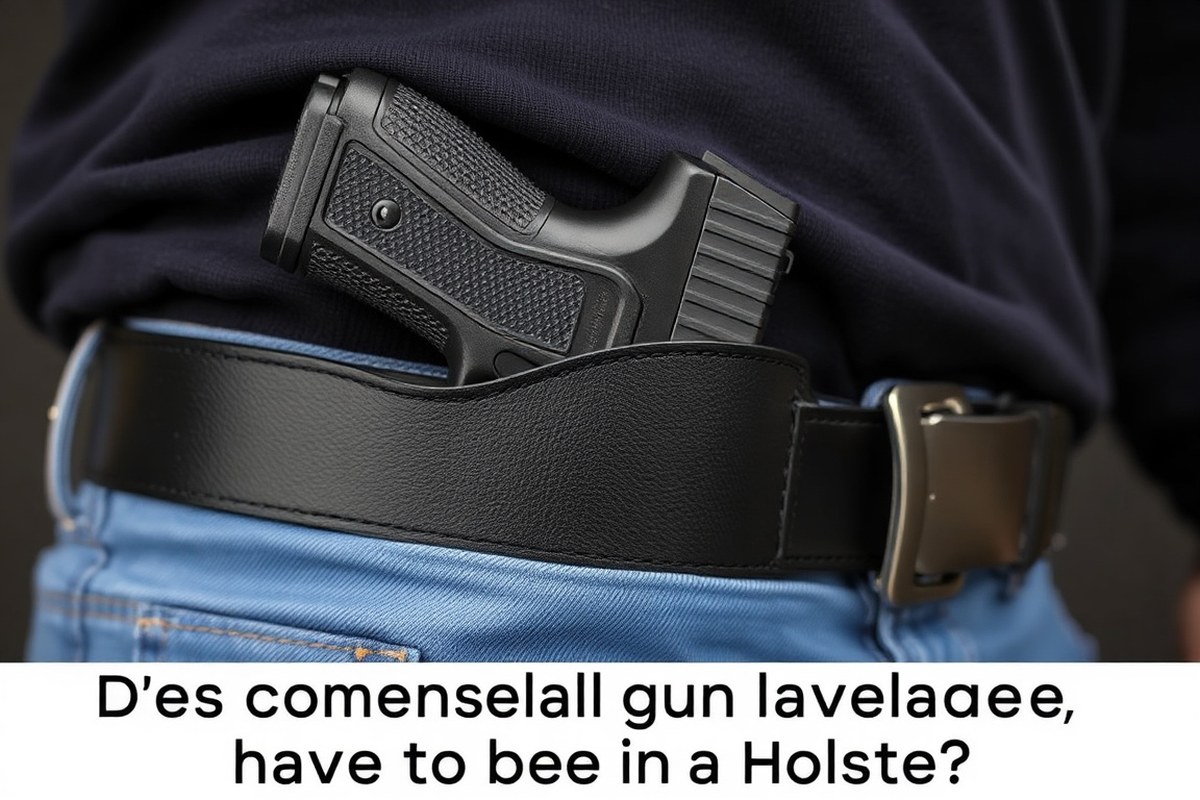
No federal law requires that a concealed handgun be carried in a holster. However, many states have their own regulations that often mandate a holster for concealed carry. These requirements aim to improve safety by securely covering the firearm’s trigger and anchoring the weapon to your body.
Federal vs State Holster Requirements
Federal law does not specify a holster as a legal requirement for carrying a concealed handgun. The focus at the federal level is on licensing, background checks, and where firearms may be carried. The actual method of carrying a concealed weapon, such as with or without a holster, is left to state and local jurisdictions.
State laws vary widely in this area. Some states require that concealed handguns be carried in holsters that cover the trigger guard and secure the weapon to your belt or body. Other states focus more on the concealment aspect itself and do not mandate a holster specifically, although they recommend one for safety. You must always follow your state’s rules to avoid misdemeanor or felony weapons charges related to improper carry methods.
States That Mandate Holsters for Concealed Carry
Certain states explicitly require that concealed handguns be carried in proper holsters. For example, Texas requires open carry handguns to be in a holster that holds the gun securely, such as a shoulder or belt holster. While Texas law does not require a holster for concealed carry, its open carry rules offer insight into state-level holster mandates.
The table below illustrates a few states with known mandates or common legal interpretations regarding holster use for concealed carry. This list is not exhaustive but shows examples to guide you on differing state policies.
| State | Holster Required for Concealed Carry? | Notes |
|---|---|---|
| Texas | No (for concealed), Yes (for open carry) | Open carry must use shoulder or belt holsters; concealed carry no license required for those 21+ and eligible |
| California | Yes | Many local laws require holsters that cover trigger guards for concealed carry endorsement holders |
| Florida | No | Holster use recommended for safety, but not explicitly mandated by state concealed carry law |
| New York | Yes | Holster required to cover trigger guard and secure weapon in concealed carry permits |
| Arizona | No | Concealed carriers not required to use a holster; emphasis on concealment and permit compliance |
Since local ordinances can further regulate concealed carry methods, always verify your city or county rules in addition to state law.
Exceptions and Recent Legal Changes
A handful of states have introduced or debated laws affecting holster requirements for concealed carry. For example, bills inspired by the Concealed Carry Reciprocity Act aim to make permit recognition uniform but do not generally address holster mandates directly. Legal challenges have centered on restrictions that go beyond safety, such as overly broad holster definitions that limit what carriers can use.
Court decisions have upheld state authority to require holsters that cover the trigger guard and secure the firearm, emphasizing the state’s interest in preventing accidental discharges and unauthorized access. Conversely, some rulings protect carriers’ rights to choose how to secure their handgun as long as it complies with basic safety standards and concealment. To comply legally with holster mandates, follow this checklist:
- Confirm your state’s concealed carry permit conditions regarding holster use.
- Use a holster that fully covers the trigger guard to prevent accidental discharges.
- Ensure the holster anchors firmly to your belt, waistband, or a body harness.
- Check local ordinances, as some cities may have additional holster requirements.
- Stay informed on legal developments or court rulings that may affect carry rules in your state.
Why Carrying Without a Holster Increases Safety Risks

Carrying a concealed handgun without a holster increases safety risks significantly. Without a holster, the trigger is exposed, which raises the chance of a negligent discharge. This happens when the trigger accidentally engages because something snags on it, like clothing or keys, and fires the gun unintentionally. Even slight pressure on the trigger can cause a discharge, and a proper holster fully covers the trigger area to prevent this risk.
Firearm loss from accidental drops is another major hazard. A handgun tucked inside the waistband or a pocket without a secure holster can shift position or slip out when moving, sitting, or bending. Unlike a holster that offers retention and stability, carrying loose inside clothing means the firearm is unsecured. This can lead to losing your handgun without realizing it, which also poses theft risks if someone else picks it up. Carrying off-body without secure storage magnifies these dangers because the orientation and security of the firearm cannot be controlled.
Snagging on clothes or objects becomes far more likely when you skip using a holster. Pocket carry without a pocket holster often causes the firearm to catch on fabrics during draw or daily activities, triggering a misfire or dropping the gun. Without proper holster retention, the handgun may not only fire but also malfunction or cause injury during retrieval. Practicing drawing without a holster does not compensate for these physical risks, especially if your clothing is loose or layered.
In some areas, local laws require a holster for concealed carry. Even where not mandated, carrying a handgun tucked inside pants without any holster rarely qualifies as safe or responsible. Holsters are designed to fit both the firearm and your body securely, ensuring the gun stays in place, remains fully concealed, and maintains trigger protection. Deviating from this standard means accepting additional legal and safety risks.
The risk factors break down as follows: negligent discharges result from trigger exposure; accidental drops happen when retention is insufficient; snagging triggers malfunctions; theft risk rises when firearms are carried off-body without secure storage; and missing trigger protection increases unsafe draws. Mitigating these risks requires using a holster that fits your handgun and body, fully covers the trigger guard, and keeps the firearm secure during all movements.
Avoid carrying a handgun tucked directly into your waistband without a holster, always use a properly fitted holster to prevent accidental discharge and retention issues.
Common Holster Types and Their Pros and Cons
Choosing the best holster for concealed carry depends on how you plan to carry and what balance of comfort, concealment, and accessibility you want. Holsters come in several materials like leather, Kydex, and nylon, and carry styles such as inside the waistband (IWB), outside the waistband (OWB), and pocket holsters. Each type affects safety, comfort, and concealment differently, so knowing their features helps you pick what works best.
Inside Waistband (IWB) Holsters
Inside Waistband (IWB) holsters fit between your body and pants, making them a top choice for concealed carry. They usually hold the handgun on your strong side or in the appendix area, where the grip is easily accessible but hidden from view. IWB holsters provide excellent concealment even when sitting or moving, but you’ll want one designed for your specific handgun model to ensure a snug fit and secure retention.
This type often comes in leather or Kydex. Leather molds well to your body over time and feels comfortable, but it can be bulkier and less resistant to sweat. Kydex offers a rigid, waterproof shell that holds the firearm firmly and enables quick draws. Expect to spend around $40 to $100 depending on material and customization. Combining an IWB holster with a stiff gun belt improves comfort and prevents sagging.
Outside Waistband (OWB) Holsters
OWB holsters attach outside your pants, generally on your belt or waistband, and are easier to draw from compared to IWB. They tend to be bigger and less concealable on their own, so they work best when you can cover your handgun with a jacket or coat. Paddle holsters slip inside the pants and hook securely to your belt without requiring belt loops, making them popular for quick on/off use.
Materials include leather for comfort and aesthetics, nylon for lightweight wear, and Kydex for durability and retention. OWB holsters usually carry your gun around the 3 to 5 o’clock position on your strong side but can also be worn appendix or cross-draw style. They are good for larger handguns and those who prioritize fast access over tight concealment. Costs typically range from $30 to $90.
Pocket and Appendix Carry Holsters
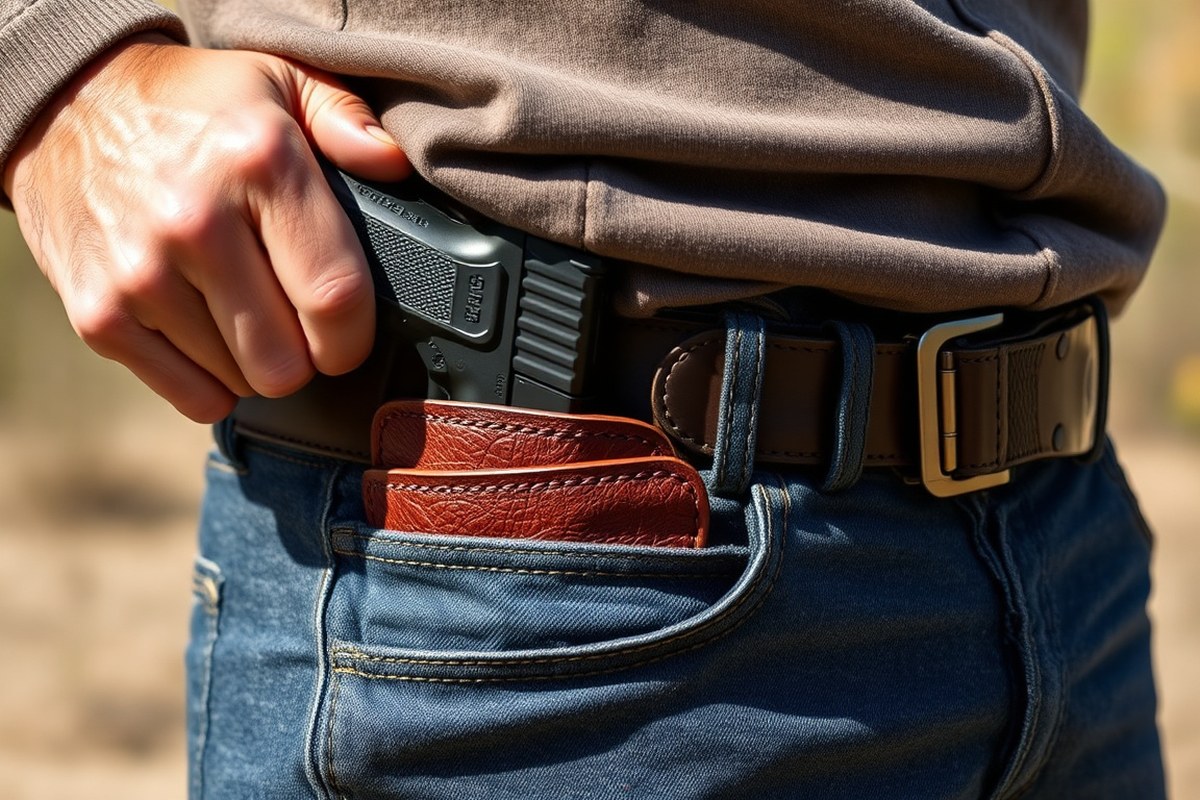
Pocket holsters are designed for small, compact handguns and keep your gun secure and oriented safely inside your pants pocket. They generally use lightweight nylon or leather and provide trigger coverage. Pocket carry limits the size of your firearm but offers easy concealment, especially with casual clothing. Keep in mind pocket carry only works well for handguns designed for that style.
Appendix carry holsters sit at the front of your waistband, near where your appendix is. This carry method is popular with IWB holsters but not advisable without one. Appendix holsters provide quick access and good concealment for small to medium handguns, but require a holster that covers the trigger and holds the gun firmly to prevent shifting or injury. These holsters cost about $40 to $100. Below is a comparison table summarizing key holster types, their common materials, typical carry positions, and best use scenarios:
| Holster Type | Common Material(s) | Carry Position(s) | Best For | Approximate Cost |
|---|---|---|---|---|
| Inside Waistband (IWB) | Leather, Kydex | Strong side, Appendix, Small of back | Concealed carry with small to medium handguns | $40 – $100 |
| Outside Waistband (OWB) | Leather, Nylon, Kydex | Strong side (3-5 o’clock), Cross draw | Open or concealed carry with jacket; larger handguns | $30 – $90 |
| Pocket Holsters | Nylon, Leather | Inside front pants pocket | Small, compact handguns | $20 – $50 |
| Appendix Holsters (IWB) | Leather, Kydex | Front waistband | Quick access and concealment with small to mid-size guns | $40 – $100 |
Choosing holster material depends on your priorities: leather offers comfort and molds nicely to your body but requires maintenance and may absorb sweat. Kydex excels at durability and retention but can be less comfortable for extended wear. Nylon is lightweight and flexible but often less durable. Consider the handgun size and how you move throughout the day to pick the right combination of style and material.
Methods for Carrying Concealed Without a Traditional Holster
You can carry a concealed handgun without a traditional holster using several alternative methods, each with different levels of security and concealment. Common options include pocket carry, tucking the gun into your waistband or clothing, and off-body carry like purse or bag carry. These methods require attention to how the handgun is secured and accessed to maintain safety and compliance.
Pocket Carry Techniques
Pocket carry involves placing the handgun directly into a pants pocket, typically the front pocket of pants or shorts. This method is popular for compact pistols designed to fit comfortably without printing too much. A pocket carry holster is highly recommended because it covers the trigger guard and stabilizes the gun, preventing snagging on clothing or accidental discharges.
Some pocket holsters come with a flat front design that keeps the gun tight against your body, improving concealment and draw speed. You should select a holster made from stiff materials like Kydex or reinforced leather to maintain shape and safety. Practicing a smooth and consistent draw using dry-fire exercises is essential to develop muscle memory and confidence.
Tuck Carry Without Holster
Tucking a handgun involves placing it inside the waistband or under a shirt without using a formal holster. This may appeal to those who want minimal bulk but carries inherent risks if the trigger isn’t protected. It’s important that you keep the gun oriented correctly, trigger side away from your body and fingers, to avoid accidental pulls on the trigger.
Using a well-fitted belt or compression garment can help secure the gun in place and prevent shifting or falling out during movement. Clothing type matters: thicker shirts and higher waistbands provide better concealment and security. Extra caution is necessary because, without a trigger guard or holster, your risk of snagging or accidental discharge increases significantly.
Off-Body and Purse Carry
Off-body carry means keeping the handgun in a purse, bag, or another container rather than on your person. This method is legal in many states but introduces challenges around quick access and security. The gun must remain under your control at all times to reduce the risk of theft or unauthorized use.
Using a dedicated concealed carry compartment or a holster designed for bags can improve safety by covering the trigger and providing a secure fit. An important step for off-body carry is securing the purse or bag with wrist straps or locking zippers to limit potential access by others. Keep your non-firing hand free when retrieving or storing the handgun to maintain control and a proper grip.
- Pocket carry: use a rigid pocket holster covering the trigger
- Tuck carry: keep the gun oriented properly, secure with belt or garment
- Off-body carry: use a bag holster and keep purse secured
- Practice draw techniques regularly to build speed and safety
- Be mindful of clothing choices for concealment and retention
- Inspect your carry method daily to ensure no wear or damage
- Follow your local laws regarding concealed carry and specific carry method rules
Trying different carry options with your specific handgun and attire will help determine what works best in terms of comfort, concealment, and reliability. Prioritize safety and consistent practice so you stay confident carrying without a traditional holster.
How to Choose a Safe and Legal Concealed Carry Holster
Choosing a safe and legal concealed carry holster starts with ensuring the holster fits your specific handgun model exactly. A proper fit means the firearm sits snugly without wobbling or shifting, which helps maintain secure retention and avoids accidental drops. The holster must fully cover the trigger guard to prevent any unintentional contact that could cause a negligent discharge. This means the trigger should never be exposed or accessible while holstered.
Look for holsters designed specifically for your gun’s make and model. Avoid generic holsters labeled “fits most” since they often don’t provide the precise contour needed to keep the handgun stable. Materials matter too: leather and Kydex holsters are common choices because they can maintain shape and retention over time. Comfort and concealment vary by material and design, so consider where and how you will carry (standing, sitting, active movement) when making your choice.
Some states require a holster to securely retain the firearm when carried concealed. Even if your state does not, using a holster that firmly retains the gun and covers the trigger guard protects you and others from accidental discharge and legal issues. You can perform a simple test after holstering: shake your holster gently side to side and downward, your handgun should not loosen or come free.
- Confirm the holster fully covers the trigger guard and locks or holds the firearm securely.
- Choose a holster designed for your handgun model to ensure proper fit and retention.
- Pick comfortable materials such as leather or molded Kydex for daily wear and concealment.
- Test retention by shaking the holstered gun; it shouldn’t move excessively or fall out.
- Consider carry position and activity level to select a holster providing stable, comfortable concealment.
- Avoid holsters that leave the trigger exposed or fit loosely, increasing risk of accidental discharge.
Wearing a holster that fails to cover the trigger guard or secure the firearm puts you at risk of accidental discharge. Pocket carry is possible only if the pocket holster completely covers the trigger and holds the gun firmly in place. For active situations like walking or climbing, select a holster with adjustable retention and clips that keep the holster close to the body.
Never choose a holster that exposes the trigger or lets your gun shift freely; secure trigger guard coverage is key for safe concealed carry.
Step through the process carefully: start by verifying whether your handgun is firmly held in a holster made for its model, confirm full trigger guard coverage, and test retention with movement. Avoid low-quality or generic holsters lacking these features. Holsters generally cost $30 to $100 depending on materials and craftsmanship. This investment improves your safety, legal compliance, and daily comfort when carrying concealed.
Best Practices for Safe and Secure Concealed Carry
Handling and drawing a concealed handgun safely requires clear, practiced steps, especially when using a holster to secure the firearm. Using a holster designed for your specific carry method, such as a pocket holster or an inside-the-waistband holster, keeps the gun in the correct orientation and prevents snagging or accidental discharge. Consistently following safe handling techniques minimizes the risk of accidents and helps maintain concealment throughout your daily activities.
Maintaining concealment starts with proper positioning of the firearm on your body and selecting appropriate clothing. Choose clothing that allows the firearm to stay hidden without printing, tight or thin fabrics increase the chance your gun’s outline will show. Layered clothing, like a loose shirt or jacket over your carry garment, can help keep the firearm concealed while allowing ready access when needed. Avoid quick, jerky movements when reaching for your gun; smooth, deliberate actions reduce unwanted attention and accidental exposure.
Many accidental exposures and discharge risks come from failing to fully secure the gun or drawing without a clear and practiced routine. Common mistakes include not checking trigger safety before drawing, drawing the firearm before it is fully clear of the holster, or mishandling the weapon while repositioning clothing. Developing a consistent sequence each time you draw will help avoid these errors and build muscle memory for safe, confident handling. The following numbered steps provide safe and secure instructions for carrying concealed with a holster, including drawing the firearm:
- Position your firearm in a dedicated holster suited for your carry method, ensuring the trigger remains fully covered and the gun is oriented consistently.
- Choose clothes that conceal without restricting access, a loose or layered top is ideal to prevent printing and allow easy draw.
- Practice a slow, deliberate draw by first clearing any clothing over the holster with your off-hand.
- Grip the firearm firmly with your dominant hand while keeping your finger off the trigger until ready to fire.
- Pull the firearm straight up from the holster without twisting, preventing snagging or accidental discharge.
- Bring the firearm into shooting position smoothly, ensuring muzzle direction remains safe at all times.
- Replace your firearm carefully by reversing the process, making certain it fully seats back in the holster with the trigger covered.
- Check your surroundings during every step to avoid alerting others unnecessarily and to maintain situational awareness.
Following these steps helps reduce the risk of negligent discharge and accidental revelation of your concealed handgun. Investing time in dry-fire practice with your particular holster and clothing setup builds confidence and speed without sacrificing safety. Avoid tucking your firearm into your waistband without a holster or using unsecured bags, which can increase risks of dropping, printing, or theft. Keeping your concealed weapon secure and accessible protects both you and those around you.
Common Mistakes When Carrying Without a Holster and How to Fix Them
Carrying a concealed handgun without a holster often leads to common but serious mistakes like unsecured carry and exposing the trigger. These errors increase the chance of the gun dropping, snagging on clothing, or discharging accidentally. A firearm that isn’t secured in a holster leaves the trigger open to unintended contact, which can cause negligent discharges and put you or others at risk.
To prevent accidental drops or negligent discharges, the firearm must be secured in a holster that covers the trigger fully. Holsters designed for pocket carrying, inside-the-waistband, or outside-the-waistband use provide retention mechanisms that hold the gun in place and block trigger access. Without this protection, you risk snagging the gun on a car door, desk edge, or clothing, which can cause it to fall or fire unexpectedly.
- Carrying without trigger coverage allows an object or finger to engage the trigger unintentionally.
- Failing to secure the firearm often results in it falling out during movement or sitting.
- Snagging on clothing or gear can cause a loss of control over the firearm.
- Using loose carry methods can damage the gun or holster and compromise safety.
- Lack of retention increases the risk of losing the firearm or unauthorized access.
- Tucking a handgun without a proper holster leaves it exposed to dirt, affecting function.
- Ignoring local regulations about secure carry may lead to legal penalties or confiscation.
To fix these mistakes, choose a holster designed for your carry method that fully covers the trigger and holds the gun securely. Inspect the retention regularly and practice drawing and reholstering safely to avoid habitually dropping the weapon. Carrying concealed without a traditional holster calls for alternative gear such as a trigger-guarded pocket holster or a closed, secure case that keeps the trigger inaccessible.
Laws about carrying without a holster vary across states and can result in penalties such as fines, permit suspension, or charges related to an accidental discharge. Certain states require holsters that completely cover the trigger or include retention features for concealed carry. Carrying a replica firearm visibly in public without a proper holster or inside a closed case may lead to significant legal trouble, highlighting the importance of correct carrying practices.
When to Consult a Professional About Concealed Carry Holster Laws
Consulting a lawyer or firearms expert about concealed carry holster laws becomes essential when local regulations are unclear, conflicting, or recently updated. For example, if your state has recently changed its mandate on holster requirements for concealed carry permit holders, getting professional advice can help you avoid legal trouble and ensure safe compliance. You should also seek legal advice if you face a potential citation or arrest related to holster issues during concealed carry, or if you plan to move to a state with different holster or carry regulations.
Professional resources for concealed carry legal help include firearms attorneys who specialize in gun laws, often found through local or state firearm rights organizations. Some states have official concealed carry associations that provide legal referrals or advocate for permit holders. Also, online legal services and law clinics with a focus on Second Amendment rights can provide guidance for a reasonable fee, typically ranging between $100 and $300 per consultation depending on complexity and location.
Staying updated on holster regulations requires regularly checking your state’s official government websites, especially the department that issues concealed carry permits. Many states post updates and changes in firearm statutes publicly and promptly. Subscribing to newsletters from recognized firearm advocacy groups or joining local concealed carry forums can also keep you informed. If a significant law change is pending, lawmakers often hold public comment periods where you can participate or get information from legal experts.
Making the decision to consult a professional involves a clear checklist: if you do not fully understand your state’s holster laws, if you plan extensive concealed carry across state lines, or if you encounter conflicting advice from non-expert sources. Also consider consulting if technology or products you want to use (like innovative holsters or carry methods) aren’t explicitly addressed by law. Having a lawyer review your situation usually costs a few hundred dollars but can prevent costly fines or legal complications later.
Proper guidance from a qualified expert helps you carry safely and legally. Without it, you risk violating laws that differ widely between states, as concealed carry holster rules may sometimes include detailed specifications about holster design, retention, and positioning. When laws evolve, as they often do, professional input ensures you adapt without jeopardizing your rights or safety.
Always confirm your concealed carry holster choices align with current state laws before carrying; a quick check on your state’s official website can prevent serious legal issues.
Step-by-Step Action Plan for Safe and Legal Concealed Carry
Follow these steps to ensure your concealed handgun is carried safely and in compliance with the law.
- Before you start: Check your state’s concealed carry laws to confirm holster requirements and restrictions. Knowing the rules helps avoid legal issues.
- Day 1: Choose a holster that fully covers the trigger guard and secures your handgun. Ensure it fits your firearm model for safety and retention.
- Week 1: Practice drawing and reholstering with your chosen holster until your movements are smooth and controlled. This reduces accidental discharges.
- Week 2: Try different carrying positions with your holster to find a comfortable and secure method that stays concealed throughout your daily activities.
- After 1 month: Inspect your holster and handgun regularly for wear or damage that could affect safety. Replace worn gear promptly to maintain secure carry.
- Ongoing: Avoid carrying without a holster unless specifically permitted and you fully understand the increased risks. Always prioritize trigger protection.
- When in doubt: Consult a firearms safety instructor or legal expert to confirm your carry method aligns with best practices and local laws.
Frequently Asked Questions
Is It Illegal to Carry a Concealed Handgun Without a Holster?
Federal law does not require a holster, but many states do. You must check your state’s laws to avoid legal issues when carrying concealed.
Can I Use My Waistband to Carry a Concealed Handgun Without a Holster?
Carrying without a holster in your waistband is unsafe and often illegal. A proper holster secures the gun and covers the trigger to prevent accidents.
Does Carrying a Concealed Handgun Without a Holster Increase the Risk of Accidents?
Yes, it exposes the trigger guard and raises the chances of negligent discharges. A proper holster keeps the gun secure and reduces these risks significantly.
Are Pocket Carry Holsters Necessary for Carrying a Concealed Handgun in a Pocket?
You should never carry a handgun in your pocket without a proper pocket holster. It protects the trigger and prevents unsafe handling inside the pocket.
What Should I Look for When Choosing a Concealed Carry Holster for Safety?
Look for a holster that fully covers the trigger guard and secures the gun in place. It should also maintain concealment during daily movements, including sitting and bending.
Can Carrying a Concealed Handgun Without a Holster Affect My Ability to Quickly Draw the Weapon?
Yes, without a holster, your draw can be slower and less controlled. A good holster holds the gun in a consistent position for smooth and safe access.
Before You Go
Using a holster that completely encloses the trigger guard and firmly retains your handgun is essential for safe concealed carry. This approach lowers the chance of an accidental trigger pull and helps avoid legal issues. Choose the right holster and practice carrying your firearm carefully to ensure your safety and that of others.