How to Become a Concealed Carry Instructor: A Complete Guide for Beginners
How to become a concealed carry instructor involves meeting state certification requirements and completing a complete instructor training course. You must complete an e-learning module, attend a 2-day instructor course, and gain practical teaching experience. Starting with your state’s specific legal and training mandates ensures you follow the correct certification path.
Key Takeaways
- Complete the required e-learning module at least two weeks before the instructor course.
- Attend a 16-hour, 2-day instructor course that includes role-playing and teaching practice.
- Verify your state’s concealed carry instructor certification requirements and legal qualifications.
- Gather prior firearms experience through military, law enforcement, or documented personal training.
- Prepare teaching materials like the USCCA textbook and 10 copies of the concealed carry magazine for students.
- Report any relevant legal matters to the Criminal Justice Standards Division within 10 days, following the specific regulations set by your state.
What Does a Concealed Carry Instructor Do?

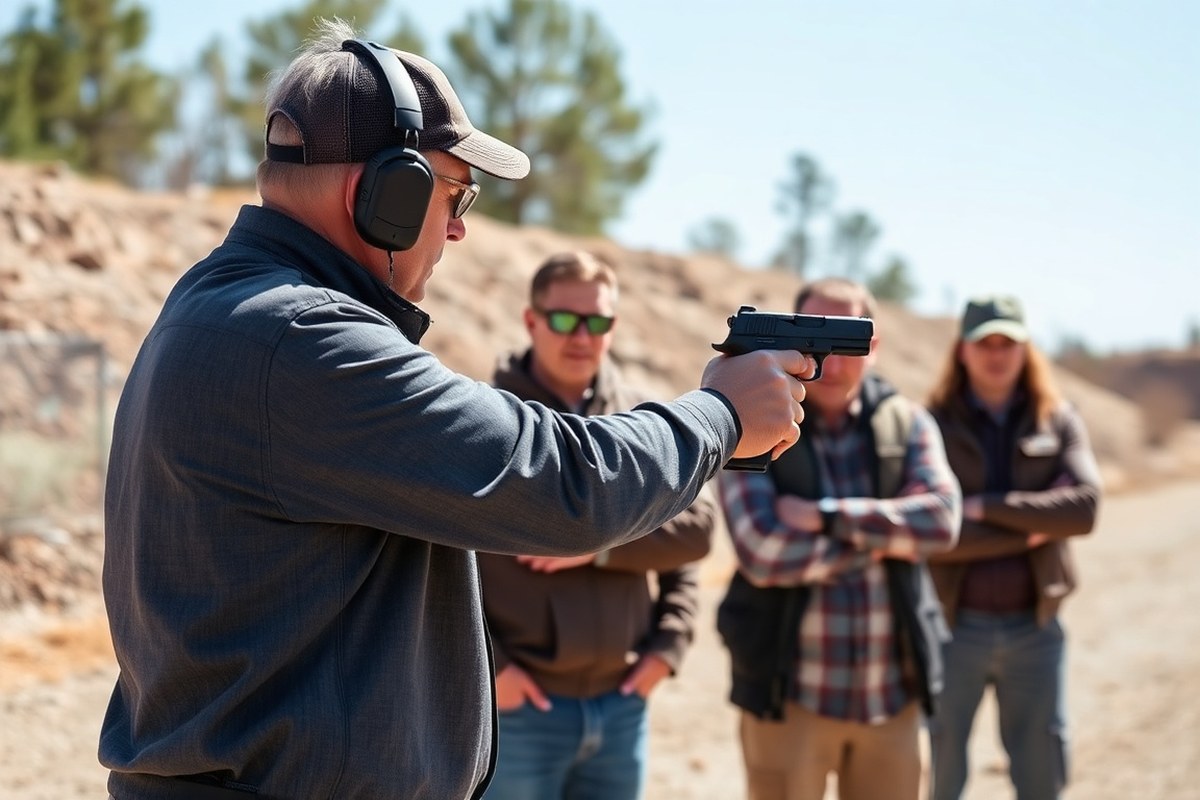
A concealed carry instructor plays a critical role in preparing students to responsibly carry a firearm for personal defense. You must have a thorough knowledge of firearm safety, state laws, defensive shooting techniques, and emergency response. Your daily duties focus on teaching these topics clearly and effectively, ensuring students not only understand them but also demonstrate safe and confident handling of their weapon. This includes explaining important legal considerations, proper storage, and when the use of force is justified.
Teaching typically involves running both classroom instruction and live-fire training sessions. You will cover basics like gun mechanics, marksmanship fundamentals, situational awareness, and self-defense tactics. Certification classes often also include first-aid training tailored to shooting incidents. Students need to meet defined learning objectives and pass qualification exercises that show they can handle firearms safely and accurately. You verify that each participant fulfills certification requirements so they can apply for their concealed carry permit.
Instructors demonstrate proper gun handling with clear, step-by-step breakdowns. You use lesson plans provided by certifying organizations such as the USCCA or NRA, and incorporate training aids to help students master each skill. The instructor training course itself usually lasts about two days and requires about 16 hours, during which you prove competence in safe firearm operation and teaching techniques. This preparation ensures you can confidently guide students through challenging material while maintaining a secure environment at the range.
Meeting certification standards includes completing prerequisite NRA or state-recognized courses and passing evaluation by a certified training counselor. You might need to handle paperwork for state approval of your classes and maintain records of student performance and attendance. Your role may extend beyond instruction to advising students on legal responsibilities and helping them prepare their permit applications.
The effectiveness of your instruction depends on your ability to communicate complex information and enforce rigorous safety standards. Problems can arise if safety protocols slip or students do not meet qualification benchmarks. Consistency in applying lesson plans and staying current with law changes contributes to your credibility as an instructor. Depending on your location, you could teach part-time at a range or take this on as a full-time career, either independently or through established firearm training facilities.
State Requirements and Legal Qualifications to Teach
To become a certified concealed carry instructor, you typically must hold a valid concealed carry license or permit for the state where you plan to teach. Some states require you to have several years of experience as a licensed carrier before applying to become an instructor. Obtaining this permit beforehand not only qualifies you to carry concealed legally but also demonstrates your knowledge of local firearms laws and safe handling practices, which is important to instructing others.
State laws vary widely regarding concealed carry instructor certification. Some states mandate completion of a specific instructor certification course approved by the state’s licensing authority or law enforcement division. For example, states like Illinois and Wisconsin require certification through recognized programs before you can teach their specific concealed carry courses. Other states, such as New Hampshire, do not require initial concealed carry permits or instructor certifications, allowing you to register as an instructor to teach courses from other states if you meet their criteria.
- Hold a valid concealed carry permit or license for your state (recommended or required)
- Complete a state-approved instructor certification course relevant to the concealed carry or CHL program
- Meet minimum experience requirements, often including prior completion of the basic concealed carry course
- Submit background checks and meet legal standards (e.g., no felony convictions, no domestic violence restraining orders)
- Notify the state’s Criminal Justice Standards Division within 10 days if you face any criminal charges or court orders
- Maintain current certifications and renew licenses as required by your state agency
- Demonstrate knowledge of each firearm action type you’ll teach (e.g., revolver, semi-automatic)
Legal disqualifiers often include felony convictions, certain misdemeanor domestic violence charges, or restraining orders. Maintaining compliance means you must inform your state licensing authority promptly about any arrest, criminal charge, or legal restriction affecting your eligibility. These ongoing regulations ensure instructors uphold the same standards required of concealed carriers, protecting student safety and program integrity. Failure to comply with these rules may result in certification revocation and legal penalties.
Always verify your state’s current instructor requirements and legal obligations before enrolling in certification programs, since laws can change frequently and vary by jurisdiction.
Following these steps carefully ensures your eligibility to become a concealed carry instructor. Costs can range from $300 to over $500, depending on the certification program and state fees. Successful candidates not only receive certification but also instructor toolkits, including curriculum materials and e-learning modules to assist with course delivery. Achieving certification positions you to meet the demand for competent concealed carry training in your area, while ensuring you operate fully within legal boundaries.
Top Certification Courses and How to Choose One
Choosing the right concealed carry instructor certification depends on your background, budget, and career goals. The USCCA, NRA, and various state-specific courses offer different time commitments, curriculum focus, and costs. Understanding these differences helps you pick a program that fits your needs and meets legal requirements.
USCCA Concealed Carry Instructor Course
The US Concealed Carry Association (USCCA) provides a nationally recognized certification geared toward civilian instructors. Its course typically runs about 2 to 3 days with a mix of live instruction and online materials. Candidates receive training on concealed carry laws, firearms safety, defensive shooting, and the use of force with a strong focus on real-world scenarios.
Cost for the USCCA instructor course usually ranges from $350 to $450. This fee includes access to the USCCA Instructor Portal, which offers marketing materials, handouts, quizzes, videos, and other teaching aids. The course requires prior experience with firearms, but no formal law enforcement or military background is necessary, making it accessible to most applicants.
USCCA certification emphasizes practical application and legal education, making it valuable for instructors serving civilian students seeking self-defense training. Instructors gain tools to maintain ongoing communication with students and potential clients through supplied forms and marketing support.
National Rifle Association Instructor Training
The National Rifle Association (NRA) has been a leader in firearms education since 1871, and its instructor training courses carry significant respect nationwide. NRA courses for concealed carry instructors are administered through NRA Training Counselors and include the Basics of Pistol Shooting Instructor course, which is instructor-led over multiple days, typically 2 to 3 days.
The curriculum covers NRA policies and procedures, training techniques, public speaking skills, organizing courses, budgeting, and use of training teams and aids. The course is ideal for those with military or law enforcement experience, as it builds on existing knowledge. Prerequisites usually include passing a state-recognized firearms instructor course or having documented prior experience such as a DD-214 or police service.
Course fees vary by location but generally range from $300 to $500. Having NRA certification improves credibility and can improve your teaching application when working with formal institutions or states that recognize the NRA’s standards.
State-Specific and Specialized Courses
Many states require concealed carry instructors to complete specific certification programs approved by their regulatory agencies. These courses vary widely in length, content, and cost based on state regulations. For example, some states mandate a 16-hour minimum course with testing on local laws, safe handling, and range instruction.
State-specific certifications often focus heavily on laws unique to that region and given specific limits on what an instructor can teach or certify. Some programs cater exclusively to law enforcement or include specialized training such as trauma shooting or simunitions. Costs can range from as low as $150 to over $400 depending on the program’s scope.
Choosing a state-specific course matters most if you plan to teach within that state or comply with its legal requirements. Many states require documentation of completing such a course before issuing proof of instructor certification. Checking the state’s department of public safety or firearms regulatory agency website will provide up-to-date prerequisites and approved courses.
Prior Experience and Skills Needed Before Applying
Military or law enforcement experience is not mandatory, but it can be very helpful when applying to become a concealed carry instructor. Such backgrounds often provide extensive firearms training, stress management, and real-world experience with defensive shooting scenarios, making it easier to meet proficiency standards. However, many successful instructors come from civilian shooting backgrounds, so prior competitive shooting, hunting, or personal defense training also counts.
Shooting proficiency is critical. Candidates must demonstrate consistent, accurate handgun shooting skills at standard distances, typically 7 to 15 yards. Being able to perform safe firearm handling, reloads, drawing from a holster, and basic malfunction drills are expected. Some states require passing a formal shooting qualification as part of instructor certification. You should regularly train and test your skills with various drills to maintain a high proficiency level before applying.
Strong teaching and public speaking skills significantly improve your success as an instructor. Being knowledgeable doesn’t guarantee effective instruction if you cannot communicate clearly, manage a classroom, or adapt to different student skill levels. Experience leading or coaching others, even in informal settings, builds confidence. Practice explaining shooting fundamentals and safety rules in simple, concise terms. You can improve by volunteering as a range safety officer or junior instructor.
- Have documented firearm safety training and previous shooting experience
- Maintain high proficiency with defensive handgun fundamentals and shooting drills
- Acquaint yourself with state-specific instructor requirements, as some states mandate law enforcement-administered courses
- Develop public speaking skills by teaching smaller groups or shadowing experienced instructors
- Practice giving clear, calm instructions and handling student questions confidently
- Prepare to demonstrate safe firearm handling and shooting skills during certification
Preparation involves regular drills focusing on accuracy and safety, such as timed reloads, shooting from different stances, and drawing from concealment. Spending around 2 to 4 hours weekly at the range for several months before applying helps build reliable skills. Consider taking introductory instructor courses designed to teach both shooting techniques and educational methods; these can cost between $300 and $600 depending on the program. Good results mean passing your state’s shooting qualification on the first attempt and feeling comfortable leading a classroom with diverse learners. Common pitfalls include underestimating the communication skills required or lacking regular shooting practice, which can lead to failing certification tests or struggling with student engagement.
Step-by-Step Process to Become Certified
The process to become a concealed carry instructor involves several well-defined steps, including application, completion of pre-course training, attendance at an in-person instructor course, and final certification with state approval. Each stage varies in length but typically spans from a few weeks for initial coursework to several months for state licensing. Exams and practical evaluations are integral parts of the certification process to verify knowledge and instructional capability.
Application and Eligibility Check
Start by submitting an application to the state agency responsible for firearms instructor certification, which is often the state police or a department of public safety. This step verifies your eligibility based on state laws, which usually include age requirements, clean criminal records, and experience with firearms. Some states require you to provide proof of prior firearms training or safety certifications, which strengthens your application and may expedite the approval process.
The application process can take anywhere from two to six weeks depending on the state’s workload. In certain states, like Louisiana, the application details what qualifying experience and certifications you must have before proceeding to training. Review the state’s official website carefully to ensure your records and documentation meet all prerequisites.
Pre-Course Training and Online Modules
After your application is accepted, you’ll typically need to complete online training modules designed to cover foundational knowledge required for concealed carry instruction. These modules include firearm safety, state weapons laws, and instructional techniques. You can expect pre-course training to take approximately 10 to 20 hours spread over several days or weeks, depending on your schedule.
Online modules offer flexibility but require discipline to complete them within the set timeframe, which states vary on. Some states require you to pass a written exam at the end of these modules before advancing to in-person training.
- Complete online safety and legal course modules
- Pass any required written quizzes or exams
- Review state-specific concealed carry laws thoroughly
- Prepare supporting documents and records for the instructor course
Failing the exam at this stage often results in retaking modules, which can delay progress. Stay on top of deadlines specified by your state agency.
In-Person Instructor Course and Evaluation
This step is typically a two- to five-day classroom and range training course taught by certified instructors or state officials. It focuses on teaching you how to conduct a concealed carry class safely, manage students, and present material effectively. States with rigorous instructor requirements, like Louisiana, also include a practical evaluation to test your shooting skills and instructional techniques.
Expect a combination of oral exams, written tests, and live demonstrations at this stage. Passing these evaluations is mandatory to prove your ability to train students accurately and responsibly.
Be prepared for rigorous assessments during the in-person training, these ensure you meet safety and instructional standards required by law.
Costs for the in-person course typically range from $300 to $600, which covers instructor fees, range access, and course materials. Scheduling depends on availability but plan to complete this within one to two months after finishing online modules.
Final Certification and State Approval
After successful completion of in-person training and evaluations, your instructor certification application will be submitted for state approval. This process may involve additional background checks or paperwork. Approval can take a few weeks to several months.
You’ll receive your concealed carry instructor license or certificate once the state officially issues it. Keep in mind that some states require licensing fees, usually between $50 and $150, and periodic renewal, which involves completing continuing education or refresher training.
- Submit final documents and test results to state agency
- Complete any additional background checks if required
- Pay final licensing fees
- Receive official instructor certification and license
- Schedule ongoing renewal and continuing education as required
Your certification authorizes you to teach concealed carry courses legally and typically lasts two to five years before renewal is necessary. Neglecting renewal deadlines can result in losing your certification and having to restart the training process.
Essential Teaching Materials and Instructor Toolkit
Every concealed carry instructor needs a set of well-prepared teaching materials and a reliable toolkit to deliver effective courses. The USCCA provides an Instructor Toolkit that includes everything necessary to get started, such as lesson plans, student handouts, and promotional tools. These materials are designed to reflect proven self-defense techniques and comply with legal standards specific to concealed carry.
Textbooks and student handouts are critical since they form the foundation of your curriculum. The USCCA’s lesson plans cover topics like firearm safety, legal considerations, and practical shooting skills. Providing students with basic course packets helps them follow along and retain the information presented. Organizing these materials into clear modules will make your classes run smoothly and save preparation time.
Technology can significantly improve the teaching experience. Using digital resources such as slide presentations, instructional videos, and mobile apps can improve student engagement and understanding. Tools like laser training devices or electronic scoring systems offer immediate feedback during live-fire practice, which can improve learning outcomes. For instructors teaching remotely or in hybrid formats, reliable video conferencing platforms and document-sharing services are essential.
To keep your courses efficient and professional, organize your materials in advance. Create a checklist of all the items you need for each session, including printed handouts, digital files, training equipment, and safety gear. Store these supplies in clearly labeled folders or a dedicated instructor bag to ensure nothing gets overlooked on training day.
- USCCA Instructor Toolkit with lesson plans and student packets
- Firearm safety and legal instruction textbooks
- Digital tools: slide decks, videos, and training apps
- Live-fire training equipment: targets, firearms, safety gear
- Organizational supplies: folders, binders, and checklists
- Technology for remote or hybrid classes: webcam, microphone, and conferencing software
Costs vary depending on whether you use the USCCA’s provided materials exclusively or supplement with additional technology and equipment. The USCCA toolkit usually ships with certification and removes much of the upfront cost for teaching materials, which can otherwise range from $50 to several hundred dollars, depending on technology upgrades and gear quality. Well-organized materials and reliable technology reduce downtime and improve student satisfaction, while missing or disorganized supplies can create confusion and lower course quality.
How to Manage Legal Responsibilities and Maintain Compliance
Concealed carry instructors carry significant legal responsibilities that impact both their professional reputation and personal liability. Your primary legal duty is to thoroughly understand and accurately convey state and federal firearms laws to your students. Failing to do so can expose you to civil lawsuits if a student misapplies what they learned and causes harm. You must maintain clear records for each class, including attendance, training materials covered, and any incidents that occur during instruction. These records not only demonstrate compliance but also protect you if questions arise about what was taught.
Keeping your certifications current is essential. Many states require you to renew your instructor certification every one to three years, often with continuing education. Completing updates on state-specific gun laws should be part of your ongoing routine. For example, taking a refresher course annually or whenever your state legislature changes relevant provisions ensures your teaching stays accurate and legally sound. The cost for these refresher courses varies but usually ranges from $50 to $200 depending on the provider and state requirements.
Proactively monitoring changes in state law protects you and your students. Using resources like your state’s official legislative website, legal newsletters focused on firearms law, or subscribing to updates from recognized firearms associations helps you stay informed. Setting a monthly calendar reminder to review your state’s legislature bills and regulations prevents lapses. After each update, review your teaching materials and classroom information to incorporate necessary changes immediately.
After any classroom incident involving a student or legal change affecting concealed carry, document the situation in detail within 24 hours. Notify your certification provider if required, and update your training content to prevent the same issue from recurring. For instance, if a student asks about legal use-of-force scenarios, your response should reflect the latest state law and best practices. Follow the decision rule by prioritizing any legal requirement over personal opinion: when unsure, verify with official sources before advising students.
Legal liability can also arise from your instructional environment, such as firearm safety during drills or range sessions. Implement strict safety protocols and communicate them clearly to reduce accidents that could lead to legal claims. Using a digital Instructor Dashboard can help you track attendance and payments accurately while serving as a compliance tool by timestamping sessions. This documentation is often critical if legal scrutiny occurs after an incident.
Good results from managing your legal responsibilities include fewer student complaints, smooth certification renewals without penalties, and a strong professional reputation. Problems arise when instructors neglect updates or fail to keep class records, which can lead to loss of certification or lawsuits. Tailor your record-keeping and legal compliance steps to your state’s exact rules, and consult a licensed attorney or your certifying organization whenever legal questions exceed your knowledge. This approach keeps your concealed carry instruction both lawful and respected.
Marketing Your Concealed Carry Instruction Services
Attracting students and building a profitable concealed carry instruction business starts with clear, targeted marketing. Focus on crafting compelling course descriptions, partnering with local shooting ranges and associations, and using online platforms like social media and specialized listing sites. Using tools from organizations such as the USCCA and NRA can boost your visibility and credibility.
Creating Effective Course Descriptions
Course descriptions should clearly state what students will learn, the benefits of your instruction, and how the course meets legal requirements. Emphasize practical skills, safety protocols, and certification opportunities. Use simple language and include keywords that potential students might search for, such as “concealed carry training,” “firearms safety,” and your location. Be specific about course length, cost, and any prerequisites to set proper expectations.
Here’s a template script to start your description: “This [X]-hour concealed carry course prepares you for safe, responsible firearm ownership and meets the state-mandated training requirements. You’ll learn practical shooting techniques, self-defense laws, and safe carry practices. No prior experience needed. Class size limited to [Y] students for personalized attention. Register today to gain confidence and legal compliance.” Adjust details to fit your schedule and state regulations.
Networking with Local Gun Ranges and Associations
Form relationships with gun ranges, firearm clubs, and local shooting associations to access ready audiences for your courses. These venues often have bulletin boards, email lists, or event calendars where you can advertise. Offer to lead occasional free seminars or workshops to demonstrate your expertise and build trust. In some cases, ranges might allow you to host classes on-site, saving you from securing separate locations.
Use contacts within these communities to get referrals. Partnering on local shooting events or safety days increases your exposure and lends social proof. Joining local chapters of firearm organizations, such as the NRA, can also open doors for referrals and invitations to speak. Maintaining a positive reputation in these circles helps sustain long-term business growth.
Using Social Media and Online Listings
Platforms like Facebook and Instagram provide opportunities to advertise directly to people interested in concealed carry and firearms training near you. Post photos or videos from your classes to build credibility and engage your audience. Use targeted ads on Facebook to reach users within a specific radius who have demonstrated interest in gun ownership or shooting sports. Track ad performance to refine your reach over time.
Take advantage of instructor marketing portals available through the USCCA and NRA. These portals often feature instructor directories where prospective students search for certified trainers by location. Maintaining an updated profile with clear contact information, course schedules, and testimonials increases your chances of being contacted. Some portals allow you to run promotional campaigns or access marketing materials specifically for your courses, often at low or no cost.
Regularly update your online profiles and engage with comments or messages promptly to convert inquiries into enrolled students.
Your First 30 Days: A Quick-Start Plan
Follow this plan to get started as a concealed carry instructor efficiently and with clear milestones.
- Day 1: Research your state’s specific licensing and legal requirements to teach concealed carry courses. Check your state’s official website or firearms regulatory agency. Make sure you have the correct paperwork before proceeding.
- Week 1: Enroll in a recognized certification course that meets your state’s standards. Confirm that the course provides accredited instructor credentials upon completion.
- Week 2: Complete the certification training and pass any required exams. Verify your certification status through the course provider or your state’s licensing authority.
- Week 3: Gather and prepare your instructional materials and toolkit, including lesson plans, safety equipment, and legal documentation. Test your training setup to confirm readiness.
- Week 4: Register your business if required and secure liability insurance if applicable. Check with your state or local authorities to ensure compliance.
- Day 30: Launch your marketing efforts by creating a simple website or social media page and reaching out to local gun ranges or shooting clubs. Measure interest by inquiries or sign-ups.
Frequently Asked Questions
What Background Experience Increases Your Chances of Approval as a Concealed Carry Instructor?
Having a solid track record in firearms training and demonstrated shooting skills improves your approval odds. States prefer instructors with proven ability to teach and safely handle firearms before certification.
Can You Teach Concealed Carry Classes in Multiple States After Certification?
Certification is generally state-specific, but some credentials like USCCA allow teaching in several states. You must check each state’s laws and possibly meet additional requirements before instructing there.
How Often Do You Need to Renew Concealed Carry Instructor Certification?
Renewal periods vary by state, often every 1 to 3 years, requiring continuing education or refresher training. Staying current ensures you meet legal standards and maintain instructional quality.
Is There a Maximum Class Size for Concealed Carry Instruction?
Class size limits depend on state regulations and safety considerations, often capped between 10 and 20 students. Managing smaller groups helps maintain effective training and compliance.
What Types of Firearms Are Typically Covered in Concealed Carry Instructor Training?
Training mostly focuses on handguns suitable for concealed carry, such as pistols and revolvers. Familiarity with common concealed carry firearms aids in delivering relevant instruction.
Are Background Checks Mandatory to Become a Concealed Carry Instructor?
Most states require a complete background check before issuing instructor certification. This step ensures instructors meet legal and safety standards to teach firearms use.
Wrapping Up
Becoming a concealed carry instructor is a clear path that combines legal knowledge, certification, and practical skills. Focus on meeting your state requirements and building a strong foundation of safety and compliance. Start by enrolling in a state-approved certification course to get your credentials rolling and open the door to teaching others effectively.