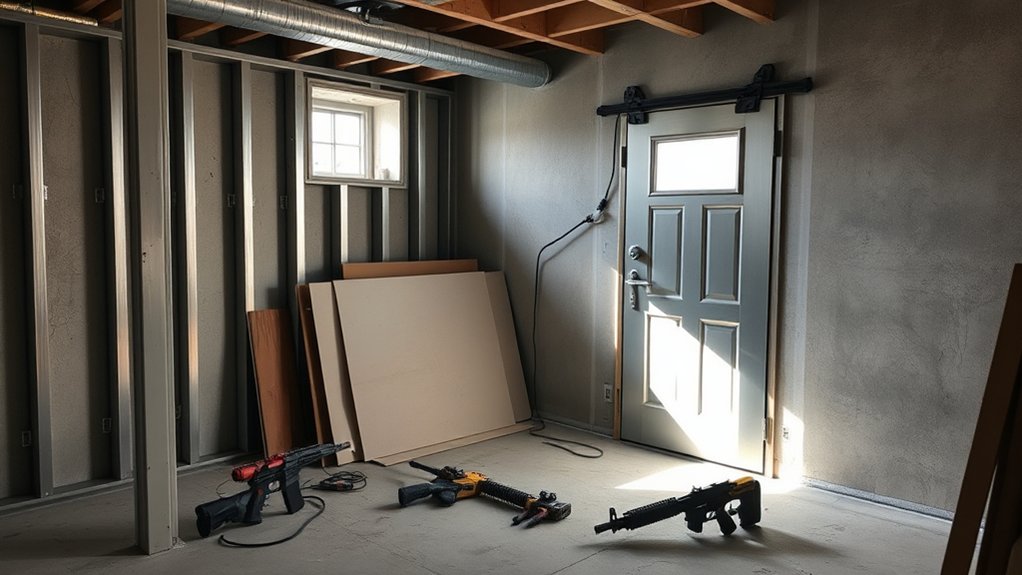
How to Make a Gun Safe Room in 10 Simple Steps
Creating Your Ideal Gun Safe Room: A Step-by-Step Guide
If you’re feeling uneasy about the safety of your firearms, you’re not alone. Many gun owners share the same concern, wanting to ensure their weapons are secure while still being accessible when needed. It can be overwhelming to figure out the best way to create a safe space that protects both your firearms and your family.
Fortunately, building a gun safe room doesn’t have to be complicated. By following a few straightforward steps, you can establish a secure environment that meets your needs.
To make a gun safe room in 10 simple steps, start by choosing a secure, low-traffic location like a basement with a solid foundation.
Reinforce walls and windows with fire- and ballistic-resistant materials, then install a high-security vault door with advanced locks.
Add moisture control and fireproofing, plus discreet security systems for monitoring.
Develop safety protocols with emergency access plans and hire qualified contractors for installation.
Keep going to uncover how to perfect each step for maximum protection.
Key Takeaways
- Choose a basement room with solid walls, minimal windows, and good structural support to enhance security and concealment.
- Install a reinforced steel vault door with advanced locks like biometric scanners. Conceal it behind false panels for added protection.
- Use fire-resistant materials, seal all cracks, and elevate safes to prevent fire and moisture damage inside the safe room.
- Maintain humidity between 40-60% using dehumidifiers and proper ventilation. This helps protect firearms from rust and corrosion.
- Hire licensed professionals for installation and establish emergency access protocols. Ensure household member training is in place.
Choose the Best Location for Your Gun Safe Room
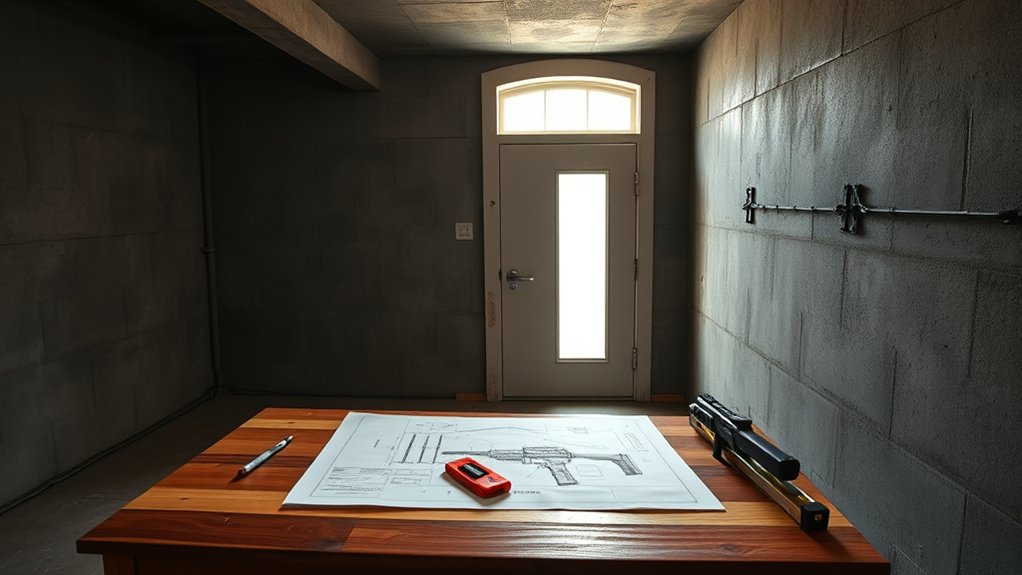
When choosing the best location for your gun safe room, the basement often stands out as the ideal spot because it offers natural concealment and lowers the risk of break-ins.
You’ll want to pick a room with minimal windows and mostly interior walls to boost security and cut down vulnerabilities.
It’s important to confirm that the space has a solid foundation and structural integrity to support your gun safe room’s heavy security features.
Avoid high-traffic areas like kitchens or garages since they can expose your safe to fire or moisture risks, which compromise security.
Also, consider how accessible the location is—not only for you but for emergency responders if needed—while still maintaining discretion.
By focusing on these key factors, you ensure your gun safe room’s location maximizes security without sacrificing practicality.
Choosing the right spot is a critical first step toward protecting your firearms effectively.
Select Durable Wall, Ceiling, and Floor Materials
How do you guarantee your gun safe room stands strong against threats and wear?
Choosing durable materials for the wall, ceiling, and floor is key. Here’s how to ensure lasting protection:
- Use reinforced concrete walls at least 8 inches thick, with rebar for strength and fireproof qualities.
- Opt for steel or concrete-filled walls, such as cinderblocks filled with concrete, to resist moisture and add durability.
- Cover drywall with 1/2 to 3/4 inch plywood or fire-rated drywall to boost fire resistance and toughness.
- Seal all cracks around ducts, pipes, and vents with fireproof sealant to eliminate weak points and enhance fire safety.
Additionally, elevate safes and storage off the floor on steel or wooden platforms to protect against moisture and flooding.
Following these steps ensures your gun safe room’s structure is solid, fireproof, and secure.
Install a High-Security Vault Door With Advanced Locks
You’ll want to choose a vault door made from solid steel with advanced locks like biometric or electronic keypads for maximum security.
Don’t forget to take into account reinforced hinges and frames to resist physical attacks.
Plus, hiding the door cleverly can add an extra layer of protection against unwanted attention.
Vault Door Types
Although installing a high-security vault door might seem intimidating, choosing the right type with advanced locks is vital to securing your gun safe room.
Vault doors come in various forms, each offering unique protection features. Here’s what you should consider:
- Steel Door: Typically 14 to 16 gauge thick, steel doors offer robust resistance against forced entry.
- Fire-Rated Doors: These safeguard your valuables by withstanding high temperatures for several hours.
- Ballistic-Resistant Doors: Equipped with AR500 steel plating, they can stop small arms and rifle rounds.
- Multi-Bolt Locking Doors: These feature multiple locking bolts and reinforced frames to prevent prying or drilling attacks.
Picking the right steel door type guarantees your gun safe room remains secure against all threats.
Advanced Lock Mechanisms
When securing your gun safe room, installing a high-security vault door with advanced lock mechanisms is essential to keep intruders out.
These doors often use tamper-proof materials like hardened steel and integrate biometric fingerprint scanners for personalized access.
Multi-point locking systems with reinforced bolts provide extra resistance against forced entry.
Below is a comparison of popular advanced lock mechanisms:
| Lock Type | Security Features | Material Compatibility |
|---|---|---|
| Biometric Fingerprint | Unique ID recognition | Works with tamper-proof steel |
| RFID Access Cards | Keyless, time-delay options | Compatible with reinforced doors |
| Keypad Codes | Programmable, alarm integration | Suitable with drill-resistant steel |
Using these technologies ensures your safe room remains secure against unauthorized access attempts.
Door Concealment Strategies
Locking your gun safe room with advanced mechanisms is only part of the security picture.
Effective door concealment strategies add a vital layer of protection.
Here’s how you can secure your vault door while keeping it hidden:
- Install a high-security vault door made of at least 3/16-inch steel, reinforced with ballistic materials.
- Use advanced locks like biometric scanners, combination locks, or electronic keypads for enhanced security.
- Conceal the vault door behind a false wall, cabinets, or decorative panels to keep it out of sight.
- Reinforce the door frame securely and anchor it to resist forced entry and tampering.
Reinforce Windows With Ballistic and Fire-Resistant Options
How can you make certain your windows don’t become weak points in your gun safe room? Start by replacing standard glass with ballistic-resistant windows rated P6B or higher to withstand forced entry and ballistic threats.
You can further enhance protection by installing fireproof window treatments or shutters to block fire and smoke. Laminated glass combined with polycarbonate layers offers strong resistance to both bullets and flames, making it an ideal choice.
Don’t forget to seal around window frames with tamper-proof sealants that are also fireproof, preventing any gaps attackers or fire could exploit. If replacing windows isn’t an option, consider adding ballistic fiberglass panels or shatterproof film over existing glass for added security and fire protection.
These reinforcements ensure your windows contribute to your gun safe room’s overall resilience, keeping you safer during emergencies without compromising on durability or fire resistance.
Implement Fireproofing and Moisture Control Measures
After securing your windows with ballistic and fire-resistant materials, it’s equally important to protect the entire gun safe room from fire and moisture damage. Proper fireproofing and moisture control will keep your firearms safe and in ideal condition. Here’s how to do it effectively:
- Use fire-resistant materials like steel, fire-rated drywall, and ceramic insulation to shield your safe room from heat and flames.
- Seal any cracks around ducts, pipes, and windows with fireproof sealants to block smoke and fire from sneaking in.
- Place firearms and important documents inside fireproof containers or safes for added protection against fire.
- Elevate your gun safe off the floor and install dehumidifiers to prevent moisture buildup, which reduces rust and corrosion.
Following these steps will help you maintain a secure, fire- and moisture-resistant safe room, ensuring your collection stays protected no matter the emergency.
Create Secure and Organized Gun Storage Solutions
Although securing your gun safe room is essential, organizing your firearms efficiently will make it easier for you to access and maintain them.
To create secure storage, use fire-resistant, steel-based modular gun racks and shelving.
Wall-mounted mounts tailored to specific firearm models maximize space and accessibility.
Don’t forget proper hooks and containers for ammunition and accessories to keep everything orderly.
Arrange firearms by type or size to speed up retrieval and maintain tidy organization.
Regularly review and update your system as your collection grows.
| Storage Solution | Purpose |
|---|---|
| Steel-based Modular Racks | Securely hold multiple firearms |
| Wall-mounted Mounts | Maximize space and accessibility |
| Fire-resistant Shelving | Protect guns from heat, organize safely |
| Ammunition Containers | Keep ammo and accessories orderly |
| Organized by Type/Size | Facilitate quick retrieval and neatness |
This approach ensures your gun safe room offers both secure storage and efficient organization.
Control Humidity and Ventilation in Your Gun Safe Room
To keep your firearms in top condition, you’ll need to manage moisture levels carefully by installing proper ventilation and using dehumidifiers effectively.
A well-ventilated room with controlled humidity prevents rust and corrosion.
Let’s look at how you can set up these systems to protect your gun safe room.
Managing Moisture Levels
Since moisture can cause rust and corrosion on your firearms, managing humidity and ventilation in your gun safe room is essential.
To keep your firearms in top shape, here’s what you should do:
- Maintain humidity control by keeping levels between 40-60% to prevent rust.
- Use a dehumidifier with an automatic humidistat to regulate moisture and avoid mold.
- Guarantee proper ventilation by circulating fresh air, but avoid discussing installation details here.
- Seal cracks and gaps around ducts with weatherproof sealant to block moisture ingress.
Regularly check humidity with a hygrometer so you can adjust your dehumidifier or ventilation system promptly.
These steps will help create a dry, safe environment for your firearms.
Installing Proper Ventilation
Controlling moisture is just one part of keeping your gun safe room in top condition—you’ll also need proper ventilation to maintain the right air quality and humidity.
Installing a dedicated ventilation system with an efficient air exchange helps reduce dust, fumes, and excess moisture, which can cause rust or corrosion on your firearms.
Make sure to use fire-resistant and moisture-resistant materials when sealing ventilation vents to keep your room secure.
Proper humidity control through ventilation ensures the environment stays between 30-50%, protecting your weapons from mold and damage.
Regularly monitor airflow and humidity levels to maintain stability.
While ventilation plays a key role, combining it with other solutions will keep your gun safe room ideal for long-term firearm storage.
Using Dehumidifiers Effectively
Although good ventilation helps, you’ll also want to use a dehumidifier to keep humidity levels steady between 30% and 50%.
This range is vital for preventing rust and corrosion on your firearms and valuables by maintaining proper humidity control.
To use your dehumidifier effectively:
- Choose one with the right capacity for your gun safe room’s size to guarantee efficient moisture absorption.
- Regularly empty the water reservoir or connect it to a drainage system for uninterrupted operation.
- Combine the dehumidifier with silica gel packs or moisture-absorbing desiccants for enhanced humidity management.
- Keep ventilation active to promote air circulation and reduce condensation buildup.
Following these steps will help you maintain a safe, dry environment for your gun safe room.
Set Up Security Systems and Hide Your Gun Room Entrance
To keep your gun safe room truly secure, you’ll want to install a biometric or keypad lock that restricts access to authorized people only.
Pair this with concealed hinges or hidden access panels to keep the entrance discreet.
Integrate security cameras with remote monitoring so you can watch for suspicious activity anytime.
Don’t forget to add alarm systems featuring motion sensors and door contacts that immediately alert you to unauthorized entry attempts.
Reinforce the door with steel or ballistic panels to resist forced entry while maintaining concealment.
| Security Feature | Purpose | Benefit |
|---|---|---|
| Biometric/Keypad Lock | Access control | Limits entry to authorized users |
| Concealed Hinges | Hide entrance | Prevents detection of entry point |
| Security Cameras | Monitor entrance | Enables remote surveillance |
| Alarm Systems | Detect intrusion | Immediate alerts on breaches |
| Reinforced Door | Resist forced entry | Enhances physical security |
Develop Safety Protocols and Emergency Access Plans
You’ll want to establish clear emergency access procedures so everyone knows how to safely enter and exit the gun safe room.
Make sure your family is trained on these protocols and can quickly gain entry to the room if needed.
Regular drills will help keep everyone prepared and confident during any emergency.
Emergency Access Procedures
When emergencies arise, having clear procedures for quickly opening your gun safe room from the inside can make all the difference.
You’ll want to focus on emergency access to guarantee safety and efficiency.
Here’s what you should do:
- Train everyone on the lock mechanism, especially biometric or keypad entry systems.
- Keep a secure, discreet backup key or access code for urgent situations.
- Regularly rehearse the emergency access plan to spot and fix any issues.
- Document and update your protocols as your security features or household needs change.
Family Safety Training
Although having a secure gun safe room is essential, its effectiveness depends on everyone in your household knowing how to use it properly.
Family safety training ensures all members can quickly and confidently access the gun safe room during emergencies.
Develop clear emergency access plans, practice locking and opening biometric or keypad locks, and rehearse under stress.
Create a memorable family code for crises, review protocols regularly, and update them as needed.
| Training Focus | Key Action |
|---|---|
| Lock/Unlock Procedures | Practice quick, secure access |
| Emergency Plan | Steps for invasions, fires, crises |
| Security Features | Use biometric/keypad locks |
| Family Code | Develop and memorize |
| Protocol Review | Regular updates and rehearsals |
Hire Qualified Contractors for Professional Installation
Because gun safe rooms require specialized construction, hiring licensed and bonded contractors with experience in high-security installations is essential.
You want professionals who understand the unique demands of a gun safe room to guarantee proper safety and security.
When selecting contractors for your installation, consider these key steps:
- Verify their experience with reinforced walls, ballistic doors, and fire-resistant materials specific to gun safe rooms.
- Request references and review previous projects to confirm professional craftsmanship.
- Make certain they follow local building codes and security regulations to meet all safety standards.
- Discuss a detailed plan, timeline, and budget upfront to align expectations and avoid surprises.
Frequently Asked Questions
How to Make Your Own Safe Room?
To make your own safe room, start by picking a discreet spot with limited access, like a basement or interior closet.
Reinforce the walls using steel or concrete to keep it secure. Install a heavy-duty door with biometric or keypad locks.
Add fireproofing materials and moisture control, like fire-resistant drywall and a dehumidifier.
Finally, include security features such as cameras, alarms, and a concealed entrance to maximize your safety.
How to Make More Room in a Gun Safe?
You’d think your gun safe is a black hole swallowing every inch of space, but you can actually create a palace in there.
Start by installing adjustable modular shelves and multi-tiered racks to stack your firearms efficiently.
Use wall-mounted hooks to free up floor space and add pull-out drawers for easy access.
Keep it tidy by rotating and decluttering regularly—your safe will feel like it’s breathing again, not bursting at the seams.
What Flooring Is Best for a Gun Room?
The best flooring for a gun room is reinforced concrete because it’s durable, fire-resistant, and moisture-resistant, keeping your firearms safe from damage.
You can coat it with epoxy for a smooth, chemical-resistant surface that’s easy to clean.
If you want extra comfort and noise reduction, consider rubber or vinyl flooring.
Just make sure the floor is sealed or elevated to prevent moisture buildup, which can cause rust and corrosion.
How to Make a Room a Safe Room?
Imagine your safe room as a fortress in a storm.
To make it safe, you’ll want to reinforce walls and doors with steel or concrete, sealing every crack like a ship’s hull against water.
Install a heavy-duty, lockable door—biometric or keypad—and eliminate vulnerabilities around vents and pipes.
Inside, organize essentials securely.
This way, you’re creating a secure haven that stands strong when you need it most.
Conclusion
By choosing the right location, you’re already halfway to safety.
When you pick durable materials, you’re not just building walls—you’re building peace of mind.
Installing that high-security door? It’s more than protection; it’s your promise to yourself.
Reinforce, fireproof, ventilate, and secure, and suddenly, your gun safe room isn’t just a room—it’s your fortress.
So, hire the pros, plan your protocols, and make sure your safety matches your commitment.
You’ll be glad you did.
Creating a gun safe room is an investment in your security and peace of mind.