Is a Gun Safe Tax Deductible?
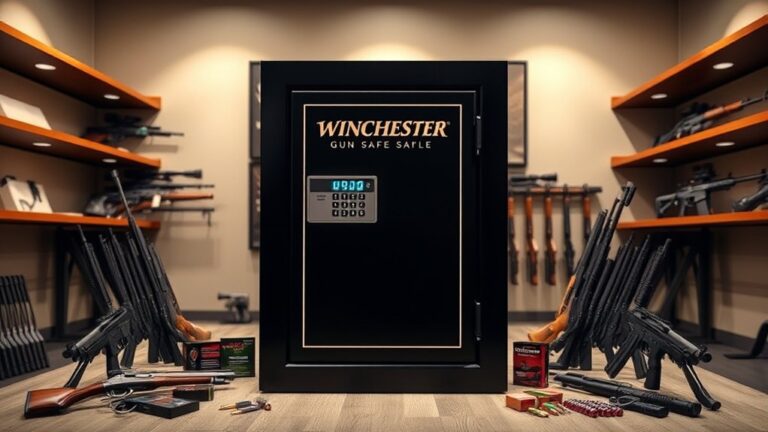
When it comes to securing your firearms, many people struggle with the best way to protect their investments while also considering the financial implications. You’re not alone if you’ve wondered how to balance safety with cost-effectiveness. A gun safe can be a significant purchase, and understanding its potential tax benefits can ease some of that financial burden.
If you primarily use it for business purposes, like storing firearms, ammunition, or inventory needed for your livelihood, you may be in luck.
A gun safe can be tax deductible if over 50% of its use is related to your work.
Proper records—like receipts and usage logs—are crucial in supporting this claim.
The IRS treats it as a capital asset, so depreciation or partial deductions may apply.
Want to find out exactly how to maximize your deduction? Keep going for more details.
Key Takeaways
- A gun safe is tax deductible if over 50% of its use is for business purposes.
- Proper documentation, like receipts and usage logs, is necessary to substantiate the deduction.
- The safe must be necessary and directly related to your business activities.
- For mixed-use safes, the deduction is based on the percentage of business use.
- Personal use of the safe can reduce the deductible amount but doesn’t disqualify the deduction entirely.
When Is a Gun Safe Considered a Business Expense?
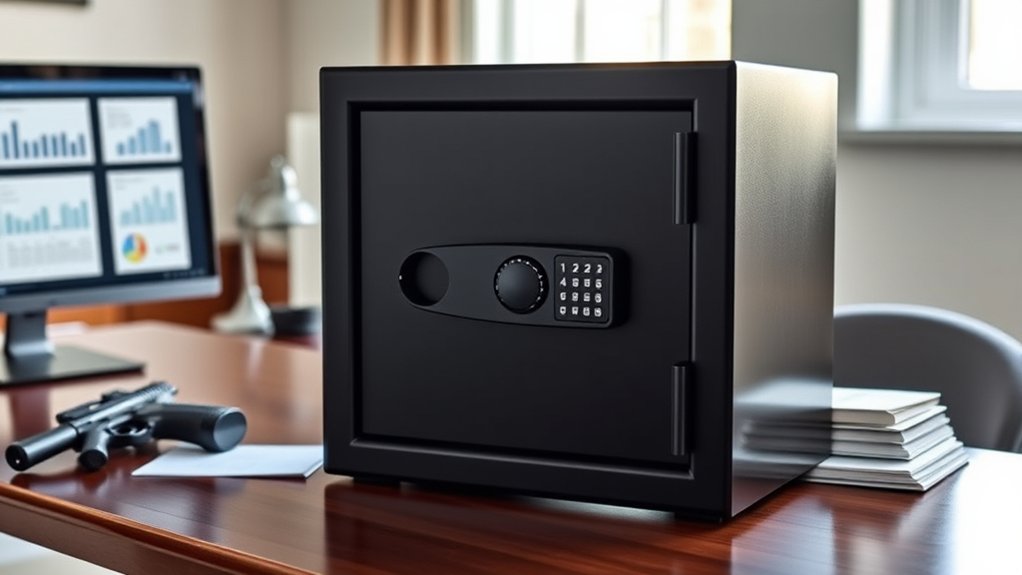
If your firearm business relies on secure storage, and over 50% of the safe’s use is for business purposes, the cost can be deductible.
If more than half of the safe’s use is for business, its cost may be deductible.
The key is that the safe must be necessary and directly related to your business activities.
For example, if you’re storing firearms, ammunition, or other inventory for sale, and the safe is used primarily for this, it qualifies.
If you also use the safe for personal firearms, only the portion used for business is deductible, so you’ll need to allocate costs accordingly.
Keep proper records, like receipts and usage logs, to substantiate your claim.
How Does Your Use of the Safe Affect Your Deduction?
Your use of the safe determines how much of its cost you can deduct, especially if it’s used mainly for business.
If over half of its use is for work-related purposes, you may claim the full or part of the expense, even if you store personal items inside.
Keeping detailed records of what’s stored for business helps support your deduction, but only the business-use percentage counts.
Business Use Percentage
When determining how much of your gun safe’s cost is deductible, the key factor is the percentage of its use exclusively for business purposes.
The business use percentage directly affects how much of the safe storage cost you can deduct. For example, if you use the safe 60% for business and 40% for personal storage, only 60% of the cost qualifies for a deduction.
To support your claim, it’s important to keep detailed logs or records of the safe’s usage. Remember, storing personal items doesn’t disqualify the deduction as long as the primary purpose is safekeeping of business firearms or inventory.
The IRS looks for evidence that the safe is primarily used for business, which determines your allowable deduction.
Personal Storage Impact
How does storing personal items in your gun safe influence your tax deduction? If the safe is used primarily for business purposes—more than 50% of the time—only the business-use portion of its cost is deductible.
Storing personal items doesn’t disqualify the deduction, as long as the majority of its safe use remains for business.
Your deduction eligibility depends on accurate records and logs that show how much the safe is used for safeguarding business firearms or equipment versus personal belongings.
The deductible amount is proportional to the safe’s use for business purposes.
Using your safe for both personal and business storage requires careful documentation to ensure you maximize your deduction while remaining compliant with IRS rules.
What IRS Rules Apply to Deducting a Gun Safe?
To qualify for a deduction, your gun safe must be used mainly for business purposes.
You’ll need to keep proper documentation like receipts and usage logs.
The IRS requires you to capitalize the cost and depreciate it over the safe’s useful life if it’s used for business.
When the safe is used for both personal and business reasons, only the business portion of the cost is deductible.
Business Use Requirements
Understanding the IRS rules for deducting a gun safe hinges on demonstrating its primary use for business purposes.
To qualify, the safe must be used mainly (>50%) for your business activities.
This business use allows the safe to be classified as a capital asset, meaning it can be depreciated over its useful life according to IRS depreciation rules.
The deduction amount depends on the percentage of the safe’s use for business versus personal purposes.
Accurate documentation is essential to support your claim; keep detailed records such as usage logs and purchase receipts.
The safe should be necessary and directly related to your trade or business to meet IRS requirements.
Without clear evidence of its primary business use, your deduction could be challenged.
Proper Documentation Necessities
Proper documentation is essential when deducting a gun safe for business purposes because the IRS requires clear evidence that the safe is primarily used for your trade or business.
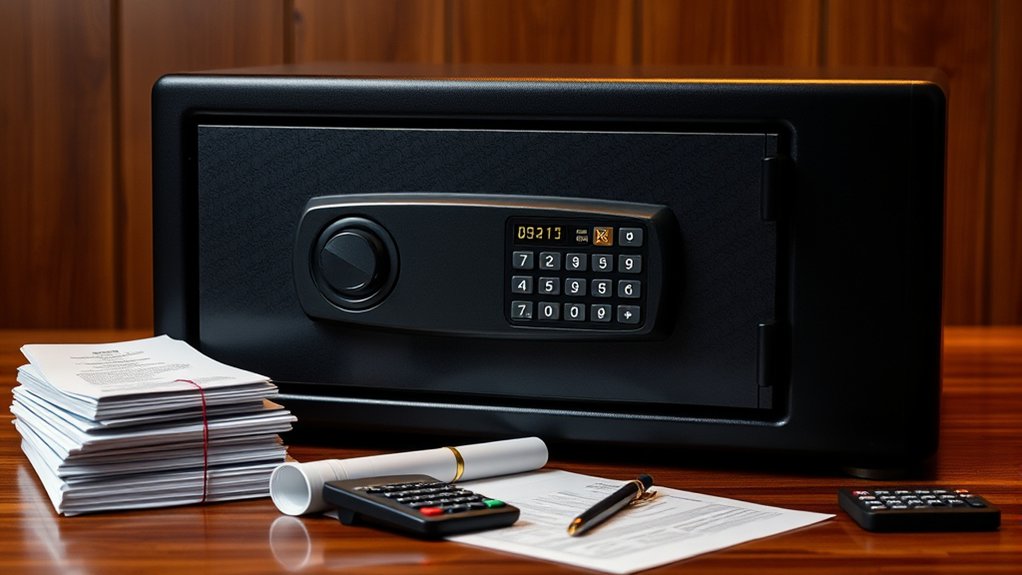
Good record-keeping is vital, so you should maintain detailed purchase records, including receipts and the purchase date and cost.
It’s also important to keep records of the safe’s primary use, such as a usage log that distinguishes between personal and business use.
Photos or statements showing that over 50% of the safe’s use is for business can further support your deduction claim.
Ensuring accurate documentation helps substantiate your deduction during IRS audits and confirms the percentage of business use you’re claiming.
Proper record-keeping and purchase records are the foundation of a solid tax deduction for your gun safe.
How to Calculate the Deductible Part of Your Gun Safe Based on Usage
Calculating the deductible part of your gun safe depends on how you use it for business versus personal storage.
To determine the deductible amount, multiply the total purchase cost by the percentage of its use for business purposes.
Calculate your deduction by multiplying the safe’s cost by its business use percentage.
For example, if your gun safe costs $1,000 and you use it 70% for business, then $700 of that cost is deductible.
Accurate records or logs showing your usage help support this calculation.
If the safe is used solely for business items, you can claim the full purchase price as a deduction.
For mixed-use safes, IRS rules require you to apply depreciation based on the business use percentage.
Remember, the key is maintaining clear documentation of how you allocate usage between personal and business purposes.
This guarantees your Gun Safe Tax deduction is justified and compliant with IRS regulations, maximizing your allowable deduction while avoiding potential issues during audits.
What Records Do You Need to Support Your Deduction?
To support your gun safe deduction, you’ll need to keep detailed records that prove how much you use the safe for business purposes.
Proper recordkeeping is essential to substantiate your claim for the tax deduction.
Be sure to keep receipts or canceled checks showing the purchase date and amount, especially if the safe qualifies as a firearm safety device.
Maintain a detailed usage log to track the percentage of time the safe is used exclusively for business.
Document its primary use for storing inventory, equipment, or firearms related to your trade.
Photographs or statements demonstrating that the safe is used mainly for business purposes also strengthen your case.
Additionally, retain records such as inventory lists or contents logs to support your business use percentage.
| Record Type | What to Keep |
|---|---|
| Purchase proof | Receipts or canceled checks |
| Usage documentation | Usage logs, photos, statements |
| Business purpose | Inventory lists, content logs |
Are There Alternatives to Deducting a Gun Safe for Firearm Safety?
While deducting the cost of a gun safe can be a helpful way to offset firearm storage expenses, there are several other options to contemplate for enhancing firearm safety without relying solely on a tax deduction.
Investing in quality safety devices like fireproof safes, lockboxes, or digital storage solutions might qualify for partial tax benefits.
However, you can also explore non-tax options.
Insurance policies can provide financial protection for your firearms and safes, adding a layer of safety without any deduction.
Installing security systems, alarms, or surveillance cameras can markedly boost firearm safety and deter theft without needing a deductible safe.
Additionally, practicing safe firearm storage habits and ongoing training can improve safety directly.
Some jurisdictions or programs even offer grants or incentives for safety devices, providing financial assistance outside of tax deductions.
These alternatives can help you maintain firearm safety efficiently and effectively.
Frequently Asked Questions
Can You Write off a Gun Safe on Taxes?
Yes, you can write off a gun safe on taxes if it’s mainly used for your business, like storing inventory or equipment.
You’ll need to keep records showing its primary use for business purposes and depreciate it over its useful life.
Remember, personal use doesn’t disqualify the deduction, but proper documentation is essential to support your claim.
Always consult a tax professional for specific advice.
What Is the Most Overlooked Tax Break?
The most overlooked tax break is the deduction for safety-related purchases like gun safes used primarily for business or security purposes.
You might not realize that these safes can be claimed as a capital asset and depreciated over time.
Just remember to keep detailed receipts and logs showing their primary use.
Overlooking this can mean missing out on a valuable deduction that safeguards your valuables and your bottom line.
What Is the New $6000 Deduction for Seniors?
The new $6,000 deduction for seniors allows eligible individuals to deduct certain qualified expenses, like medical costs and long-term care, on their tax returns.
If you’re a senior meeting specific age and income criteria, this deduction can substantially reduce your taxable income.
It’s designed to ease financial burdens related to healthcare and aging expenses, so make sure to check if you qualify and keep records of eligible costs.
How Are Safes Treated for Tax Purposes?
For tax purposes, safes used mainly for your business can be classified as a capital asset and depreciated over time.
If you use the safe primarily for business, you may be able to deduct its cost or a portion of it, especially if used for inventory or secure storage.
Keep detailed records of purchase details and usage to support your deduction, and verify the safe is mainly used for business activities.
Conclusion
If you use your gun safe primarily for business purposes, you might be able to deduct its cost.
Remember, only the portion used for work is deductible, and accurate records are essential.
Did you know that over 50% of gun owners store firearms securely?
Ensuring your safety investment is tax-deductible could save you money while protecting your assets.
Just make sure to follow IRS rules, and consider alternatives like insurance if deductibility isn’t an option.
In conclusion, understanding if a gun safe is tax deductible can help you maximize savings while ensuring your firearms are securely stored.