When Does the Glock Ban Go into Effect: Complete California Timeline & Key Details
The Glock ban in California will become active on July 1, 2026. After this date, licensed dealers cannot sell new semi-automatic Glock pistols or similar models that feature cruciform trigger bars. Plan ahead by buying any Glocks you want before the ban starts.
Key Takeaways
- Licensed dealers face fines up to $1,000 per violation when selling banned Glock models after July 1, 2026.
- Private sales of existing Glock handguns remain legal even after the ban takes effect.
- Law enforcement officials are exempt from all Glock ban restrictions.
- AB 1127 prohibits new sales and transfers of certain Glock pistols through dealers starting July 1, 2026.
- Glock clones with cruciform trigger bars are included in the ban’s restrictions.
- Some popular handguns like the Sig Sauer P320 and Smith & Wesson M&P remain unaffected by AB 1127.
When Does the California Glock Ban Officially Take Effect?

The ban on Glock pistols in California goes into effect July 1, 2026. From that day, licensed dealers cannot sell new semi-automatic Glock pistols or similar models with cruciform trigger bars. Glock pistols bought before this date can still be privately sold and owned legally. Buyers and sellers must follow these rules to stay within the law.
Before the ban’s effective date, an important precursor is that Starting January 1, 2026, dealers are restricted from selling new Glock models that do not meet California’s criteria, especially those lacking microstamping. This means you should prioritize buying compliant Glock models listed on the California Handgun Roster before the start of 2026 if you want to avoid losing legal sales options.
For private owners, the ban phases in by restricting new purchases and dealer sales after the dates mentioned but continues to allow ownership, possession, and private transfers of Glock pistols manufactured before July 1, 2026. Transfers will still have to adhere to existing firearm laws, including any required background checks. Law enforcement officers maintain exemptions both before and after the ban’s start.
| Aspect | Details |
|---|---|
| Governor Signing Date | October 10, 2025 |
| Dealer Sales Ban Starts | January 1, 2026 (for non-compliant new Glock models) |
| Official Ban Effective Date | July 1, 2026 |
| Private Ownership of Pre-Ban Glocks | Permitted after July 1, 2026 |
| Private Sales of Pre-Ban Glocks | Allowed under existing firearm transfer laws |
| Law Enforcement Exemptions | Remain in effect |
| Federal Legal Challenge | Filed July 1, 2026 |
This timeline matters because it defines when dealers must stop selling specific Glocks and when private sales are still lawful. Buyers aiming to own a compliant Glock should act before January 1, 2026, to ensure lawful purchase options. Owners holding Glocks before July 1, 2026, can maintain and privately transfer these firearms legally, but transfers after full ban enforcement must follow standard background check rules.
On July 1, 2026, the California Department of Justice and firearm dealers begin strict enforcement of these restrictions. Any attempts to sell new restricted Glock models after this date through dealers will be illegal. Private owners face no immediate confiscation but should track all transfers carefully. Monitoring ongoing legal challenges filed on the same day as the ban will be essential, as they might affect enforcement timing or restrictions.
Which Glock Models and Features Are Restricted by AB 1127?
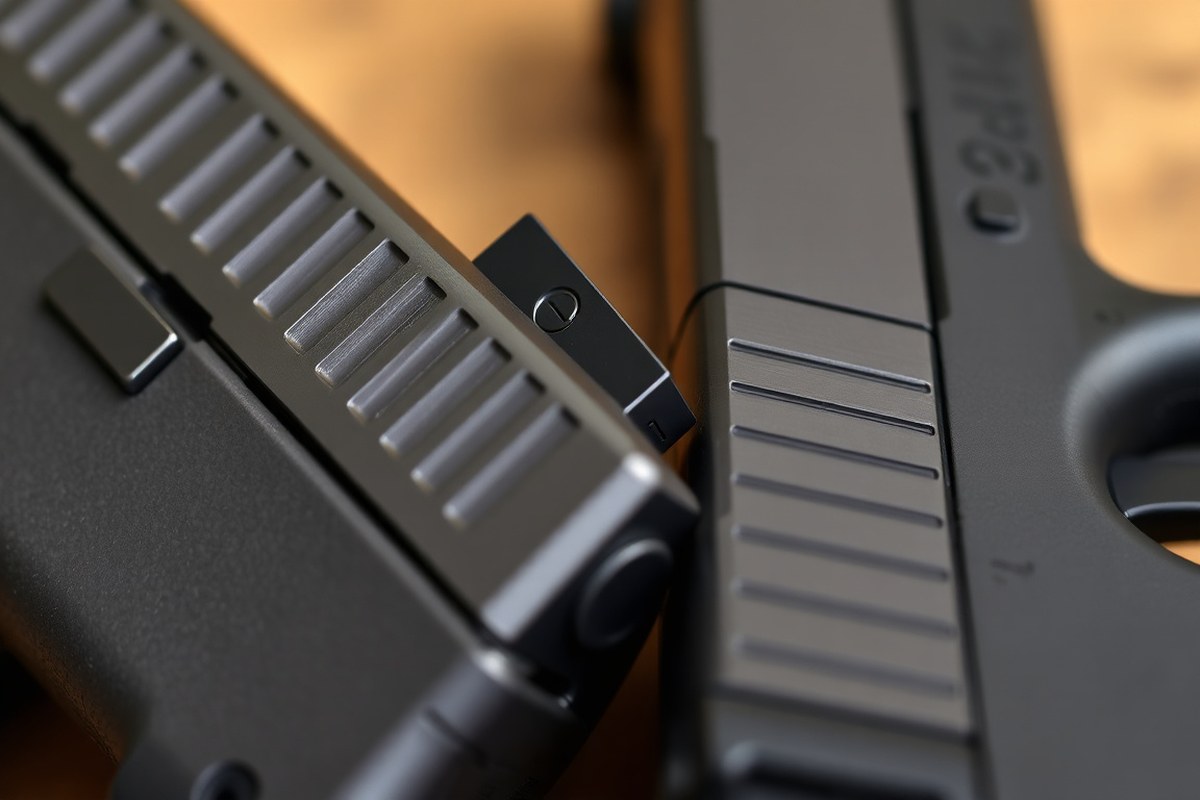
California’s Assembly Bill 1127 (AB 1127) prohibits Glock pistols that have a cruciform trigger bar, a part that makes it easier to convert the gun to fully automatic. This ban applies to well-known models like the Glock 17, 19, 26, and 43. The cruciform trigger bar is a distinct feature found only on Glock-type handguns and works with illegal devices known as “switches” or “auto sears” that enable automatic fire. Because of this, licensed gun dealers must not sell or transfer these models after July 1, 2026.
Not all Glock pistols are banned. Models that do not use the cruciform trigger bar or those with modified trigger bars designed to block auto-conversion may still eventually qualify for sale if manufacturers submit them to California’s Department of Justice (DOJ) by the January 1, 2027 deadline. The law gives manufacturers until then to redesign affected pistols and resubmit them without the microstamping requirement, which has long been a barrier for new semi-automatic pistols in California. Until potential modifications are approved, only Glock models without the cruciform trigger bar remain on the California roster.
| Glock Model | Uses Cruciform Trigger Bar? | Impact From AB 1127 |
|---|---|---|
| Glock 17 | Yes | Sales and transfers banned unless redesigned by 1/1/2027 |
| Glock 19 | Yes | Sales and transfers banned unless redesigned by 1/1/2027 |
| Glock 26 | Yes | Sales and transfers banned unless redesigned by 1/1/2027 |
| Glock 43 | Yes | Sales and transfers banned unless redesigned by 1/1/2027 |
| Glock 43X | Yes | Included in ban; redesign needed to remain legal |
| Modified Glock models (pending) | No (if redesigned) | May return to roster if approved by DOJ after redesign |
Since the ban targets a specific internal component, modifying your existing Glock to comply is not allowed if it originally used a cruciform trigger bar. The law also exempts certain law enforcement and special individuals from these restrictions. Commercial sales through licensed dealers must cease for banned models by the deadline, but private party transfers are not restricted under AB 1127.
Tip: To check if a Glock model is legal for purchase or sale, consult the current California DOJ handgun roster and confirm whether the model uses a cruciform trigger bar or if a redesigned version has been approved.
How Will the Ban Impact Current Glock Owners and Private Sales?
Individuals who own Glock pistols purchased before the ban’s start date may continue to keep and possess them legally without additional restrictions. The private sale of these Glock handguns will still be permitted after the ban becomes effective on July 1, 2026, provided all legal requirements are met. Ownership transfers must follow California’s private party transfer rules, but the ban does not outlaw possession or private sales of previously acquired Glock models.
Ownership Rights Retained After July 1, 2026
Glock pistols acquired before January 1, 2026, may remain in your possession without new legal restrictions. The ban applies only to new sales and transfers of designated Glock models beginning July 1, 2026. Existing lawful ownership is unaffected, so you are not required to surrender or re-register your Glock due to this ban.
Since new dealer sales of Glock pistols will be banned starting July 1, 2026, owners should understand that the law focuses on preventing new purchases rather than retroactively restricting your existing guns. Your rights to keep and use these pistols in accordance with California law are fully protected.
Rules Governing Private Party Transfers
Private party transfers (PPTs) remain legal for Glock pistols bought before the ban date. You can sell, gift, or otherwise transfer ownership to another individual within California following the state’s standard PPT procedures. These rules require all transfers to be processed through a licensed firearms dealer, even if conducted between private individuals. Private sales conducted after July 1, 2026 must:
- Use a licensed firearms dealer as the transfer agent
- Complete a background check on the buyer during the transfer
- Record the transaction in the dealer’s records
- Verify that the Glock pistol being transferred was purchased before January 1, 2026
- Ensure the buyer meets all eligibility requirements under California law
- Complete the transfer within 30 days to avoid violation
These steps ensure the transaction complies with state laws and maintains traceability, even after the ban on new sales has taken effect.
Steps to Legally Transfer Ownership Post-Ban
When transferring a Glock purchased before the ban, you should follow these steps to stay within legal bounds:
- Identify a licensed firearms dealer to act as the transfer agent for the private sale or gift.
- Bring the firearm and required documentation, including proof of prior purchase date to confirm pre-ban status.
- Complete the Dealer Record of Sale (DROS) process through the dealer, initiating a background check on the buyer.
- Wait for the approved waiting period (typically 10 days) once the application is submitted.
- Once approved, finalize the transfer by signing all required forms at the dealer’s office.
- Ensure the transfer is completed within the timeframe required by California law.
Following these procedures keeps your private sales compliant regardless of the broader Glock ban and protects you from legal consequences. Skipping or rushing these steps could result in violations and penalties under California firearm laws.
What Are the Compliance and Enforcement Rules for Dealers and Owners?
California dealers must strictly follow the rules set by Assembly Bill 1127 starting July 1, 2026. They cannot sell or transfer any Glock models banned under the legislation, such as the Glock 19. Compliance requires dealers to verify that any Glock handgun they intend to sell meets California’s specific standards before completing the transaction. Dealers should maintain clear records confirming the model is allowed for sale, relying on official DOJ lists rather than online retailer information. Shipments of non-restricted firearms will continue without interruption, but any Glock model not meeting the law’s criteria will be prohibited from sale or transfer.
Enforcement of the ban will focus on dealer transactions rather than private owners. Law enforcement agencies are tasked with ensuring no prohibited Glock models change hands via licensed dealers after the ban date. They will use compliance checks and investigation of dealer records to detect violations. Fines for dealers caught selling banned Glock variants can reach up to $1,000 per violation. Repeated or intentional violations could lead to increased penalties, license suspensions, or further legal action, though details on such escalations are not yet specified. The law does not penalize owners simply for possessing banned Glocks after July 1, 2026.
For Glock owners, compliance means understanding that while owning existing banned models is legal, selling or transferring them through a dealer is not after the ban takes effect. Dealers must refuse sales of banned models and carefully verify that any trade or sale complies with AB 1127. Owners planning to sell or transfer their Glock through licensed dealers must ensure the model is not on the restricted list when completing the transaction.
A practical checklist for dealers to comply includes: confirming the Glock model against the official AB 1127 restricted list before any sale, documenting compliance in transaction records, refusing sales of banned models, and staying updated on changes to DOJ enforcement guidelines. Business owners will benefit from training staff on these requirements to avoid violations. Penalties for Dealers Violating AB 1127
| Violation | Penalty |
|---|---|
| Selling or transferring banned Glock model | Up to $1,000 per violation |
| Repeated violations | Potential increased fines and license review (details pending) |
Enforcement will primarily occur through auditing dealer sales records and responding to complaints or reports. Dealers should prepare for routine inspections from California Department of Justice officials or other law enforcement entities after July 1, 2026. Staying informed on regulatory updates related to AB 1127 will help both dealers and owners avoid inadvertent violations.
Are There Exemptions for Law Enforcement and Special Individuals?
Law enforcement officers, government agencies, and certain designated individuals are exempt from the Glock ban under California’s AB 1127. These exemptions allow law enforcement and other authorized users to purchase, possess, and carry off-roster Glock models even after the ban takes effect. Retired officers and federal agents also benefit from specific provisions within these exemptions.
Official Exemptions Under AB 1127
AB 1127 specifies clear exemptions for law enforcement officers, government personnel, and certain other groups. These individuals retain the right to buy and use Glock models banned for civilians, particularly off-roster semi-automatic handguns. The law’s restrictions on sales begin after July 1, 2026, but do not apply to exempt parties. This ensures that authorized users maintain access to firearms necessary for official duties or personal protection related to their status. Exempt groups typically include:
- Active law enforcement officers
- Authorized government agency employees
- Federal law enforcement agents
- Retired peace officers who meet state criteria
- Certain licensed security personnel
- Individuals with special permits or legal authorizations
Those in these categories can continue purchasing or possessing off-roster Glock firearms after the ban date, preserving operational readiness and official capabilities.
Exemptions for Law Enforcement Agencies
Law enforcement agencies themselves have the authority to acquire restricted Glock models without interruption. Agencies use these exemptions to equip personnel appropriately, ensuring continuity in training, duty assignments, and unit standardization. This exemption applies regardless of the ban’s impact on civilian sales.
Active officers can carry these firearms both on and off duty. Retired officers, depending on California’s “peace officer exemption” criteria, may also maintain possession of these firearms for personal protection. Federal agents enjoy separate exemptions under federal law, which remain effective within California despite state restrictions.
Make sure to verify your exemption status with your agency or licensing authority to avoid potential legal issues.
Limitations of Exempt Status
Exemption does not grant unlimited freedom; conditions apply to ensure compliance with state regulations. Authorized individuals must maintain professional status or valid permits proving eligibility. Lost or revoked certifications may revoke exemption privileges.
Civilians who currently own Glock models before the ban remain unaffected, but cannot legally sell or transfer banned models to other civilians post-ban. Exempt individuals must also comply with storage, transport, and usage laws independently of the ban. Failure to meet these conditions can result in penalties, including confiscation or legal action. Checklist to maintain exemption status:
- Confirm active or retired law enforcement status with documents
- Maintain any required licenses or permits up to date
- Store firearms according to California safety laws
- Keep documentation accessible during possession or transport
- Report any status changes promptly to relevant authorities
Following these steps helps avoid misunderstandings and ensures lawful possession during and after the Glock ban’s enforcement.
What Legal Challenges Could Affect or Delay the Glock Ban?
Several legal challenges could influence or delay the enforcement of California’s new Glock ban under AB 1127. The California Rifle & Pistol Association (CRPA) and similar firearms advocacy groups have prepared lawsuits arguing that the ban violates constitutional rights. These challenges focus primarily on the Second Amendment and due process protections, aiming to block or overturn the ban before it fully takes effect. The outcome of these cases depends on federal and state court decisions, which could issue preliminary injunctions to halt enforcement temporarily.
A particularly significant factor is the federal lawsuit authorized by U.S. Assistant Attorney General Harmeet Dhillon on June 25, 2026. This complaint targets California officials over the ban, demanding they rescind the law or enter into a court-enforceable consent decree. Such federal action carries more influence than private lawsuits and could lead to quicker judicial intervention. The enforcement timeline for the Glock ban in California could be postponed if federal courts issue an injunction like the one that blocked Virginia’s assault weapons ban before it took effect, allowing legal questions to be sorted out.
The timing of these lawsuits matters greatly. Typically, courts consider requests for preliminary injunctions within weeks or months after a lawsuit is filed. A court granting an injunction might pause enforcement of the ban during the progress of longer-term constitutional challenges. However, if courts decline to block the ban early, California law enforcement will begin enforcement immediately on the effective date set by the state, with no delay.
Advocacy groups have actively responded to the legislation, filing suits promptly and coordinating legal strategies to challenge AB 1127. These efforts create uncertainty around the ban’s timeline, especially as they could lead to appeals that stretch the legal process over many months or even years. For gun owners, dealers, and legal experts, monitoring court rulings and injunction statuses is important to understanding when restrictions on Glock models and features will practically apply.
While the ban has a firm legal foundation in state law, constitutional challenges backed by federal intervention introduce a notable risk of delay or modification. The exact duration and outcome of these legal disputes are difficult to predict, but they typically require court hearings, motions, and possibly settlement discussions. Costs to involved parties include legal fees and potential adjustments to compliance plans based on court rulings.
How Can Buyers Legally Purchase Glocks Before the Ban Takes Effect?
To buy a Glock before California’s ban begins on July 1, 2026, you must begin dealer paperwork by June 20, 2026, accounting for the 10-day wait. You also need completed safety certificates and must file the paperwork correctly. Starting the process early reduces last-minute issues and helps you obtain a Glock compliant with present rules.
Last Day to Initiate Dealer Purchase
The absolute last day to begin the process of purchasing a Glock through a licensed California dealer is June 20, 2026. This deadline is critical because the state’s 10-day waiting period applies after starting the paperwork. Starting the process on June 21 or later means you cannot legally take possession before the ban begins.
Starting by June 20 means you can complete the background check and waiting period, allowing transfer of ownership before July 1. Dealers must submit Form DROS (Dealer’s Record of Sale) along with your identification and other documentation during this window.
Completing the California Handgun Safety Certificate Process
Before purchasing a Glock, buyers must obtain a California Handgun Safety Certificate (HSC) or the newer Firearm Safety Certificate (FSC). This certificate proves you can safely handle a firearm and is mandatory for private citizens. Steps to complete this process include:
- Study the California Firearms Safety Test handbook, available at most gun shops or online.
- Schedule and pass the written test at a certified dealer or firearms instructor.
- Bring valid government-issued ID and proof of California residency.
- Pay the test fee, which typically ranges from $25 to $30.
- Receive your FSC or HSC, valid for five years.
You must have your certificate before initiating the purchase paperwork at the dealer. Without it, the dealer cannot legally begin the background check or submit your sale.
Tips to Expedite Paperwork and Avoid Delays
To make sure your Glock purchase completes smoothly before the ban, prepare your documents early and follow these tips:
- Gather valid California ID, proof of residency, and the Firearm Safety Certificate in advance.
- Contact your preferred licensed dealer early to confirm Glock availability and their processing times.
- Complete the Dealer’s Record of Sale (DROS) paperwork online or at the dealer promptly on or before June 20, 2026.
- Clear the mandatory 10-day waiting period after paperwork submission without delay.
- Arrange for pickup quickly after the waiting period to ensure possession before July 1.
Failing to meet deadlines or complete paperwork can mean missing the chance to legally own a Glock under current rules. Waiting too long risks dealing with reduced inventory or the inability to purchase affected models after July 1.
What Alternatives and Modifications Are Available Post-Ban?
You still have some options for Glock-like pistols that meet California’s strict firearm roster requirements. Several Gen 3 Glock models, such as the 17, 19, and 26, remain legal for purchase as of late 2025. Manufacturers must modify these or introduce new versions by January 1, 2027, to comply with the law’s microstamping and other demands. Glock is actively working on Gen 6 models designed to fit into California’s approved handgun roster, aiming to meet the updated standards without needing repeated testing.
Modifying existing Glocks to comply is limited. The law requires features like microstamping, which can’t be added aftermarket. You can remove or replace certain restricted components, but that won’t make a banned model legal for new sales. Compliance hinges on the entire firearm meeting roster requirements, including parts integral to the gun’s design. For current owners, legal modifications mostly mean ensuring your pistol lacks banned features rather than converting a non-roster Glock into a legal one.
| Model | California Roster Status (Late 2025) | Compliant Features Required | Manufacturer Plans |
|---|---|---|---|
| Glock 17 (Gen 3) | On Roster | Microstamping, safety features | Pending update for compliance by 2027 |
| Glock 19 (Gen 3) | On Roster | Microstamping, safety features | Pending update for compliance by 2027 |
| Glock 26 (Gen 3) | On Roster | Microstamping, safety features | Pending update for compliance by 2027 |
| Glock 43 | Roster status uncertain | Must meet roster mandates | Update plans unclear |
| Glock Gen 6 Models | Not yet on Roster | Designed for compliance | Manufacturer working to add |
Choosing from compliant pistols means sticking to models already tested and on the state roster. Dealers will not be able to legally sell non-compliant Glocks after the ban. For prospective buyers, consider pistols that either remain on the roster or are expressly modified and approved by manufacturers for California. Costs range from typical retail prices plus possible price adjustments for new compliant versions that include microstamping and other mandated safety features. Waiting until new models are widely available might delay your purchase but ensures legal ownership with fewer risks.
Always verify a specific model’s current roster status before purchase to avoid buying an illegal handgun under California’s laws.
Step-by-Step Action Plan to Handle the California Glock Ban
Follow these steps to ensure you comply with the California Glock ban and understand your options before and after it takes effect.
- Immediately: Review the list of restricted Glock models and features under AB 1127 to identify if your firearm is affected. Confirm this by checking official state resources or your dealer’s information.
- Within the next 30 days: Complete any private sales or transfers of affected Glock models to California-licensed dealers to remain compliant. Verify the sale with proper documentation and background checks.
- Before the ban’s effective date: Purchase your desired Glock models legally from licensed California dealers who still have them in stock. Confirm receipt of all required paper trails and registration.
- On the ban’s effective date: Cease any new private sales or transfers of restricted Glock models outside licensed dealers, following state compliance rules. Monitor official updates to confirm enforcement start.
- Within 90 days post-ban: Ensure all restricted Glock models you own are registered or modified to meet legal requirements. Confirm by submitting forms and receiving acknowledgment from authorities.
- Ongoing: Keep track of legal challenges that may impact enforcement timelines by regularly checking California Department of Justice announcements and court rulings.
- For law enforcement and exempt individuals: Maintain documentation proving your exemption status and comply with any special registration or reporting requirements.
Frequently Asked Questions
When Does the Glock Ban Officially Take Effect in California?
The restriction on Glock handguns begins on July 1, 2026, following the signing of Assembly Bill 1127 in October 2025. This legislation establishes the deadline after which new statewide rules will govern Glock models and their copies.
How Long Do You Have to Purchase a Glock Before California’s Ban Takes Effect?
New Glock pistols possessing certain prohibited features can be bought legally in California up to July 1, 2026. Purchasing approved models included on the California Handgun Roster before that date guarantees compliance with state law.
What Happens to Private Sales of Glocks After the Ban Takes Effect?
Private sales of Glocks acquired before July 1, 2026, remain legal after the ban begins. This lets current owners transfer these guns without violating the new restrictions.
Will Law Enforcement Still Be Allowed to Use Glock Pistols After the Ban?
Yes, law enforcement officers remain exempt from the Glock ban after July 1, 2026. They can continue to possess and use Glock firearms regardless of the new restrictions.
Does the Glock Ban Mean Current Owners Must Surrender Their Guns?
Current Glock owners can keep pistols purchased before January 1, 2026, despite the ban’s start. The law does not force owners to turn in grandfathered firearms.
Are There Any Legal Challenges That Might Delay the Glock Ban?
Legal challenges could arise but the ban is currently set for July 1, 2026. Monitoring state court decisions is important, as lawsuits can delay or modify enforcement.
Key Points to Remember
The California Glock ban officially restricts specific models and sales starting on its set effective date, which significantly alters how these firearms can be owned and transferred. Taking early steps like purchasing compliant models now or properly registering your firearms ensures you avoid penalties. Your next action should be to verify your Glock’s status against the AB 1127 list and make any necessary legal purchases or registrations before the ban begins.