Why Is Glock Discontinuing so Many Models? The Complete Guide with Key Insights
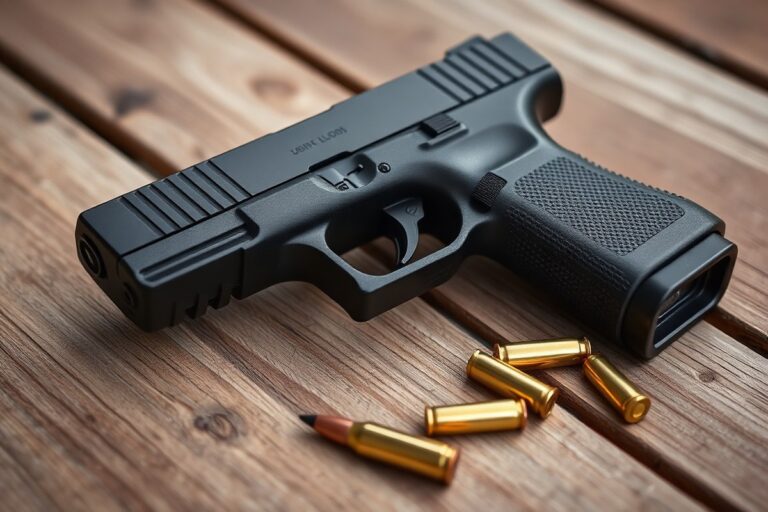
Glock is discontinuing so many models primarily to streamline its lineup and introduce new “V Series” pistols designed to comply with recent laws and block unauthorized modifications. Most older models, including many from Generations 3 and 4, are being phased out to make way for updated versions that better meet regulatory challenges and market demands. This move affects collectors, dealers, and everyday Glock owners. You’ll find detailed insights on which models remain, how legal changes impact these decisions, and what the discontinuation means for parts and support.
The transition to “V Series” models marks a significant shift in Glock’s product strategy. This change directly responds to new state laws, key lawsuits, and evolving firearm technology aimed at limiting illegal automatic conversions. If you own a Glock or sell them, understanding these updates will help you navigate future buying, selling, or maintaining your firearms effectively.
Key Takeaways
- Glock is discontinuing around 35 models to focus on new “V Series” pistols that prevent unauthorized modifications.
- The Glock 43, 43X, and 48X remain in production as exceptions to the widespread discontinuations.
- Many Generation 3 and 4 pistols, including the G17, G19, G22, and G30, are being dropped from the lineup.
- New California laws influenced Glock’s decision to develop models that block switch conversions to fully-automatic firearms.
- Discontinued models will still receive customer support and parts for a limited time, but availability will reduce over years.
- Dealers must prepare for reduced inventory of older models and increased focus on the new “V Series” line.
Why Is Glock Discontinuing so Many Pistol Models?

Glock is discontinuing many of its pistol models primarily to address mounting legal challenges and evolving firearm regulations. Laws like California’s Assembly Bill 1127, signed in October 2025, aim to restrict devices that convert pistols to fully automatic fire, which has pushed Glock to redesign its lineup. The company’s shift toward new “V Series” models, which feature mechanical changes preventing such conversions, directly responds to these legal pressures. By removing older models vulnerable to these modifications, Glock reduces its exposure to lawsuits seeking millions of dollars in damages.
Market factors also play a significant role in the decision. Consumer interest continues to shift toward more modern, versatile pistols that comply with current state laws and incorporate recent technological improvements. Dropping older models, particularly many Gen 3 and Gen 4 variants, streamlines Glock’s catalog, allowing the company to focus production capacity and marketing efforts on newer designs like the Gen 5 and V Series. These newer models generally feature improved ergonomics and compatibility with contemporary accessories, meeting current consumer preferences better.
Technically, the discontinuation simplifies Glock’s manufacturing and distribution processes. Maintaining a large variety of older generations across multiple generations involves higher costs in tooling, parts inventory, and quality control. Consolidating into fewer, updated models reduces complexity and keeps production more efficient. This leaner lineup also means Glock can better support parts availability for active models, keeping their service and warranty systems leaner and more responsive.
The process involves phasing out 34 or more commercial pistol models, including many popular ones like the Glock 17 and Glock 19 from earlier generations. Distributors began receiving notice of the changes by early 2025, with official discontinuation listings appearing by November 2025. Transitioning to new V Series models incurs costs related to design, retooling factory lines, and educating dealers and customers about the new features and compliance benefits. However, these expenses balance against reduced legal risks and better alignment with the current firearms market landscape.
The legal and market-driven motivations also mean Glock narrows its focus to models that remain popular and legally viable, such as the Glock 43, 43X, and 48X, which continue production alongside the new V Series. This approach helps Glock sustain sales while adapting to tighter regulation environments. Opting not to discontinue certain models allows Glock to retain a foothold in compact and subcompact pistol segments favored by carry permit holders.
Which Glock Models Are Being Discontinued and Which Remain?

Glock is discontinuing many models effective November 30, 2025, based on reports from industry sources and Glock’s website. This includes well-known pistols such as the Glock 17 and Glock 19 across Generations 3, 4, and 5. The decision affects most commercial models except for a few compact pistols that will remain available, notably the Glock 43, 43X, and 48X. These remaining models represent Glock’s more recent offerings designed with updated safety features.
The distinction between generations matters because the discontinued models mostly include earlier versions (Gen 3 to Gen 5) that can be modified with conversion switches, a common concern for unauthorized automatic conversion. Glock’s shift to the new 6th Generation (“V” models) aims to block such modifications. The older Glock models will no longer be in production, yet Glock has committed to providing continued parts and service support for owners of discontinued pistols, ensuring maintenance and repair remain possible despite the halt in manufacturing.
| Model | Status | Generation(s) | Notes |
|---|---|---|---|
| Glock 17 | Discontinued | Gen 3, 4, 5 | Popular full-size model; production ends Nov 30, 2025 |
| Glock 19 | Discontinued | Gen 3, 4, 5 | Compact version of Glock 17; production ends Nov 30, 2025 |
| Glock 43 | In Production | Gen 5 and newer | Single-stack compact; expected to continue |
| Glock 43X | In Production | Gen 5 and newer | Extended grip compact; expected to continue |
| Glock 48X | In Production | Gen 5 and newer | Slimline compact; expected to continue |
| Other Gen 3, 4, 5 models | Discontinued | Gen 3, 4, 5 | Most commercial models removed Nov 30, 2025 |
Continuing production only for the Glock 43, 43X, and 48X means Glock is focusing on models that fit new regulatory demands and prevent illegal automatic conversions. The newer “V” Series pistols anticipate replacing many of the phased-out designs with improve internal safeguards. Owners of discontinued models can still access parts and repairs, avoiding obsolescence despite production stopping. This transition affects availability and aftermarket pricing but offers continuity for existing Glock owners.
Make sure to register any concerns about parts or repairs well before November 30, 2025, as model discontinuation could slow supply chains for discontinued pistols.
How New Laws and Lawsuits Impact Glock’s Model Discontinuations
Recent state-level laws and a wave of lawsuits have strongly influenced Glock’s decision to discontinue many of its pistol models. Legal actions filed by the attorneys general of New Jersey and Minnesota allege that Glock’s pistols can be easily converted into automatic weapons using illegal devices known as Glock switches. Additional lawsuits have come from cities including Chicago, Baltimore, and Seattle, with Seattle’s city attorney filing suit against Glock, its Austrian parent company, and several local authorized dealers as recently as September 2025.
These legal pressures have pushed Glock to redesign its pistols, leading to the introduction of the V Series models. The new V Series still preserve the external appearance and core functionality users expect but incorporate internal changes specifically aimed at preventing the use of conversion switches. These design modifications involve altering internal components and mechanisms to eliminate vulnerabilities exploited by illegal devices that allow semiautomatic pistols to fire fully automatically. For example, Glock’s newest Gen6 pistols feature ergonomic updates, a flat-faced trigger design, and a built-in optic-ready system that also maintain the brand’s Safe Action® System for safety and reliability.
Legislators in several states, including Illinois, Maryland, and New York, have proposed or passed laws restricting firearm features that facilitate conversion to automatic fire. New York’s 2024 legislation not only bans certain features but also permits lawsuits against manufacturers of pistols deemed easily convertible. This legal environment creates financial and regulatory risks for gun makers, prompting Glock to phase out models vulnerable to litigation and regulatory bans.
The continuous stream of lawsuits and evolving state regulations have accelerated Glock’s move to discontinue dozens of models and replace much of its lineup with V Series variants explicitly designed to comply with these new challenges. Glock emphasizes that while the external look and performance remain familiar, the internal redesigns are critical to ensure compliance. Gun owners should track official Glock communications to understand how these changes affect parts availability, service, and ownership rights. While Glock plans to continue offering support for discontinued models, verifying service options with authorized centers based on your serial number is recommended.
By adapting its product line to address legal and legislative pressures, Glock aims to mitigate risks related to accusations of facilitating illegal automatic fire conversions. These efforts reflect broader shifts in firearm regulations, where manufacturers must balance market demand and evolving compliance obligations. Glock’s legal challenges illustrate how lawsuits and regulation directly impact firearm design choices, pushing manufacturers to innovate in ways that comply with laws and protect their business interests.
What Is the Glock V Series and How Does It Prevent Unauthorized Modifications?
The Glock V Series introduces a new generation of pistols designed to replace legacy models, featuring improvements that specifically target the prevention of unauthorized automatic-fire conversions. These pistols include upgraded triggers and slides engineered to resist modifications that turn semi-automatic Glocks into illegal fully automatic weapons. Initial V Series models are set for release as early as December 2025, signaling a shift in Glock’s approach to compliance and innovation.
Key Features of Glock V Series Pistols
The Glock V Series marks a notable evolution from previous generations with several technical and design enhancements. A key feature is the integration of an improved trigger mechanism, which delivers a more consistent and smoother trigger pull. This upgrade aims to improve shooting accuracy and user experience while maintaining Glock’s reputation for reliability.
Slides have also undergone redesign, focusing on refined ergonomics and better optics compatibility, responding to current market demands. The pistols are visibly marked with a ‘V’ on the slide and frame to distinguish them from earlier models. These updates not only modernize the platform but also set the stage for future Glock offerings adhering to stricter regulations.
Technical Mechanisms Preventing Fully-Automatic Conversions
The primary technical innovation in the V Series is the modification of internal components that historically enabled illegal conversions to fully automatic fire via so-called “switch” modifications. In previous Glock models, removing or altering specific parts allowed rapid-fire capability, which federal law strictly prohibits.
With the V Series, Glock has engineered both the trigger system and slide components to resist such conversions. This includes redesigning the trigger bar and firing mechanism to physically prevent the installation or operation of auto sear devices. These internal changes require precise manufacturing tolerances and strong materials to maintain reliability under normal uses while blocking mechanisms that enable rapid fire.
Preventing these conversions is significant for law enforcement and legal compliance, as unauthorized automatic-fire pistols are rare but attract severe legal penalties. By implementing these mechanical safeguards, the V Series aims to reduce illegal firearm modifications and reinforce safe usage within legal boundaries.
Models Confirmed and Rumored in the V Series Lineup
The first V Series models confirmed include the Glock 19 V and Glock 45 V, both slated to debut late in 2025. These models represent popular sizes favored by both civilian shooters and law enforcement agencies. Their selection highlights Glock’s strategy to update widely used platforms first, ensuring broad market acceptance and smoother transitions.
Rumors suggest that all legacy models will gradually be replaced by V Series variants, extending across calibers and form factors. Exact details remain sparse, but evidence points to a complete rollout covering full-size, compact, and subcompact models. Glock’s messaging signals ongoing development, with optic-ready features and compliance-driven improvements as cornerstones of the new lineup.
Collectors and dealers should note these V Series pistols are clearly marked, which will help differentiate authorized models from discontinued versions. This distinction will become important as market availability shifts and state laws affect sales and transfers.
What Does Discontinuation Mean for Glock Parts and Customer Support?
Glock will continue to support discontinued pistol models with parts and service for years after they leave active production. Owners of legacy models shouldn’t worry about losing access to magazines, spare parts, or repair services any time soon. This ongoing support is standard practice in the firearms industry to maintain brand reliability and customer trust for existing gun owners.
While exact timelines for support vary by model and Glock has yet to provide a detailed schedule, you can expect parts availability and factory service to persist for several years. This makes owning a discontinued Glock less risky than it might seem, as you’ll have access to genuine components necessary for maintenance, upgrades, or repairs. Aftermarket parts availability may shift faster due to market demand changes, so sourcing third-party components might become harder over time.
The key concern is staying informed about your specific model’s status and stocking up on important consumables like magazines and recoil springs if you prefer aftermarket options. It’s also wise to establish a relationship with a Glock-certified gunsmith or authorized service center for professional repairs and warranty work.
- Keep an inventory of spare parts such as magazines, springs, and sights from authorized dealers or Glock directly.
- Contact Glock customer service or visit their official website for updates on discontinued model support and parts availability.
- Schedule regular maintenance and inspections through certified gunsmiths experienced with Glock pistols.
- Consider purchasing key spare components while they are readily available.
- Store your firearm properly to reduce wear and prolong the lifespan of parts.
- Monitor the used firearms market for pricing trends and part availability.
- Be cautious when buying aftermarket parts; verify compatibility with your specific model and generation.
Service for discontinued Glock pistols will generally include repairs under warranty (if applicable), replacement parts for common wear items, and factory overhaul if necessary. Costs vary based on the type of repair and whether the pistol is still under warranty. Routine maintenance such as cleaning and lubrication remains the responsibility of the owner and should follow Glock’s recommended intervals to ensure reliability.
Keep your Glock’s serial number handy and register your pistol with Glock’s customer support to facilitate quicker service and parts orders when needed.
How the Discontinuation Affects Glock Dealers and Collectors
Discontinuing many Glock models impacts dealers’ inventory decisions, sales tactics, and how collectors view these pistols’ future worth. Dealers need to adjust orders and educate customers on availability, while collectors should consider value trends and rarity risks linked to discontinued models.
Dealer Strategies for Handling Discontinued Inventory
Dealers must balance current inventory against incoming orders by closely tracking which Glock models remain in production. Reducing orders of discontinued models prevents overstocking and frees capital for new Glock V Series releases. Clear communication with customers about what’s available avoids confusion and builds trust.
Adjusting inventory successfully involves reviewing sales velocity and customer preferences frequently. For older Gen3 or Gen4 variants facing discontinuation, dealers should evaluate how much stock to keep based on local demand and price sensitivity. Holding limited quantities may encourage quick sales before supplies run out but tying up funds in slow-moving discontinued models can strain cash flow.
- Audit existing Glock inventory for discontinued versus current models
- Limit purchase orders to essential quantities of discontinued pistols
- Promote new Glock V Series models to shift customer interest
- Inform customers about discontinued status to manage expectations
- Offer trade-ins or promotions to move older models faster
- Monitor competitor stock levels for discontinued models
- Plan for parts and accessory availability linked to discontinued guns
Clear internal tracking systems help coordinate orders with sales trends. Dealers who react promptly to discontinuation announcements avoid excess aging stock and can capitalize on customer demand for newer options or collectible pieces.
Collector Tips on Buying Discontinued Glocks
Collectors benefit by noting that some discontinued Glock pistols, especially those with dedicated followings like certain Gen3 or Gen4 variants, could appreciate in value over time. Carefully selecting which models to acquire based on rarity and condition increases the likelihood of future return on investment.
Since discontinued models may face parts scarcity and limited support years down the line, collectors should prioritize firearms in excellent condition with original accessories. Tracking market trends and historical pricing helps determine the right time to buy or sell. Staying informed through dedicated forums and Glock enthusiasts groups provides ongoing insights.
- Research which discontinued models have cult followings or historical significance
- Verify condition and completeness of the firearm before purchasing
- Document serial numbers and production details for provenance
- Consider storage options to preserve firearm condition over time
- Watch aftermarket parts availability for discontinued models
- Connect with other collectors and dealers for market knowledge
Collectors who act strategically now may see their discontinued Glocks become prized pieces, provided they maintain them well and stay aware of external factors like potential legal changes affecting gun ownership.
Market Trends for Glock Values Post-Discontinuation
Discontinued Glocks often experience shifts in market value influenced by demand, availability, and collector interest. Models once produced in large quantities might see moderate appreciation, while rare variants or those tied to notable production runs could spike in price.
Factors such as caliber popularity affect value trajectories. Glock’s decision to phase out models chambered in .40 S&W and .45 ACP may shrink supply over time, encouraging higher prices for remaining pistols. However, widespread discontinuation can also saturate the collector market temporarily, leading to price volatility.
Dealers and collectors should expect fluctuations and be ready to adapt pricing strategies. Staying updated on Glock’s production announcements and monitoring online auction results offers real-time insights into current market sentiment.
Timeline for Discontinuation and Rollout of New Glock Models
Glock plans to end production of many current models by the end of November 2025. This deadline applies to all Glock pistols being discontinued. The company intends to begin rolling out the new Gen V V Series models starting in December 2025. These V Series guns include updated features designed to prevent unauthorized modifications, but the transition timing primarily hinges on completing existing production runs.
Though no official announcement from Glock or its parent company confirms these exact dates, information from Glock representatives and industry sources shows a clear timeline. The cutoff near the end of November 2025 is key because it aligns with Glock’s manufacturing and inventory cycles as they prepare to launch their new generation of pistols.
This timeline matters if you want to purchase or sell Glock models that are being discontinued. After November 2025, new supplies of the older versions will cease, making remaining stock more valuable or harder to find. At the same time, dealers and collectors should anticipate availability for the V Series models starting in December 2025, although distribution may vary by region and demand.
| Event | Date | Significance |
|---|---|---|
| End of production for discontinued Glock models | November 30, 2025 | Last day Glock manufactures existing pistol models before discontinuation |
| Start of Glock V Series (Gen V) rollout | December 2025 | Availability begins for redesigned Glock pistols with new features |
If you’re holding inventory of discontinued Glock models, plan to sell or move stock by late 2025 to avoid carrying unsellable items once production stops. For buyers interested in the latest Glock technology, waiting until December 2025 or later ensures access to V Series pistols.
Keep in mind, availability timelines for the V Series may differ between dealers and regions due to production capacity and demand. Glock dealers will need to order accordingly, and collectors should track release announcements to secure desired models promptly. Planning purchases around these deadlines helps avoid missing out or paying a premium after discontinuation.
How Glock’s Lineup Changes Reflect Shifts in Market Demand and Firearm Technology
Glock’s decision to discontinue many models while retaining the 43, 43X, and 48X shows a direct response to changing customer preferences, new firearm technologies, and broader industry movements. Glock is focusing on compact, easily concealable pistols equipped with modern ergonomic and optic-ready features that meet current demands for self-defense and everyday carry. These shifts help the brand maintain relevance in a competitive market driven by active firearm owners and evolving requirements.
Consumer Preference for Compact and Carry Pistols
Compact pistols like the Glock 43, 43X, and 48X remain popular because they offer a balance between concealability and effective firepower. South Florida’s market data highlights the 19 and 43X as top choices for personal defense and concealed carry, reflecting a nationwide trend. Users want handguns that are easy to carry all day without sacrificing reliability or capacity. Larger or less ergonomic models see declining demand, which influences Glock’s decision to streamline its lineup toward those that better suit carry needs.
Carrying comfort, combined with adequate magazine capacity, is critical. The 43X and 48X, for example, have slim frames with increased magazine length compared to the original 43, giving users more rounds without significant bulk. This design focus aligns with everyday carry shooters who prioritize not only performance but also low-profile concealment.
Advances in Ergonomic and Optic-Ready Designs
Glock’s newer Gen6 pistols come standard with optic-ready slides and include three different optic plates, allowing users to mount various red dot sights directly onto the handgun. This update reflects increasing consumer demand for optics that improve target acquisition speed and accuracy, especially in defensive or competitive shooting situations. Older models that lack this feature no longer meet the market’s expectations for modularity and customization.
Ergonomics have also evolved, with Glock refining grip textures, finger grooves, and frame contouring to improve comfort and control during extended use. These updates improve pointability and recoil management, which are critical for users who depend on their pistols regularly. Failing to adopt these design improvements could make a model less competitive.
Industry Trends Toward Safer, Modernization-Oriented Firearms
The firearms industry is shifting toward guns that incorporate safety and modernization features suited for a wider audience, including first-time buyers and experienced carriers. Glock’s product decisions also reflect external pressures such as evolving laws and litigation risks, although those factors are addressed elsewhere. By focusing on models like the 43 series and 48X, Glock zeroes in on pistols that balance simplicity with advanced features, reducing risks and improving user confidence.
Many users now expect their firearms to come ready for accessories like optics while providing slimmer profiles for concealed carry. The move away from multiple older models allows Glock to channel resources into refining a few versatile platforms. This modernization attracts a broader customer base who value safety, modularity, and reliability in a compact package.
Owners considering discontinued models should verify aftermarket support and parts availability before making long-term plans to ensure ongoing reliability and serviceability.
Your Next Steps: Navigating Glock Model Discontinuations
Managing changes in Glock’s lineup requires timely attention, especially if you own, sell, or collect their pistols. Here’s how to stay ahead and protect your interests.
- Immediately: Check your current Glock models against official Glock announcements to confirm if yours is discontinued or remains in production.
- Within 1 week: Contact your local Glock dealer to inquire about parts availability and warranty service options for discontinued models, ensuring you understand potential limitations.
- Within 2 weeks: For collectors, appraise your discontinued Glock models’ value by consulting firearm appraisers or online collector communities to gauge market demand shifts.
- Within 1 month: If you plan to purchase a new Glock, research the updated lineup to select models that fit your use and to access current technology like the V Series.
- Ongoing: Monitor legislative and legal developments impacting firearm ownership and Glock’s product offerings to adapt your choices accordingly.
- After 2 months: Consider professional gunsmith advice before attempting modifications on V Series models to avoid voiding warranties or compromising safety.
- Quarterly: Review Glock customer support updates for parts and service notices related to your models to maintain functionality over time.
Frequently Asked Questions
Which Glock Models Are Going Away?
Glock is discontinuing about 35 models, keeping only the 43, 43X, and 48X, replacing others with new “V Models” designed to prevent switch conversions. This streamlines the lineup and updates features to meet new legal challenges.
What Is the Most Sold Glock Model?
The Glock 17 has been the best-selling model for years, prized for its reliability and versatility. It remains a popular choice among law enforcement and civilian shooters despite the upcoming discontinuation of older versions.
Why Are Glocks Disliked?
Some gun owners dislike Glocks because of their polymer feel, trigger design, or perceived lack of customization. Preferences vary widely, with some users preferring steel-framed or other brands for comfort or aesthetics.
Why Are Glocks Being Banned?
Certain states and cities ban specific Glock models due to features classified under assault weapon laws or concerns about ease of conversion to machine guns. New laws like California’s AB 1127 directly influence these restrictions.
Are the New Glock V Series Models Compatible with Older Parts?
The V Series models are designed with changes that make them incompatible with many older Glock parts. This helps prevent unauthorized modifications but might limit upgrade options for owners.
Will Discontinued Glock Models Be Supported with Parts and Service?
Discontinued Glock models will continue to receive parts and customer support for some time, though availability may decrease as production shifts to the new V Series. Owners should stock up on essentials if concerned.
Wrapping Up
Glock’s decision to discontinue many models reflects evolving market demand and regulatory challenges, while their focus on new technologies like the V Series aims to protect both the brand and gun owners. Staying informed about these changes helps you make smart decisions whether you’re a user, dealer, or collector. Start by verifying the status of your Glock models and connecting with authorized dealers to safeguard access to parts and support.