Are Gun Safes Worth It? A Complete Guide with Expert Tips
Are gun safes worth it? Yes, they offer essential protection against theft, accidents, and fire, making them a smart investment for responsible firearm storage. They reduce accidental shootings by over 50% and safeguard your firearms from damage and unauthorized access. Start by choosing a safe that fits your needs for size, weight, and security features to ensure lasting protection.
Key Takeaways
- Invest in a gun safe weighing at least 140 pounds for better theft resistance and stability.
- Look for fire-rated safes tested for 160 minutes at 1400°F for reliable fire protection.
- Budget safes under $500 provide basic security but often lack true fire resistance.
- Biometric fingerprint safes offer quick access, important in emergencies, usually found in mid-range models.
- Consider safe size carefully to store all firearms securely without wasting space.
- Heavy safes (500+ pounds) offer superior theft deterrence but may require professional installation.
Are Gun Safes Worth the Investment for Firearm Safety?

Gun safes provide significant safety and security benefits that often justify their cost and effort. Studies show homes with gun safes reduce accidental shootings by more than 50%, which highlights their effectiveness in preventing unintentional access to firearms by children or unauthorized individuals. Beyond accident prevention, gun safes also protect firearms from theft and fire damage, ensuring your weapons remain safe and intact. Investing in a quality safe that fits your needs is a proactive measure to safeguard your firearms and comply with legal storage requirements.
Even if you live alone or own only one firearm, a gun safe remains a worthwhile investment. Unauthorized access can occur through break-ins, and accidental discharge is always a risk if a firearm is not securely stored. A safe with quick access features, such as biometric locks or combination keypads, can balance security with the ability to retrieve your firearm quickly in emergencies. For example, some safes like the Barska Quick Access model offer entry in about 2.5 seconds, which suits owners who want rapid access without compromising safety.
Gun safes come in a wide price range, with many options under $500 offering sufficient protection against theft and fire for most small firearm collections. Heavier safes, typically weighing 800 to 1500 pounds, provide stronger defense against break-ins but often need professional help to install. Paying more upfront gives you confidence that your guns are secured from unauthorized access, damage, and potential legal issues. Having a secure safe can also lower your liability if your gun is stolen and used improperly, since safe storage often influences insurance claims and court cases.
Some gun owners may hesitate due to price or convenience, but the safety and legal advantages make gun safes a valuable part of responsible ownership. Safes shield firearms from theft, accidental shootings, and environmental damage. To maximize benefit, choose a safe matched to your firearm quantity and storage environment, install it securely, and maintain it regularly. Prioritizing safe storage protects your family, your property, and your rights as a firearm owner.
How Different Gun Safe Types Match Your Needs and Security

Gun safes come in different types tailored to your firearm storage needs, balancing size, security, and ease of access. Choosing between biometric, electronic, traditional, and portable locks matters for how quickly and securely you can reach your guns. The size and form, ranging from small handgun safes to full-size gun cabinets, along with wall or floor safes, determine what and how much you can store safely.
Biometric, Electronic, and Mechanical Locks Explained
Biometric locks use fingerprint recognition to give quick and secure access. They suit handgun safes or smaller models, offering speed and high security but tend to be pricier and rely on batteries. Electronic keypad locks provide fast, programmable entry but face vulnerabilities if power fails or batteries die. Traditional mechanical locks, including dial or key locks, are dependable and affordable but usually slower to open and more vulnerable to picking. Portable safes often feature simpler locking mechanisms prioritizing convenience over maximum security.
Keep spare batteries for biometric or electronic locks on hand to prevent lockout during emergencies.
Small Handgun Safes Versus Full-Size Gun Safes
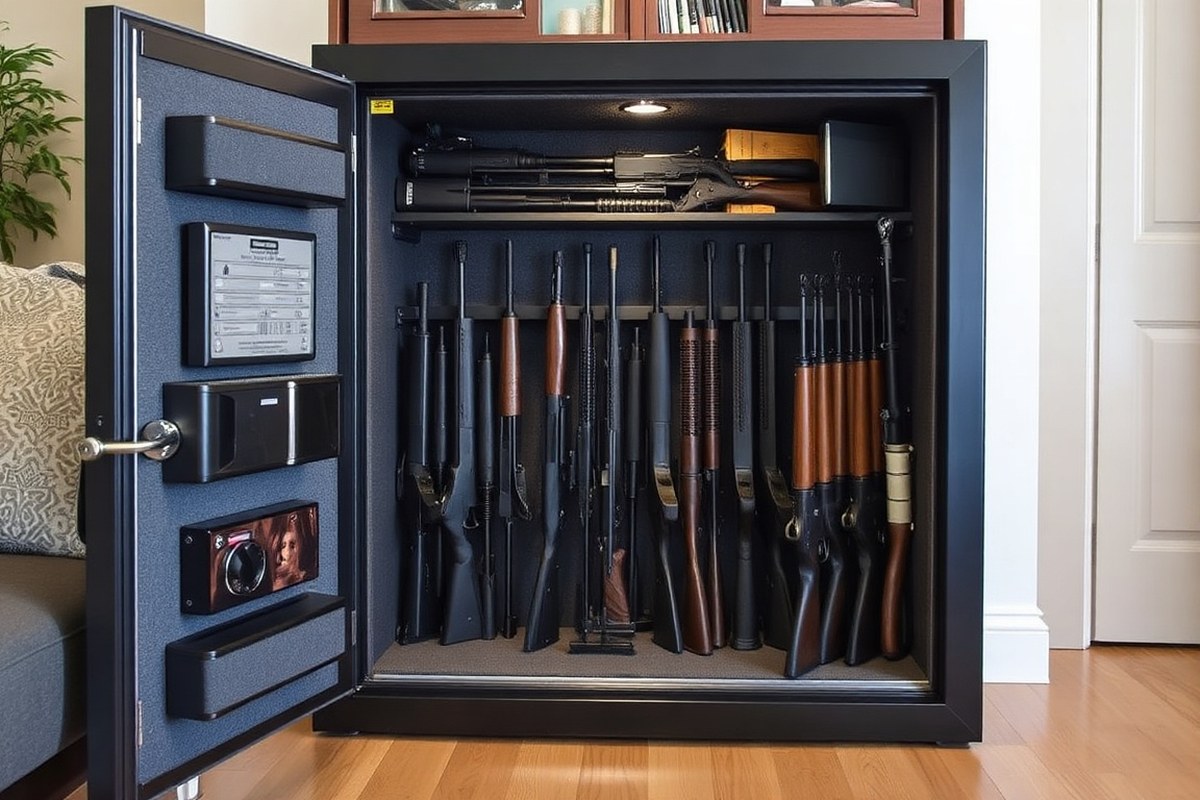
Small handgun safes excel at storing one or two pistols and provide rapid authorized access. Their small footprint makes them ideal for bedside or travel use but offer little protection for long guns or multiple firearms. Full-size gun safes accommodate multiple long guns and accessories, usually offering thicker steel, organized racks, and superior resistance to theft and fire. These are heavy and expensive, often exceeding $300 to $500, and less convenient for fast access. Mid-sized safes fill the gap between these extremes, holding several rifles or shotguns and some handguns, balancing space and portability.
| Storage Option | Best Suited For | Main Advantage | Main Limitation |
|---|---|---|---|
| Full-size Gun Safe | Multiple long guns and accessories | Strong capacity and organized storage | Heavy, expensive, less convenient for rapid access |
| Compact Handgun Safe | One or more handguns | Smaller footprint, quicker authorized access | Limited capacity, little protection for long guns |
| Locking Gun Cabinet | Basic access control on a limited budget | Usually lighter, less expensive | Less secure, typically thinner steel |
Wall Safes, Floor Safes, and Portable Options
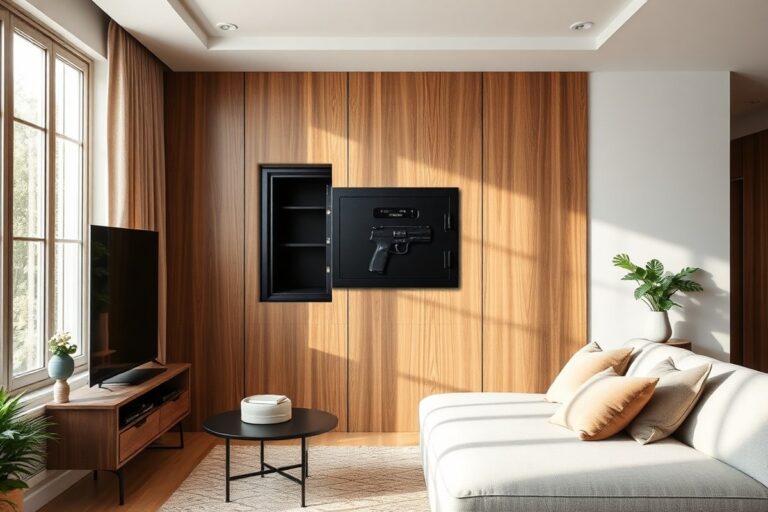
Wall safes save space and hide firearms from plain sight by being recessed into studs or masonry. They can be harder to install and offer less capacity, typically limited to a few handguns or compact firearms. Floor safes offer stronger security for long guns since they are bolted to concrete, resist pry attacks better, and can hold multiple firearms but require dedicated floor space and installation effort. Portable safes give you the option to secure guns on the go, such as during travel or stays away from home, but they sacrifice heavy steel construction for lightness and convenience. This tradeoff reduces theft resistance and storage capacity.
Properly anchoring wall or floor safes prevents thieves from removing the entire safe, maximizing your investment in security.
Key Gun Safe Features: What to Look for Before Buying
Choosing the right gun safe means focusing on several key features. Steel thickness, fire resistance, lock type, and humidity control all impact how well your firearms stay secure and protected. Knowing what to prioritize can help you get the most reliable safe for your budget and needs.
Steel Gauge and Fire Resistance Ratings
Steel gauge measures the thickness of the metal, with lower numbers indicating thicker steel. For gun safes, 12-gauge steel (about 0.1046 inches thick) offers a good balance of solid protection and price. Thinner steel, like 14-gauge (about 0.0747 inches), is found in many budget models but provides less resistance to break-in attempts. Heavier steels increase safe weight and cost but improve security against pry tools or forced entry.
Fire resistance is another critical factor. Many affordable safes under $500 lack a fire rating, which means they may not protect your firearms during a blaze. Look for safes with an actual UL Class 350 rating or higher, ensuring they can keep inside temperatures below 350°F for at least 30 minutes because temperatures above 400°F can damage gun finishes and ammunition. Fireproof safes cost more but provide peace of mind if your home is at risk of fire.
Lock Mechanisms: Pros and Cons
Lock type influences both security and how quickly you can access your firearms. Traditional key locks are inexpensive and reliable but slower to open, especially under stress or emergency. Mechanical combination locks don’t require batteries, eliminate the risk of electronic failure, and can open fairly quickly once you know the combination.
Electronic keypad locks offer fast entry and can be programmed with multiple user codes. The downside is they depend on batteries, which require regular checks and replacement to prevent lockouts. Biometric locks use fingerprints and provide the quickest access but typically cost more, often between $200 and $450. They may also need a backup key or battery system to avoid lockout in a power failure. Weigh access speed against potential reliability issues to find what fits your daily use.
Humidity and Moisture Management Features
Humidity control prevents rust and corrosion inside the gun safe, preserving metal parts and finishes. Many safes include rubber door seals that help keep out moisture and dust. For added protection, consider a dehumidifier pack or an electronic humidity control system, especially if you live in a humid climate or place the safe in a basement.
Humidity over 60% can accelerate rust on firearms, reducing lifespan and reliability. A hygrometer inside your safe helps you monitor conditions, and it’s a small investment to avoid costly repairs or replacements later. Regularly rotating or inspecting your firearms also helps catch early signs of corrosion.
How to Choose the Right Size and Placement for Your Gun Safe
Choosing the right size and placement for your gun safe directly impacts both the security of your firearms and how easily you can access them when needed. Picking a safe that fits your collection today and tomorrow avoids wasted space and added expense, while placing it strategically at home balances protection with quick retrieval. Bolting down lighter safes reduces theft risk but requires careful installation.
Estimating Safe Size for Your Firearms
Start by counting all firearms you own, including long guns, handguns, and any accessories like ammunition or cleaning kits you want stored inside. A safe too small will force overcrowding, causing damage or slow access. Oversized safes waste money and take up valuable space. For future-proofing, add 20% to 30% more capacity than your current collection to accommodate new firearms. For example, if you have six rifles and four pistols, seek a safe rated to hold at least 12 guns.
Consider the dimensions of your firearms and how they stand or lie inside the safe. Long guns need vertical clearance, typically at least 55 inches tall, while handgun safes may only require a few inches in height but need organizing shelves. Some safes offer modular racks or adjustable shelving to adapt over time. Verify the interior dimensions carefully, then compare those with firearm lengths and widths. Fireproof safes tested to withstand up to 1400°F for 160 minutes add value but sometimes come with thicker walls, slightly reducing interior space.
Choosing the Best Home Location
Your safe should be placed in a spot that restricts casual access yet allows you to reach your firearms quickly in emergencies. Many gun owners prioritize a master bedroom closet, securing the safe behind clothing to keep it concealed but accessible. Basements or hidden rooms offer strong protection from theft and fire but may delay quick retrieval. Avoid obvious places like garages or living rooms where guests or intruders may spot the safe easily.
Think about environmental factors like humidity and temperature too. Fireproof safes protect against heat but placing your safe in a damp basement with poor ventilation can lead to corrosion inside. Ensure the location is dry and stable. Keep the safe on a flat, sturdy surface to prevent tipping or shifting over time.
Installing and Bolting Down Your Gun Safe
Gun safes weighing 300 pounds or less should be bolted to the floor or wall to prevent thieves from simply carrying them off. Use heavy-duty anchor bolts specified in the safe’s manual and drill into concrete or solid wood flooring for best results. Avoid drywall or thin flooring that won’t hold the bolts under force. A basic bolt-down kit can cost $30 to $60, and installation typically takes 1 to 3 hours depending on your skill and tools.
Bigger safes weighing several hundred pounds or more are harder to remove without dismantling, but bolting adds an extra layer of security. Removing large, unbolted safes can allow burglars to take your firearms offsite for later theft. Keep the safe location accessible for bolting while avoiding obvious sight lines.
Balancing Security and Accessibility
Choose safes with quality locking mechanisms, such as biometric or combination locks, to combine security with fast access. For home defense firearms, many owners use a separate quick-access safe positioned near their bed, while storing the rest of the collection in a larger fireproof safe elsewhere. This approach optimizes safety and readiness but requires two purchases and more space.
Make sure your safe’s placement allows for a comfortable opening radius and clearance around the door for stacking or organizing guns inside. Avoid congested corners that reduce functionality. Planning the layout beforehand helps you avoid later discomfort or inefficient use of space in your gun room or closet.
How Gun Safes Protect Firearms from Theft, Fire, and Damage
Gun safes offer more than just a lock to keep unauthorized people away from your firearms. They are built to resist burglary using thick steel, often 14-gauge or heavier, and multiple locking bolts that make prying open the safe difficult. Though no safe can fully guarantee protection against a determined thief, most quality models significantly raise the effort and time needed to break in, which often deters theft. Cheaper safes under $500 generally lack serious burglary resistance, so investing in a well-constructed safe is essential if theft protection is a priority.
Fire protection is another critical feature that gun safes provide. Fireproof safes maintain internal temperatures low enough to prevent damage to your firearms and valuables during a house fire. Many models offer 30-minute fire ratings, meaning they can withstand temperatures for that duration without the inside heat reaching levels that warp metal or destroy finishes. For example, safes with proper fire seals and insulation prevent heat and smoke from penetrating. However, no safe is invulnerable, real-world fires vary, and even fireproof safes can sustain damage if exposed to intense or prolonged flames beyond their rating.
Moisture control is a less obvious but important benefit of gun safes. Firearms exposed to high humidity or condensation risk rust and corrosion, which degrade performance and value. Some safes come with sealed doors and built-in dehumidifiers or allow you to add moisture-absorbing products to maintain a dry interior. These features reduce the chance of rust forming by controlling humidity levels inside the safe. Still, if you live in particularly humid climates or store guns long-term, supplementing with silica gel packs or an electronic dehumidifier helps maintain optimal conditions.
Make sure to check the fire rating and moisture protection features before buying your gun safe to match your specific safety needs.
The cost to get these protections varies. Fireproof safes with solid burglary resistance typically start around $800 to $1,000 but can go up depending on size and technology like biometric locks. Models like the Hornady Fireproof 95407 offer fire protection without the higher cost of biometric options, keeping the investment reasonable. Fireproof safes with proper seals also help prevent damage from smoke and water used by firefighters. Balancing your budget with the level of protection you need ensures you get a gun safe that truly safeguards your firearms beyond just locking them away.
Installation and Maintenance Tips to Maximize Gun Safe Security
Anchoring and positioning a gun safe properly is essential for maximizing its security. You should bolt the safe to the floor or wall using heavy-duty anchors matched to the material, concrete anchors for basements or masonry, lag bolts for wood floors. This prevents thieves from carrying it away. Place the safe in a discreet, low-traffic area of your home where it’s not easily visible or accessible to unauthorized persons while remaining convenient for you. Avoid damp or unventilated spaces to reduce moisture risks. For example, installing a safe in a closet with a dehumidifier pack helps control humidity.
Routine maintenance keeps your safe’s locking mechanism working and protects your firearms inside. Check electronic locks monthly by entering your access code several times to ensure the keypad functions without delay or error locks that temporarily block entry. For mechanical locks, lubricate the bolts and hinges with a graphite-based lubricant every six months to prevent sticking, avoiding oil-based products that attract dust. Replace batteries in electronic locks annually or sooner if you notice sluggish response. Leave a moisture absorber inside the safe and replace it every three months to prevent rust and corrosion, especially in humid climates.
Testing your safe’s security features regularly confirms that access and protective functions remain reliable. Once every three months, perform a quick audit by closing and locking the safe, then trying to open it using your code, key, or biometric method. This reveals any issues like delayed unlocking or false biometric recognitions that should be fixed immediately. Verify the safe’s seals and door alignment during these checks; a proper seal prevents smoke and fire damage while tight alignment prevents pry attacks. Pay attention to any unusual sounds when locking or opening, as this might signal mechanical wear needing professional service. Proper maintenance and testing not only extend your safe’s life but also ensure it continues to protect your firearms effectively.
Common Mistakes When Buying and Using Gun Safes (and How to Avoid Them)
One common mistake when buying a gun safe is choosing one that’s too small or underbuilt for your needs. A safe that doesn’t fit all your firearms and accessories forces you to leave some items unsecured, defeating the main purpose. Some inexpensive safes under $500 do not provide adequate fire protection or burglary resistance. For example, the Hornady 95407 is one of the few fire-rated safes worth buying below $500, so opting for cheaper models can mean risking firearm damage during a fire. To avoid this, measure all your guns and gear before shopping and pick a safe that has extra room for future purchases. Look for safes with clear fire ratings and theft protection tests to ensure real durability.
Lockouts and power failures create access issues that frustrate many gun safe owners. Digital keypads and biometric locks can fail if batteries run out or electronics malfunction, especially in emergency situations. To prevent this, keep fresh backup batteries on hand and check them every few months. Many safes include override keys or mechanical lock options, learn how to use these before you need them. Some biometric safes allow programming multiple fingerprints to avoid being locked out if one authorized user is missing. Testing your lock system periodically ensures it works smoothly when required.
Skipping proper installation severely reduces a gun safe’s effectiveness. A heavy safe left unsecured can be carried away by burglars or tipped over in an accident. Anchoring the safe to the floor or wall with strong bolts requires a power drill, concrete anchors for masonry floors, or lag bolts for wood. This step usually adds about $50 to $100 in hardware costs but greatly improves security. Follow the manufacturer’s instructions for mounting locations and hardware choice to ensure maximum resistance to theft or tipping. Installing in a discreet, low-traffic area also helps avoid drawing attention to the safe.
Another installation error is placing the safe where extreme temperatures or moisture can cause damage or lock failure. For instance, storing a safe in a garage or basement without climate control exposes it to rust and electronics corrosion. To prevent this, place the safe indoors in a temperature-stable room, ideally between 60 and 80°F (15 to 27°C) with low humidity. Using moisture-absorbing packets inside the safe helps protect firearms and documents from rust. Periodic maintenance, including cleaning and lubrication of locking parts, also extends safe life and reliability.
Should You Store Ammunition in the Gun Safe?
Storing ammunition inside your gun safe has both benefits and drawbacks. Keeping ammo together with firearms makes handling and access easier since everything you need is in one locked and secure location. This setup helps ensure that only authorized users can reach both guns and their ammunition, which improve safety, especially in homes with children or visitors. Using moisture absorbers and airtight containers inside the safe will preserve ammo quality, potentially extending its shelf life to 10 to 25 years or more, according to firearm storage experts.
On the downside, ammunition stored inside a gun safe can pose risks during a fire, since most residential gun safes only offer partial fire resistance, typically protecting firearms up to 1,000°F for 30 minutes, but not guaranteeing ammo protection at similar temperatures. Ammo like primers and powder can be more vulnerable, so it may degrade or even cause unsafe conditions if exposed to high heat. Separating ammo into sealed, fireproof containers inside or outside the safe can mitigate these risks.
From a legal and insurance perspective, storing ammo alongside your guns generally supports claims of responsible gun ownership. Many insurance companies favor firearms stored in a locked safe, reducing liability. Some states have laws requiring firearms to be secured but may not explicitly regulate ammo storage. To fully comply with local rules and insurance policies, confirm any specific storage mandates for ammunition. In some places, secure storage of both guns and ammo is necessary to avoid penalties.
Space considerations also matter. Ammunition takes up room inside the gun safe, which may limit how many firearms and accessories you can store. For affordable options, you can find gun safes under $500 that hold both guns and some ammo for basic protection. Adding dehumidifiers ensures neither guns nor ammo are damaged by moisture over time. The cost of maintaining optimal conditions, including desiccants or dehumidifiers, is minimal compared to the safety and longevity benefits.
Store ammo in sealed plastic or metal containers with moisture absorbers inside your safe to maintain reliability and reduce corrosion risk.
Overall, storing ammo in the gun safe is practical and can be safe if you take proper precautions to prevent moisture and fire damage. Separate storage may be preferable if you live in areas prone to extreme heat or want to maximize safe capacity. Following all firearm safety rules whenever accessing guns or ammo remains essential, regardless of where ammo is stored.
Legal and Insurance Benefits of Using a Gun Safe
Gun safes play a key role in helping you comply with firearm storage laws and reduce liability. Many states require secure storage to prevent unauthorized access, especially by children. For example, the California Department of Justice accepts locked safes, locking containers, or locking gun cabinets as compliant storage methods. By using a properly selected and anchored gun safe, you show responsible ownership and meet these legal standards. This can protect you from legal penalties and liability if a firearm were to be accessed unlawfully. You must ensure the safe you choose has reliable locking mechanisms like biometric access or keypad entry, and that it is installed securely to a solid surface to keep unauthorized users out.
Beyond legal compliance, owning a gun safe can help lower your insurance premiums. Insurance companies often offer discounts because safely storing firearms reduces the risk of theft and accidental damage. For example, if you insure firearms valued at $5,000, having them locked in a high-quality gun safe may qualify you for a premium reduction based on the decreased risk. This discount varies by insurer and state but demonstrates the financial benefit of investing in a secure safe. You should keep documentation like purchase receipts and installation proof to provide your insurer if needed.
Using a gun safe also strengthens your position in theft claims. If your firearms are stolen, insurance companies review how securely your guns were stored before paying out a claim. A gun safe that is rated for burglary resistance and properly anchored means you meet or exceed common policy requirements. This reduces the chances of claim denial due to negligence. You must keep the safe locked and limit access only to trusted users, so the insurer sees you acted responsibly. Failure to secure firearms adequately may cause insurers to reduce or deny coverage, increasing your personal liability. The table below summarizes these legal and insurance benefits:
| Secure Storage Benefits | Insurance Advantages |
|---|---|
| Reduces unauthorized access and theft risk | May qualify for premium discounts on gun insurance |
| Demonstrates responsible firearm ownership | Supports claim approval in theft or damage cases |
| Helps comply with state and local firearm laws | Potentially lowers liability exposure |
To gain these benefits, select a gun safe rated for security, anchor it firmly, and keep all firearms locked away when not in use. Regularly review your local laws and insurance policy terms as requirements and discounts may change. This approach reduces theft risk, legal liabilities, and insurance costs while protecting your firearms and family.
Step-by-Step Action Plan for Securing Your Firearms with a Gun Safe
Start protecting your firearms by choosing the right safe and setting it up properly. Follow these steps to make sure your investment adds real security.
- Day 1: Assess your firearm collection and storage needs. Make a list of all the guns, ammunition, and accessories you want to secure. You’ll know this worked when you have a clear inventory and size estimate.
- Day 2-3: Research gun safes that match your size and security requirements, focusing on features like fire rating and lock type. Visit stores or compare online to find options within your budget. This step is successful when you shortlist at least three models.
- Week 1: Purchase the gun safe that best fits your needs and budget. Choose delivery or pickup depending on installation plans. You’ll know this is done when the safe is in your possession.
- Week 1-2: Install your safe in the planned spot, securing it to a wall or floor as recommended. Check that the safe locks correctly and that access is convenient but discreet. Installation is complete when the safe is bolted and locked without issues.
- Week 2: Store your firearms and optionally your ammunition in the safe following safety guidelines. Avoid storing ammo in safes without proper ventilation or fire rating if that concerns you. This works when all items fit securely and the safe remains locked.
- Month 1: Test the lock mechanism regularly and inspect for any signs of tampering or damage. Improve safe security by changing access codes or combination periodically. You’ll know the safe is secure when it resists forced entry and works reliably.
Frequently Asked Questions
Are Gun Safes Worth the Money for Casual Gun Owners?
Gun safes can be worth it even for casual owners because they prevent unauthorized access and protect against theft or fire. An entry-level safe may suffice to keep your firearms out of reach of children and casual intruders.
Can Gun Safes Help Lower Home Insurance Premiums?
Using a gun safe may qualify you for reduced home insurance rates, depending on your insurer. Securing firearms can demonstrate responsible ownership and reduce risk, which insurers often reward.
Are There Cheaper Alternatives to Traditional Gun Safes That Still Work?
Yes, gun cabinets or lockboxes can provide basic security for less cost. They keep firearms away from children and casual users but may not protect well against fire or determined thieves.
How Long Do Gun Safes Usually Last Before Needing Replacement?
A quality gun safe can last decades if properly maintained. Regular maintenance like checking locks and seals helps ensure continued protection.
Does a Gun Safe Protect Firearms from Humidity and Rust?
Many gun safes offer moisture control features to help prevent rust. Adding dehumidifiers or silica gel packs improve protection against humidity damage inside the safe.
Are Biometric Locks on Gun Safes Reliable and Worth the Cost?
Biometric locks provide quick access and good security but can be more expensive. They work well if maintained properly but might occasionally fail due to sensor issues.
The Bottom Line
Investing in a gun safe provides clear benefits for protecting your firearms from theft, fire, and unauthorized access. Choosing the right model and setting it up carefully ensures you maintain control over your guns and comply with safety and legal requirements. Start by finding a reputable dealer or visiting a store today to explore your options and get hands-on advice tailored to your needs.