Car Gun Safe Guide: How to Choose, Install & Secure Your Firearm Safely
A car gun safe guide helps you pick and install the right safe to protect your firearm inside your vehicle. A properly chosen and mounted safe keeps your gun secure during travel, deters theft, and ensures quick access in emergencies. Start by matching the safe’s size and locking mechanism to your firearm and daily needs.
Key Takeaways
- Choose a car gun safe that fits your firearm’s size, typically designed for common 9 mm or .38 handguns.
- Consider locking mechanisms like biometric, combination, or key locks based on your access speed and security preference.
- Heavy-duty safes like the 6.5-pound PP1K offer durable protection but be mindful of weight in your vehicle.
- Lightweight safes made from impact-resistant materials can be easier to carry without compromising reasonable protection.
- Mount your safe securely to the vehicle seat or frame to prevent easy theft or movement during accidents.
- Car gun safes priced under $200 provide good value and protection against common theft attempts.
What Is a Car Gun Safe and How Does It Work?
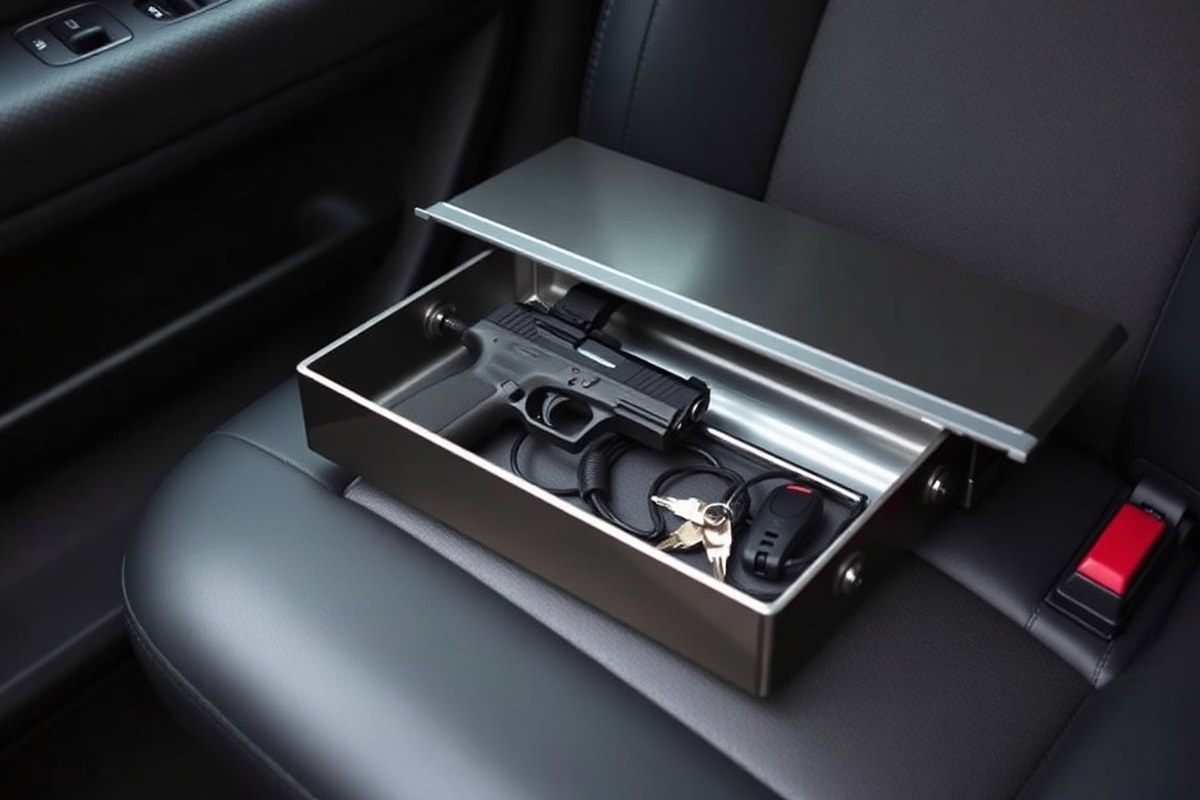
A car gun safe is a specially designed lockbox meant to store firearms securely inside a vehicle. Its main purpose is to prevent unauthorized access to the firearm, whether from theft or accidental handling. These safes offer a controlled environment that protects your gun from damage while ensuring it stays out of reach when you are not in the vehicle.
Typical car gun safes come in several common designs, including under-seat mounts, center console safes, cable lock attachments, and trunk-mounted units. Each type offers a different level of convenience and security based on your vehicle’s layout and your usage needs. For example, an under-seat mount keeps your firearm within immediate reach but out of plain sight, whereas a trunk-mounted safe may offer better overall concealment.
Car gun safes are usually made from strong materials such as 12-gauge or 14-gauge steel, which creates a strong, tamper-resistant body. Some models use 16-gauge steel for a balance of weight and durability. The construction often includes pre-drilled holes or steel security cables for firm mounting inside the vehicle. A common feature is a solid locking mechanism that can be a mechanical combination lock, a key lock, biometric scanner, or a keypad, depending on user preference and desired security level.
The operational basics of a car gun safe involve securely fastening the safe to the vehicle to prevent it from being removed easily. High-quality safes use mounting options like attachment to LATCH anchors, console integration using factory hardware, or strong cables rated for over 1,500 pounds of tensile strength. Once installed, you open the safe using the selected lock method, retrieve or store your firearm, and lock it back to maintain security. This process helps you balance accessibility with secure storage to deter theft and unsafe handling.
Costs for car gun safes vary significantly depending on features and build quality. Entry-level models priced around $50 to $90 provide basic theft deterrence and are suitable for minimal usage. More durable options with thicker steel and advanced locking mechanisms generally cost more but offer greater security and durability. For instance, a safe constructed from 12-gauge steel with LATCH anchor compatibility typically offers stronger protection against break-ins and can cost over $200.
Choosing the right safe often depends on your firearm size and how you want to access it. Larger safes accommodate full-sized handguns but may require more careful placement in your vehicle. Smaller safes are easier to conceal and mount but might only fit compact pistols. The trade-off between size, convenience, and security is key to finding a safe that works for daily use and complies with safety standards.
Why You Need a Car Gun Safe for Everyday Carry and Security
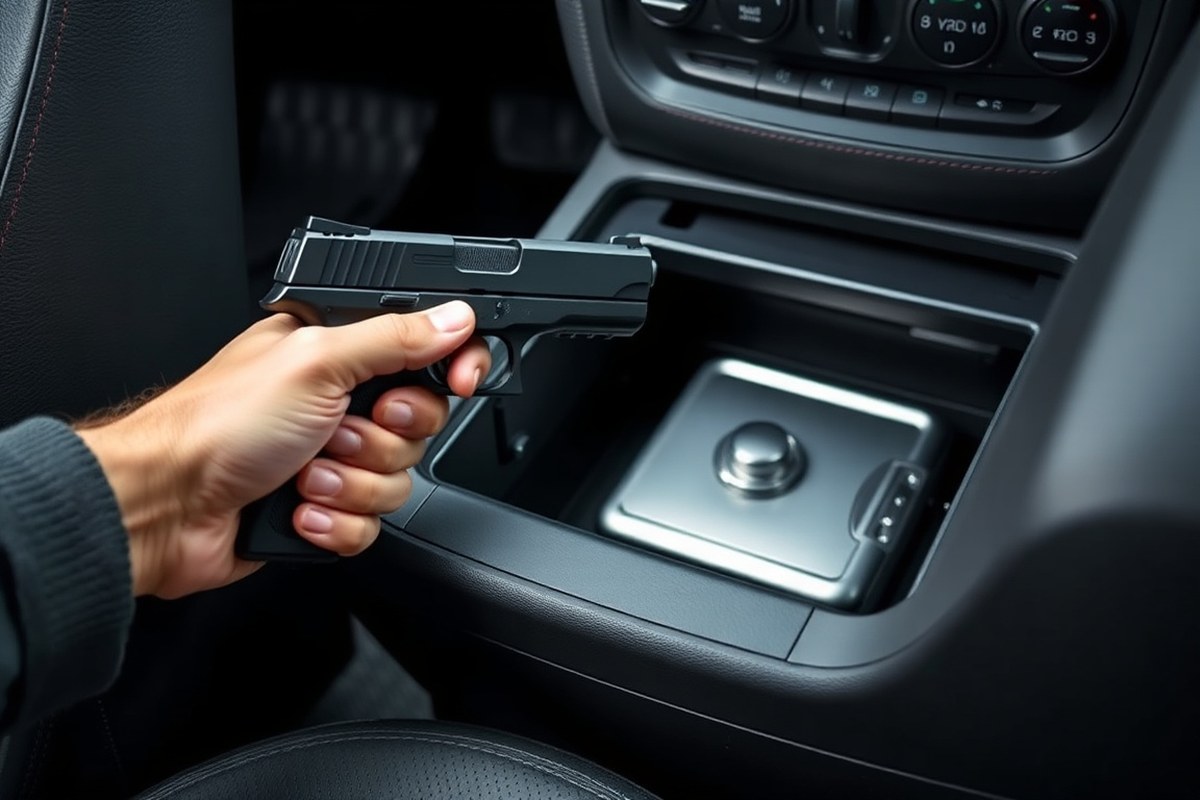
Securing a gun in a vehicle is essential for safety, theft prevention, and legal compliance. Firearms left unsecured in a car, glove box, or center console can be easily stolen or accessed by unauthorized individuals, including children or criminals. A car gun safe physically protects your firearm by encasing it in a steel or reinforced lock box that resists tampering and quick break-ins. This reduces the risk of theft because a potential thief cannot grab your gun in a brief smash-and-grab scenario, which often lasts only seconds.
On a practical level, a quality car gun safe should fit your firearm along with its holster and be securely mounted in your vehicle, ensuring it stays put in traffic or emergencies. Most safes fit popular everyday carry handguns like a Glock 17 (7.3 inches long) or Ruger LCR (.38 caliber, 6.5 inches long). Mounting options depend on your vehicle type but typically include bolting to the floor, seat rails, or center console. Using a secure mounting method further prevents the safe from being removed or stolen.
Legally, many states mandate secure storage of firearms when left unattended in vehicles. Using a gun safe helps you comply with these laws and can protect you from fines or criminal charges. Some states require specific features in your safe, like a certified locking mechanism or compliance with DOJ standards, such as California’s roster of approved firearm safety devices. Even where laws don’t require a gun safe, using one demonstrates responsible firearm ownership and can reduce liability if your gun is stolen or used unlawfully.
Car gun safes provide more than just theft protection; they also ensure safe transportation. Securing your firearm limits accidental exposure to passengers or children. A well-chosen safe offers quick access during emergencies through trustworthy locking mechanisms like combination dials or biometric scanners, balancing security and readiness.
The cost of a good car gun safe varies widely but typically ranges from $100 to $400 or more, depending on materials, size, and locking features. Installation can be a simple DIY project if the safe comes with mounting hardware and detailed instructions, but professional installation may be best if you want to ensure the safe is firmly secured and legally compliant.
Always double-check your state and local regulations before purchasing or installing a car gun safe to ensure full legal compliance and avoid penalties.
Types of Car Gun Safes and Their Mounting Options
Car gun safes come mainly in three types: center console safes, under-seat or trunk-mounted safes, and portable cable-locked safes. Each type has different mounting options that affect how securely the safe attaches to your vehicle and how quickly you can access your firearm. Choosing between permanently installed safes and portable ones depends on your need for concealment, speed of access, and whether you want to move the safe between vehicles.
Center Console Gun Safes
Center console gun safes fit inside the factory console of your vehicle or replace the existing console with a secure insert. They often come as custom-fit units designed for specific car models, such as the 3mirrors or JIKE safes fitted for various Ford trucks between 2015 and 2024. These safes provide quick access, locking mechanisms like 4-digit codes or biometric scanners, and blend discreetly into the vehicle’s interior.
Installation usually involves bolting the safe to the floor or seat rails beneath the console to prevent theft or shifting while driving. Since these safes fit tightly into the vehicle’s design, they preserve console functionality. The downside is the limited size, restricting the safe to smaller handguns or accessories, and the installation can be time-consuming and sometimes requires professional help for exact fitment.
Under-Seat and Trunk-Mounted Safes
Safes that mount under the seat or in the trunk provide a more hidden storage option but may cost more time to access. Under-seat safes often have a bracket or rail mount bolted to the floor and require flipping up the seat for access, which is less convenient than console safes. Trunk-mounted safes offer more room and stay out of sight but are better suited for longer-term storage rather than quick retrieval.
These safes can also be integrated with aftermarket mounting brackets but depend heavily on vehicle compatibility. Installation might take one to two hours and usually involves bolts, screws, and brackets to secure the safe firmly to prevent shifting. They generally accommodate larger firearms or multiple guns but reduce how fast you can get to your weapon in emergencies.
Portable Cable-Locked Safes
Portable safes, such as the Vaultek LifePod or Bulldog Cases Car Gun Safe, weigh around 3 to 5 pounds and include a steel cable to lock the case to a seat rail or other secure vehicle part. These safes allow you to move the safe between vehicles or take it inside your home easily. Portable safes often feature electronic locks or biometric access but trade off complete concealment for convenience.
Installation involves threading the cable through the safe’s built-in anchor point and securing it to a stable vehicle mounting point like the seat rail, usually completed in minutes without special tools. While these safes don’t blend into the vehicle’s interior as smooth as console safes, they lower the risk of theft because they can’t be easily removed without cutting the cable. However, the cable and mounting point are potential weak points if targeted by thieves.
| Approach | How it Attaches | Access Speed | Weak Point | Example |
|---|---|---|---|---|
| Bracket or Rail-Mounted | Bolted to seat rail or floor | Fast (keypad/fingerprint) | Electronic lock, separate mount | Vaultek Slider Series with Car Rail Mount |
| Console Insert | Installed inside factory console | Fast | Console fit specific | JIKE Center Console Gun Safe for Ford |
| Under-Seat Safe | Bracket bolts to floor under seat | Slow (seat flip for access) | Slower access, vehicle specificity | 3mirrors Center Console Safe Gun Safe Box |
| Portable Cable-Locked | Cable loops around seat rail | Moderate | Cable and mount vulnerable to cutting | Vaultek LifePod, Bulldog Cases Portable Safe |
Choosing where to mount your safe affects how quickly you can open it and how concealed it will be. Console safes provide the best mix of quick access and discreetness but require a precise fit. Under-seat and trunk safes offer more concealment and storage space but add delay to access time. Portable safes deliver flexibility at the cost of being more visible and potentially less secure if the cable is damaged. Match mounting choices to your vehicle’s interior layout and your priorities for speed versus concealment.
Choosing Size and Fit: Matching Your Firearm to a Safe
Start measuring your firearm by determining its overall length, height, and width to find a compatible car gun safe. Use a tape measure or ruler to record your gun’s dimensions from the muzzle to the back of the grip for length, the bottom to the top of the sights or hammer for height, and the widest part including the slide and grip for width. Note these measurements precisely because safes are sized closely to fit handguns securely.
Choose a safe with internal dimensions slightly larger than your firearm’s measurements to ensure it fits comfortably with some room to spare for quick access. Safes designed specifically for vehicles typically range from compact sizes around 7″ x 5″ x 2″ interior to larger options near 12″ x 7″ x 2″. These sizes are suitable for most handguns plus some small accessories like magazines or keys. Avoid any safe where your gun fits tightly or requires forcing it into place, as this risks damage and slow access.
Consider if you want to store additional items, such as magazines, a holster, or small valuables like a wallet or documents. Some car gun safes offer flat, cushioned interiors or pockets that accommodate these extras. Make sure the safe’s depth and width account for multiple items without crowding. Use this checklist when matching your firearm to a car gun safe:
- Measure handgun length, height, and width precisely.
- Compare to safe’s interior dimensions plus at least an extra inch in length and width.
- Check if additional storage space is needed for magazines or valuables.
- Ensure the safe’s mounting method fits your vehicle and access needs.
- Confirm the locking mechanism suits your speed and security preference.
Below is a comparison table featuring common car gun safes with their exterior sizes and notable attributes:
| Product | Exterior Size (L x W x H) | Weight (lbs) | Interior Dimensions (in) |
|---|---|---|---|
| SnapSafe Combination Lock Box | 9.5 x 6.5 x 1.75 | 3.5 | ~8.5 x 5.5 x 1.5 |
| Hornady Alpha Elite Lock Box | 10 x 7.5 x 2.25 (approx.) | 5.85 | 9.75 x 7.5 x 2.25 |
| Bulldog Cases Car Gun Safe | 7.5 x 5.5 x 2 | 3.6 | 7 x 5.25 x 2 |
Choosing the right size safe avoids fit problems and speeds your ability to secure or retrieve your handgun. Smaller safes, while more compact, might restrict what else you can store beyond the firearm. Larger safes can hold two magazines or other small items but weigh more and take up more vehicle space. Weigh your priorities for size, weight, portability, and extra storage before deciding.
How to Choose the Best Locking Mechanism for Car Gun Safes
Car gun safes come with several types of locking mechanisms, including biometric scanners, mechanical combination locks, and key locks. Each type offers different balances of speed, security, and convenience. Choosing the best lock depends on how quickly you need access, the security level required, and maintenance considerations like power sources and backup options.
Biometric Locks: Speed and Security
Biometric locks use fingerprint recognition to provide fast and secure access to your firearm. They offer one of the quickest ways to open a safe, often unlocking within 1 to 3 seconds. This speed benefits everyday carry users who need a firearm ready at a moment’s notice. Biometric systems often include backup key access to avoid lockouts in case of battery failure or sensor issues.
Security is generally high with biometric locks, but they can be vulnerable to dirt, moisture, and cold temperatures affecting sensor performance. High-quality biometric safes are made with heavy-duty steel and incorporate anti-tamper features. Prices typically range from about $150 to $300 or more depending on build quality and brand. A biometric system also requires batteries, often AA or rechargeable lithium-ion, which you must monitor and replace every few months to avoid lockout.
Mechanical Combination and Key Locks
Mechanical combination locks work without power and provide reliable security by requiring a precise sequence of dialed numbers. They avoid battery dependency but typically take longer to open than biometric options, especially under stress. Mechanical locks are less common but still favored in cases where electronic failures must be avoided. Their construction is usually steel or alloy steel, offering solid protection, though the level depends on the specific safe.
Key locks are simple and familiar, offering fast access if you keep the key handy. Many safes use sturdy keys with at least two backups included. The downside is the risk of losing keys or unauthorized access if someone else finds them. Key locks require no batteries, making them low-maintenance, but they may take longer to open compared to a biometric scan, especially if the key location is inconvenient. Typically, safes with key locks cost less, around $100 to $250 depending on the steel quality and lock brand.
Battery and Backup Power Tips
Electronic locks like biometric and keypad systems depend on batteries that must be replaced regularly. Expect to change batteries every 3 to 6 months under normal usage for AA or AAA batteries, or annually for lithium-ion rechargeable types. Batteries can die unexpectedly, so it’s critical to have backup access such as override keys or a mechanical lock option. Some models alert you with low battery indicators to prevent surprises.
Maintaining good battery health means avoiding extreme heat or cold inside the vehicle, as temperature swings can reduce battery life and sensor effectiveness. Keep spare batteries in your vehicle but away from direct sunlight or moisture. Check for corrosion on battery contacts regularly and clean them with a dry cloth if needed. In emergencies, mechanical override keys or combination entry can be life-saving if battery-powered systems fail.
Always test your backup key or alternative entry method before relying solely on electronic locks to prevent frustrating lockouts in critical situations.
Legal Considerations for Keeping a Gun Safe in Your Vehicle
Vehicle gun safes are generally legal to purchase and install, but laws about how you must store a firearm in your car vary widely by state. Some states require the firearm to be unloaded and locked in a secure container or safe while in a vehicle. Others may demand that the gun be stored separate from ammunition. Because these laws differ, you should check local regulations in both your home state and any states you plan to travel through to avoid legal issues.
Several states prohibit carrying a loaded gun in a vehicle unless you have a concealed carry permit or specific authorization. Even with a permit, rules about where the gun can be kept, such as within a lockbox or gun safe securely attached to the car, can apply. Choosing a car gun safe that mounts solidly and locks with a reliable mechanism helps you stay compliant by keeping the firearm secure and inaccessible to unauthorized users.
Storing other valuables besides firearms in the safe is often allowed, which adds security for items like cash or important documents. However, make sure your firearm is the primary item stored in the locked safe to meet the intent of most laws concerning secure firearm transport. When you exit your vehicle, always lock the gun safe regardless of state requirements. This prevents theft and unauthorized use, which can lead to serious legal consequences.
If your firearm is stolen from your vehicle, whether from a gun safe or otherwise, you generally must report the theft to local law enforcement immediately. Reporting protects you legally and helps prevent stolen guns from being used in crimes. Keep a record of the firearm’s make, model, and serial number ready, and file a police report as soon as possible. Follow up on any requirements your state imposes for reporting losses, as some states set specific time frames, often within 72 hours.
Traveling across state lines introduces another layer of complexity. Guns legal to carry in one state may be restricted in another. Before a trip, review firearm transport laws for each state on your route. Decide how you will store the gun, such as unloaded inside a locked gun safe mounted in your vehicle’s interior or trunk. Make sure the safe meets minimum standards required by all states you pass through, including tamper-resistant locks and secure attachments.
Vehicle gun safes provide peace of mind by preventing accidental access and protecting guns from theft. Investing $50 to several hundred dollars in a quality safe is a practical step that reduces legal risks and safeguards your firearm. Always mount the safe securely, use the manufacturer’s recommended lock type, and regularly test the lock function. Avoid placing the safe in visible or easy-to-pull locations, which could attract a thief. Proper legal compliance paired with vigilant use of a car gun safe lowers your risks and helps you responsibly own and transport a firearm in your vehicle.
Installation Steps for Securely Mounting Your Car Gun Safe
Mounting your car gun safe securely involves choosing the right method based on your vehicle and usage needs, then following clear installation steps with the proper tools. Typical options include attaching the safe inside the center console, mounting it under a seat, or securing a portable safe with a cable. Each method requires specific steps to ensure stability and quick access.
Installing a Center Console Safe
A center console safe fits snugly inside your vehicle’s existing console, providing a discreet and convenient storage space. This method generally does not require modifying the vehicle, relying on the safe’s design to secure it. It’s ideal if your vehicle’s console has enough dimensions to accommodate the safe. Use these steps to install your center console safe:
- Measure the console space to confirm safe dimensions fit.
- Remove any items and clean the console interior.
- Place the safe into the console, ensuring a snug fit without forcing.
- Use rubber pads or foam strips on console sides to minimize rattle and movement.
- If the safe includes mounting brackets, deploy them to secure it to the console edges.
- Verify the safe opens smoothly without interference.
- Replace console lid or cover, if applicable, to maintain concealment.
Tools needed often include a screwdriver for bracket installation and foam or rubber padding for stabilization. Avoid forcing the safe if it doesn’t fit comfortably; a loose safe risks damage and poor security.
Under-Seat Mounting Procedure
Mounting a gun safe under the seat keeps your firearm within easy reach while reducing visibility and theft risk. This method generally requires drilling or bolting the safe to the vehicle floor or seat frame for secure attachment. Steps to install an under-seat gun safe:
- Measure the under-seat space for fit and clearance, especially for seat movement.
- Position the safe in the desired location and mark drilling points through its mounting holes.
- Move the safe aside and drill pilot holes carefully avoiding wiring or fuel lines beneath the vehicle floor.
- Secure the safe using bolts, washers, and nuts supplied with the safe.
- Tighten the bolts firmly using a wrench or ratchet set.
- Test that the seat moves freely without obstruction.
- Check the safe’s lock carefully for proper function after installation.
Required tools include a drill with metal bits, a ratchet or wrench set, measuring tape, and a marker. Bolting under the seat provides better theft resistance but can make the safe less portable and harder to install in some car models.
Securing a Portable Cable Lock Safe
Portable safes with cable locks offer flexibility and quick removal but depend on a nearby fixed anchor point in the vehicle. Correct cable routing and tight locking ensure the safe cannot be easily removed by thieves. Follow these steps to secure a cable lock safe in your car:
- Identify a sturdy anchor point like a seat frame bolt or factory hook inside the vehicle.
- Thread the cable through the anchor point, then through the safe’s designated cable loop.
- Pull the cable tight to minimize slack and potential use points.
- Lock the cable mechanism using the safe’s key or combination lock.
- Double-check the cable’s security by attempting gentle tugs and inspecting lock engagement.
- Store the key in a secure pocket or on your person, never inside the vehicle.
Tools required may include pliers to adjust cable tension and flashlights to inspect anchor points. Cable-mounted safes typically cost between $50 and $200, offering a balance of affordability and security, especially for short-term vehicle stops.
Features and Mistakes to Avoid When Buying a Vehicle Gun Safe
Look for a car gun safe that balances strong security features with quick access, especially during emergencies. Essential attributes include a reliable locking mechanism like a mechanical dial or electronic keypad, which provide firm protection without delays. The safe should be made from sturdy steel with at least a 10-gauge thickness to resist tampering and forced entry. Size matters: pick one that snugly fits your firearm without rattling but leaves enough room for quick retrieval. Other must-haves include mounting hardware adaptable to your vehicle and a concealed installation spot to keep your safe out of plain sight.
- Strong steel construction (minimum 10-gauge thickness)
- Secure yet speedy locking option (keypad or mechanical dial)
- Size tailored for your firearm’s dimensions
- Mounting kit suitable for your specific car model
- Concealable placement to avoid attracting thieves
- Weather resistance for protection against moisture and temperature changes
- Internal padding to prevent firearm damage
Common mistakes include buying a safe that’s too large or too small, which either wastes space or makes quick access difficult. Another error is installing without appropriate mounting hardware or placing the safe where it will interfere with driving controls. Avoid leaving the safe unsecured by bolt-down methods that do not anchor solidly to the vehicle frame. Using generic, ill-fitting mounting brackets risks damage to your car’s interior or the safe becoming loose over time.
To prevent vehicle damage during installation, use a drill with a depth stopper to avoid drilling through important wiring or the car floor. Always disconnect the vehicle battery before drilling near electrical components. Follow the manufacturer’s installation guide exactly, and opt for mounting points recommended by the safe maker or experienced installers. If unsure, have a professional complete the job to prevent costly repairs.
Never force mounting hardware into place or over-tighten bolts, as this can crack plastic interior parts or warp the safe frame.
Step-by-Step Action Plan for Securing Your Gun in Your Vehicle
Follow these steps to select, purchase, and install a car gun safe that fits your needs and your vehicle properly.
- Before you shop: Measure the firearm you plan to store and the available space in your vehicle to ensure proper fit. Confirm the size matches manufacturer specs for potential safes.
- Day 1: Research locking mechanisms and choose one that balances quick access with security according to your daily carry habits. Check for reviews on reliability.
- Day 2: Review local and state laws regarding firearm storage in vehicles to avoid legal risks. Confirm compliance with your chosen safe’s locking style and mounting method.
- Week 1: Purchase a car gun safe with mounting options compatible with your vehicle’s make and model. Verify included hardware and tools.
- Week 2: Install your safe using recommended mounting points and hardware. Test mounting stability and locking function before leaving the vehicle.
- Week 3: Practice quickly and safely accessing your firearm from the safe. Confirm the locking mechanism works smoothly under realistic conditions.
- Ongoing: Periodically inspect the safe’s mounting integrity and lock function every few months. Address any wear or issues immediately to maintain security.
Frequently Asked Questions
What Is the Average Weight of a Heavy-Duty Car Gun Safe?
A heavy-duty car gun safe typically weighs around 6.5 pounds, like the PP1K model, offering solid security without too much bulk. This weight balances durability with ease of daily use in your vehicle.
Are Biometric Locks Reliable for Car Gun Safes?
Biometric locks offer quick access and decent security but can fail if dirty or damaged. Keep sensors clean and consider a backup key for uninterrupted access.
How Do TSA-compliant Gun Safes Benefit Travelers?
TSA-compliant gun safes, such as the Vaultek LifePod, allow safe transport on flights while meeting federal travel requirements. They feature easy-to-use locks and secure attachment for travel convenience.
Can Environmental Factors Affect My Car Gun Safe?
Extreme temperatures and humidity can impact a car gun safe and the firearm inside. Choose safes made for automotive use that handle temperature swings and protect from moisture.
What Is the Best Mounting Method to Prevent Theft of a Car Gun Safe?
The strongest mounting methods anchor the safe to LATCH bars, seat frames, or use heavy-duty cables. These methods keep the safe secured to your vehicle, deterring quick theft attempts.
Are Smaller Pistol Safes Secure Enough for Daily Carry in a Car?
Smaller safes can be secure if made from steel and fitted with quality locks. Pick one with pre-drilled mounting holes and a snug fit to your firearm to reduce movement and theft risk.
Before You Go
Your vehicle’s gun safe protects your firearm and prevents unauthorized access when you’re away from the car. Taking concrete steps to choose the right safe and install it securely gives you confidence in your everyday carry security. Start measuring your firearm and vehicle space today to get your safe fitted right the first time.