How Big Is a Gun Safe: Complete Guide to Sizes, Capacity & Choosing Right
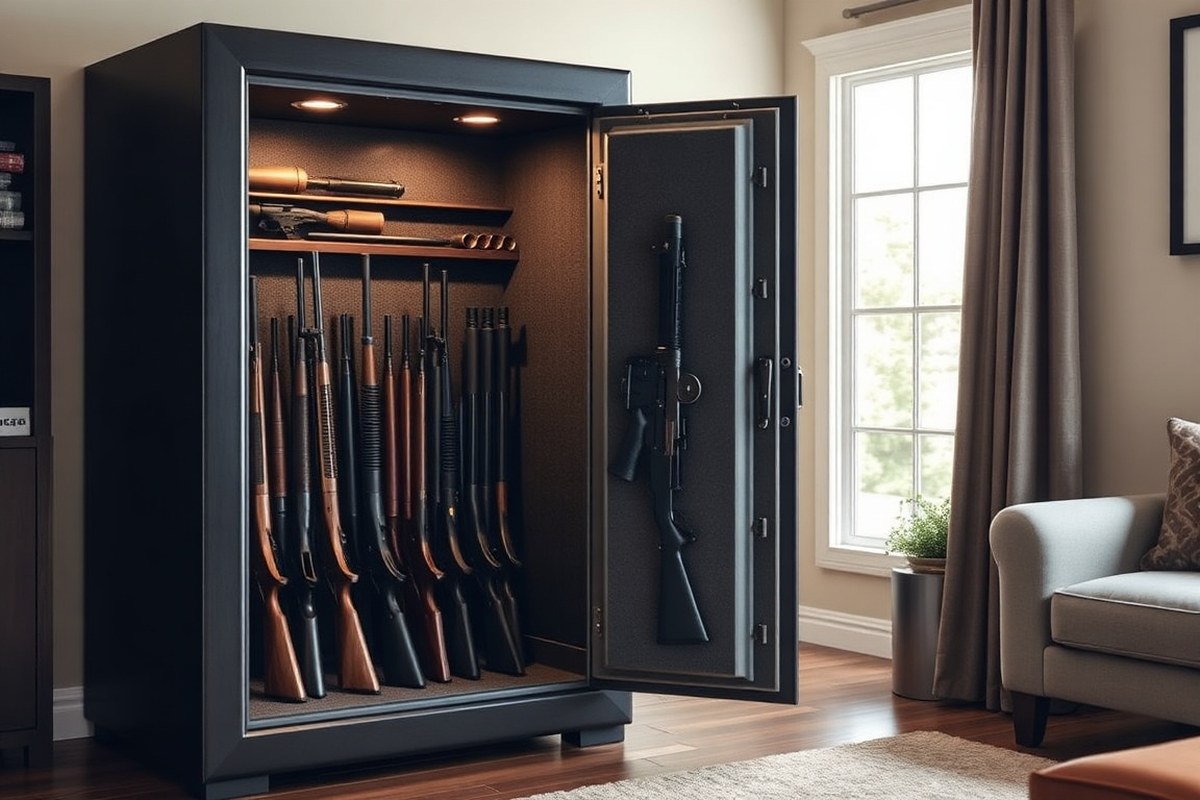
A typical gun safe ranges from compact models about 4.5 feet tall and 14 to 16 inches wide to large vault-like safes measuring up to 6 feet tall with multiple feet in width and depth. Sizes depend on the number and type of firearms and additional gear you want to store securely. How big is a gun safe primarily hinges on your collection’s length, quantity, and other valuables.
This information suits gun owners deciding on a secure storage option that fits their home and security needs. You’ll learn how to measure your firearms, understand safe interior design’s impact on usable space, and weigh factors beyond size like fire ratings and security features.
Key Takeaways
- Measure each firearm’s length, height, and width to estimate the total interior size you need in a safe.
- Interior layout like shelving, racks, and door storage significantly affects how many guns fit inside your safe.
- Choose a fire rating of at least 60 minutes; 90 to 120 minutes offers better protection for your firearms and documents.
- Weight alone doesn’t guarantee security; modern tools can breach many heavy safes in under 15 minutes.
- Large safes with two doors provide 100% accessibility, making it easier to organize and access firearms.
- A safe rated for 30 guns may not efficiently hold 11 long rifles due to internal design constraints.
How Big Is a Gun Safe? Typical Dimensions and Capacities
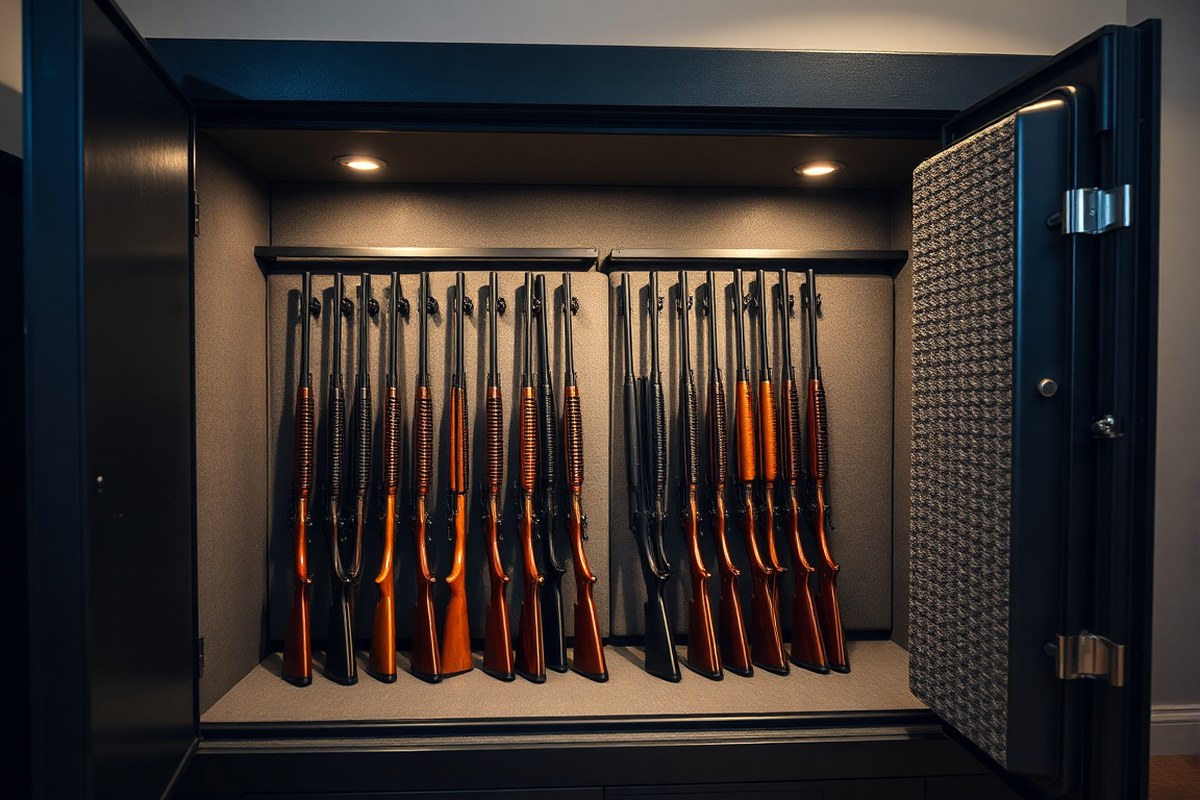
Gun safes vary widely in size, depending on the number of firearms you need to store and the space available in your home. Exterior dimensions usually start around 4.5 feet tall and go up to 7 feet or more for very large models. Depths range from about 16 inches in smaller safes to 28 inches or more in large ones. Width can start as narrow as 14 inches for compact handgun safes and expand to 60 inches or wider for widebody models. These external sizes include the safe’s walls, door, hinges, and locks, which means the usable interior space is smaller.
The interior volume and layout determine your actual gun capacity. Manufacturers often advertise capacity based on the number of gun slots, which might not reflect the real number of firearms you can store efficiently. Long guns require vertical space; most gun safes are at least 55 inches tall inside to accommodate rifles and shotguns standing upright.
Small gun safes are typically around 60 inches tall, 22 inches wide, and 22.5 inches deep, fitting roughly 6 to 12 long guns along with handguns and accessories. Medium safes often start near 72 inches tall and 30 to 40 inches wide, holding 20 to 40 guns depending on interior design. Large safes can measure 7 feet tall, 60 inches wide, and 28 inches deep or more, with capacities exceeding 70 long guns plus pistols and other valuables.
| Safe Size | Typical Exterior Dimensions (HxWxD) | Approximate Gun Capacity | Description |
|---|---|---|---|
| Small | 60″ x 22″ x 22.5″ | 6-12 long guns | Compact safes for limited collections and small spaces |
| Medium | 72″ x 30-40″ x 22-24″ | 20-40 guns | Common size for most home collectors, balances capacity and footprint |
| Large | 84″ x 60″ x 28″ | 70+ guns, 100+ cubic feet interior | For serious collectors or multi-family storage needs |
| Extra Large / Walk-In | 84″ x 84″ x 48″ (or custom) | 100-150+ guns | Walk-in safes, full-room installations with custom storage systems |
Knowing the difference between exterior and interior measurements matters. Exterior size affects where the safe fits in your home and the installation process, including weight and door swing clearance. Interior size governs how many guns and gear you can store and how accessible they are. Walls and doors often add several inches of thickness, cutting into interior space. For example, a safe with a 60-inch exterior height might have an internal height closer to 55 inches, just enough for most rifles. Accurate measurements and realistic capacity expectations prevent overcrowding, which can damage firearms or lead to inefficient storage.
How to Measure Your Guns and Gear to Estimate Safe Size

Measuring your firearms and gear accurately before buying a gun safe helps ensure you get the right size without wasting space or money. You need exact measurements of rifles with scopes, handguns, ammo boxes, and accessories. This way, you can estimate total space, including room for future additions to your collection.
Measuring Rifles with Scopes
Rifles with scopes take up more space than rifles alone because scopes increase length and width. Measure rifles from the buttstock to the front tip of the barrel, including the scope’s longest point. The height matters too, the scope’s tallest points add extra clearance. Usually, scoped rifles need at least 48 to 52 inches of vertical space depending on barrel length.
Remember, some safes place rifles in vertical slots that form an L shape, so the scope may block adjacent spaces. Adding 2 to 3 inches to rifle width for the scope ensures they won’t be packed too tightly, reducing damage risk.
Space for Handguns and Ammo
Handguns typically require less storage space, but you should measure each from muzzle to grip, usually 6 to 10 inches long, and about 1 to 2 inches wide. Door panel organizers or padded trays help store them efficiently. Ammo boxes vary, but a standard 50-round box of 9mm ammo measures about 8″ long by 3″ wide by 2.5″ high. Add space for multiple boxes plus magazines and accessories like cleaning kits or range gear.
Plan at least 1 cubic foot per 20 handguns and 2 to 3 cubic feet for a small ammo stockpile. This room helps avoid overcrowding and preserves gun and ammo condition.
Checklist for Measuring Guns and Gear
Accurate measurements help determine total storage space required. Use a soft tape measure and record dimensions in inches to avoid confusion. Write down length, width, height, and add extra room for movement and future guns. Follow these steps to measure your collection:
- Measure each rifle: Include scope length and height. Note overall length and the widest section.
- Measure each handgun: Record length, width, and height individually.
- Measure ammo boxes and accessories: Note dimensions of standard boxes and any larger items.
- Estimate future additions: Add 15% to 30% extra space for growth over 5 years.
- Calculate total volume: Multiply length × width × height for each category, then sum totals.
- Add clearance space: Include 1 to 2 inches per firearm space for handling and padding.
- Compare with safe interior dimensions: Ensure calculated space fits comfortably inside the gun safe.
Always allow extra room for clearance and future additions to prevent damage when storing and removing firearms.
Adjusting for Different Gun Types and Accessories
Shotguns often have longer barrels than rifles and sometimes extended magazine tubes, which can require additional safe depth. If you own a mix of rifles, shotguns, and scoped guns, measure the longest and tallest model carefully, then check how your safe’s interior handles maximum dimensions.
Accessories like pistols on door racks, gun cleaning kits, and valuables also need separate space. Manufacturers often include door organizers to help, but adding an extra cubic foot or two inside the main body helps store boxes and small gear securely.
What Goes Wrong Without Proper Measuring
Underestimating the length or ignoring the added space a scope takes can cause you to buy a safe that is too shallow or narrow. You may end up packing rifles tightly, increasing the risk of scratching or damage. Overcrowding ammo and handguns leads to difficulty accessing guns and decreases safe usability.
A common mistake is relying on “gun count” capacity from stores without measuring your specific gun sizes and gear. For example, a “31-gun” safe can feel cramped if your rifles are all scoped or include long shotguns. Always measure your collection personally for best results.
How Interior Design Affects Usable Storage Space in a Gun Safe
Interior features like rifle racks, door organizers, adjustable shelves, and liner thickness directly affect how efficiently you can store guns and other valuables in a safe. These components govern how much usable space remains after accounting for fireproofing and security hardware. Tailoring these elements can help you fit more firearms and belongings without oversizing the safe.
Rifle Racks and Cradle Types
Rifle racks determine how neatly and securely long guns fit inside a safe. U-shaped barrel racks that cradle rifles by the barrels are common and help keep guns upright and organized. Notched or padded racks reduce movement and scratches but consume some interior width. For collectors with a growing number of scoped rifles, safe height should be at least 55 to 60 inches to stand firearms upright without tilting. Keep in mind, some racks are fixed in place, but adjustable or removable racks allow more flexibility if you want to store more or fewer long guns at once. Removing auxiliary shelves in safes with multi-purpose interiors can increase long gun capacity but sacrifices space for other valuables.
Door Organizer Options and Capacity
Door panels offer valuable storage space often overlooked. Many gun safes include door organizers with pistol sleeves, small shelves, and accessory hooks that keep handguns, ammo boxes, and cleaning kits accessible without cluttering the main compartment. These pockets and slots use vertical space efficiently, often allowing a dozen or more pistols to be stored upright without additional rack space. Custom door organizers, like those on the Safe Guard GR-30, include molded slots and even LED lighting, improving visibility and quick access. The door’s thickness and bolt designs can reduce interior width slightly but having organized storage here minimizes the need to widen the entire safe.
Impact of Fireproof Liners and Padding
Fireproof linings and interior padding protect firearms from heat damage but reduce usable storage volume. A fireproof safe’s walls may be 1.5 to 3 inches thick due to composite layers and drywall, which can cut interior dimensions by up to 6 inches on each side in smaller safes. Inside, suede lining or leather trim on racks and shelves cushions firearms but adds to material thickness. These soft materials prevent scratching but reduce the fit tolerance, meaning rifles and pistols fit tighter. Fireproof barriers and padding also add weight, which can complicate installation or relocation. Since these features are critical for protecting your collection from fire, balancing wall thickness and lining materials is essential when choosing a safe that fits your storage needs.
Adjustable Shelving and Accessory Storage
Adjustable shelving systems let you customize storage for different-sized valuables alongside your firearms. Shelves placed in the upper part of the safe help store ammo boxes, documents, or accessories, making the most of the available vertical space. Removing or reconfiguring shelves can free room for additional guns but may reduce organization for smaller items. Some safes include auxiliary shelves with suede or felt lining that protect fragile gear from shifting during door openings. Investing in modular interior components usually adds $50 to $200 depending on the brand and complexity but pays off by maximizing your safe’s capacity and functionality. LED light bars integrated near shelves improve visibility inside the safe without consuming space, helping you quickly find what you need even in low light.
Factors Beyond Size: Weight, Fire Rating, and Security Features
Higher fire ratings usually increase gun safe size because of thicker fireproof materials like concrete composites and steel layers needed to withstand extreme temperatures. For example, safes with a 90-minute fire rating often feature 1/4-inch to 1/2-inch thick steel bodies and additional fire-resistant insulation. This added material increases both the safe’s external dimensions and internal volume displacement. Because fireproofing adds bulk and weight, you’ll find safes with longer fire ratings weigh significantly more. A 90-minute fire-rated safe might weigh over 1,000 pounds, compared to lighter models around 600 pounds with minimal fire protection.
Steel thickness ties directly to safe weight and size. Thicker steel, such as 11-gauge (about 0.12 inches), improves burglary resistance but also adds hundreds of pounds. For instance, the Big Daddy series uses 11-gauge steel combined with fireproofing to deliver strong protection, tipping scales above 1,300 lbs in some models. Thinner steel bodies can reduce weight but usually come with lower security ratings and less fire protection. Locking bolt count also affects weight; more bolts, such as 14 to 18 in premium safes, increase door thickness and locking mechanism complexity, boosting safe weight and often model size.
The floor your safe will rest on must support its full weight without risking collapse or damage. Concrete floors in basements or garages typically support heavy safes well, but standard wood flooring or upper-level floors may require reinforcement. To verify floor strength, check local building codes or consult a structural engineer, especially for safes heavier than 1,000 pounds. Reinforcements might cost a few hundred dollars but prevent costly floor damage or unsafe installations. Wall mounting or anchoring options can reduce movement risk but do not replace proper floor support.
- Choose a fire rating based on your risk tolerance: 60 minutes minimum, 90 minutes or more preferred
- Match steel thickness to desired security level; 11-gauge steel offers high protection at higher weight
- Count locking bolts for added burglary resistance, typically 14 to 18 bolts in premium safes
- Confirm floor load capacity exceeds safe weight including content, aiming for 200 lbs/sq ft or more
- Consider reinforcing wood floors for safes heavier than 800 to 1,000 pounds
- Plan installation space with extra room for safe door swing and access to locking mechanisms
Planning safe placement includes dimensions but must also account for weight distribution and structural support to avoid costly problems. Fire ratings that exceed 90 minutes often require thick step doors and extensive fireproof insulation. These safes typically range from 1,000 to 1,500 pounds or more. The tradeoff is increased size and cost but improve protection in case of fire or burglary. If your floor can’t handle heavy safes, look for lighter models with moderate fire and security ratings or strengthen your installation area before purchase.
How to Choose the Right Gun Safe Size for Your Collection
Choosing the right gun safe size depends on the number and types of firearms you currently own and how you anticipate your collection growing. A reliable rule of thumb is selecting a safe about 30% larger than your immediate needs to accommodate new purchases and accessories. For example, if your guns take up about 100 cubic feet of space, look for a safe with around 130 cubic feet of interior volume. This buffer prevents overcrowding, which can damage firearms and accessories over time.
Consider the types of firearms you have. Rifles and shotguns with scopes or mounted accessories require more space than pistols due to their length and additional attachments. Measure each firearm with all attachments in place to estimate accurate dimensions. Adding racks, shelves, or compartments for handguns, magazines, cleaning kits, and ammunition further influences the size needed. Ignoring these accessories often leads to a tight fit and inefficient storage.
Room size and layout also impact your choice. A large gun safe may offer peace of mind but requires enough floor space and structural support. Weigh the safe’s weight, some can exceed 1,000 pounds, and ensure the floor and entry can handle it without compromising safety or causing damage. If space is limited, prioritize interior organization features over sheer size. Some safes use vertical space more efficiently, helping store more without expanding the footprint.
Buying a bigger safe than currently necessary is a practical investment if you plan to grow your collection or store valuable non-firearm items like documents or jewelry. However, an oversized safe in a small room may make access cumbersome and reduce usable living space. Matching safe size to both your gun collection’s volume and your storage environment maximizes security and convenience.
Follow this decision checklist: first, count your firearms and measure their dimensions fully equipped; second, add about 30% more space for growth and accessories; third, check the available room size for installation footprint and door swing clearance; finally, select a safe with interior configurations fitting your storage goals. This method helps avoid buying too small, which forces upgrades later, or too large, causing unnecessary expense and space issues.
Always verify the safe’s installation site can support its weight and dimensions before purchase to prevent costly reinstallation or damage.
Popular Gun Safe Brands and How Their Sizes Compare
Comparing popular gun safe brands helps you choose the right safe by showing differences in size, capacity, weight, and fire ratings. Major brands like Liberty, Browning, Rhino, and Sportsman offer models that vary from narrow, space-saving designs to massive double-wide safes. The capacity numbers indicate how many long guns or handguns you can fit, but interior design and locking mechanisms can affect the true usable space.
Fire ratings should factor into your decision, although it’s important to know most residential gun safes do not meet the UL standard fire ratings required for full fire protection. Many brands advertise fire resistance, but actual tested ratings are often lacking. Weight ranges can alert you to security and quality, with heavier safes offering better protection but requiring stronger floor support and more planning during installation.
| Brand | Typical Dimensions (H×W×D, inches) | Capacity (long guns) | Weight (lbs) | Fire Rating |
|---|---|---|---|---|
| Liberty | 55×28×20 to 72×60×30 | 14 to 60+ | 500 to 1,500+ | No UL certification; advertised 30-60 minutes |
| Browning | 60×28×28 to 72×48×32 | 18 to 50 | 600 to 1,400 | Reported 30-45 minutes; not UL tested |
| Rhino | 50×30×30 to 72×66×28 | 18 to 65 | 800 to 1,600 | Non-UL, fire ratings are manufacturer estimates |
| Sportsman’s Double-Wide | 72×72×30 to 84×72×34 | 60+ | 1,800 to 2,500+ | No UL certification; thick steel walls |
Rhino’s construction minimizes capacity loss caused by bulky locking bolts, offering more usable interior space relative to its external size. This can be helpful if you want a high capacity without the largest footprint. In contrast, double-wide safes from Sportsman’s provide the largest capacities, suited for very large collections or business use, but they are heavy and expensive, sometimes costing over $10,000. Narrower safes by Liberty or Browning can be more practical for home use with limited space, though capacity and fire protections may be more modest.
Finding the best fit means balancing size, security, fire resistance, and budget against your collection’s size and your installation area. Ignoring fire ratings or buying the largest safe without measuring space and planning for weight can lead to costly mistakes. Careful comparison using specs like the table above is a smart step before purchasing.
How to Plan Installation Space and Handle Large Gun Safes
Planning space for a gun safe installation involves allowing enough clearance for the door to swing fully and ensuring easy access to the interior. Moving a safe depends on its weight, with lighter models manageable by one or two people and heavier units requiring professional help or equipment. Floor strength matters for safes over 1,000 pounds, as reinforcement and proper anchoring are necessary to prevent damage.
Required Clearance for Door Swing and Access
Gun safe doors typically need at least 24 to 30 inches of clearance to open fully, though this varies with the door type and locking mechanism. Because most safes swing outward, plan for this space plus additional room for you to stand and organize your firearms without obstruction. Leave extra clearance in front and on the hinge side to avoid damaging walls or nearby furniture during use.
For tall, multi-door safes, each door section often requires separate clearance zones, sometimes requiring a wider space than the safe’s footprint alone. Also consider clearance for emergency access if multiple people may need to open the door quickly in tight spaces. This planning prevents restricted access, damage, or frustrating use.
Safe Weight Categories and Moving Help Needed
Gun safes generally fall into three weight categories affecting how to move and install them:
- Lightweight safes (up to 200 lbs): Usually manageable by one person with a hand truck or dolly on flat surfaces.
- Medium-weight safes (200 to 600 lbs): Require at least two strong people or specialized equipment like a stair-climbing dolly to navigate stairs or uneven floors.
- Heavy safes (over 600 lbs): Often need professional moving services with equipment like hoists or forklifts, especially for multi-story homes.
Smaller safes can sometimes be moved by one person, but stairs and doorways complicate moving. Use furniture sliders when moving across finished floors to avoid damage. Larger safes that weigh 1,200 pounds or more should not be moved without professional help, due to risk of injury and property damage.
Considerations for Floor Strength and Anchoring
Most residential floors can support safes up to about 1,000 pounds without reinforcement. Over that, you should assess if the floor structure can handle the load, especially on upper floors. Consulting a structural engineer or contractor helps determine if reinforcement with joist supports or added plywood layers is needed.
Anchoring the safe to the floor or wall prevents tipping hazards and theft. Use heavy-duty anchor bolts matched to your floor type, concrete, wood, or tile. Follow manufacturer guidelines for anchor size, spacing, and installation torque to ensure secure mounting. Proper anchoring protects your investment and improve safety.
Tips for Positioning Inside the Room
Place your safe near an exterior wall if anchoring is an option, as this typically offers more solid flooring and easier bolt installation. Avoid corners where door swing space is limited and where it’s harder to access all sides of the safe for maintenance.
Leave at least 36 inches clear in front of the safe for comfortable movement and loading. Position the safe away from heat sources, humidity, or vents that can affect your guns and electronics inside. For basement or garage installations, ensure the floor surface is dry and level.
Mark the installation area with tape before moving the safe in to verify door swing space and clearances for installation tools. This prevents last-minute adjustments that could damage flooring or walls. Follow these steps before moving in your gun safe:
- Measure the safe and door swing width to determine minimum clearance space.
- Assess your floor load capacity or consult a professional for reinforcement.
- Select the correct moving method based on the safe’s weight category.
- Clear and protect the route from entry point to installation spot with rugs or sliders.
- Secure anchoring points on the floor or walls using proper bolts and tools.
- Position the safe ensuring full door swing and minimum 36-inch front clearance.
- Confirm the safe is level and stable before loading firearms and valuables.
Common Mistakes Buyers Make Choosing Gun Safe Size
Underestimating the capacity you need is one of the biggest mistakes gun safe buyers make. Many start with the guns they have now and don’t plan for future additions or accessories like scopes, magazines, or cleaning kits. A safe that fits your collection today might feel cramped next year. To avoid this, measure each gun and accessory, then add at least 20% more space to allow for growth.
Another common error comes from confusing exterior dimensions with interior space. Some buyers assume the listed size means all usable storage, but thick walls, insulation, and door mechanisms reduce that. For example, a safe 60 inches tall outside might only have 55 inches of usable interior height. Check detailed specs or ask the retailer for cabinet and usable dimensions. A slight difference can mean fewer guns fit or limited vertical space for long rifles.
Door access is often overlooked. Organizers mounted on the inside of the door can eat into interior width, reducing space for larger firearms or gear. Padding and lining, useful for protecting finishes, also take up room. Avoid surprises by confirming if accessories like door racks are included and subtracting their footprint from your space calculations.
Some buyers focus too much on price or advertised gun count. A cheap safe that claims to hold 20 firearms might lack depth or well-designed shelving, causing you to jam guns too tightly or remove protective padding. Safes with better interior design, though pricier, might store the same number more comfortably and safely.
- Do a full inventory of guns and gear, include future purchases in size estimates.
- Compare interior dimensions, not just listed exterior size.
- Check for door-mounted storage and interior padding that reduce usable space.
- Don’t rely solely on the advertised gun capacity number; consider interior layout.
- Set a budget but be willing to pay more for a well-designed interior over a higher gun count.
Confirm detailed interior measurements and features before buying to prevent a safe that quickly feels too small.
Correcting these mistakes means starting with measurement and planning tools. Use a tape measure or spreadsheet to list every gun and accessory, then add 20%-30% extra for growth or bulky items. Ask for or find online the actual interior safe length, width, and height, and subtract space taken by racks or padding.
A well-planned safe size fits your collection comfortably today and keeps your guns secure without forcing you to remove protective linings or remove valuable door organizers. Investing time in thorough sizing checks and realistic growth assumptions helps avoid costly replacements or awkward compromises after purchase.
Step-by-Step Action Plan for Choosing the Right Gun Safe Size
Use this plan to find the perfect gun safe size that fits your firearms, gear, and space without overbuying or underpacking.
- Before you buy: Measure your longest rifles and pistols, plus any accessories or ammo boxes you want stored. Confirm measurements by laying guns flat and including cases or scopes if you keep them attached.
- Day 1: Sketch the interior layout you’ll need, factoring tall vertical storage for rifles and adjustable shelves for gear. Ensure your planned design fits within typical safe dimensions.
- Day 2: Research gun safe models with your size requirements. Note fire ratings, weight, and security features that match your protection needs and physical installation limits.
- Day 3: Check your installation space width, depth, and door swing clearance. Confirm you can move a heavy safe inside or through doors, hallways, or stairs if necessary.
- Day 4: Compare interior usable space vs. External dimensions to pick a safe that maximizes storage without wasted gaps or oversized bulk.
- Day 5: Order your safe or schedule an in-store visit to see models in person. Bring your measurements and list of must-have features.
- After delivery: Check your safe’s interior layout against your plan before loading guns. Adjust shelving or racks to ensure secure and organized storage.
- One week later: Review your storage setup after use and adjust if you added new gear or firearms. Plan for future upgrades by measuring space left inside.
Frequently Asked Questions
How Big Is a Gun Safe Typically?
Gun safes vary, but a common large safe measures about 72” wide by 60” tall and 28, 30” deep, holding 80 to 100 long guns. The interior layout affects how much you can store effectively.
Will My Floor Hold a 1000 Lb Safe?
Most residential floors support around 40, 50 pounds per square foot, so a 1000 lb safe needs careful placement and possibly reinforcement. Consult a structural engineer for heavy safes to avoid damage.
How Many People Does It Take to Move a 600 Lb Safe?
Moving a 600 lb safe typically requires at least three strong adults and proper equipment like a dolly or hand truck to avoid injury and protect floors.
What Is Considered a Large Gun Safe?
A large safe usually holds 70 or more long guns and includes space for pistols and valuables. Sizes often exceed 60” in height and width with secure locking mechanisms.
What’s the Biggest Gun Safe You Can Buy?
The biggest available commercial gun safes can hold up to 600 guns, with dimensions over 7 feet tall by 6 feet wide. These are usually custom or specialty models.
How Deep Are Most Gun Safes?
Most gun safes are between 16 and 30 inches deep, balancing interior storage and manageable overall size for room placement.
Final Thoughts
Choosing the right gun safe size starts with knowing your gear’s exact dimensions and the space where the safe will live. Balancing interior layout and external footprint ensures efficient, secure storage without wasting money on unnecessary bulk. Take measurements today and compare a few well-rated safes to find one that fits your needs, then check installation space carefully before ordering.