How to Buy a Gun Safe: A Complete Guide with Expert Tips and Comparisons
How to buy a gun safe starts with identifying the level of security and protection you need based on your firearms and home environment. Choose a safe that balances size, fire resistance, weight, and locking features to deter theft and protect your guns from damage. First, decide if you need a bolt-down safe, especially if it weighs 300 pounds or less, to prevent easy removal.
Key Takeaways
- Select gun safes weighing 500 pounds or more to discourage theft without needing extra anchoring.
- Use bolt-down installations for safes under 300 pounds to secure them against being carried away.
- A UL 350/One Hour or Two Hour fire rating helps protect firearms from direct heat and fire damage.
- Choose steel gauges of 12 or thicker to improve the safe’s resistance to break-ins and physical attacks.
- Consider interior humidity control with dehumidifiers to keep guns free from rust and moisture damage.
- Pick locking mechanisms based on your speed of access and security preference, like mechanical or digital locks.
How to Start Choosing the Right Gun Safe
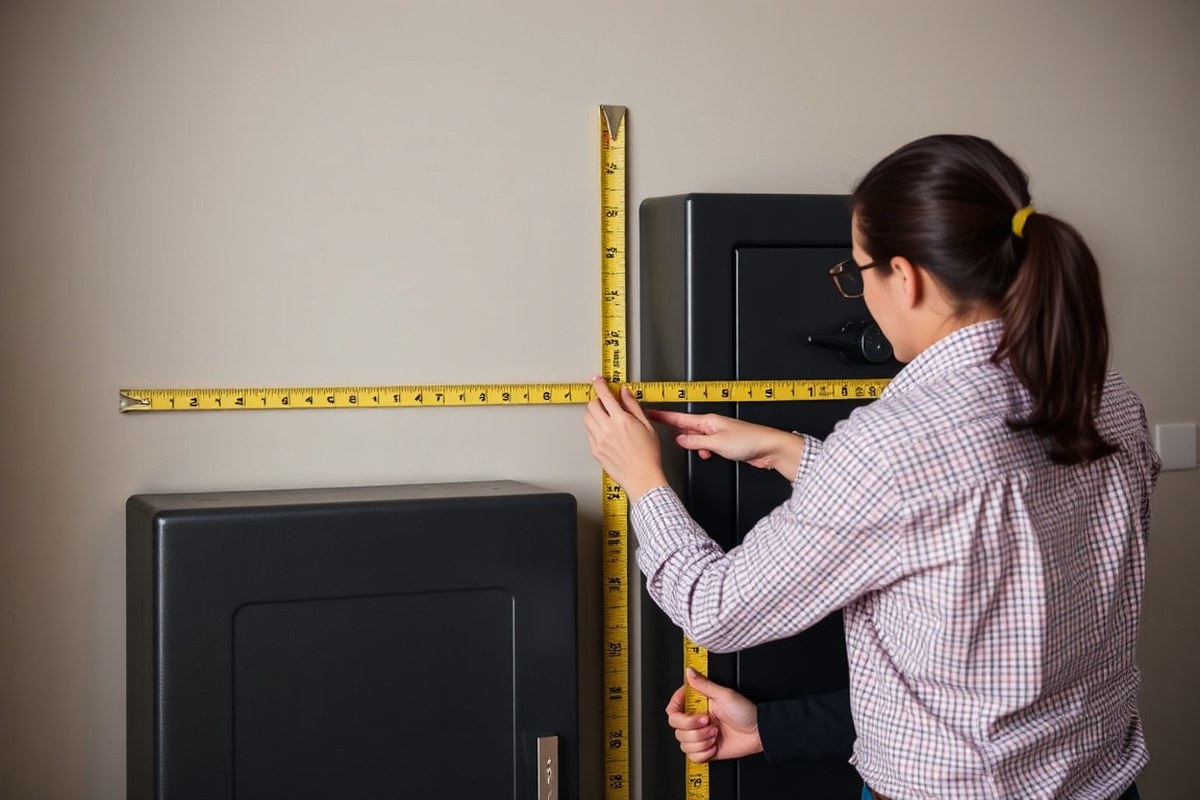
Choosing the right gun safe starts with a clear understanding of your current and future firearm storage needs alongside your security priorities. Assessing these early helps you narrow options and avoid costly mistakes, like buying a safe too small to hold added guns or one too light to deter theft effectively. How you plan to use your safe, whether for quick access at home or long-term protection against fire and burglary, also influences the features you should focus on first.
Follow these steps to evaluate your needs and set priorities before looking at specific models or features. This approach ensures that the safe you choose fits your lifestyle and provides the level of security you require.
- Inventory your firearms. Count how many guns you currently own, noting their types, handguns, rifles, shotguns, and size. This helps determine the minimum capacity needed. Remember to add room for at least 20-30% more space to accommodate future purchases, as collection growth is common over time.
- Decide accessibility needs. Rate how quickly and easily you need to access your firearms. For example, those who keep rifles for home defense may want a safe with fast electronic or biometric locks. Others storing costly collections primarily for protection might prioritize stronger locks over rapid access.
- Set your security priorities. Identify your main threats, burglary, fire, or unauthorized use by children. A heavier safe over 300 pounds offers better theft deterrence but might need bolting down for extra security. If fire protection matters, look for safes with a verified fire rating that meets expected exposure (e.g., 1-2 hours at 1200°F).
- Determine placement and size constraints. Consider where the safe will go, the floor space available, ceiling height, and how much weight the structure can hold. This helps choose a safe that physically fits well and can be anchored if needed.
- Calculate your budget range. Understand how much you want to invest. Gun safes vary widely in price from a few hundred dollars for small handgun safes to thousands for large, fire-rated models. Balancing cost with security and capacity helps avoid overspending on features you don’t need or underinvesting in protection.
- Review compromise options. Once you have your list of priorities and constraints, rank them to see where you might accept tradeoffs. For instance, a lighter safe with a biometric lock may improve access but require anchoring to prevent theft. This step clarifies what features to prioritize when searching.
Types of Gun Safes: Which Suits Your Needs Best?
You’ll mainly choose from four types of gun safes: full-size long gun safes, midsized safes, handgun safes, and concealment or quick-access safes. Each has a specific purpose depending on your firearm collection, storage space, and how quickly you need access.
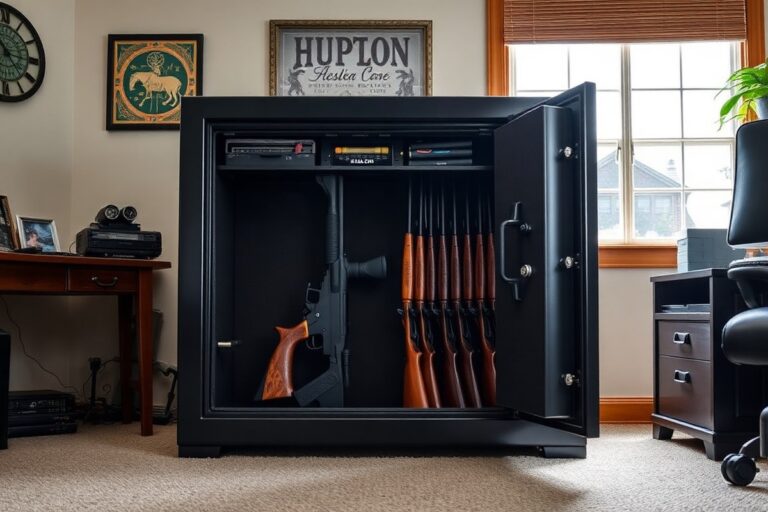
Full-size long gun safes accommodate rifles, shotguns, and other long firearms. They generally hold 30 to 72 guns, but actual capacity drops when scopes and accessories are added, often to 14 to 18 guns less than the rated capacity. These safes weigh several hundred pounds and measure several feet high, so they need ample room and secure anchoring. They often have mechanical locks like combination or keyed locks. Such safes suit gun owners with multiple long guns who require strong security and fire protection. For example, a premium model like the Liberty Fatboy Jr. Can hold up to 45 guns and offers 75 minutes of fire resistance, but due to weight (around 754 pounds) and size, you must plan where to place it carefully.
Midsized gun safes bridge the gap between small handgun safes and large long gun safes. These safes cannot fit long guns but can store multiple handguns, ammunition, and small valuables like cash or jewelry. They serve well in apartments or rooms where space limits a full long gun safe. If you have a few handguns and small valuables and want more security than a handgun safe alone, midsized safes make sense. They usually have heavier construction than handgun safes but remain easier to move than long gun safes.
Handgun safes are compact, designed for one or two pistols and a small amount of ammunition. They usually feature biometric locks or quick-opening mechanisms for fast access. These safes are best as bedside units or in rooms where immediate access is critical for defense. However, their small size limits them to just handguns, you can’t store rifles here. Handgun safes also work well to complement a larger safe where you keep long guns.
Concealment and quick-access safes offer low-profile storage, such as under-bed safes that slide beneath a bed frame. Some larger versions of under-bed safes can even accommodate a long gun. This type is best for apartment dwellers or those needing fast access while keeping firearms out of sight. The downside is often lighter construction and smaller fire ratings, prioritizing speed and concealment over maximum protection.
| Type of Gun Safe | Typical Size/Capacity | Primary Use | Security & Features | Price Range |
|---|---|---|---|---|
| Long Gun Safe (Full-size) | 30 to 72 guns (rated), actual 14-18 less with accessories | Storing rifles and shotguns securely | Heavy steel, mechanical locks, fire resistance up to 75 min | $1,500 to $5,000+ |
| Midsized Safe | Fits multiple handguns, no long guns | Handguns, ammo, cash, jewelry | Secure steel, mechanical or electronic locks | $400 to $1,200 |
| Handgun Safe | One to two handguns plus ammo | Quick access for home defense handguns | Biometric or quick electronic locks, light construction | $150 to $400 |
| Concealment / Under-bed Safe | Small handgun or one long gun in larger models | Fast access, low profile, hidden storage | Lightweight, may have biometric locks, limited fire rating | $100 to $600 |
Choose a full-size long gun safe if your collection includes multiple rifles or shotguns and you have space for it. Midsized safes work well if you have several handguns or want to store small valuables together. Handgun safes and concealment safes are ideal for quick access and limited space, but are not for larger collections or long guns.
Tip: If you currently own eight guns, look for a safe rated to hold at least 24 to accommodate new purchases and accessories.
Determining the Right Size and Capacity for Your Safe
Choose a gun safe that fits your current firearms and allows room to grow. Calculating interior size requires measuring your guns and any accessories, then adding extra space for future purchases. Pay attention to how interior layout can affect capacity, like shelves or racks, to keep your collection organized and accessible.
Measuring Your Firearms and Gear
Start by measuring each firearm you plan to store. For long guns, measure length from butt to muzzle and note height and width. Handguns require length, height, and width too. Include accessories like scopes, magazines, or ammo boxes that will go in the safe since they take up space.
Make sure the interior dimensions of the safe comfortably exceed the largest firearm’s dimensions. For instance, if your longest rifle is 48 inches, find a safe with at least 50 inches of interior length. This ensures guns fit without forcing the safe to stay open or risk damage.
Estimating Future Storage Needs
Plan for at least 50% more capacity than your current gun collection. This future-proofs your safe so you won’t outgrow it quickly. For example, if you have 8 firearms now, look for a safe designed to hold 12 or more.
Think about other valuables you might store too, such as documents, jewelry, or electronics, which will reduce available firearm space. Also, factor in accessories like dehumidifiers or interior lighting, which take up room inside the safe.
Considering Interior Organization Options
Interior layout affects how many guns fit and how fast you can access them. Options include vertical racks for rifles, adjustable shelves for handguns and ammo, and door organizers for small items. These help maximize space by keeping everything neatly arranged.
Remember that bulky organizers reduce total capacity but improve protection and ease of access. A safe with customizable interiors allows you to adapt storage as your collection changes. Some owners choose interior lighting for quick identification and retrieval, which uses a small amount of space but adds convenience. Use the following checklist to estimate the size and capacity you need for your gun safe:
- Measure each firearm’s length, height, and width.
- Sum the firearms’ total space requirements, allowing clearance between guns.
- Add space for accessories like scopes, magazines, ammo, and safekeeping gear.
- Multiply your current collection size by 1.5 to estimate future growth.
- Include extra room if storing valuables besides firearms.
- Check the interior layout options and deduct space for shelves or organizers.
- Ensure your safe’s interior dimensions exceed your largest firearm by a few inches.
- Factor in space consumed by extras such as dehumidifiers or lighting.
For example, imagine you own 5 long guns averaging 48 inches in length and 3 handguns around 9 inches long. You plan to add a few more firearms and store ammo. Add 50% capacity: 5 long guns become about 8, handguns become about 5. Allow 50 inches interior length for rifles, plus width and height for all firearms and accessories, plus 10% extra interior volume for organization options. This leads to a safe with around 60 inches of interior length and at least 25 to 30 cubic feet of total volume. This size accommodates current and future firearms comfortably, leaves room for accessories, and supports interior customization.
Understanding Fire Protection Ratings and Real-World Importance
UL fire ratings on gun safes indicate how long a safe can protect its contents during a fire at specified temperatures. For example, a common rating is 60 minutes at 1,825°F, meaning the safe should prevent internal temperatures from rising above critical levels that would damage firearms for one hour. These standards come from the Underwriters Laboratories (UL), which tests safes under controlled conditions to simulate real fires.
Typical home fires can reach temperatures around 1,000 to 1,800°F, with the most intense heat lasting about 30 to 60 minutes before firefighters can respond and control the blaze. A safe rated for 60 minutes of fire protection usually aligns with average fire department response times. Living in an area with slow emergency response or wanting extra security calls for safes that offer 90 minutes or more of fire resistance. Keep in mind that fire protection ratings typically specify a maximum internal temperature of 350°F, which is the threshold at which gun oil and wooden gun stocks may sustain damage.
Not all gun buyers need a fireproof safe. Living in a low fire risk region or keeping your firearms in a climate-controlled, fire-safe room means focusing on burglary resistance with sturdy steel and reliable locks might be sufficient. However, for those with large or valuable collections, especially in fire-prone areas, investing in a safe with a certified fire rating can prevent loss in worst-case scenarios.
Here is a quick comparison of common UL fire ratings you might find on gun safes: a 20-minute rating at unspecified temperatures offers minimal protection and is usually found on entry-level models. A 45- to 60-minute rating at 1,200°F to 1,825°F is common for mid-range safes, balancing cost and protection. Higher-end safes can provide up to 2.5 hours of fire protection at 1,200°F or higher.
Finding a safe with the right fire rating means matching it to your local fire department’s expected response time and the value of your firearms. For example, if the average fire department response in your town takes 10 to 15 minutes but fires can smolder for over an hour before you have any chance to intervene, a 60-minute fire rating provides a realistic safety margin. On the other hand, long fire resistance (90 minutes or more) adds weight and cost, so it may not be necessary for all buyers.
Gun safes with fire resistance generally cost between $600 and $1,200 for full-size models. This price range usually includes 16- to 12-gauge steel, multiple locking bars, and at least moderate anti-theft features. The internal materials of fireproof safes also matter since additional insulation protects guns from excessive heat and moisture, which can also harm your firearms over time. For areas with high humidity, combine fire-rated safes with desiccants or dehumidifiers to avoid corrosion.
Comparing Locking Mechanisms: Which Lock Is Right for You?
Choosing the right locking mechanism for your gun safe depends on balancing security and quick access. Mechanical locks provide solid security but slower access. Electronic locks offer speed and convenience. Biometric locks combine quick entry with user-specific authentication but are not flawless. Understanding these differences will help you match your safety needs with your emergency access priorities.
Mechanical Combination Locks
Mechanical combination locks use a dial or set of dials to get the safe by entering a correct code. These locks do not rely on batteries or electronics, making them reliable in any power situation. Their simplicity adds durability, often resisting hacking or electronic failure common in digital systems.
Among their drawbacks, mechanical locks typically require more time to open, especially under stress. Learning and accurately dialing the combination can be difficult in emergencies where seconds matter. Users must also remember the exact combination; forgetting it means potentially costly safe servicing.
Mechanical locks suit long-term storage where quick access is less critical. They perform well for hunting trips or at-home vaults without frequent immediate retrieval needs. Their cost is usually lower than biometric models but can be comparable to some electronic keypad safes.
Electronic Digital Locks
Electronic digital locks use a keypad where you type in a personal identification number (PIN) to get the gun safe. They often include lockout features after multiple incorrect attempts and allow easy code changes without locksmith help. These locks depend on batteries, which usually last from one to two years before replacement.
Advantages include quick access, typically under 10 seconds, making them favorable during emergencies. Many models can store multiple user codes, helpful for families wanting access without sharing the same combination. On the downside, they carry risks of electronic failure or battery depletion, so consistent battery checks are necessary.
- Fast and convenient unlocking by PIN
- Can store multiple user codes
- Requires battery power and regular replacement
- Usually includes lockout after failed attempts
- Vulnerable to electronic faults or hacking attempts
Digital locks are a good fit if you anticipate needing speedy access and want flexible user management. Portable or bedside safes often use electronic keypads to balance security with rapid retrieval.
Biometric Fingerprint Locks
Biometric locks unlock a gun safe by scanning authorized users’ fingerprints. This method provides the fastest access, often under two seconds, ideal for emergencies. The technology eliminates the need to remember combinations or carry keys.
This option suits self-defense or quick-retrieval scenarios and smaller handgun vaults. Most biometric safes support multiple fingerprint profiles, allowing family members to gain access efficiently. Prices for biometric safes typically start around $160 to $200 depending on features and size.
Drawbacks include reliance on fingerprint sensor accuracy, which can vary with finger moisture, cuts, or dirt. Electronics still rely on batteries, which must be maintained. Heavy-duty long gun safes equipped with biometric locks still require significant user effort to open due to heavy steel construction.
Regularly test and clean biometric sensors to maintain fast, reliable access during emergencies.
Safe Construction and Steel Gauge: How Secure Is Your Safe?
Choosing the right steel gauge is key to securing your gun safe against theft and forced entry. A safe body made of 12-gauge steel (approximately 0.105 inches thick) or thicker provides adequate protection for most residential needs. Smaller safes, under 20 inches in each dimension, may get by with 14-gauge steel, but anything larger should step up to 12-gauge or even 10-gauge steel for the walls and especially the door. The door itself should be thicker than the body, ideally, plate steel that resists prying and cutting tools.
Reinforced doors and multiple locking bolts significantly improve security. Locking bolts are steel rods that extend from the door deep into the safe’s body, securing it firmly when locked. More locking bars, such as five to seven, spread along the door’s edge deny easy use points and make prying or twisting attacks much harder. Reinforced door edges and the addition of drill-resistant plates around locking mechanisms help prevent common intrusion methods.
Construction quality matters beyond just steel thickness. The “stitching” of the safe, the way panels are welded and joined, should be flawless and continuous to remove weak spots. Double layers of fireboard on walls, ceilings, and floors both improve fire protection and add resistance against attacks through thermal methods. Heavier safes, often over 150 pounds, are less portable and more resistant to quick theft attempts, though anchoring with bolts remains recommended.
- Minimum 12-gauge steel for body on safes larger than 20 inches
- Thicker plate steel doors with multiple locking bolts (5 to 7 bars)
- Welded seams without gaps or weak joints
- Drill-resistant plates protecting lock and keypad
- Double layers of fireboard reinforcing walls and ceiling
- Heavy safe weight (150 pounds or more) to deter physical theft
- Reinforced door edges for pry resistance
Low-gauge steel safes with solid welds and extensive locking bolts offer stronger theft resistance, reducing vulnerability to hand tools and drills. In contrast, thin steel or poorly assembled safes break or bend under force more easily, inviting fast break-ins. Pay attention to the door thickness and bolt count, as these are the first targets in an attack. Good construction also means fewer rattles or gaps that can be probed to defeat the safe.
Your budget might limit choosing very thick steel or extensive reinforcement, but prioritize a heavier and well-built safe with multiple locking bolts over a lighter, thinner model. Safes with 14-gauge steel bodies and reinforced doors provide moderate security, while 10- to 12-gauge bodies with composite reinforcements offer higher protection, especially combined with fire resistance layers. Confirming construction quality and hardware protection upfront helps ensure your safe will truly protect your firearms against common burglary attempts.
Anchoring and Placement: Securing Your Safe in Your Home
Securing your gun safe properly includes anchoring it and choosing the right location in your home. Anchoring prevents theft by making the safe difficult to move, while correct placement protects your guns and other valuables from damage and ensures safe, quick access. Different home types and safe weights require different anchoring and placement approaches.
Anchoring Techniques by Safe Weight
Safes weighing 500 pounds or more often don’t need bolting because their weight alone resists theft attempts and accidental tipping. Lighter safes under this weight should be anchored to add security, especially if theft or safety concerns exist. Most gun safes come with pre-drilled holes or a bolt-down kit for anchoring.
Anchoring involves securing the safe to the floor and/or wall, ideally into concrete or wooden wall studs. Doing both offers the best protection against attempts to move or tip the safe. Avoid anchoring only to drywall, as it won’t hold the bolts under stress. Follow these steps to bolt your safe securely:
- Locate studs in the wall behind the safe and confirm the floor type (concrete or wood subfloor).
- Position the safe where you want it, preferably next to a wall with stud access and on a floor that supports bolting.
- Mark drilling points through the safe’s pre-drilled holes onto the floor and wall.
- Drill pilot holes into the stud and floor surface using a hammer drill for concrete or a standard drill for wood.
- Insert appropriate anchors or sleeve bolts for concrete; use lag bolts for wood studs.
- Place the safe over the holes and drive bolts through its base and back panel into the anchors or studs.
- Tighten all bolts securely but avoid overtightening, which can damage materials.
Bolt-down kits typically cost $20 to $50 and are often included or sold separately by the manufacturer. Using the right tools and anchors designed for your floor and wall type ensures stability and security. Poorly anchored safes can be tipped, moved, or lifted easily, defeating the intent of locking up firearms.
Ideal Home Placement for Security and Access
Choosing the right spot for your gun safe balances security, environmental factors, and convenience. The ground floor on a foundation slab offers the best stability for heavy safes. Placing the safe where visitors must pass through a narrow doorway can limit casual access. The back wall of closets or rooms facing interior walls is ideal for anchoring.
Avoid areas that experience moisture, such as garages or basements prone to flooding, unless you add a dehumidifier inside the safe to prevent rust and damage. Do not place the safe near windows or external doors that offer easy entry to intruders.
For quick access during emergencies, keep handguns or smaller safes within reach in bedrooms or master closets. Larger safes meant for multiple firearms and valuables can stay in utility rooms or hidden closets with bolting options.
Special Cases: Upstairs and Apartments
Securing a gun safe upstairs or in an apartment needs extra planning. Floors above ground level often use wood framing, which can hold bolts if you locate and use studs properly. Anchoring only to the floor without wall support is less secure, so look for double anchoring opportunities to both floor and wall.
In apartments where drilling may be restricted or impossible, bolt-down kits might not be allowed. Consider safes specifically designed for apartment use, which weigh at least 500 pounds or use alternative security methods like heavy chains or discreet concealment. Compact handgun safes placed in furniture designed for bolting can be a practical solution.
Keep in mind, never block emergency exits or violate building safety codes with your safe’s placement. Check your lease or building regulations before installation and always follow safety guidelines to protect both your firearms and your home.
Budgeting Your Purchase: What to Expect to Pay
Expect to pay anywhere from under $100 for a small handgun safe to over $2,000 for a premium full-size gun safe with advanced security features and fire resistance. Price varies based on size, lock type, steel thickness, and fire rating. Smaller safes with basic key or electronic locks cost less but offer limited protection. Larger safes with biometric locks and at least a 30-minute fire rating cost more but provide stronger defense against theft and fire, especially important in rural areas with slower fire response times.
Choosing the right safe means balancing budget with the level of security you need. Look for a 12-gauge steel body or thicker if you expect serious burglary attempts. A fire rating of 30 minutes or more adds valuable time for firefighters to respond. Lock types range from simple key locks to biometric scanners; electronic or biometric locks usually cost more but offer quicker access and better security.
| Rank | Product | Rating | Cost |
|---|---|---|---|
| 1 | Gunvault NV200 Nanovault With Key Lock | 9.5 | $ |
| 2 | Snapsafe Keyed Alike Lock Box | 9.1 | $ |
| 3 | Barska Top Open Keypad Safe | 8.7 | $ |
| 1 | Barska Large Biometric Safe | 9.5 | $ |
| 2 | Hayman CV-20-C Burglar Safe | 9.1 | $$ |
| 3 | Mesa Safe MBF1512C is an all-steel safe designed to protect against burglary and fire damage. | 8.7 | $$ |
For a mid-range budget, safes priced between $500 and $1,500 provide a good balance of secure steel thickness, reliable lock mechanisms, and at least 30 minutes of fire resistance. Prioritize safes with proven security ratings and avoid cheaper models lacking tested fire protection or with lock vulnerabilities, as happened with certain Stack-On Sentinel models recalled for easy unauthorized opening.
Always bolt your safe to the floor or wall to prevent thieves from simply carrying it away, no matter your budget.
Buying a gun safe means considering what matters most to you, fire protection, burglar resistance, or quick access. A premium safe adds peace of mind but requires a bigger upfront investment. Budget safes can be acceptable for handguns or situations with lower threat levels if anchored properly and placed discreetly. Check manufacturer certifications, user reviews, and known recalls before committing to a purchase, especially for costly biometric and electronic lock safes.
Interior Organization and Accessories to Protect Your Guns
Organizing firearms and accessories inside your safe should prioritize both protection and easy access. Start by grouping similar guns together, store rifles upright in designated racks to prevent leaning and damage, while handguns fit best in padded compartments or removable trays. Use adjustable shelving to separate ammunition from firearms, keeping it in a locked box for extra safety. Avoid stacking guns or piling items on top of one another, as this can scratch finishes and cause mechanical issues over time.
Adding a dehumidifier inside your safe is essential to prevent rust, corrosion, and damage to wood stocks. Ideal relative humidity levels inside a gun safe are between 40% and 50%. You can use silica gel packs or electric dehumidifiers made specifically for gun safes. Silica gel packs are less expensive ($10 to $30), but need frequent replacement or recharging. Electric models cost $100 or more but maintain consistent humidity control without manual upkeep.
Several interior accessories improve both the security and long-term maintenance of your firearms. Soft foam-lined gun racks minimize impact damage. Ammo organizers and detachable trays reduce clutter. Interior lighting with LED strips helps you identify items easily without harming gun finishes. Some safes also offer built-in vault doors or lock boxes within the safe for storing high-value handguns or documents separately.
- Install adjustable shelves and gun racks to customize fit
- Use padded trays or foam inserts for handguns and optics
- Keep ammo in locked, ventilated containers to prevent moisture buildup
- Place a dehumidifier or silica gel packs inside, monitor humidity levels
- Add interior lighting for quick access and visibility
- Secure smaller valuables in a separate lockbox within the safe
Maintaining proper interior conditions includes checking the dehumidifier or silica packs monthly and replacing or recharging as needed. If you notice condensation or rust points, increase your dehumidifying efforts. A clean, dry environment protects your firearms’ mechanical parts and wooden elements, preventing costly repairs or replacements. Using these organization and protection steps ensures your guns remain in top condition while staying secure and accessible when you need them.
Common Mistakes to Avoid When Buying a Gun Safe
Choosing a gun safe without considering key security details can leave your firearms vulnerable. One common mistake is buying a safe with thin steel, such as less than 12-gauge thickness. Steel gauge 12 (about 0.1046 inches thick) is a minimum standard for prying resistance. Safes made with thinner steel are often easier to break into. A practical fix is to select safes labeled with 12-gauge steel or thicker for better protection against attempts to pry or cut into the safe.
Placement errors add further risks. Placing a heavy safe on carpet or unsecured floors can allow thieves to quickly grab and carry the safe away. Anchoring your safe to the floor or wall using provided hardware prevents easy removal. Use concrete screws or lag bolts matched to your floor type, and double-check tightness every six months to maintain security.
Maintenance mistakes degrade the safe’s performance and longevity. For example, ignoring humidity control inside the safe can cause rust on firearms. Installing a quality dehumidifier pack that you replace every 4 to 6 months prevents moisture buildup and preserves your guns. Resist the temptation to cover internal surfaces with materials that trap moisture, such as carpets that don’t allow airflow.
- Buying a safe with cheap or unreliable keypad locks; instead, choose high-quality electronic or biometric locks with good reviews.
- Failing to anchor the safe securely; always bolt your safe to floor or wall studs using proper hardware.
- Picking a safe too small for your collection, leading to overcrowding and damage.
- Neglecting to replace dehumidifier packs regularly to prevent rust and corrosion.
- Placing the safe near heat sources or in damp basements, which harms lock mechanisms and contents.
- Overlooking the need for periodic lock and hinge lubrication with a light oil to ensure smooth operation.
- Ignoring manufacturer instructions for regular inspections and maintenance checks.
Cheap, no-name keypad locks frequently appear in negative reviews due to unreliability or slow response times. Investing slightly more in reputable lock brands reduces headaches and improves security. Another major factor is size. Too small safes cause firearm damage due to tight stacking and increase theft risk by making it easier to remove the whole safe. Fireproof rating and secure construction matter most, but they won’t help if the safe is easy to steal or poorly maintained.
Standard fire testing methods involve putting safes into furnaces reaching about 2,000 degrees Fahrenheit for 30 minutes, per UL standards. Failing to maintain the safe’s seals and hinges can compromise fire resistance over time. Regularly inspect these components and replace any damaged weatherstripping or hardware promptly. Such upkeep protects your investment beyond the initial purchase and extends the safe’s effective life.
Step-by-Step Action Plan for Buying Your Gun Safe
Follow these steps to pick and secure the best gun safe for your needs efficiently and confidently.
- Day 1: Measure your firearms and estimate future additions to determine the safe’s size. Confirm your measurements to ensure all guns will fit comfortably.
- Day 2: Research safe types and security features based on your location and risk level. Check customer reviews and ratings to validate the safe’s reliability.
- Day 3: Compare fire protection ratings of shortlisted safes and choose one that meets at least 30 minutes of fire resistance. Verify the rating with independent testing sources.
- Day 4: Decide on the locking mechanism, mechanical, electronic, or biometric, based on ease of use and security needs. Test samples in-store or watch operation videos for confidence.
- Day 5: Select the steel gauge and construction quality that balance security and budget. Confirm the steel thickness by checking product specifications or consulting manufacturers.
- Day 6: Plan safe placement and secure anchoring points in your home. Use a stud finder and drill to anchor the safe solidly, verifying stability after installation.
- Day 7: Purchase interior organization accessories such as racks or foam inserts to protect and arrange your firearms. Confirm fit and ease of access once installed.
- After Purchase: Register your safe with the manufacturer if available and document your serial numbers and purchase details for warranty and insurance purposes.
Frequently Asked Questions
What Should I Consider When Upgrading to a Larger Gun Safe?
Upgrade only if your collection grows or you want extra space; a larger safe ensures future-proof storage and avoids buying another safe later.
Are Used Gun Safes a Good Purchase?
Used safes can save money, but inspect welds, locks, and steel gauge for security and functionality before buying.
How Do Gun Safe Weight and Size Impact Home Installation?
Heavier safes (500+ lbs) resist theft better but require professional help for moving and installation.
Is It Necessary to Buy a Fireproof Gun Safe?
Fireproof safes protect guns and paperwork from heat and smoke; choose one rated for your highest risk.
How Often Should I Maintain My Gun Safe?
Regularly check locks, humidity levels, and dehumidifiers to keep your safe secure and guns in good condition.
Can I Store Ammo in My Gun Safe?
Yes, but store ammo separately in a ventilated container to prevent moisture buildup inside the safe.
Final Thoughts
Choosing the right gun safe requires careful attention to size, security features, and fire protection without overlooking practical considerations like placement and budget. Taking action on measurements and research first keeps the process manageable and focused. Your next step should be visiting a reputable dealer to handle different safes and decide which locking mechanism feels right for your daily routine.