Is Ohio Open or Concealed Carry Legal? A Complete Guide for Carriers
Is Ohio open or concealed carry legal? Both are legal under Ohio law with age and eligibility requirements. Open carry is allowed starting at age 18 without a permit, while concealed carry requires you to be at least 21 and not legally prohibited from possessing a firearm.
Since June 13, 2022, you can carry a concealed handgun without a license if you meet Ohio’s qualifying criteria. Check your eligibility first to avoid legal issues.
Key Takeaways
- Open carry in Ohio is legal for anyone 18 or older not prohibited by law.
- Concealed carry is allowed without a permit if you are at least 21 and legally eligible.
- Ohio’s Permitless Carry law began June 13, 2022, removing license requirements for concealed carry.
- Federal law restricts carrying within 1,000 feet of schools unless you have a state-issued permit.
- Ohio requires an 8-hour training for a carry license, but training is not mandatory under permitless carry.
- Licenses issued are valid for 5 years, useful for reciprocity with other states.
Is Open and Concealed Carry Legal in Ohio?

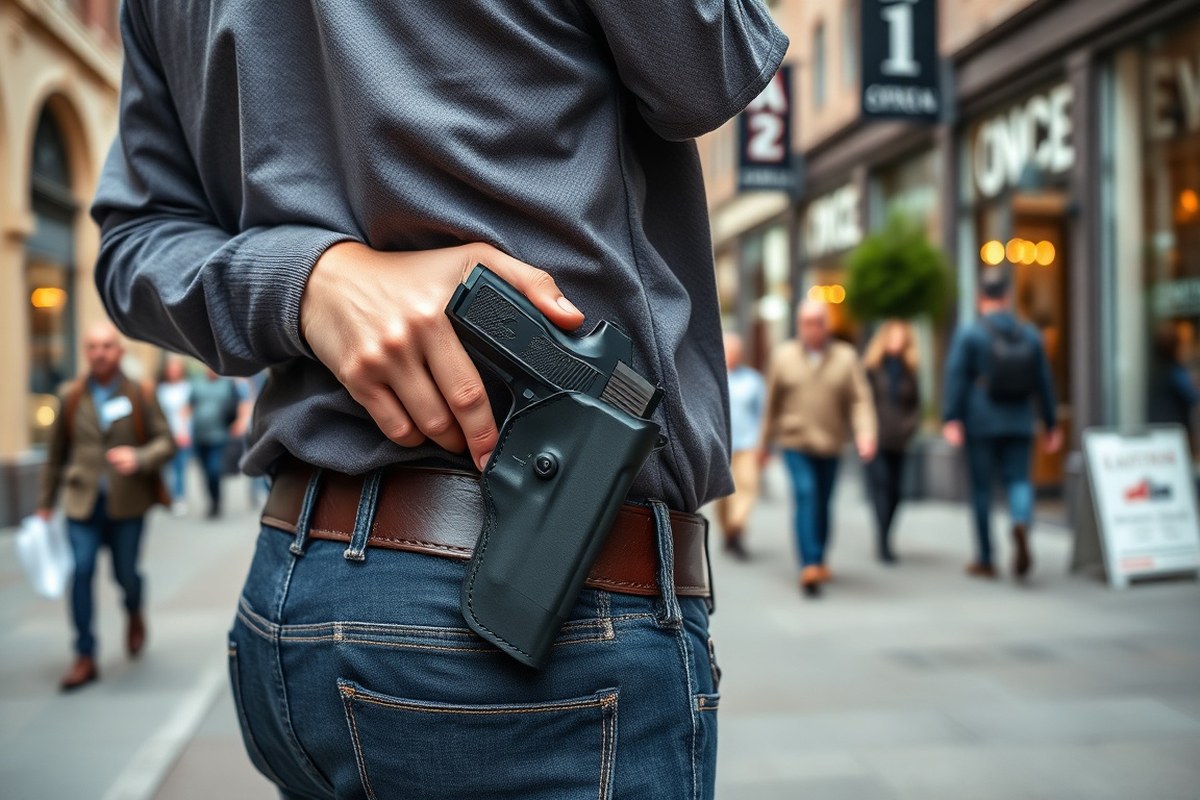
Ohio permits individuals aged 18 or above who qualify legally to carry firearms openly without needing a permit. You can carry a firearm where it’s visible in public as long as you meet the age and legal requirements. Carrying openly means the gun is out in plain sight rather than concealed under clothing or inside a container.
For concealed carry, Ohio permits “constitutional carry,” meaning qualifying adults aged 21 and over can carry a concealed handgun without a license. This law took effect on June 13, 2022, with Senate Bill 215. You do not need to apply for a Concealed Handgun License (CHL), undergo additional training, or pass a background check beyond the one required to purchase the firearm. However, many still obtain a CHL to benefit from reciprocity with other states.
Non-residents must meet the same age and legal requirements and can carry openly at 18+ if allowed to possess firearms, but they must be at least 21 to carry concealed without a permit under Ohio law. Reciprocity applies for valid out-of-state concealed carry permits, allowing non-residents to carry concealed with their licenses recognized by Ohio.
| Feature | Permit Required? | Minimum Age | Eligibility |
|---|---|---|---|
| Open Carry | No | 18+ | Any lawful firearm possessor |
| Concealed Carry (Permitless) | No (since June 13, 2022) | 21+ | Qualifying adult legally allowed to possess a handgun |
| Concealed Carry (With License) | Yes (optional) | 21+ | Must meet training, background check, and application requirements |
| Non-Resident Carry | Open: No; Concealed: Yes, if carrying with valid out-of-state license or permitless if 21+ | 18 (Open) / 21 (Concealed) | Must meet respective legal eligibility; reciprocity applies for concealed carry licenses |
Carrying openly at 18 gives you access to firearm possession where visibility is permitted. Concealed carry, on the other hand, requires you to be at least 21 to use Ohio’s permitless carry provision. Choosing to get a CHL is optional but recommended if you plan to carry across states that do not recognize Ohio’s permitless carry. Non-residents must be mindful of their own state’s laws and Ohio’s reciprocity rules since carrying without a valid permit outside Ohio can bring legal risks.
Where Can and Can’t You Carry a Firearm in Ohio?
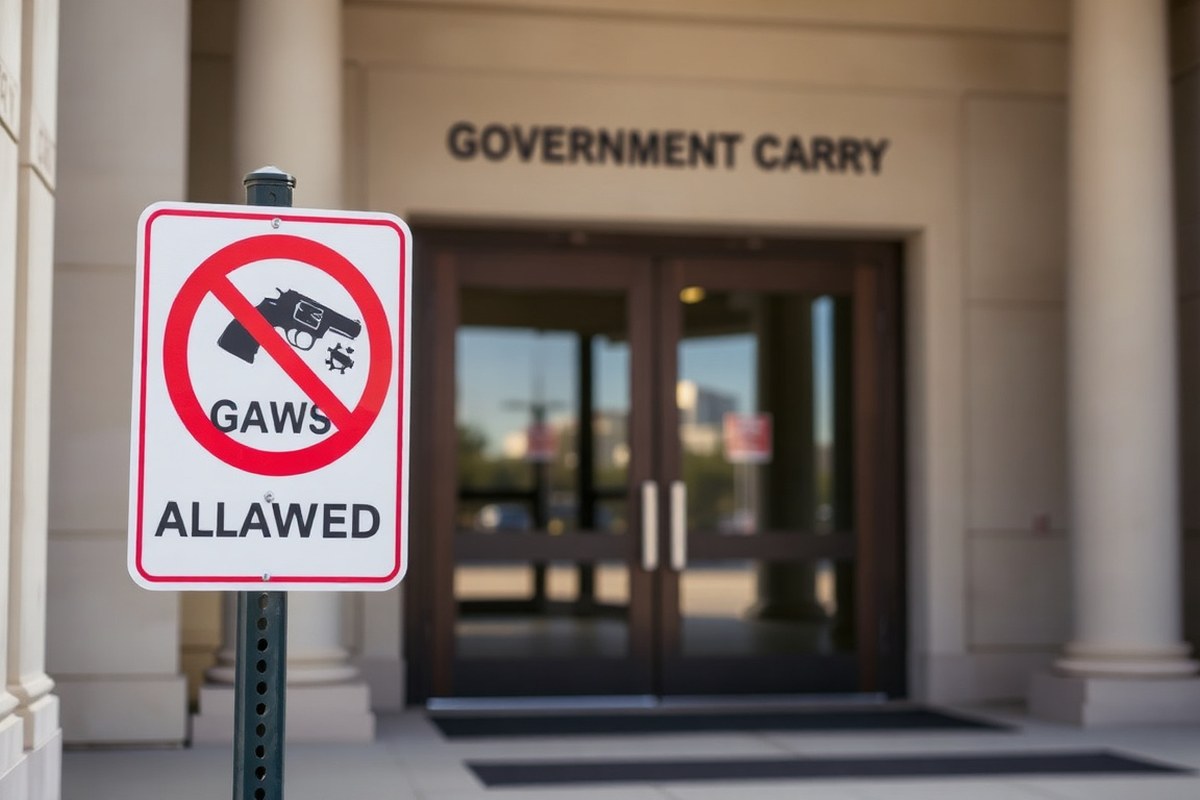
Ohio allows both open and concealed carry with broad rights for adults 21 and older who can legally possess firearms. However, certain places strictly prohibit carrying firearms, whether openly or concealed. Knowing these locations helps you avoid legal trouble and ensures you carry responsibly.
One of the most important restrictions involves schools and school zones. Federal law requires a state-issued permit to carry a handgun within 1,000 feet of a school. Under Ohio law, only holders of a Concealed Handgun License (CHL) may carry in or near school property, whether open or concealed. This applies regardless of Ohio’s permitless carry status for most other locations.
Carrying firearms inside government buildings such as courthouses or other government offices is prohibited. This also applies to buildings within public parks since many house government offices or facilities, even though parks themselves generally allow carry. Federal buildings inside National Parks are off-limits as well, though carrying in the park areas is usually legal.
Private property owners can restrict firearms on their premises by posting clear signage according to Ohio rules. If you enter a private business or home with a conspicuous “no firearms” sign, you must not carry or should leave immediately. This control also extends to bars and restaurants holding a Class D liquor permit, where permitless carriers cannot carry firearms. Concealed or open carry is not allowed in bars that primarily serve alcohol, even if you have a CHL. Here’s a checklist summarizing places in Ohio where carrying a firearm is prohibited or restricted:
- School property and within 1,000 feet of schools (only CHL holders allowed)
- Courthouses and government buildings
- Federal buildings within National Parks (visitor centers, offices)
- Private property with explicit “no firearms” signage
- Bars and establishments with a Class D liquor permit (for permitless carriers)
- Schools zones defined by federal law requiring permits to carry
Always check for posted signage and confirm whether a place is a government or federal facility before carrying; ignorance is not a defense.
The restrictions apply equally to open and concealed carry. Liability insurance cannot be required by local governments as a condition for carrying or possession. While permitless carry simplifies most daily carrying, remember that these location regulations remain in place to keep firearms away from sensitive areas. Adhering strictly to these rules means you carry within the law’s limits and avoid penalties.
How Does Ohio’s Permitless Carry Law Work?
Ohio’s permitless carry law, effective June 13, 2022, lets qualifying adults legally carry a concealed handgun without needing a license. This change, under Senate Bill 215, means if you meet the requirements, you can carry concealed without a background check or waiting periods. While carrying without a license is now allowed, obtaining a Concealed Handgun License (CHL) remains an option that offers some advantages.
Definition and Background of Permitless Carry
Permitless carry, also known as constitutional carry, means that adults 21 and over who meet legal qualifications can carry a concealed handgun without a license or permit. Ohio joined this group of states on June 13, 2022, with the passage of SB 215. Before this change, carrying a concealed handgun almost always required obtaining a CHL, which involved training, fees, and background checks.
The law removes previous barriers like waiting periods and the requirement to inform law enforcement proactively when carrying a concealed gun. Ohio still applies concealed carry laws specifically to handguns; open carry remains legal by default because state law doesn’t prohibit it. These adjustments reflect a broader trend toward more permissive gun laws in Ohio, making it one of the more relaxed states regarding firearm carry as of 2026.
Legal Qualifications for Permitless Concealed Carry
The permitless carry law applies only to adults 21 years old and above who legally qualify under state and federal laws to possess a handgun. To carry concealed without a license, you must not be prohibited from possessing firearms due to criminal convictions, mental health adjudications, or restraining orders. You also must carry the handgun in compliance with Ohio’s restrictions on locations where firearms are prohibited by law.
Explicitly, to carry concealed permitless, you need to ensure that you meet Ohio’s eligibility conditions for a CHL since the law uses those criteria as the standard for who qualifies. The law does not require you to obtain training, complete background checks, or pay fees to carry concealed with this new option. However, carrying openly is legal statewide starting at age 18, so you can carry without a license in that manner at a younger age.
Benefits and Limitations Without a License
Not needing a license to carry concealed reduces cost and paperwork. You save on CHL application fees, training classes, and renewal expenses. This makes lawful concealed carry more accessible and private, since you don’t have to register your intent or show credentials.
Despite this, maintaining a CHL still has benefits. Having a license allows you to carry concealed in other states that recognize Ohio’s permits, as Ohio honors all valid out-of-state concealed carry permits. A CHL also demonstrates you have completed approved training, which might help in legal or safety situations. Permits can ease traveling and interactions with law enforcement in other jurisdictions.
The main limitation of permitless carry is the lack of formal training requirements, so you should seek firearms education on your own. Also, permitless carry does not allow people under 21 to carry concealed, and it does not change restrictions on where guns can or cannot be carried. Understanding the distinctions between carrying with and without a CHL helps prevent unintentional legal violations.
What Are the Rules for Carrying Firearms in Vehicles?
You can carry a handgun openly or concealed in your vehicle in Ohio whether or not you have a Concealed Handgun License (CHL). Ohio law allows handgun carry inside vehicles without a CHL, but certain restrictions still apply, especially around school and safety zones. Having a CHL mainly affects your ability to carry in federally restricted areas like school zones.
When transporting firearms in a vehicle, the gun should be readily accessible to you. There are no specific state requirements for locking or storing the firearm inside the vehicle unless you are within a federally defined school safety zone. In those areas, federal law requires that to carry a firearm in your vehicle, you must have a valid CHL and the firearm must be locked in a compartment of the vehicle, such as the glove box, console, or a locked container.
- You may carry a loaded handgun concealed or openly in your car anywhere in Ohio without a CHL except in federal school safety zones.
- Carrying firearms in school safety zones requires a CHL and the firearm must be locked in the vehicle.
- You do not have to lock or store the firearm separately unless you are in a federal safety zone where the CHL requirement applies.
- Only handguns are covered; other firearms may have different rules.
- The law applies while you are in or upon the vehicle, not outside on school grounds or restricted premises.
- Anyone prohibited from carrying a handgun remains subject to those restrictions regardless of vehicle carry privileges.
Following these rules matters because carrying in a vehicle without a CHL can still comply with Ohio law but may violate federal law near certain locations. The cost of carrying is primarily related to obtaining a CHL, which requires eight hours of training and passing a live-fire qualification, but this is not mandatory for vehicle carry outside school zones. Good results look like carrying your handgun safely and legally in your vehicle, avoiding prohibited areas, and understanding when a CHL is necessary. Problems arise when you unknowingly carry a loaded gun locked or unlocked in a school zone without the correct license, violating federal law and risking prosecution.
Who Is Prohibited from Carrying a Handgun in Ohio?
Ohio law prohibits certain people from carrying handguns openly or concealed based on both state and federal regulations. To legally carry in Ohio, you must be at least 21 years old and not fall under any disqualifying categories. This means anyone who is a “prohibited person” by state or federal law cannot carry. These restrictions exist to keep firearms away from those deemed a risk to public safety.
Several categories bar you from carrying in Ohio. You cannot possess or carry a handgun if you have a felony conviction. This includes convictions for crimes punishable by imprisonment exceeding one year. People currently under indictment for a felony also cannot legally carry firearms. Being on probation or parole for a felony similarly disqualifies you until that status ends.
Mental health status and substance abuse also affect eligibility. A court finding you mentally incompetent or an involuntary commitment to a mental health facility results in losing the right to carry. Federal law also forbids carrying if you have been committed or adjudicated as mentally ill. Persons addicted to drugs or with a history of substance abuse may be disqualified, especially if they are under treatment restrictions or court orders.
Federal laws add to what Ohio prohibits. Notably, if you are a subject of a restraining order related to domestic violence, you are barred from carrying. Anyone convicted of domestic violence misdemeanors or who has renounced U.S. Citizenship may not carry. Federal bans also apply to illegal drug users or unlawful aliens. Ohio enforces these rules strongly alongside its own.
To check your eligibility, review your criminal record for felony or certain misdemeanor convictions, confirm your mental health legal history, and assess any federal restrictions such as restraining orders or indictment status. Keeping a clear record and avoiding legal trouble are essential to maintaining your right to carry.
Promptly informing law enforcement officers you are carrying a concealed handgun when stopped can help avoid misunderstandings or legal troubles.
What Are the Training, Cost, and Licensing Steps in Ohio?
You don’t have to hold a Concealed Handgun License (CHL) to carry a firearm openly or concealed in Ohio, but many people still choose to get one for specific benefits. Obtaining a CHL requires completing training, submitting an application with fees, and waiting for processing. Renewing a CHL involves following a set procedure to maintain the license’s validity. While permitless carry does not require training or background checks, the CHL process remains more detailed and structured.
CHL Training and Qualification Requirements
To get a Concealed Handgun License in Ohio, you must complete an 8-hour training course. This consists of 6 hours of classroom instruction plus 2 hours of range time with a certified instructor. The classroom portion covers laws, firearm safety, and carry techniques, while the range time focuses on practical shooting skills and safe handling.
You must be at least 21 years old, a resident or have a valid reason to carry in Ohio, and not be prohibited by law from owning a firearm. The training helps ensure responsible gun ownership and legal compliance, which is why it remains important for those who want an official CHL.
Application, Costs, and Processing Times
Applying for a CHL involves submitting a form to the sheriff’s office in your county of residence. Along with the completed application, include the proof of completed training, fingerprints, and a fee. As of recent information, the application fee is around $67 for first-time applicants but may vary slightly by county.
Processing typically takes between 45 and 60 days for the sheriff to approve or deny the application. You will be notified once your license is ready to be picked up or mailed to you. Background checks are required for the CHL, including fingerprints checked through the FBI and the Ohio Attorney General’s office.
| Step | Requirement | Details |
|---|---|---|
| Training | 8 hours total | 6 hours classroom, 2 hours range with certified instructor |
| Application Fee | About $67 | Paid to county sheriff’s office when applying |
| Processing Time | 45-60 days | Background check including fingerprints |
| Eligibility | Age 21+, no prohibitions | Must meet legal requirements, residency or valid reason |
Despite permitless carry, many get a CHL for recognized reciprocity in other states and to carry in places restricted to license holders, such as school zones.
Renewal Process and Fees
Renewing your Ohio CHL is required every five years. You must submit a renewal application to the sheriff’s office usually 60 days before your license expires. Renewal forms often require updated personal information and may include a fee similar to the initial application, typically around $67.
Renewals do not require repeating the full training course unless the license has been expired for over six months. However, some sheriffs may request supplemental training to ensure ongoing safety and compliance. The processing time for renewal is similar to the initial application. Maintaining a current CHL ensures continuous legal benefits, such as carrying in restricted areas and maintaining valid reciprocity with other states that recognize Ohio’s license.
How Should You Interact with Law Enforcement While Carrying?
In Ohio, you are not required to tell a police officer you are carrying a firearm unless the officer specifically asks. However, once they do ask, you must promptly and clearly inform them that you are armed, especially if your handgun is concealed. This obligation helps avoid misunderstandings and ensures a safer interaction for both you and the officer.
When you are stopped, either while driving or on foot, wait for the officer to ask about any firearms. Do not volunteer information about carrying unless directly questioned. You should disclose your concealed handgun when an officer asks, “Do you have a weapon on you?”” At that point, respond immediately and calmly.
A clear and respectful script to use during a stop for drivers might be: “Good evening, officer. Yes, I have a concealed handgun. I also have my concealed handgun license and identification ready to show you.” For pedestrians, a similar phrase works well: “Officer, I’m carrying a concealed handgun. I can show you my license and ID.” Holding your hands visible and avoiding sudden movements reduces tension during these encounters.
After informing the officer, follow their instructions carefully, especially if they ask you to show your Concealed Handgun License (CHL) or other identification. Ohio law requires you to provide your CHL upon request when carrying concealed, so keeping it accessible but secure is important. Present your license and ID promptly, and avoid reaching for pockets without notifying the officer first.
Common mistakes include failing to disclose when asked, reaching for your firearm or license too quickly without notifying the officer, and making sudden movements. These actions can lead to unnecessary suspicion or escalation. Another error is giving information about carrying before the officer asks, which is not required and may increase the risk of confusion.
Remaining calm and cooperative throughout the stop usually results in a smoother experience. Listen carefully to the officer’s requests and answer only what is asked. Open carry does not legally require you to inform officers unless they ask, but staying clear and calm helps lower tension.
Ohio’s law requires you to promptly inform officers about your concealed handgun when asked. Using a simple, polite script and following instructions carefully creates safer, more predictable encounters when carrying. Remember that keeping your license and ID accessible and clearly informing the officer according to these guidelines minimizes legal risks and misunderstandings.
How Does Ohio’s Carry Law Affect Traveling and Reciprocity?
Ohio’s permitless carry applies only within state borders. To legally carry a concealed handgun in other states, you need an Ohio Concealed Handgun License (CHL), which some states recognize for reciprocity. Non-residents should consider obtaining an Ohio CHL if they want legal concealed carry in Ohio or select states permitting Ohio’s CHL.
Reciprocity and Recognition of Ohio CHL
Ohio has concealed carry reciprocity with several states, meaning they accept an Ohio CHL for concealed handgun carrying. This allows Ohio license holders to carry concealed handguns legally in those states. The list of states recognizing Ohio’s CHL can change, so checking updated reciprocity information before travel is essential. Below is a comparison of states recognizing Ohio’s CHL versus those acknowledging permitless carry status. States only recognize the CHL, not the permitless carry legality from Ohio:
| Category | States Recognizing Ohio CHL | States Recognizing Ohio Permitless Carry |
|---|---|---|
| Examples | Indiana, Kentucky, West Virginia, Michigan, Pennsylvania* | None |
| Convenience | Allows concealed carry with Ohio CHL | Not recognized outside Ohio |
| Requirement | Must have valid Ohio CHL | No carry rights outside Ohio without CHL or state permit |
| Notes | Some states require permits; always check regulations | Permitless carry is strictly limited to Ohio |
*Pennsylvania accepts Ohio CHL but has specific rules; confirm before travel. Carrying concealed without a valid, recognized permit in other states may lead to legal penalties including fines, jail time, or firearm confiscation.
Limitations of Permitless Carry Outside Ohio
Ohio’s permitless carry law does not extend beyond its borders. Most states do not recognize permitless carry and require a valid concealed carry permit or license from their own state or one they recognize. Carrying without a license in these states can result in criminal charges, even for Ohio residents accustomed to permitless carry.
Crossing state lines with a firearm means you must comply with the laws of the state you enter, including possession, transport, and carry restrictions. Transport rules under federal law may help when moving firearms between states, but they don’t replace state carry permits or licenses required for concealed carry.
Never rely on Ohio’s permitless carry law when traveling; always confirm the destination state’s gun laws and permit requirements.
Advice for Non-Residents and Travelers
Non-residents planning to carry a concealed handgun in Ohio should consider applying for an Ohio CHL. Obtaining an Ohio CHL involves a background check, a minimum of eight hours of training, and fees totaling around $67, including fingerprinting and application costs. This license ensures legal concealed carry within Ohio and provides reciprocity benefits in other states recognizing Ohio’s CHL.
Travelers to Ohio without a CHL should understand Ohio’s permitless carry law applies only to residents and those legally allowed to carry under it. Out-of-state permitless carry rights do not transfer to Ohio, so visitors must either have a valid Ohio CHL or a permit recognized by Ohio. Deciding whether to carry permitless, rely on your home state’s permit, or apply for an Ohio CHL depends on your travel plans. Use this rule:
- For short stays and driving through Ohio, carry under your home state’s permit if Ohio recognizes it.
- If you plan longer stays or frequent travel in Ohio that includes concealed carry, obtain an Ohio CHL.
- Never carry permitless outside Ohio unless your destination state’s laws explicitly allow it.
Step-by-Step Action Plan for Carrying Firearms Legally in Ohio
Follow these steps to carry a firearm in Ohio within the law and avoid potential legal issues.
- Before you carry: Verify you are legally eligible to possess a firearm by ensuring you have no disqualifying felony convictions or restraining orders. Confirm this by reviewing your criminal record or consulting an attorney if needed.
- Day 1: Decide if you want to carry openly or concealed. Understand that Ohio allows permitless carry if you are 21 or older, but a concealed carry license can make traveling to other states easier. Check your eligibility for a permit online or with the local sheriff’s office.
- Week 1: If applying for a concealed handgun license, complete the required 8-hour firearms training from a certified instructor. Obtain documentation proving completion to submit with your application.
- Week 2: Submit your concealed handgun license application to your county sheriff along with proof of training, fingerprints, and fees. Track your application status through the sheriff’s office.
- Upon approval: Carry your firearm responsibly and follow Ohio’s location restrictions, including no guns in schools, courthouses, government meetings, and private property where banned. Learn these limits from Ohio Revised Code or official resources.
- Whenever stopped by law enforcement: Immediately inform officers you are carrying a firearm, whether concealed or openly. Keep your hands visible and follow all their directions. This reduces misunderstandings and helps maintain safety.
- Before traveling interstate: Research reciprocity laws of the state you plan to visit. Carry your Ohio license when required and comply with that state’s laws to avoid penalties.
- Ongoing: Stay updated on Ohio firearm laws, as they can change. Refer to the Ohio Attorney General’s website or contact local law enforcement for the latest information.
Frequently Asked Questions
Is Open Carry Legal in Ohio for Anyone?
Open carry is legal in Ohio for anyone 18 or older who can legally possess a firearm. You can visibly carry a gun without a permit unless you are prohibited by law.
Can I Carry a Concealed Handgun in Ohio Without a License?
Yes, Ohio law allows permitless concealed carry for qualifying adults 21 and older. You don’t need a license, training, or an additional background check beyond purchasing the gun.
Are There Places in Ohio Where Open or Concealed Carry Is Banned?
Yes, firearms are prohibited in certain places like schools, courthouses, and private properties with posted bans. Always check specific location rules to avoid violations.
Does Ohio Require You to Inform Police Officers If You’re Carrying?
No, Ohio has no duty to inform for permitless carriers. It’s still good practice to remain calm and follow officer instructions during stops.
Can Non-Residents Carry Concealed Guns in Ohio?
Ohio recognizes all valid out-of-state concealed carry permits. Non-residents with a proper license may carry concealed according to Ohio law.
Is There a Difference in Age Requirements for Open Versus Concealed Carry in Ohio?
Yes, open carry is allowed at 18+, but concealed carry without a permit is allowed only for adults 21 and older.
The Bottom Line
Ohio allows both open and concealed carry with certain rules designed to keep you and others safe. Knowing the restrictions, your eligibility, and proper communication with law enforcement helps you carry within the law. To begin, confirm your eligibility and decide if you want a concealed carry license for greater flexibility.