What Ammo Does a 1911 Use? A Complete Guide to Choosing the Right Ammunition
What ammo does a 1911 use? The most common cartridge for a 1911 pistol is the .45 ACP. This standard load typically features a 230-grain bullet designed for reliable feeding and optimal performance in the 1911’s barrel and rifling. Choosing ammo that matches your 1911’s specifications ensures smooth operation and helps maintain the firearm’s durability over time.
Key Takeaways
- The .45 ACP 230-grain full metal jacket (FMJ) is the original and most reliable ammo choice for standard 1911 pistols.
What Typical Ammunition Does a 1911 Use?

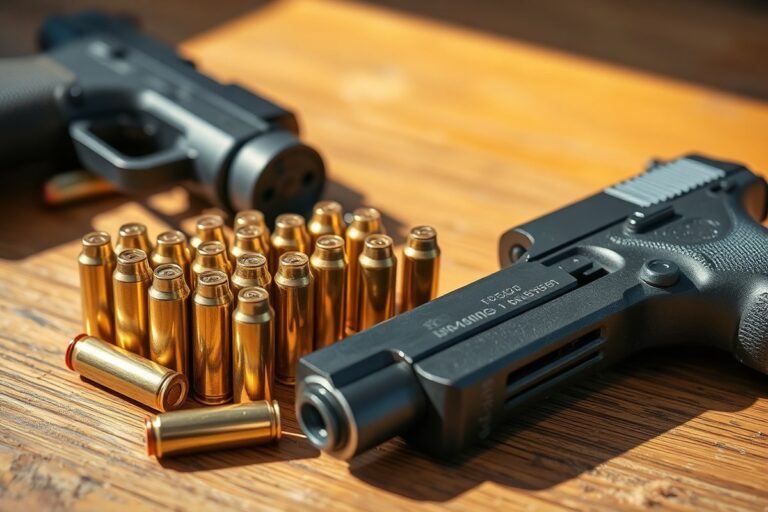
A 1911 pistol most commonly uses .45 ACP (Automatic Colt Pistol) ammunition. This caliber was the original design intention when the pistol was developed, offering a reliable balance of stopping power and manageable recoil. The standard bullet weight for the .45 ACP in a 1911 is 230 grains, typically full metal jacket (FMJ). This makes it suitable for both target shooting and self-defense, and the ammunition is widely available and relatively affordable, usually costing around $0.30 to $0.50 per round depending on brand and quantity.
Not all 1911 pistols are chambered for .45 ACP. While this caliber is the most traditional and popular, manufacturers produce 1911-style pistols chambered in other calibers like 9mm, .38 Super, 10mm, and even .22 LR. These alternatives cater to shooters who prioritize different factors such as lower recoil, higher magazine capacity, or specific performance preferences. For instance, a 9mm 1911 offers lighter recoil and higher capacity but less stopping power compared to the .45 ACP. Each caliber requires using ammunition explicitly designed for that chambering to maintain safety and reliability.
Using the correct caliber ammo matters because the 1911’s finely tuned mechanics depend on precise ammunition dimensions and pressure levels. Using ammo that doesn’t match your 1911’s caliber or strength requirements can cause cycling problems, jams, or accelerated wear on key components like the barrel, slide, and recoil spring. For example, some 1911s chambered in .45 ACP are not rated for +P ammunition, which has higher pressure and velocity. Using +P rounds in these guns can lead to damage over time. Standard pressure .45 ACP rounds are inherently subsonic, which makes them well-suited for use with suppressors.
When selecting ammo for your 1911, always check the caliber mark on your pistol’s barrel or slide and match the ammo to that specification. Choose reputable brands and the correct bullet type for your purpose, be it full metal jacket for range training or hollow points for personal defense. Switching between different calibers or ammunition types in a 1911 requires thorough cleaning afterward to maintain reliability and avoid malfunctions. Keeping your 1911 well maintained and using the recommended ammo type not only ensures consistent performance but also extends the firearm’s service life.
Why Is .45 ACP the Standard Cartridge for 1911 Pistols?

The .45 ACP has been the standard cartridge for the 1911 pistol since its inception, primarily due to its historical development and design compatibility. Designed by John Browning for the U.S. Military, the 1911 was intended to fire a powerful round that would deliver effective stopping power with manageable recoil. The .45 ACP cartridge, featuring a 230-grain bullet traveling around 830 feet per second from the original M1911A1 barrel, meets this balance well. This bullet weight and velocity offer a good tradeoff between knockdown power and shooter control, making the pistol effective in both military and civilian applications.
The 1911 pistol’s barrel, rifling twist rate, and chamber dimensions were all optimized for the 230-grain .45 ACP round, which ensures consistency and accuracy. Using ammunition that differs too much in bullet weight or velocity can lead to decreased performance and increased wear on the firearm. The .45 ACP’s relatively large diameter and moderate velocity generate sufficient energy for stopping threats while keeping recoil from becoming difficult to manage, even during rapid fire or extended sessions. This controlled recoil allows you to maintain quicker follow-up shots without sacrificing accuracy.
Another reason the .45 ACP remains standard is its widespread availability and proven reliability. Ammo made to military specifications is consistent, which helps preserve the lifespan of your 1911 by reducing excessive force on its components. The 230-grain bullet weight used originally continues to be popular because it complements the 1911’s design, providing a well-balanced shooting experience. Variations exist with lighter or heavier bullets depending on specific needs, but most 1911 barrels perform best within this traditional range.
The cartridge’s 1.273-inch overall length fits perfectly within the 1911’s magazine capacity, maintaining reliable feeding and ejection. This precision fit, combined with the cartridge’s power profile, made it the preferred choice for decades. You can expect consistent shot placement and manageable recoil from quality .45 ACP loads designed for your 1911 model. Choosing the classic round also means easier access to training ammunition and spare magazines optimized for this cartridge.
Always verify that the ammo you choose matches your 1911’s barrel length and rifling twist rate to maintain optimal accuracy and prevent unnecessary wear.
Other Popular 1911 Calibers: Features and Differences
Besides the standard .45 ACP, 1911 pistols come chambered in several other calibers that offer different benefits in performance, recoil, and application. The 9mm is a common alternate choice for lower recoil and higher magazine capacity. Meanwhile, calibers like the .38 Super and 10mm offer more power for specialized uses but can increase recoil and wear on the firearm.
9mm: Pros and Cons in 1911s
The 9mm in a 1911 provides reduced recoil compared to .45 ACP, making it easier for some shooters to manage rapid follow-up shots. The smaller cartridge also allows magazines to hold more rounds, often up to 10 or 12, versus the typical 7 or 8 in .45 ACP. Ammunition costs are generally lower and more available, which suits regular practice or competitive shooting on a budget.
On the downside, 9mm rounds generally deliver less stopping power per shot than a .45 ACP, which matters for self-defense. The 1911 platform requires some design tweaks to reliably feed 9mm cartridges, so using quality 9mm-specific magazines and ammo is key. Overall, 9mm 1911 pistols offer a good balance of shootability and capacity.
.38 Super and 10mm: Specialized Uses
The .38 Super is a trendy choice for competitive shooters who want a high-velocity cartridge with manageable recoil. It offers more power than 9mm but less than 10mm or .45 ACP, with relatively flat trajectories and a reputation for accuracy in target shooting and USPSA matches. However, it typically has a lower capacity than 9mm and requires specific magazines for reliable operation.
The 10mm provides substantially more energy and penetration, favored by shooters needing power for hunting or defense against larger threats. It produces noticeably stronger recoil and increased muzzle blast, which can reduce accuracy for some shooters and accelerate wear on parts. Ammo costs for 10mm tend to be higher and ammo availability more limited compared to 9mm or .45 ACP.
Less Common 1911 Calibers Explained
Several other calibers chambered in 1911s include .22 LR for inexpensive training and plinking due to minimal recoil and low ammo cost. Some shooters also use wildcat or less mainstream rounds like .45 Super or .460 Rowland, which deliver higher pressures and power than standard .45 ACP but require reinforced frames and barrels.
Magazines and parts compatibility can vary widely with less common calibers, making it important to follow manufacturer guidelines strictly. Shooters choosing these rarer calibers weigh tradeoffs between power, recoil, firearm longevity, and ammunition availability. The table below compares key features of the more common 1911 calibers besides .45 ACP:
| Caliber | Recoil Level | Typical Magazine Capacity | Ammo Cost | Common Use |
|---|---|---|---|---|
| 9mm | Low to Medium | 10-12 rounds | Low | Self-defense, target, practice |
| .38 Super | Medium | 8-10 rounds | Medium | Competitive shooting, target |
| 10mm | High | 7-8 rounds | High | Hunting, defense against large threats |
| .22 LR | Very Low | 10-12 rounds | Very Low | Training, plinking |
Choosing the right caliber depends on your shooting style, recoil tolerance, and ammo budget. Low-recoil rounds like 9mm and .22 LR promote easier handling and higher volume shooting. More powerful calibers suit users prioritizing stopping power but require more skill and maintenance.
How Barrel Length and Bullet Weight Affect Ammo Selection
Your 1911’s barrel length and rifling twist have a strong impact on which bullet weight and load type will deliver the best accuracy, reliability, and shooting experience. Matching ammo to your barrel size ensures the bullet stabilizes properly and cycles the firearm without issues. The common rifling twist rate for .45 ACP in a 1911 is 1 turn in 16 inches with 6 grooves, designed mainly for the standard 230-grain bullet, but performance can vary based on your barrel length.
Short barrels (3 to 4 inches) benefit most from lighter bullet weights, typically 185 to 200 grains. These lighter bullets reach optimal velocity more easily in the reduced barrel length, cutting down muzzle blast and felt recoil. Standard barrels around 5 inches can handle a broad range of bullet weights, from 185 up to 230 grains or higher, allowing you to balance stopping power and control. Heavier bullets generally provide better accuracy and terminal performance in the full-length barrel by fully engaging the rifling and maintaining velocity.
Adjusting load power based on barrel length is a useful strategy. Short barrels usually perform better with reduced powder charges to avoid excessive muzzle flash and recoil, which can impair rapid follow-up shots and comfort. In contrast, full-length barrels can handle higher loads that reach their peak velocity without as much blowback or barrel wear, improving long-range accuracy and reliable cycling. Always verify your specific 1911’s manual recommendations and test new loads at the range. Below is a decision table summarizing how to select bullet weight and power level according to barrel length and typical rifling:
| Barrel Length | Recommended Bullet Weight (grains) | Load Power | Expected Benefits | Potential Issues |
|---|---|---|---|---|
| 3 to 4 inches (Short Barrel) | 185, 200 | Reduced powder charge | Lower recoil, less muzzle blast, reliable cycling | Lower velocity, reduced range |
| 5 inches (Standard Barrel) | 185, 230 (common 230-grain standard) | Full powder charge | Balanced power and control, improved accuracy | More felt recoil with heavy loads |
| >5 inches (Extended Barrel) | 200, 230+ | Full to increased powder charge | Better velocity, improve terminal performance | Increased barrel wear, potential feeding issues if mismatched |
Testing various bullet weights and loads in your own 1911 is important, especially if your barrel length deviates from the 5-inch standard. Note that the rifling’s 1:16 twist rate is optimized around medium to heavy bullet weights; very light or very heavy bullets may not stabilize well. Problems like misfeeds, inconsistent accuracy, or increased recoil can all signal ammo-barrel mismatch. Always practice with your chosen ammo before trusting it in a self-defense or competition setting.
Matching your bullet weight and powder load to your 1911’s barrel length and rifling twist improves its performance. Lighter, reduced loads work best for shorter barrels to control recoil and blowback. Standard barrels offer the most versatile ammo options. Extended barrels can push heavier bullets faster but require careful selection to avoid wear and feed issues. Start with this guide, then adjust your choice based on how you shoot, what you need, and your test results.
Choosing Bullet Types for Your 1911: FMJ, Hollow Point, and More
A 1911 pistol shoots best with ammunition designed for its intended use, balancing bullet type, recoil, and performance. Full metal jacket (FMJ) rounds suit practice and training by providing reliability and smooth feeding. Hollow points, in contrast, offer controlled expansion and greater stopping power for defense situations. Specialized bullet types can further tailor your shooting experience depending on your needs and firearm setup.
Full Metal Jacket (FMJ): Target and Training Use
FMJ bullets feature a soft lead core fully encased in a harder metal shell, which helps rounds feed smoothly through a 1911’s mechanisms. This bullet type is generally preferred for target shooting and training because it is less expensive and reduces barrel fouling compared to exposed lead. The smooth jacket allows reliable feeding and extraction, minimizing malfunctions during range sessions.
Since FMJ rounds do not expand upon impact, they are not suited for self-defense but excel at practice where deep penetration and consistent trajectory are key. Shooters often choose FMJ ammo weighing between 185 and 230 grains to balance manageable recoil with stable accuracy. Expect to pay roughly $0.30 to $0.50 per round for quality FMJ 45 ACP ammunition, making it an economical choice for extended range time.
Use FMJ ammo primarily for range practice to protect your 1911’s barrel and maintain reliable cycling with minimal maintenance.
Hollow Point (HP): Self-Defense Advantages
Hollow point bullets have a cavity in the tip designed to expand upon impact, increasing diameter and transferring more energy to the target. This expansion reduces the risk of over-penetration, making them preferable for self-defense where stopping threats quickly with less collateral damage is critical. Most high-end 1911 pistols accommodate a wide range of hollow point shapes without feeding issues.
Sizes typically range from 185 to 230 grains in .45 ACP hollow points, which maintain the 1911’s inherent balance between recoil and accuracy. The expanded bullet creates a larger wound channel, improving stopping power while maintaining penetration sufficient to reach important organs. Hollow points generally cost $1.20 to $2.00 per round, reflecting their specialized purpose and advanced manufacturing.
Recoil can feel sharper with hollow points due to their construction and weight choices, so practicing with your chosen defensive load is important. Accuracy often improves because the bullet design stabilizes flight characteristics, but reliability testing in your 1911 is essential before trusting hollow points for carry or home defense.
Always test-fire hollow point ammunition extensively in your 1911 to confirm reliable feeding and acceptable recoil before relying on it for self-protection.
Other Specialty Bullets for 1911 Pistols
Besides FMJ and hollow points, other specialty rounds exist for the 1911 that address different shooting needs. +P rated ammunition, loaded to higher pressure than standard 45 ACP, offers increased velocity and energy, which some shooters prefer for improve stopping power. However, using +P loads demands that your 1911 be rated to handle the increased stress to avoid accelerated wear or damage.
Match-grade bullets and carefully reloaded ammunition offer greater consistency in weight and dimensions, translating into improved accuracy for competition shooters. Bullet weights under 185 grains can reduce recoil but may sacrifice some terminal performance. Conversely, heavier bullets over 230 grains increase recoil but yield deeper penetration, useful for specific tactical scenarios.
Choosing specialty rounds requires matching your 1911’s mechanical tolerances to avoid feeding or extraction failures. Maintenance should include regular inspection of extracted casings and the barrel throat for signs of excessive wear caused by high-pressure or specialty rounds.
Consult your 1911 manufacturer’s guidelines before using +P or specialty ammo to ensure safe operation and maintain firearm longevity.
Ensuring Reliability: How Ammo Quality and Brand Affect Performance
Choosing quality ammunition for your 1911 is critical to ensure reliable performance and protect your pistol’s longevity. Quality ammo leads to fewer malfunctions, consistent accuracy, and less wear on moving parts. Look for cartridges that meet industry standards like SAAMI specifications and come from manufacturers with strong quality control processes.
Before buying, inspect ammo packaging for intact seals and expiration dates. Poor packaging or old ammo increases the risk of misfires and corrosion. Avoid loose rounds or those with visible defects like dents, corrosion, or irregular primer seating. Proper storage away from moisture maintains ammo integrity and prevents rust that can damage your gun’s internal components.
Several brands have earned solid reputations among 1911 shooters for reliability and performance. Names like Winchester, Federal, Remington, and Hornady are commonly recommended. These companies typically provide consistent powder charges, reliable primers, and quality projectiles that work well in 1911 pistols.
- Check for the brand’s reputation via online reviews and shooting forums focused on 1911 models.
- Buy factory-new ammo when possible to reduce the risk of defects.
- Avoid surplus ammo that may not perfectly fit your pistol’s chamber or specifications.
- Test different bullet weights and brands at the range to see what your specific 1911 prefers.
- Store ammo in a cool, dry place with airtight containers or ammo cans to prevent moisture exposure.
Reloaded or remanufactured ammunition can be safe for your 1911 if it’s carefully produced and inspected, but it’s riskier than factory ammo. Quality control varies heavily with reloaders, and issues like inconsistent powder charges or improper bullet seating can cause malfunctions or damage. Only use reloaded ammo from trusted reloaders who follow precise processes and inspect each round. If you choose to use reloads, try them first in a controlled setting to confirm reliable feeding and ignition in your firearm.
Reliable ammo protects your 1911 from failures like stovepipes, misfires, and ejection problems. Consistent ammo also reduces stress on the recoil spring and barrel, extending your pistol’s service life. While factory brands vary in price, expect dependable ammo to cost between $0.30 and $0.60 per round for .45 ACP, depending on bullet type and quality. Cheaper or unknown brands may save money upfront but could cause jams or damage, leading to costly repairs or dangerous situations.
How Ammo Choice Impacts Shooting Experience and Firearm Longevity
Ammo choice plays a major role in how your 1911 shoots and how long it lasts. Recoil changes noticeably depending on the bullet weight and powder charge. For example, a full-metal jacket 230-grain .45 ACP round produces a more manageable recoil compared to a 185-grain +P load, which can increase felt recoil and impact follow-up shot speed. Lower recoil generally helps maintain accuracy, especially during rapid fire, by allowing you to keep better control over the pistol.
Accuracy depends heavily on picking ammo that matches your barrel length and the pistol’s rifling twist rate. The 1911’s standard barrel length of about 5 inches works well with heavier bullets like 230 grains, which stabilize properly for tighter groupings. Using lighter or faster rounds not optimized for your barrel length often results in inconsistent muzzle velocities and wider groupings. Consistent velocity is important for precision; fluctuations can shift point of impact shot to shot.
Ammo type also affects firearm wear. Higher-pressure +P rounds or hotter custom loads can accelerate wear on critical components like recoil springs and extractor springs. They can lead to parts breaking down faster, requiring more frequent replacements. Some powders burn at higher temperatures, increasing barrel erosion over tens of thousands of rounds. Staying within manufacturer-recommended pressures and using factory ammo designed for your 1911 helps prevent premature wear.
Common ammo-related problems include failures to feed, eject, or fire reliably. These issues often arise from using ammunition that’s not suited to the pistol’s specifications. For example, using rounds with a bullet profile or overall length outside your magazine’s capacity can cause jams. Also, dirt or buildup from corrosive primers in some inexpensive ammo can cause malfunctions and require more cleaning to maintain reliability.
To improve your shooting experience, try sticking to premium factory ammo that fits your 1911’s barrel length and twist. Match the bullet weight to your intended use, 230 grains for general range shooting offers a good balance, while lighter weights might be used for carry but may affect accuracy. Experiment in small batches to see which rounds your pistol cycles cleanly and groups tightly. Plan on replacing recoil springs every 3,000 to 5,000 rounds when using standard pressure ammo and sooner if operating with +P loads to maintain longevity.
Proper ammo selection is about balancing recoil, accuracy, and wear. Using ammo well suited to your 1911 improves shooting satisfaction while preventing costly repairs and downtime. Regular inspection and maintenance become easier, allowing you to enjoy your pistol longer without issues caused by improper ammunition choice.
Selecting Ammo Based on Your Shooting Purpose and Conditions
Select your 1911 ammo based on what you intend to do with your pistol. Self-defense calls for reliable, expansion-capable rounds, while target or competition shooting benefits from consistent accuracy and manageable recoil. Weather and environment can change how your ammo performs, so factor those in before choosing your load.
Self-Defense Ammo Choices and Considerations
Your first priority with self-defense ammunition is reliability and terminal performance. Hollow point bullets are widely recommended because they expand on impact, creating larger wound channels and reducing the risk of over-penetration. Standard .45 ACP hollow points are effective, but many also use +P rated ammo for increased velocity and stopping power. Note that +P rounds generate higher pressure, so confirm your 1911 is rated for +P ammo to avoid damage or excessive wear.
Practice with your self-defense load regularly to ensure your pistol functions smoothly under these conditions. You might spend about $1 to $2 per round for quality hollow points, which is reasonable given their purpose.
- Use hollow points for expansion and stopping power
- Verify if your 1911 is rated for +P before using high-pressure ammo
- Test your self-defense load for reliable feeding and ejection
- Aim for a bullet weight between 185 to 230 grains for balancing recoil and energy
- Reload practice improves confidence and function with your defensive ammo
Always test your chosen self-defense ammo in your specific 1911 before carrying it.
Target and Competition Ammo Selection
For target shooting or competitions, focus on ammo that offers consistent accuracy and predictable recoil. Full metal jacket (FMJ) rounds are often preferred since they feed reliably and cost less, enabling more range time on a budget. Consider lighter bullets, around 185 to 200 grains, to reduce recoil and speed up follow-up shots. Some shooters choose specialized match-grade ammo designed for precise velocity control.
Expect to pay 30 to 50 cents per round for standard FMJ and more for match-grade loads. Consistency in velocity and bullet weight will help you score better and shoot faster during timed events.
Adjusting Ammo Choices for Weather and Environment
Extreme temperatures can impact ammunition performance. Cold weather tends to reduce powder burn efficiency, leading to lower velocity. In hot environments, ammo can experience increased pressure. You may need to select a load with a powder charge rated for temperature stability or adjust your sights to compensate for velocity shifts.
Humidity rarely causes significant changes but can affect gunpowder if ammunition is stored poorly. Use sealed packaging and store ammo in a cool, dry place. For long outdoor sessions in varying weather, bring multiple ammo options and test them under local conditions before committing.
- Expect slightly reduced velocity below 40°F and adjust accordingly
- Use temperature-stable powders for hot climates to avoid overpressure
- Store ammo in sealed containers to prevent moisture damage
- Test ammo performance if shooting after temperature swings greater than 30°F
- Adjust your sights if you detect consistent point-of-impact shifts outdoors
Step-by-Step Action Plan for Choosing Ammo for Your 1911
Follow these steps to select the right ammunition for your 1911, ensuring safe and effective shooting tailored to your needs.
- Before your first range session: Identify your 1911’s chambering by checking the barrel markings or manufacturer specs. Confirming the caliber ensures you buy compatible ammo.
- Day 1: Test standard .45 ACP FMJ: Start with full metal jacket (FMJ) ammunition if you have a .45 ACP pistol to verify the gun cycles reliably and the ammo feeds well.
- Week 1: Try different bullet weights: Experiment with 185 to 230 grain bullets; lighter bullets often have higher velocity, while heavier ones reduce recoil. Note accuracy and comfortable shooting feel.
- After 2 weeks: Introduce hollow points: Use hollow point rounds suited to your shooting purpose, such as personal defense, and observe reliable expansion without jams.
- Month 1: Evaluate brands and quality: Compare ammo reliability and group size from a few trusted manufacturers. Reliable cycling and consistent accuracy show good choices.
- Before carry or competition: Choose ammo you’ve tested thoroughly for your specific 1911 and intended use, prioritizing reliability and performance under expected conditions.
- Ongoing: Monitor firearm condition: Keep an eye on wear and cleaning intervals as different ammo types and loads can affect barrel and component longevity.
Frequently Asked Questions
Can I Use 9mm Ammo in a Standard .45 ACP 1911?
No, you cannot use 9mm ammo in a standard .45 ACP 1911 because the barrel and chamber are designed specifically for .45 ACP cartridges. Using the wrong caliber risks firearm damage and unsafe shooting conditions.
Is It Safe to Use Reloads in My 1911 Pistol?
Using reloads in your 1911 can be safe if the reloads are made to exact specifications with quality components. However, factory ammunition is generally more reliable and safer for consistent performance and your pistol’s longevity.
How Does the Rifling Twist Rate Influence Ammo Performance in A 1911?
The rifling twist rate affects bullet stability and accuracy, so using ammo with bullet weights compatible with your 1911’s twist rate improves shooting precision. Check your pistol’s specs for recommended bullet weight ranges.
What Should I Know About Using Hollow Point Ammo in A 1911?
Hollow point ammo expands on impact for better stopping power, making it popular for self-defense. Confirm your 1911 cycles hollow points reliably, as some models may require specific ammo types to avoid jams.
Does Using Higher Muzzle Energy Ammo Damage A 1911?
High-velocity or high-pressure ammo can increase wear and stress on your 1911’s components, reducing its lifespan. Stick to ammo recommended by the manufacturer to maintain reliable function and durability.
Can I Switch Calibers on a 1911 Frame?
Some 1911 frames can be converted to other calibers with specific parts, but not all models support this. Consult your firearm’s manual or a gunsmith before attempting any caliber conversions.
Wrapping Up
Selecting the right ammo for your 1911 involves understanding your pistol’s caliber, testing various bullet types and weights, and focusing on reliable brands. Tailor your choice to your intended shooting purpose for the best balance of performance and firearm care. Start by verifying your pistol’s chambering and testing a trusted .45 ACP FMJ load at the range to build a strong foundation for further ammo selection.