What Is FMJ Ammo? A Complete Guide to How It Works and When to Use It
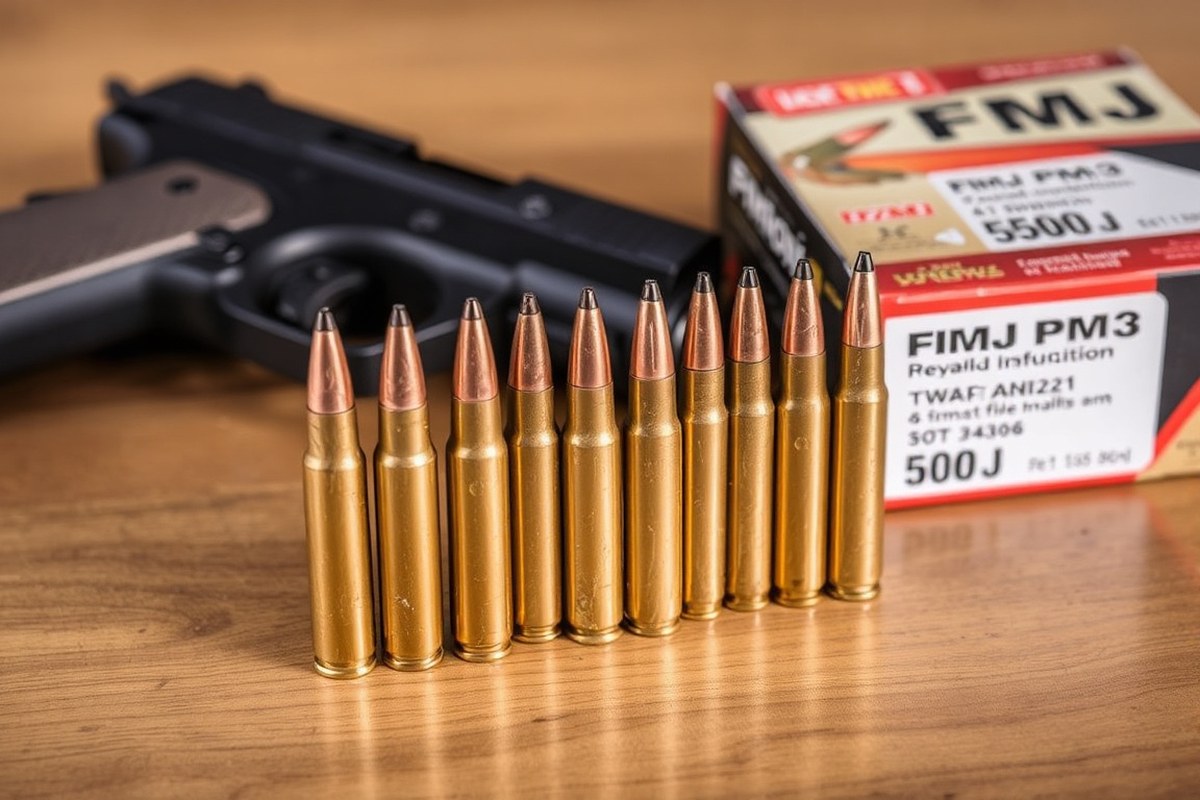
The term “FMJ ammo” describes bullets that have a soft lead center fully covered by a tough metal layer, typically made from copper or a copper alloy. Full Metal Jacket (FMJ) bullets keep their shape when fired and while penetrating a target. This coating lessens residue buildup in the gun barrel and enables the bullet to pass through targets without expanding.
FMJ ammo works well for target practice and situations requiring deep penetration, making it a popular choice for range shooting and training. Understanding its structure helps you pick ammo suited to your firearm’s needs and your shooting goals.
Key Takeaways
- FMJ bullets consist of a lead core covered by a copper or gilding metal jacket, leaving the rear exposed.
- Typical 9mm FMJ rounds can penetrate 27 to 32 inches of ballistic gel, showing strong penetration capability.
- Firing FMJ ammo at velocities beyond its design may cause the bullet to fragment prematurely within 4 to 10 inches.
- FMJ ammo usually costs less than hollow points, making it a budget-friendly option for bulk shooting and plinking.
- Older pistols, like the first-generation 1911 models, feed FMJ rounds more reliably than hollow points.
- FMJ is commonly labeled as “ball” ammo in military cartridges such as 5.56 NATO, indicating full metal jacketing.
What Is Full Metal Jacket (FMJ) Ammo?
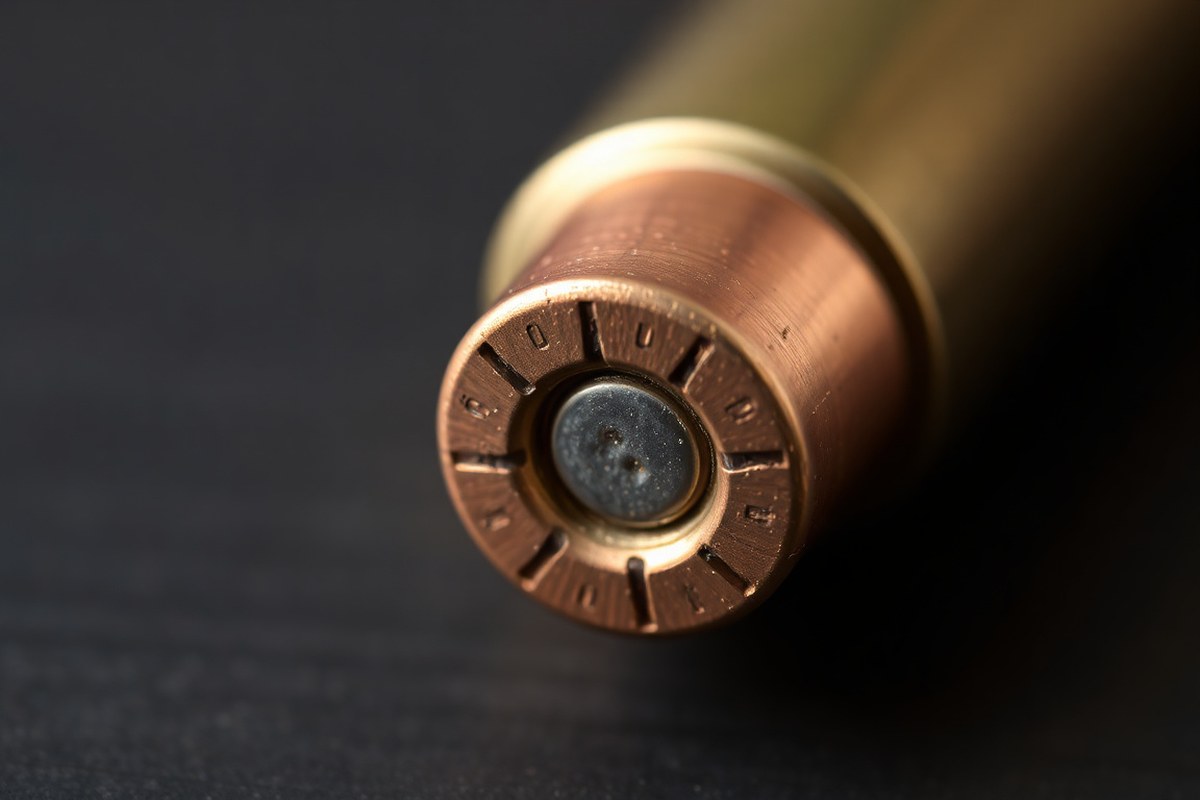
Full Metal Jacket (FMJ) ammo is a type of ammunition where the bullet consists of a soft lead core completely enclosed by a harder metal shell, known as the jacket. This jacket is typically made of copper but can also be brass, cupronickel, steel, or other metal alloys. The key characteristic is that the bullet’s nose and sides are fully covered with this metal jacket, while some versions may leave the base of the lead core exposed or also covered in a variation called Total Metal Jacket (TMJ).
The name “Full Metal Jacket” comes from this jacket that encloses the lead core. The jacket serves to reduce lead residue and fouling in the barrel after firing, which helps maintain the firearm’s accuracy and prolongs barrel life. Originating over 100 years ago, FMJ bullets were designed for military use and remain the standard for training and practice rounds worldwide. They are often referred to as “ball” ammo in military designations, highlighting their traditional role as mass-produced standard rounds.
Construction-wise, making FMJ ammo involves pressing a lead core into a copper or similar metal sleeve. The jacket is formed by drawing metal into a shape that tightly fits around the lead core. This design ensures the bullet is more strong, resists deformation, and feeds reliably in semi-automatic firearms. Unlike hollow point bullets that expand on impact, FMJ bullets maintain their shape and penetrate deeply due to their hard jacket, making them common for range use and military applications.
The cost of FMJ ammo typically falls on the lower end compared to specialty defensive loads, often around 20 cents per round for common calibers. This affordability, combined with its reliable feeding and minimal barrel wear, makes FMJ ammo a practical choice for bulk shooting sessions. Variations in the jacket material or the extent of lead coverage can tweak performance and cost but the basic principle remains the encapsulation of lead with a full metal jacket.
How FMJ Ammo Works and Its Typical Performance
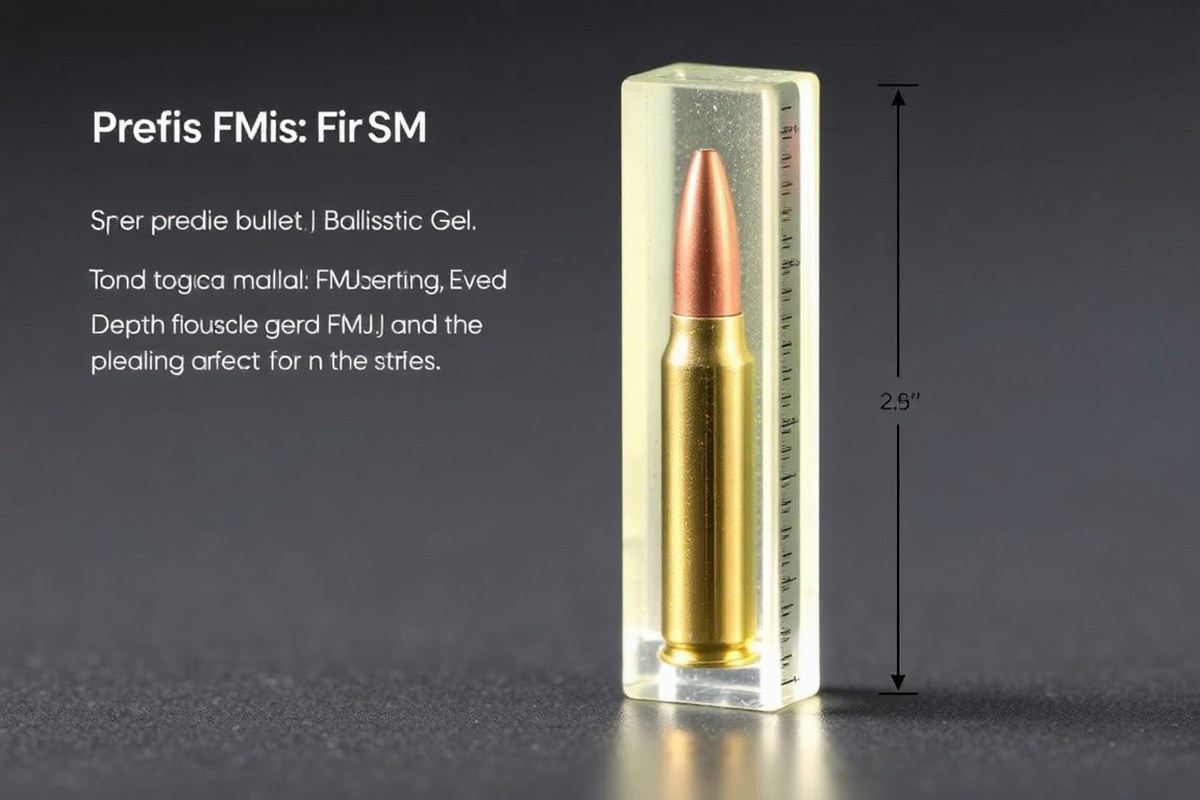
FMJ ammo functions by using a lead core encased in a harder metal jacket, which allows the bullet to penetrate targets with minimal deformation. This results in deep penetration through soft tissue and barriers but limited expansion. Velocity and barrel length influence how far and how effectively FMJ bullets penetrate, with faster speeds and longer barrels generally improving penetration performance.
Penetration Depth in Ballistic Gel
FMJ bullets are known for their ability to penetrate deeply. The FBI recommends a penetration depth of 12 to 18 inches in calibrated ballistic gel to ensure adequate stopping power without creating excessive risk of over-penetration. Standard 9mm FMJ rounds often exceed this range, penetrating 27 to 32 inches of ballistic gel or more. This deep penetration occurs because the hard metal jacket prevents the bullet from expanding or fragmenting upon impact, allowing it to maintain its shape and pass through soft tissue and barriers more efficiently.
Over-penetration is a common concern with FMJ ammo since the bullet can pass through the intended target and endanger bystanders. This risk is higher with common full-size defensive calibers like .38 Special or .45 ACP, which produce similar or greater penetration compared to 9mm FMJ rounds. While the deep penetration is advantageous for target shooting and certain military or law enforcement applications, it can pose legal and safety liabilities in civilian self-defense situations.
Effect of Velocity and Barrel Length on Penetration
Velocity plays a critical role in the performance of FMJ bullets. Higher pressures in the cartridge push the bullet faster down the barrel, increasing its velocity, which improves penetration and terminal ballistics. For example, +P rounds typically offer greater velocity than standard loads, pushing the FMJ bullet to penetrate deeper.
Barrel length directly affects velocity. A longer barrel allows the expanding gases from the cartridge to accelerate the bullet over a longer distance, increasing muzzle velocity. This effect is especially noticeable in smaller calibers like .22LR, .25 ACP, or .380 ACP, where firing FMJ bullets from short-barreled compact pistols can limit velocity and reduce penetration. In these cases, FMJ bullets often outperform hollow points because the latter may not expand effectively at lower velocities. For larger calibers, velocity gains from barrel length can still improve penetration but also increase potential over-penetration risks.
To maximize penetration with FMJ ammo in a compact pistol, choose a load with higher velocity or consider a barrel length that is as long as your carry setup allows.
Role of Bullet Shape in Feeding and Accuracy
The sleek, rounded tip of FMJ bullets supports reliable feeding in magazines and chambers, reducing the chance of jams compared to some hollow point designs that have exposed or blunt noses. This smooth shape contributes to consistent cycling in a variety of firearms, making FMJ ammo popular for training and practice.
However, FMJ bullets are often less accurate than other types because the swaging process, which forms the metal jacket around the lead core, can produce uneven thickness. This uneven distribution causes the bullet to be slightly heavier or thicker on one side, resulting in less predictable flight patterns. Some FMJ designs are intended to tumble upon impact to create more damage, but this behavior is inconsistent and depends heavily on the round’s velocity and the target material.
For precision shooting, FMJ rounds may not meet the highest accuracy demands, especially beyond close ranges like 50 yards. Still, for typical training or informal target shooting, the reliability and feed consistency of FMJ make it a practical choice.
Advantages and Disadvantages of Using FMJ Ammo
Full Metal Jacket (FMJ) ammo offers clear advantages in cost, reliability, and cleanliness but also comes with drawbacks like overpenetration and less stopping power. Understanding these pros and cons helps you decide when FMJ ammo fits your shooting needs versus other bullet types.
Pros: Cost, Reliability, Cleanliness
FMJ ammunition is generally less expensive than jacketed hollow point (JHP) or soft point ammo, making it a popular choice for practice and range shooting. You can often find FMJ rounds at prices significantly lower per box, which reduces your training costs without sacrificing consistency. Their simple, sleek design also contributes to feeding reliability, especially in semi-automatic pistols and rifles. This is because the smooth, rounded jacket on FMJ bullets helps avoid jams and misfeeds that can occasionally occur with hollow point ammo, which has a cavity at the tip.
Also, FMJ ammo tends to be cleaner when fired compared to pure lead bullets. The copper or steel jacket encasing the lead core reduces barrel fouling and lead deposits, which means less frequent cleaning and maintenance of your firearm. This trait supports consistent performance over longer shooting sessions. For example, shooting 500 rounds of FMJ ammunition will generally require less barrel cleaning compared to the same count with unjacketed lead bullets.
Cons: Overpenetration, Reduced Stopping Power
One primary downside to using FMJ rounds in self-defense situations is overpenetration. These bullets are designed to retain their shape and penetrate deeply, often passing through targets and even walls without significant expansion. This can increase the risk of unintended injury to bystanders and reduce the bullet’s effectiveness in quickly stopping a threat. The lack of expansion means FMJ rounds transfer less energy to the target compared to hollow or soft point bullets, which are engineered to expand and cause more trauma.
Reduced stopping power is a direct consequence of this bullet design. FMJ bullets maintain a narrow wound channel and do not mushroom or break apart on impact, potentially resulting in slower incapacitation of an assailant. For defensive pistol calibers like 9mm or .45 ACP, hollow point ammo is generally preferred because it creates larger wound cavities and limits penetration to reduce collateral damage. In contrast, FMJ is more suited for training or situations where penetration is prioritized over rapid stopping.
Safety and Legal Considerations
FMJ ammunition is widely legal for sport shooting and training, but some jurisdictions restrict its use for hunting or self-defense due to concerns over overpenetration and animal welfare. Always check local laws regarding FMJ ammo, especially if you intend to carry or hunt with it. In urban or densely populated areas, overpenetration risks make FMJ rounds a less responsible choice for self-defense.
Some shooters opt to use FMJ ammo for practice while carrying hollow point rounds for personal defense, balancing reliability and cost. Rotating your carry ammo and regularly verifying its function in your firearm helps ensure reliability with hollow points, which can feed less smoothly. Gunsmiths can sometimes modify firearms for better performance with JHP rounds, but FMJ typically requires no adjustments. Keeping your reliance on FMJ focused on practice reduces legal and safety concerns while maintaining preparedness.
Common Uses for FMJ Ammunition
Full Metal Jacket (FMJ) ammunition is widely used for training, target practice, and military purposes due to several key factors. It’s cost-effective compared to specialized self-defense rounds like jacketed hollow points (JHP), making it ideal for high-volume shooting where expense matters. FMJ bullets have a solid metal jacket around a soft core, allowing reliable feeding and consistent performance in semi-automatic and automatic firearms, which military forces rely on. This rugged design enables FMJ rounds to feed smoothly from magazines or belts without deformation, supporting sustained use in diverse conditions.
Militaries prefer FMJ ammo primarily because of its penetration capabilities and durability. FMJ bullets can pass through barriers and cover without deforming or fragmenting, which suits combat environments where targets may be behind walls, vehicles, or gear. This characteristic aligns with international laws of armed conflict, which restrict the use of expanding bullets. These rounds often penetrate up to 18 inches in ballistic gelatin, making them effective for ensuring target incapacitation at range. For military personnel, the reliability and penetration balance outweigh the higher stopping power of expanding bullets.
For civilian shooters, FMJ ammunition remains the go-to choice for range sessions and skill-building. It typically costs significantly less than JHP ammo, sometimes less than half the price per round, which translates into hundreds of dollars saved over time. The solid construction also reduces barrel fouling and wear compared to some specialty loads, extending firearm life and reducing maintenance frequency. When practicing, you benefit from consistent bullet flight and impact patterns, helping improve accuracy and familiarity with your firearm’s operation.
Using FMJ for self-defense is less straightforward. While FMJ rounds can effectively stop an aggressive threat, their tendency to over-penetrate is a concern. Since FMJ bullets often pass completely through a target, they may keep traveling, risking injury to bystanders beyond the intended target. For confined environments like homes or crowded areas, this trait makes FMJ less ideal compared to hollow point ammunition designed to expand and reduce penetration depth. However, FMJ still retains velocity and can cause lethal wounds, so it remains a possible option when no expanding rounds are available or if limited by legal restrictions.
Choosing FMJ for self-defense calls for understanding your environment and threat scenario. In rural or open areas where over-penetration risk is minimal, FMJ may be adequate. Training regularly with FMJ helps maintain the skills and confidence needed in emergencies, even when you switch to specialized self-defense ammo in your defensive carry. Preparing with affordable FMJ rounds can also make it easier to practice safely and frequently, building muscle memory without worrying about excessive wear or cost.
How FMJ Compares to Hollow Point and Soft Point Ammo
FMJ ammo differs from hollow point and soft point bullets in design, cost, reliability, terminal effects, and intended use. FMJ bullets have a hard metal jacket covering the entire lead core, making them less expensive and highly reliable but less effective at expansion and stopping power. Hollow point and soft point bullets are designed to expand upon impact, improving stopping power and terminal effects but generally cost more and may not feed as smoothly in some firearms.
Jacketed Hollow Point (JHP) Overview
Jacketed Hollow Point bullets feature a hollow cavity at the tip, surrounded by a copper jacket that reduces lead fouling in the barrel. This design promotes controlled expansion upon hitting a target, increasing the bullet’s diameter to create larger wound channels and transfer more energy. JHP bullets outperform FMJ rounds in stopping power because they expand rather than just penetrate, making them preferred for self-defense and law enforcement.
The copper jacket also prevents fragmentation, ensuring the bullet stays intact for predictable terminal performance. However, JHP ammo typically costs 30-50% more than FMJ, and some firearms with tight feeding mechanisms or older models may experience occasional jams or feeding issues with hollow points. Despite this, many users accept the tradeoff for increased terminal effectiveness.
Soft Point (SP) Bullets Explained
Soft Point bullets have an exposed lead tip with a partial copper jacket covering the rest of the bullet. This design allows controlled expansion on impact, although not as aggressively as JHP bullets. Soft points provide a middle ground between FMJ and hollow points, balancing penetration and expansion.
Soft point ammo tends to be popular with hunters because it offers deep penetration to reach important organs while still expanding to cause significant tissue damage. Prices sit between FMJ and JHP, often closer to JHP’s cost. Reliability in feeding tends to be good, similar to FMJ, since soft points have a rounded profile.
Situations Best Suited for Each Ammo Type
FMJ ammunition excels in training, target practice, and situations where penetration consistency is prioritized over stopping power. It is typically more affordable, costing roughly $0.20 to $0.35 per round compared to $0.50 or more for hollow points. This makes FMJ a budget-friendly option for high-volume shooting.
Self-defense and law enforcement rely mostly on JHP ammo because its expansion reduces the risk of over-penetration and increases stopping power. Soft point rounds are often used in hunting when a quick, humane kill is desired, as the bullet balances penetration with expansion.
| Feature | Full Metal Jacket (FMJ) | Jacketed Hollow Point (JHP) | Soft Point (SP) |
|---|---|---|---|
| Design | Lead core fully encased in copper or other metal jacket | Hollow cavity tip with copper jacket | Exposed lead tip with partial copper jacket |
| Cost per round | $0.20 – $0.35 | $0.50 – $1.00+ | $0.40 – $0.80 |
| Terminal effect | Penetration without expansion | Controlled expansion, large wound channel | Moderate expansion with deep penetration |
| Reliability in feeding | High; smooth feeding in most firearms | Good but occasional feeding issues in some guns | Good; similar to FMJ |
| Typical use cases | Training, target practice, military use | Self-defense, law enforcement, home defense | Hunting medium game, self-defense |
Always test your chosen ammo in your specific firearm to ensure reliability and consistent feeding before relying on it for defense or hunting.
Safety and Legal Considerations for FMJ Ammo
FMJ ammo is generally legal in most parts of the United States, but restrictions do exist depending on state or local laws. Some places prohibit the use of certain ammunition types on public land or during hunting seasons, so checking local regulations is essential before purchasing or using FMJ rounds. Internationally, laws vary widely, with some countries banning FMJ entirely or limiting its use to law enforcement and military. You should always verify your area’s legal status to avoid fines or confiscation.
Safety concerns with FMJ ammo focus mainly on overpenetration risks. Because FMJ bullets have a hard metal jacket and a relatively unchanging shape as they travel, they tend to pass through targets and continue moving with considerable velocity. This can put bystanders or unintended targets in danger, especially in home defense or crowded shooting ranges. Controlling the bullet’s path is critical to minimizing these risks.
To reduce overpenetration danger, use these practical steps. Shoot in designated safe areas such as bullet traps or backstops made from thick steel or layered rubber that can absorb the bullet’s energy. Avoid shooting at hard surfaces that can cause ricochets. Limit FMJ use to open ranges or controlled environments where the backstop and surroundings are secure. Always know your target and what lies behind it before pulling the trigger.
Handle FMJ ammo following standard firearm safety rules. Keep firearms unloaded until ready to shoot, store ammo separately in a locked container like a Liberty Safe, and never point the muzzle at anything you don’t intend to shoot. Use protective gear such as eye and ear protection since FMJ rounds can generate louder reports and more sparks on impact. Transport ammo carefully, avoiding damage to the cartridges that might cause misfires.
Consider using FMJ rounds designed for shooting sports, training, or specific firearms that benefit from their feeding reliability and penetration. Choose the correct caliber and bullet weight to balance penetration with safety. For example, lighter FMJ bullets tend to lose velocity faster and reduce overpenetration compared to heavier ones. In situations where overpenetration is a critical concern, such as home defense, alternatives to FMJ may be preferable.
Costs for FMJ ammo vary but tend to be lower than specialty rounds like hollow points. For range practice, FMJ offers an economical choice without sacrificing feeding reliability. However, storing and handling FMJ ammo responsibly requires investment in secure storage solutions and adherence to safety protocols. Good results mean shooting within a safe environment, respecting local laws, and minimizing risks to people and property outside the target zone.
How to Choose FMJ Ammo for Your Firearm and Purpose
Choosing the right full metal jacket (FMJ) ammo starts with knowing your firearm type and shooting goals. FMJ bullets suit many common calibers, including 9mm, .380 ACP, .40 S&W, and .45 ACP for pistols, as well as popular rifle calibers like .223 Remington and 7.62x39mm. You want to pick FMJ ammo that matches your gun’s chamber specifications to ensure proper feeding and safety. For example, 9mm FMJ rounds are widely available and priced affordably, typically between $0.20 and $0.35 per round, making them popular for target practice and training.
Next, consider what you want to accomplish. FMJ ammo is best for target shooting, practice, and competitions where deep penetration without expansion is acceptable or even preferred. For concealed carry, FMJ generally isn’t recommended because it penetrates deeply but often over-penetrates without expanding, which can cause collateral damage. Instead, hollow point or specialized defensive bullets are better for self-defense. Still, if FMJ is your choice for practice, make sure to select loads that don’t produce excessive recoil, especially if you use a compact handgun. Higher-pressure FMJ loads can increase felt recoil, which may reduce accuracy and slow down your follow-up shots.
Take note of bullet shape and profile to match your shooting needs. Pistol FMJ bullets come in rounded shapes for calibers like 9mm and .380 ACP, aiding reliable feeding. Others, such as the .40 S&W, often use a truncated cone profile that can influence penetration and recoil. Semi-wadcutter bullets, while not FMJ, are favored in target shooting due to clean target holes; if precise scoring is your goal, these may be a better fit than standard FMJ.
Safety and local laws may also affect your choice. FMJ ammo is legal in nearly all areas but may be restricted in certain hunting contexts or ranges. Always check rules before use. Finally, test your selected FMJ ammo in your firearm to confirm reliable function. A good result means consistent feeding, clean cycling, and repeatable accuracy at your intended distance, usually 7 to 25 yards for pistols. If you experience feeding issues, excessive recoil, or inaccurate shots, switch to a different brand, bullet weight, or powder load that better suits your gun’s characteristics.
Common Myths About FMJ Ammo Debunked
FMJ ammo often gets a bad rap when it comes to stopping power. Many people think FMJ rounds lack the ability to quickly incapacitate a threat, but the reality is more nuanced. FMJ bullets typically penetrate straight through a target without expanding, which means they generally cause less tissue disruption than hollow points. This results in less immediate stopping power, which is why +P and hollow point ammunition are preferred for self-defense, these types expand on impact to transfer more energy and create larger wound channels.
Hydrostatic shock, a concept where a bullet causes a rapid pressure wave that damages tissues away from the bullet path, is debated among firearms experts and has been questioned for decades. It’s true that hollow points are better suited to generate hydrostatic shock due to their expansion and energy transfer. FMJ bullets, with their non-expanding design, rarely produce significant hydrostatic shock, especially in handgun calibers. So, relying on FMJ rounds to cause shock that incapacitates quickly is not supported by solid evidence.
Accuracy often causes debate among shooters. Some think FMJ ammo lacks precision compared to hollow points due to bullet shape differences. Quality FMJ bullets from trusted brands can deliver excellent accuracy, sometimes equaling or outperforming hollow points at usual handgun shooting ranges. Choosing good FMJ loads and testing them with your gun is essential. Variables such as consistent bullet weight, manufacturing quality, and correct seating depth influence accuracy more than bullet jacket type.
For those using older pistols like early 1911 models, FMJ ammunition can also offer more reliable feeding and function. Hollow points often cause jams in these firearms because of their shape, making FMJ rounds a safer bet for reliable operation under stress despite their lower stopping power. This tradeoff matters when your firearm’s design limits your ammo choices, especially if you prioritize reliability over expansion performance.
Always test new ammo in your firearm to ensure reliable feeding and acceptable accuracy before using it for critical purposes.
Step-by-Step Action Plan for Using FMJ Ammo
Follow this plan to start using FMJ ammo effectively and safely with your firearm.
- Before Your First Use: Check your firearm’s manual to confirm FMJ ammo compatibility. Your firearm should function reliably with FMJ rounds if supported.
- Day 1: Test-fire a small batch of FMJ ammo at a range. Observe for feeding reliability and accuracy; consistent cycling means good compatibility.
- Week 1: Increase your shooting practice with FMJ rounds, focusing on familiarizing yourself with their recoil and trajectory. Improved shot grouping and confident handling show progress.
- Week 2: Clean your firearm thoroughly after shooting FMJ ammo, as the full metal jacket can cause increased barrel fouling. Noticeable improvement in ease of cleaning and sustained accuracy indicates good maintenance.
- Week 3: Use FMJ ammo for regular target practice to build muscle memory and shooting skills while monitoring ammo performance and any signs of wear on your firearm.
- After 1 Month: Evaluate whether FMJ ammo meets your shooting purposes, such as training or plinking. Consistent reliability and satisfaction with performance confirm it’s a suitable choice for ongoing use.
Frequently Asked Questions
Why Is FMJ Ammo Also Called Ball Ammo?
FMJ ammo is often called ball ammo because both feature a lead core covered by a metal jacket. They have been used interchangeably for many years, especially in military and shooting sports contexts, though technically not all FMJ qualifies as ball ammo.
Does FMJ Ammo Perform Reliably in Semi-Automatic Firearms?
Yes, FMJ ammo is known for its reliable feeding in semi-automatic handguns and rifles. Its consistent shape and hardness reduce malfunctions compared to some soft-point or hollow-point rounds.
Is FMJ Ammo Suitable for Self-Defense Use?
FMJ ammo is not ideal for self-defense because it tends to over-penetrate and cause less stopping damage than hollow-point rounds. Consider JHP ammo instead for personal protection.
How Does FMJ Ammo Affect Firearm Maintenance?
FMJ ammo is cleaner than lead bullets, producing less fouling in the barrel. This reduces the frequency of cleaning compared to shooting unjacketed lead rounds.
Can I Shoot FMJ Ammo at All Ranges?
FMJ ammo is suitable for target practice and plinking at most ranges. Some ranges may restrict FMJ use due to penetration concerns, so always check range rules before shooting.
Why Is FMJ Ammo Usually Cheaper Than Hollow-Point Ammo?
FMJ ammo is made with simpler bullet designs and less complex manufacturing processes, making it less expensive. Hollow-point ammo costs more due to added design for expansion and stopping power.
Before You Go
FMJ ammo offers reliable performance and cost-effectiveness for training and target practice, making it a solid option for most shooters. Focus on testing your firearm’s compatibility and maintain good cleaning habits after each session. Start using FMJ rounds today at the range to gain firsthand experience and confidence in their handling and function.